A combination recorded in a formula source. It describes a historical or theoretical relationship, not a personal recommendation.
← Herbal Study JournalSTUDY EDITION · 01
FIELD GUIDE · FOUNDATIONS
Read a herb
in context.
A study atlas for ten familiar entries in Chinese materia medica. Each profile separates plant identity, traditional description, modern evidence, and safety—four questions that are often blurred together online.
HOW TO USE THIS ATLAS
Start with identity.
Then ask what the claim means.
Materia medica is a body of knowledge about medicinal substances. A useful record begins with the accepted botanical name, the plant part used, and any processing that changes the material. Common names alone are not enough: one name may refer to different species in different markets, while similar-sounding names can point to unrelated plants. The Latin binomial helps anchor a record, but it does not authenticate a product in a jar. Correct identification requires suitable reference material, trained inspection, and, in supply chains, appropriate quality testing.
Traditional descriptions belong to their own framework. Terms such as “qi tonic,” “warming,” or “nourishing yin” summarize historical theories and pattern-based practice. They are not interchangeable with a modern diagnosis, a laboratory measurement, or proof that an herb treats a disease. A careful study note preserves the traditional meaning while stating plainly what clinical research has and has not established.
Finally, separate herb-to-herb formula design from herb-to-drug interaction evidence. Classical formulas record deliberate combinations within a specific theory, preparation, and clinical context. That history does not establish that the same mixture is safe for every person, product, dose, or prescription medicine. When reliable sources do not establish a dangerous pair, the honest label is “unknown or insufficiently studied,” not “toxic.”
Three labels used in these notes
A named risk or interaction reported by a government health source or clinical reference. The source and limits are linked in the profile.
Available information is too limited to conclude that a pairing is safe or harmful. Absence of a warning is not proof of safety.
This atlas does not provide doses, recipes for self-treatment, or individualized advice. Consult a qualified clinician or pharmacist before using herbs or supplements, especially during pregnancy or while taking medicine. NCCIH overview of herb–drug interactions ↗
FIVE STARTING POINTS
Herb profiles
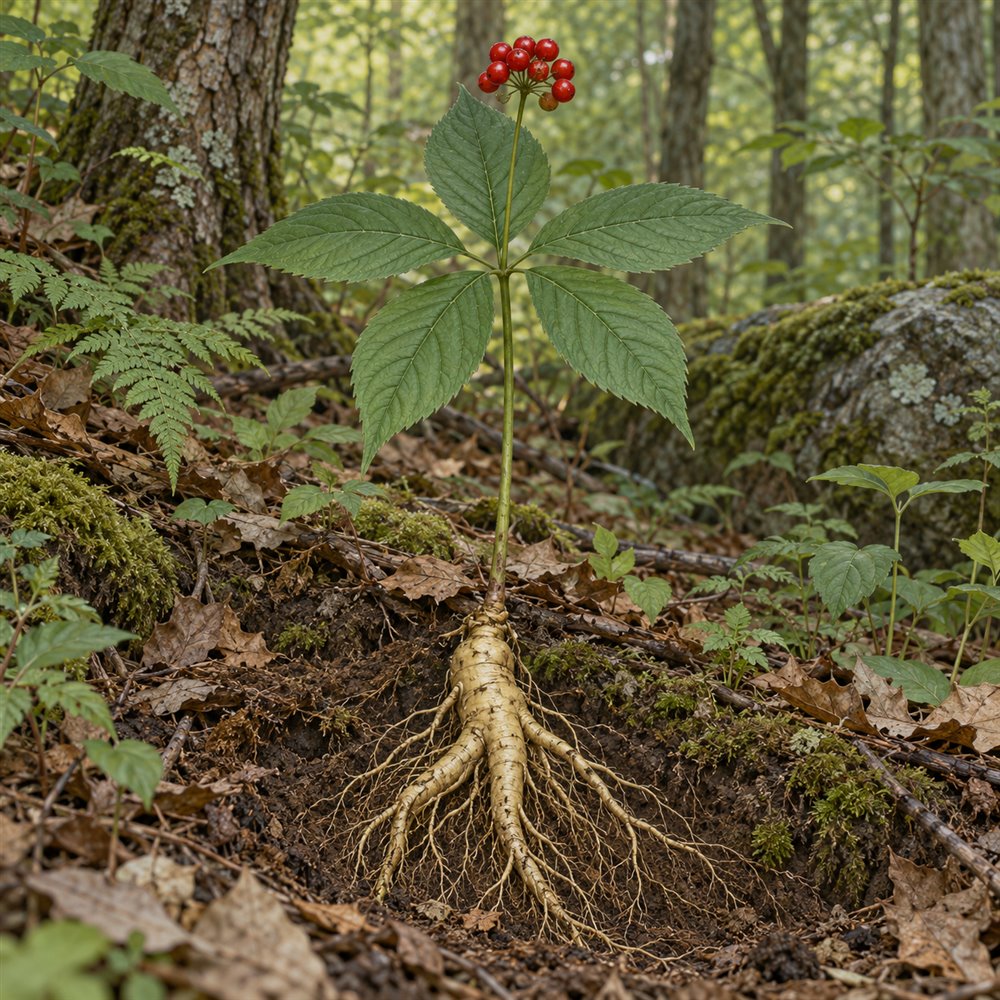
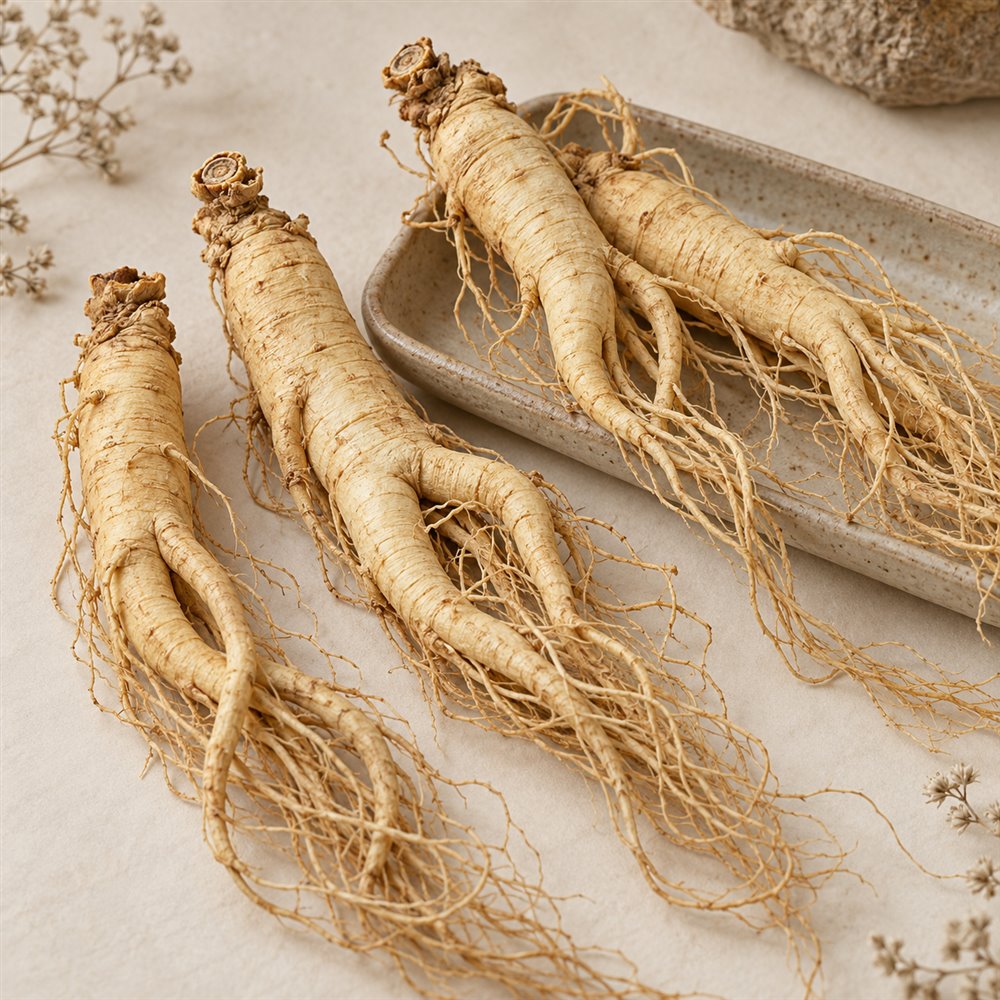
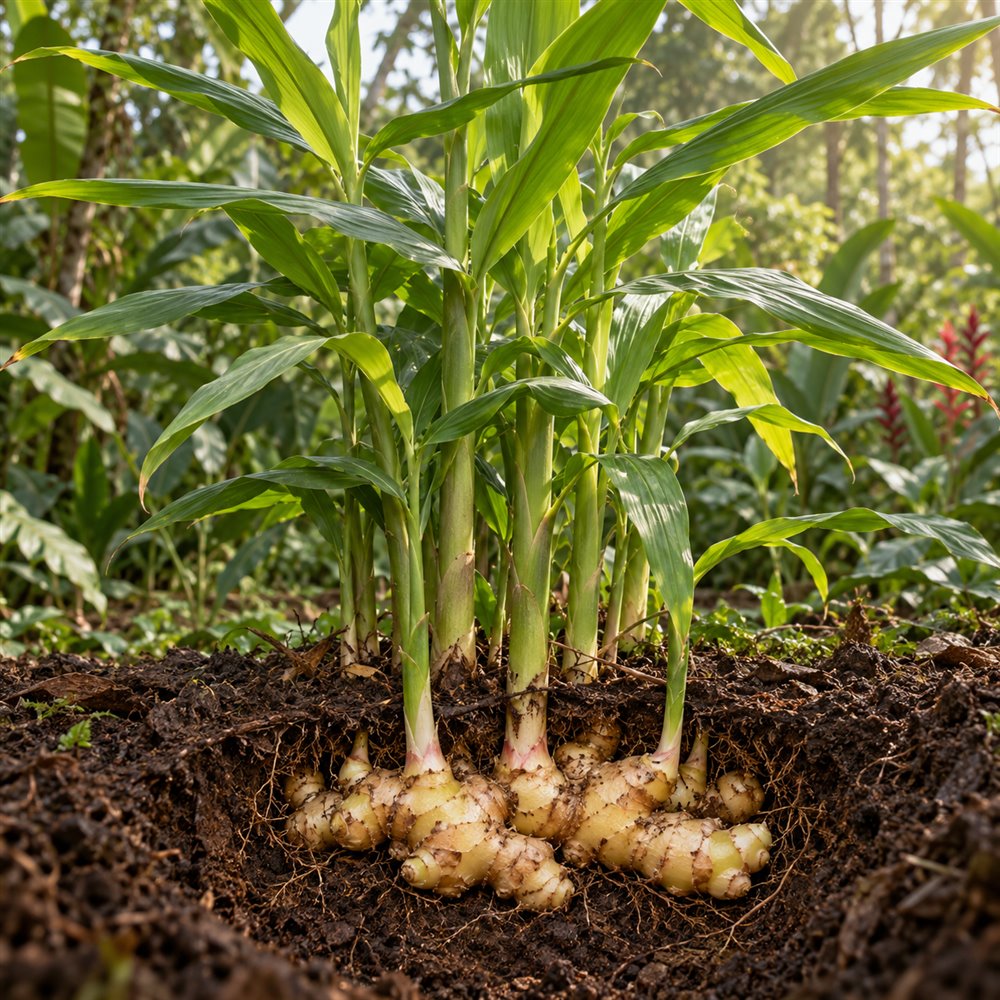
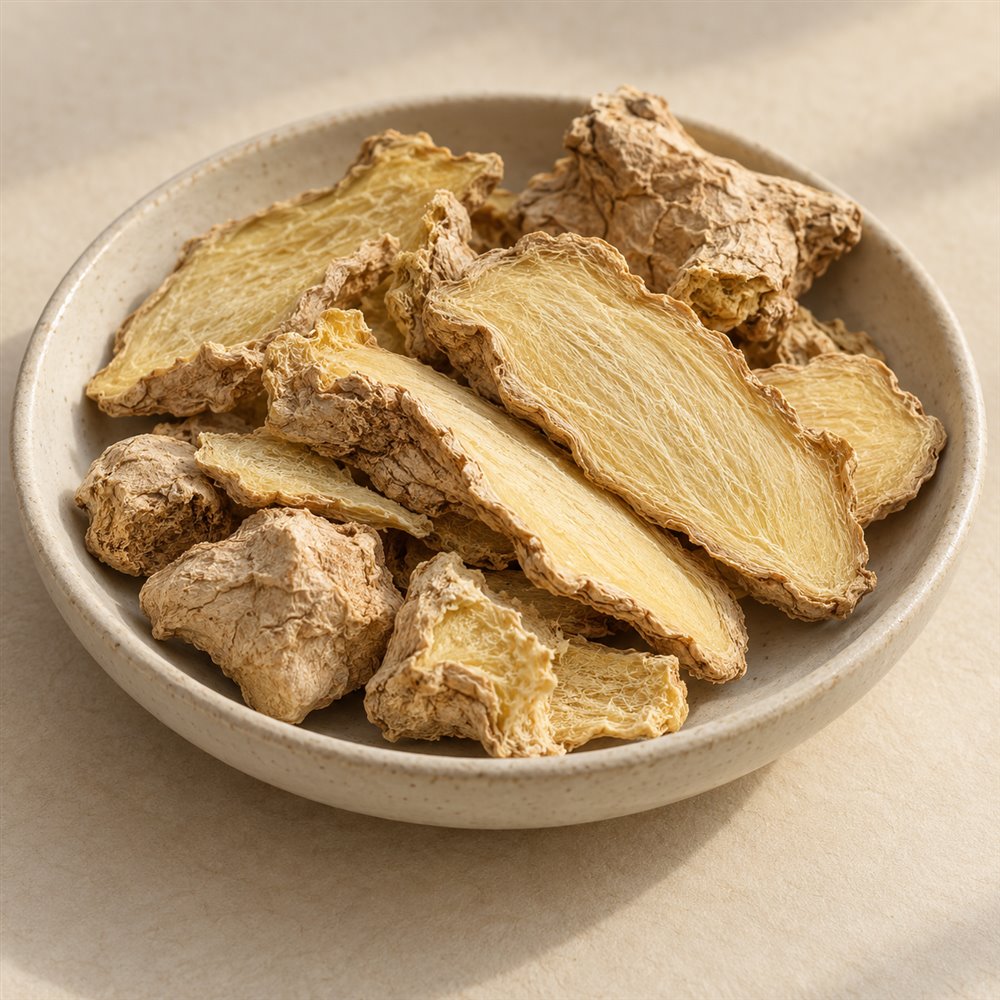
The images are AI-generated educational illustrations. They help with visual recall, but cannot verify a real plant or raw drug. Use the scientific name and linked source—not the illustration alone—when studying identity.
01 / 人參
Asian ginseng · Ren Shen
Panax ginseng C.A. Meyer · root
FROM PLANT TO DRIED MATERIAL · POST-HARVEST HANDLING
- Harvest cultivated roots when mature and due; lift carefully to preserve the branching root.
- Shake off soil and wash gently with clean water; do not scrub hard.
- Dry gradually with airflow and controlled heat; rotate trays so roots dry evenly.
- Cool, separate damp or damaged material, and record species, growing source, harvest date, and lot before dry storage.
These are educational handling steps, not directions to prepare a remedy for self-treatment. Processing source ↗
“Ren Shen” is the Chinese materia medica name commonly associated with Asian ginseng root. Keep it distinct from American ginseng (Panax quinquefolius), Siberian ginseng (Eleutherococcus senticosus), and products sold under broad “ginseng” labels. They are not botanical synonyms. A study record should capture species, root preparation, and product form before it summarizes traditional function.
Traditional texts place Ren Shen among qi-supporting substances. That classification explains how the herb is organized in the traditional system; it does not establish a biomedical effect for fatigue, diabetes, immunity, or any other diagnosis. NCCIH summarizes research on cognition and blood sugar as limited or inconclusive rather than a basis for replacing care.
Safety notes matter even in a learning atlas. Insomnia is a common reported side effect; ginseng may affect blood sugar and clotting. Evidence about warfarin interactions is mixed, and possible interactions with blood-pressure medicines, statins, and antidepressants remain uncertain. A formula containing Ren Shen is therefore a historical reference, not an automatic “safe tonic” for someone taking medicines. Read NCCIH’s Asian ginseng review ↗
02 / 生薑
Ginger · Sheng Jiang
Zingiber officinale Roscoe · fresh rhizome
FROM PLANT TO DRIED MATERIAL · POST-HARVEST HANDLING
- Lift mature cultivated rhizomes when foliage has aged and begins to die back; avoid bruising or cutting them.
- Remove loose soil, wash, trim stems and fine roots, and discard rotten, moldy, or badly bruised material.
- For dried material, slice evenly and dry in a single layer on clean, ventilated trays away from dirt and dust.
- Package only after fully cool and dry; label source and processing date and check for mold in storage.
These are educational handling steps, not directions to prepare a remedy for self-treatment. Processing source ↗
Ginger is both a familiar food and a materia medica substance. “Sheng Jiang” refers to fresh ginger in many formula references; dried ginger is a separate processed material with its own name and use. The difference is practical: drying, steaming, slicing, and storage change water content and chemical composition. A careful catalogue should not collapse fresh rhizome, dried rhizome, culinary tea, and concentrated supplement into one entry.
Traditional descriptions place fresh ginger in warming formula contexts and record it as a supporting ingredient in some prescriptions. The formula context is what the classical text says, not a recommendation to add ginger to treat a cough or fever. NCCIH notes that research on ginger for pregnancy-related nausea is suggestive, while safety is not certain in every case. For motion sickness, evidence is mixed.
Ginger can cause abdominal discomfort, heartburn, diarrhea, or gas. Whether concentrated ginger interacts with anticoagulants is not definitively established; NCCIH reports that concerns have been raised and that evidence is incomplete. Food use and supplement use are not equivalent exposures. If a record mentions a traditional combination, it should state the source and distinguish that record from a modern interaction study. Read NCCIH’s ginger review ↗
03 / 甘草
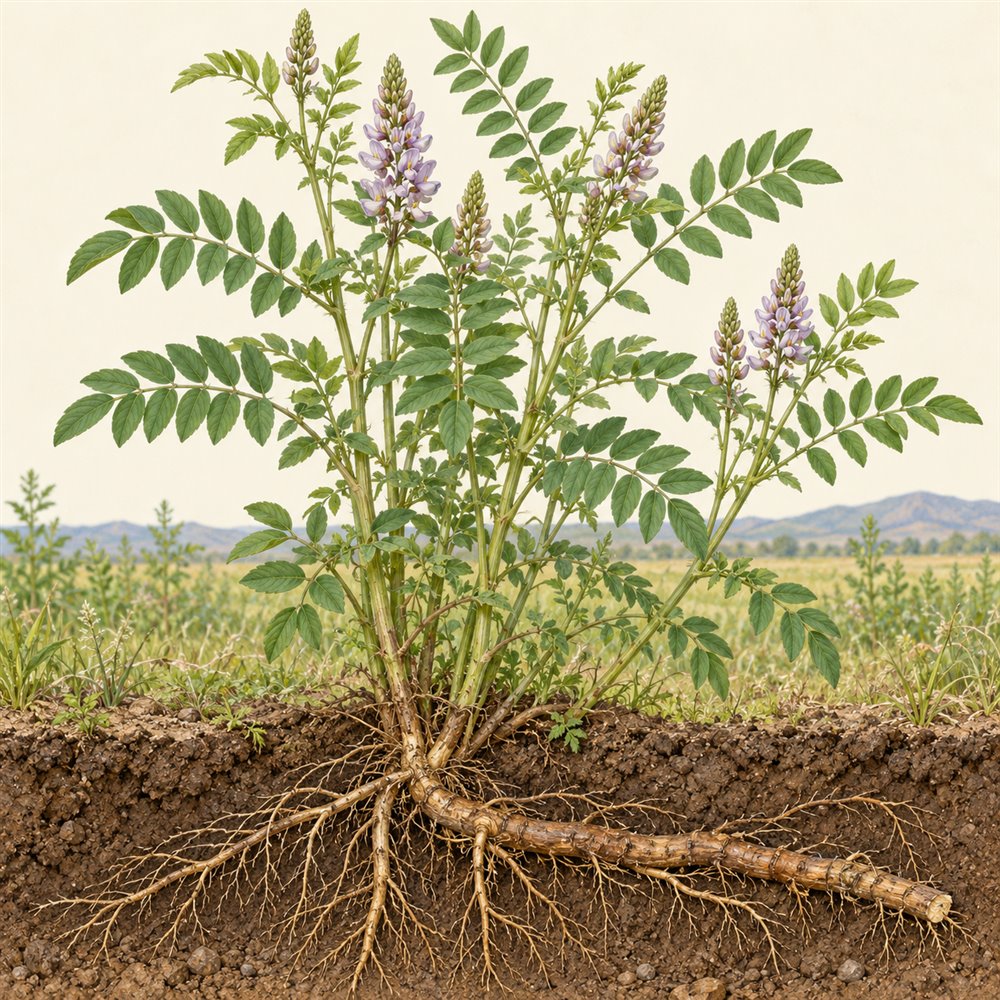
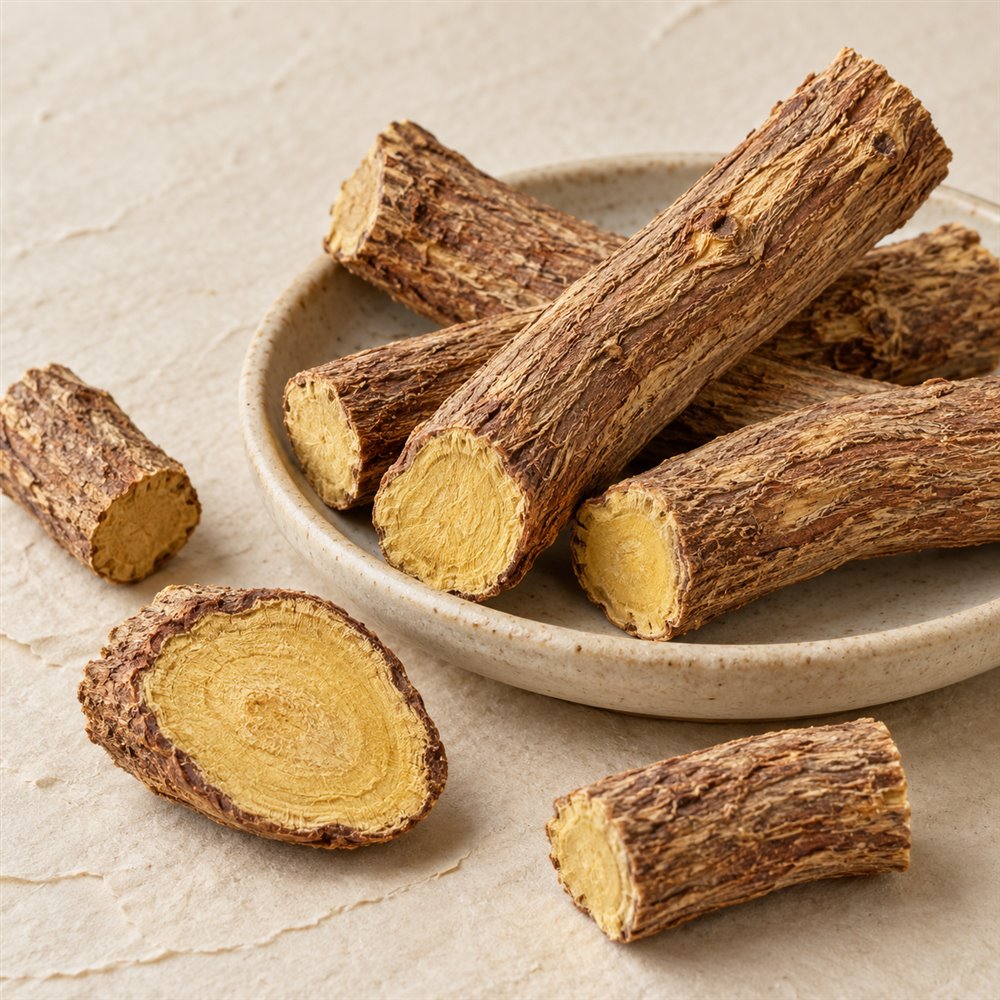
Chinese licorice · Gan Cao
Glycyrrhiza uralensis Fisch. · root and rhizome
FROM PLANT TO DRIED MATERIAL · POST-HARVEST HANDLING
- For cultivated plants, harvest roots after several years according to the region’s schedule and verify the Glycyrrhiza species.
- Shake off soil, wash gently, and remove debris or damaged roots; do not dig unidentified wild plants.
- Cut into pieces or slices under qualified procedures and dry evenly on clean trays away from moisture, smoke, or dust.
- Record Latin name, plant part, processing, source, and lot. Appearance cannot establish glycyrrhizin content.
These are educational handling steps, not directions to prepare a remedy for self-treatment. Processing source ↗
Gan Cao appears in many traditional formulas and is often described in classical explanations as harmonizing the other ingredients. That phrase belongs to formula theory; it should never be translated as “neutral,” “harmless,” or “safe with everything.” Species, processing, extraction, and glycyrrhizin content matter. “Licorice” can also refer to other Glycyrrhiza species or to deglycyrrhizinated products, so the source material should be named precisely.
The most concrete safety issue is glycyrrhizin. NCCIH reports that licorice products containing this compound can cause serious effects, including irregular heartbeat, particularly with high or prolonged intake. Even relatively small amounts have been associated with severe effects in people with high salt intake, hypertension, or heart or kidney conditions. Interactions with corticosteroids have also been reported.
This is a useful example of why a “pairing” database needs separate fields. A formula source may document Gan Cao beside several other herbs; that does not answer whether a person’s prescription medicine interacts with the final product. Record the traditional combination, the known medicine interaction, and the uncertainty around individual commercial products as separate statements. Read NCCIH’s licorice safety summary ↗
04 / 枸杞子
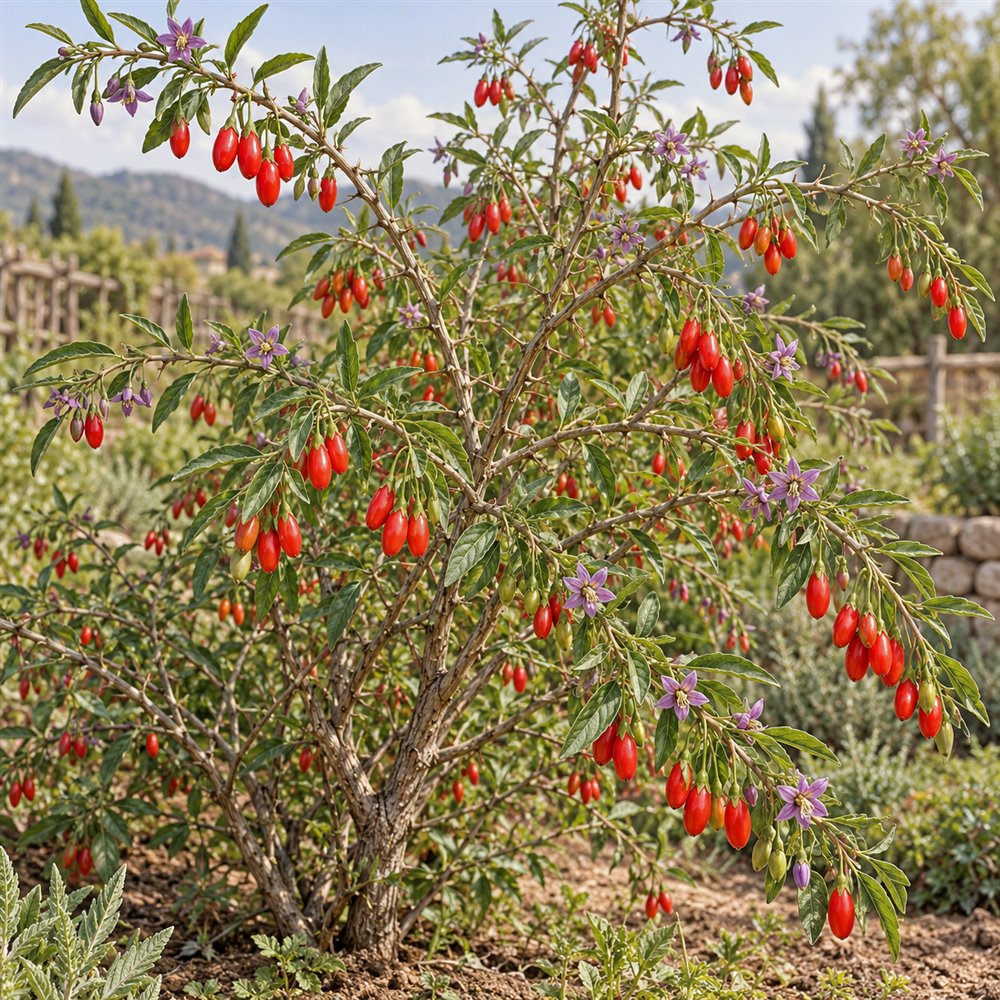
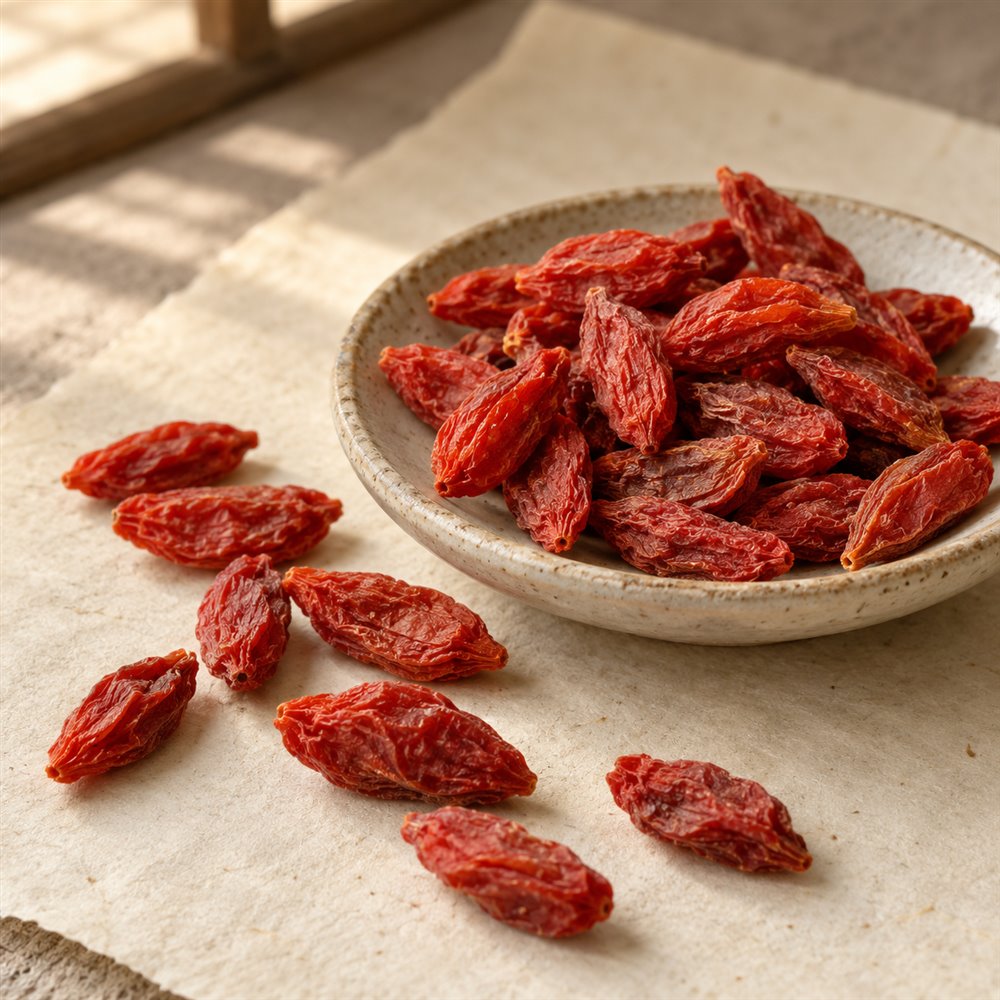
Goji berry · Gou Qi Zi
Lycium barbarum L. · fruit
FROM PLANT TO DRIED MATERIAL · POST-HARVEST HANDLING
- Harvest fruit when red or orange and loosening from the stem; discard bruised, fermenting, or moldy berries.
- Remove leaves, stems, and damaged fruit; if washed under the process, let the surface dry before dehydration.
- Spread thinly on clean trays and dry with airflow; minimize turning to reduce discoloration and finish drying under suitable conditions.
- Cool fully and store in dry packaging away from light and moisture; check odor, insects, and mold.
These are educational handling steps, not directions to prepare a remedy for self-treatment. Processing source ↗
Gou Qi Zi refers to the fruit used in food and traditional materia medica contexts. The fruit is commonly sold dried, but the market also includes juices, powders, extracts, and blended supplements. These are different products. A study entry should identify the botanical species, plant part, and product form rather than implying that evidence from one preparation applies to all of them.
Traditional descriptions often place the fruit in a nourishing context associated with liver and kidney theory. Those phrases help explain the classical classification; they do not mean the fruit has been shown to prevent or treat eye, liver, kidney, or metabolic disease. Contemporary product research varies by preparation and study design, so the evidence must be assessed product by product.
Food use is not the same as concentrated supplement use. People taking anticoagulants or medicines for chronic conditions should ask a clinician or pharmacist before adding concentrated products. The interaction information for many herbs is incomplete, and web pages frequently overstate certainty. For a learning site, “not enough evidence to determine” is a useful conclusion, not a weakness. Read Memorial Sloan Kettering’s goji berry monograph ↗
05 / 麻黃
Ephedra · Ma Huang
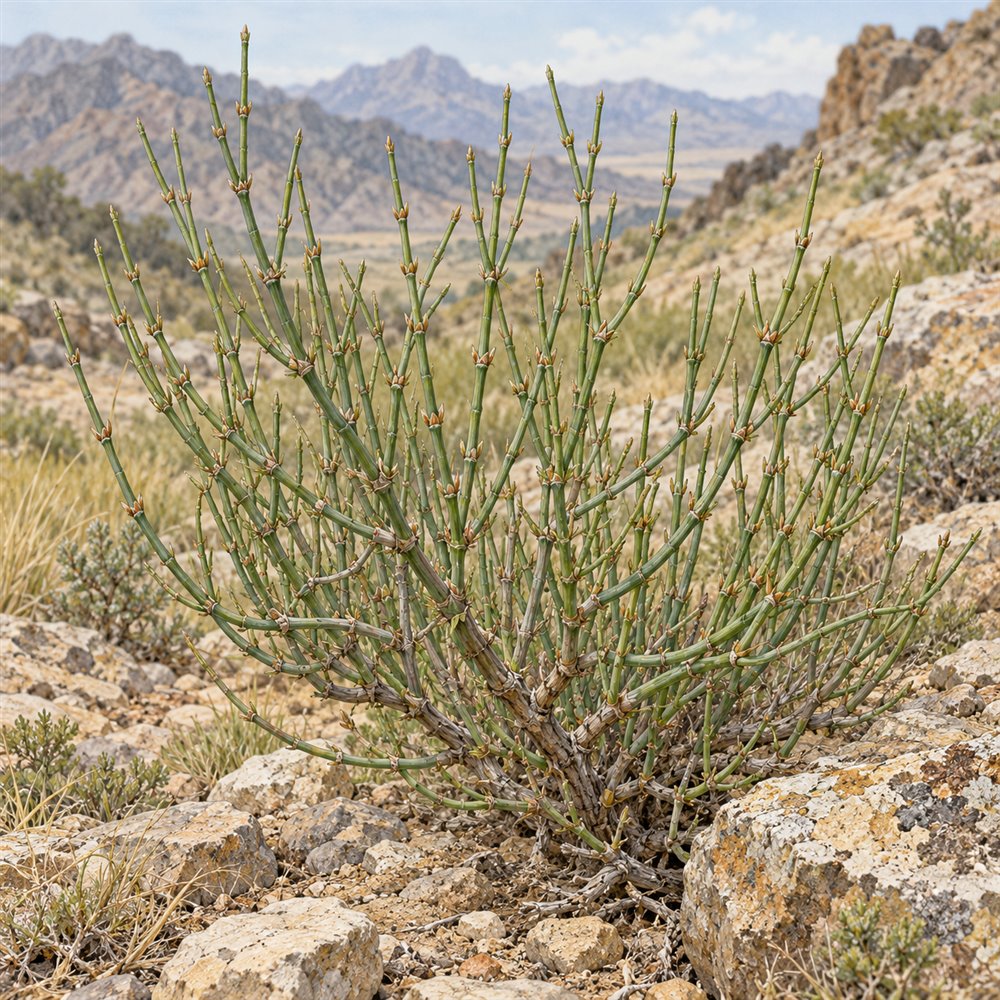
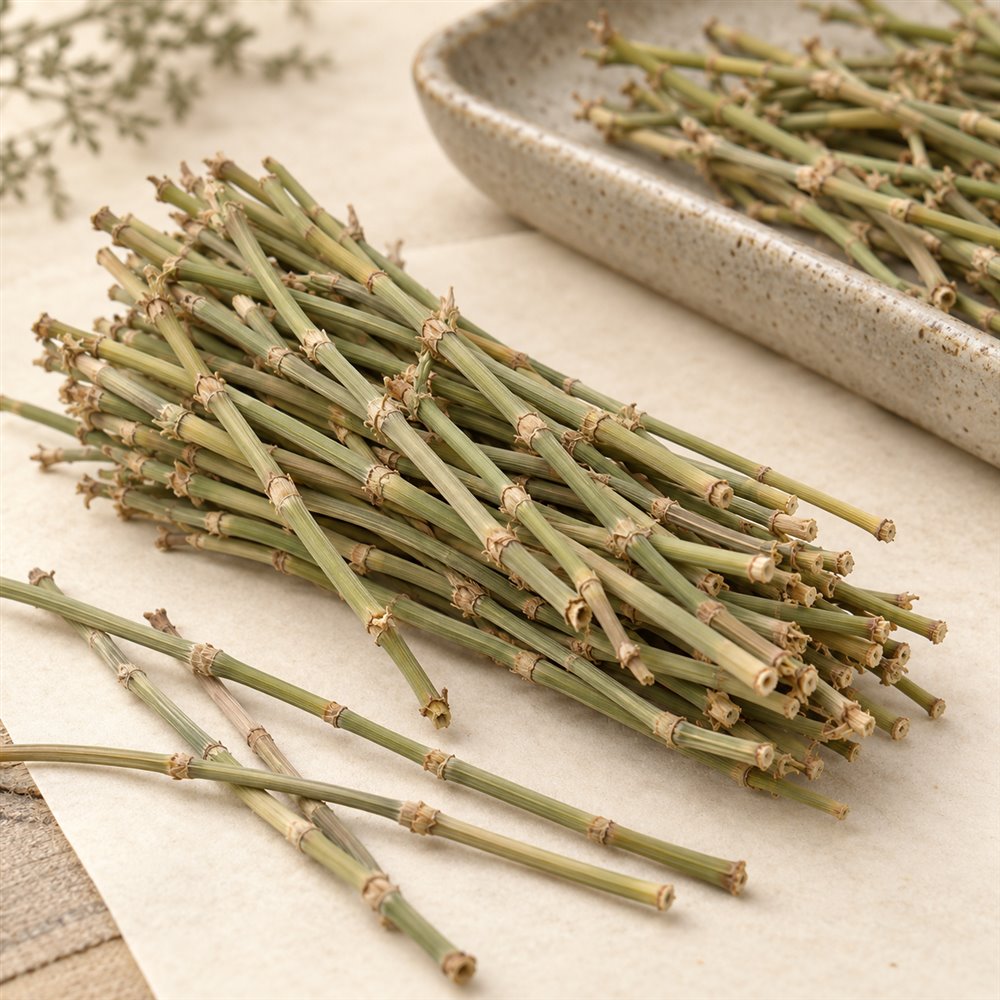
Ephedra sinica Stapf · stem and branch
FROM PLANT TO DRIED MATERIAL · POST-HARVEST HANDLING
- This profile covers controlled supply-chain handling only; it is not a guide to harvesting or preparing ephedra at home.
- Qualified specialists verify the Ephedra species and aerial stems; a trade name cannot establish alkaloid content.
- Clean, sort, dry, and test under applicable materia medica standards and local rules, with traceable lots.
- Do not decoct, extract, or combine for self-use. NCCIH reports serious cardiovascular and neurologic risks; FDA prohibits ephedrine alkaloids in U.S. dietary supplements.
These are educational handling steps, not directions to prepare a remedy for self-treatment. Processing source ↗
Ma Huang is important to study because classical use and modern product safety must be discussed together. The medicinal material is associated with the jointed green stems of Ephedra species, not a generic leafy shrub. Species identity and alkaloid content are central details; a name printed on a label is not proof that an unknown sample is correctly identified or chemically consistent.
NCCIH reports that ephedra has been linked—even with relatively low doses and short-term use—to high blood pressure, heart attack, seizure, stroke, and psychosis. The FDA banned dietary supplements containing ephedrine alkaloids in the United States in 2004. This page therefore treats Ma Huang as a high-caution educational entry and does not offer it as a weight-loss or self-care option.
Some classical formulas contain Ma Huang, but listing a historical formula is not permission to prepare or use it. The formula’s original context, processing, diagnosis, and supervision cannot be reconstructed from an ingredient list. In this atlas, the safety warning is more prominent than any traditional indication. Read NCCIH’s ephedra review ↗ · FDA rule summary ↗
The paired study images show two forms for comparison. Use scientific nomenclature and source records for reference; do not identify real specimens from the image alone.
黃芪 · Huang Qi
Astragalus root · Huang Qi
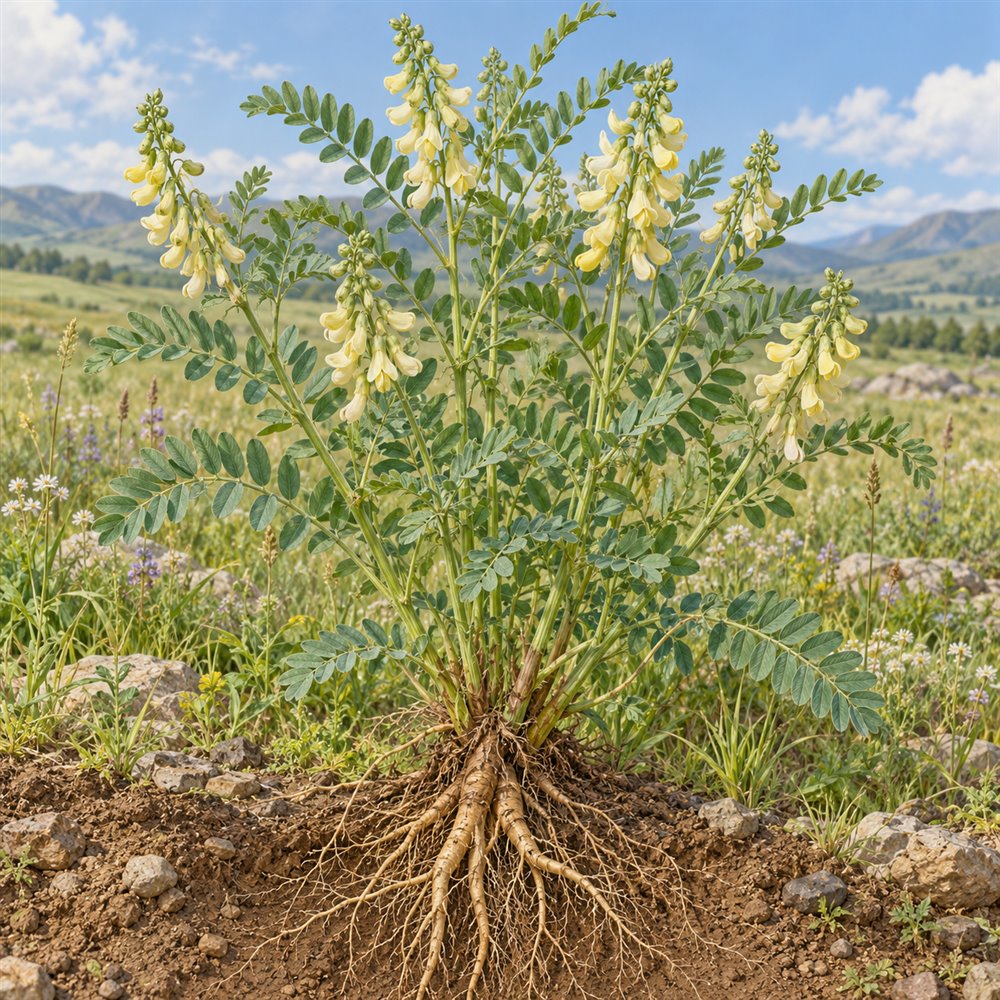
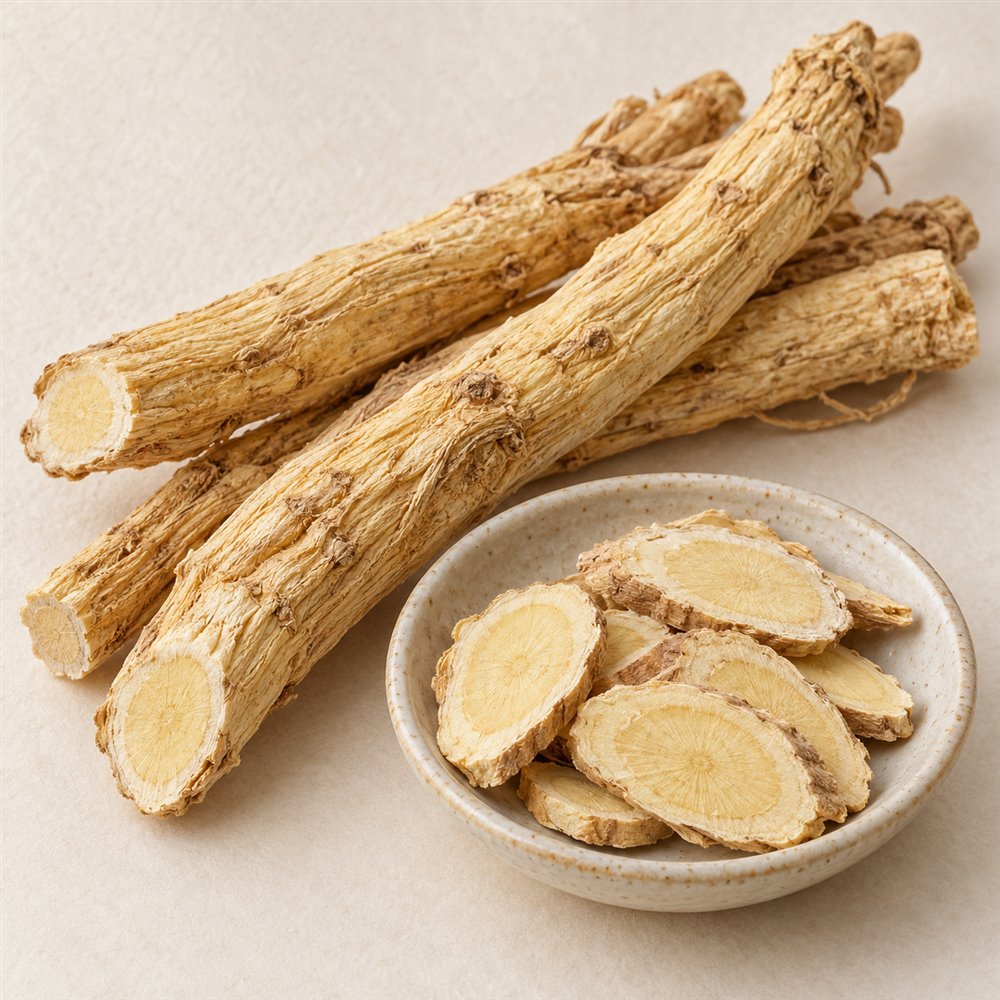
Astragalus membranaceus (Fisch.) Bunge · Root
Name and part used
Astragalus root; the living plant is a legume with pinnate leaves and pea-like flowers.
Traditional context
Huang Qi refers to specified Astragalus species in materia medica sources; do not generalize the name to every species in the genus.
Modern evidence
Studies differ by Astragalus species, extract, and product quality; traditional descriptions do not establish treatment efficacy.
Safety
It may be unsuitable with some autoimmune conditions or immune-modulating medicines; interaction data are limited. Ask a clinician during treatment.
Pairing in reference texts
Appears in many classical formulas; no specific toxic pairing is labeled here without reliable evidence for the exact species and product.
FROM PLANT / SOURCE HABITAT TO DRIED MATERIAL · REFERENCE HANDLING
- Harvest cultivated roots on the production region’s schedule; HKBU describes Huang Qi as dried root, typically long and cylindrical with a pale yellow cut surface.
- Shake off soil and remove debris or damaged portions; do not combine different Astragalus species under one label.
- Slice or retain whole according to a qualified processing standard and dry evenly on clean surfaces.
- Cool, lot, and label species, growing region, and processing date; check for moisture or mold before packaging.
These steps describe post-harvest handling for study; they are not directions for self-medication. Processing reference ↗
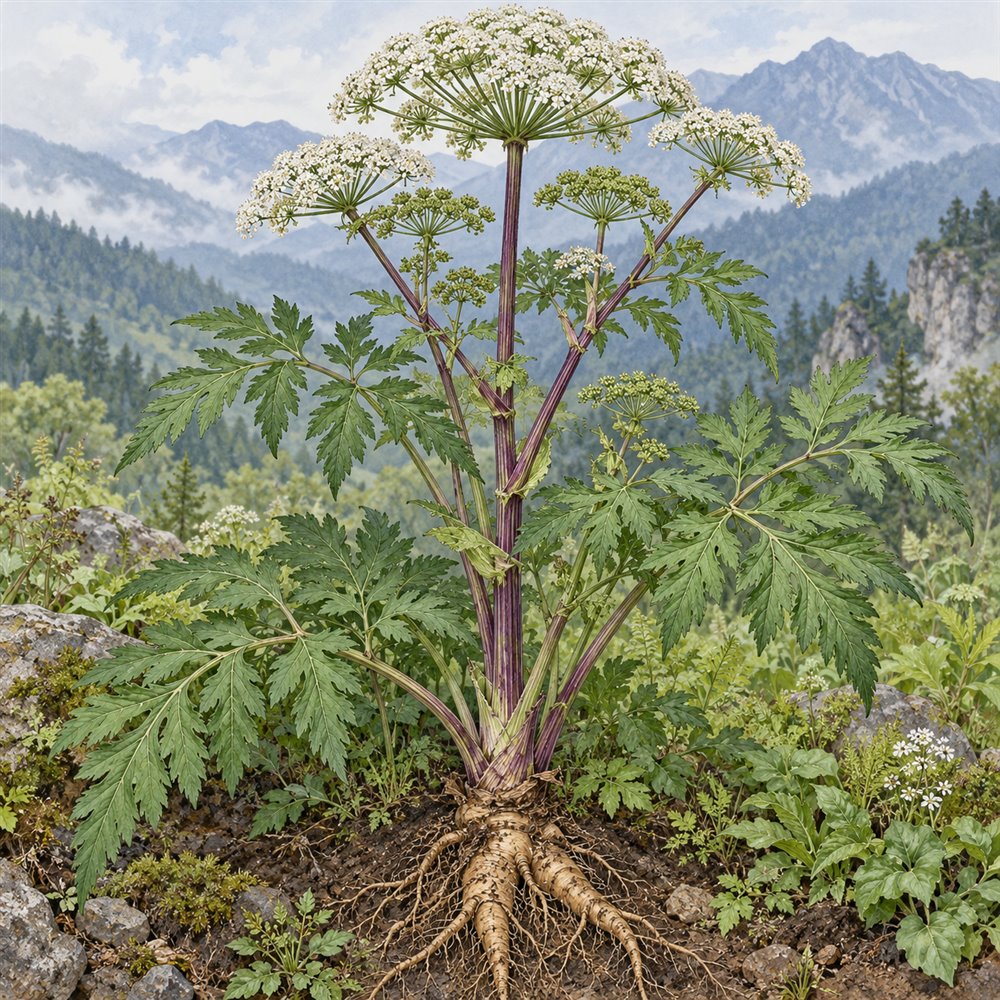
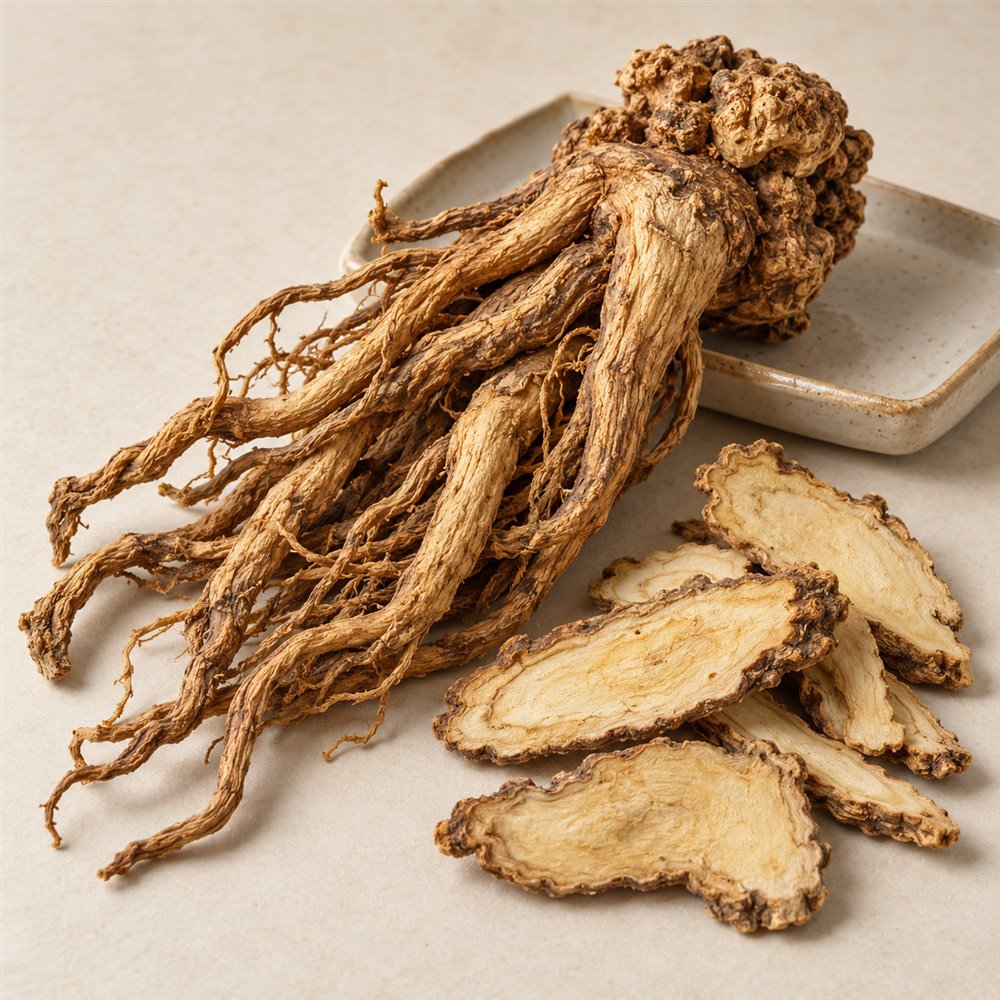
The paired study images show two forms for comparison. Use scientific nomenclature and source records for reference; do not identify real specimens from the image alone.
當歸 · Dang Gui
Chinese angelica · Dang Gui
Angelica sinensis (Oliv.) Diels · Root
Name and part used
An Apiaceae herb with a grooved purplish stem, finely divided leaves, and white umbels.
Traditional context
HKBU identifies Dang Gui as the root of Angelica sinensis. Distinguish it from other Angelica species and mixed commercial products.
Modern evidence
Research on Dang Gui products and preparations is heterogeneous; traditional use is not proof of efficacy for anemia or menstrual disorders.
Safety
It may affect clotting or interact with medicines; pregnancy, surgery, and combination products require professional review.
Pairing in reference texts
Appears in formulas such as Xiao Yao San and Gui Pi Tang in specific sources. Co-inclusion does not establish individual safety.
FROM PLANT / SOURCE HABITAT TO DRIED MATERIAL · REFERENCE HANDLING
- Harvest Angelica sinensis roots in late autumn as described in the HKBU record; keep them separate from other Angelica species.
- Remove soil and fine roots and let surface moisture drain; reject material with uncertain identity or source.
- Qualified processing may steam the roots and then sun-dry or use low-temperature drying; this is raw-material handling, not a home medicine recipe.
- Record Latin name, plant part, processing method, and lot; store dry and monitor quality.
These steps describe post-harvest handling for study; they are not directions for self-medication. Processing reference ↗
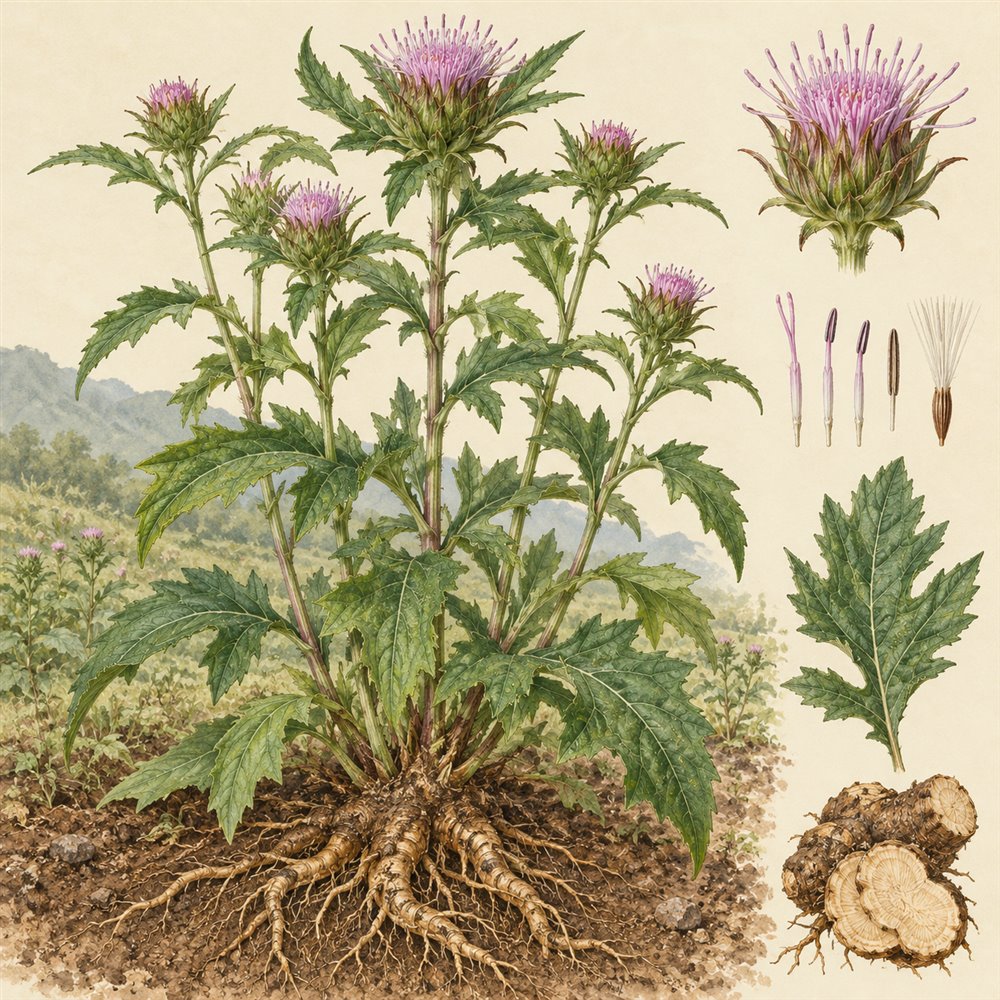
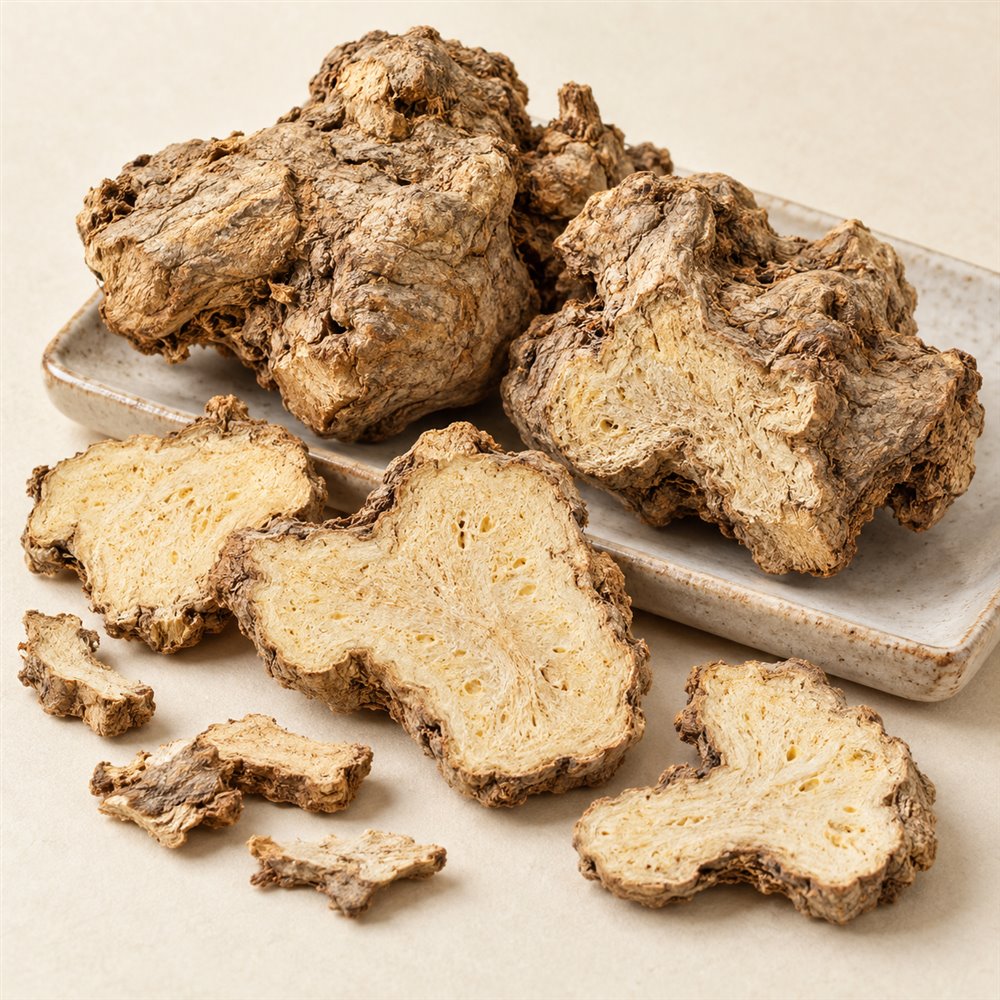
The paired study images show two forms for comparison. Use scientific nomenclature and source records for reference; do not identify real specimens from the image alone.
白朮 · Bai Zhu
Largehead atractylodes · Bai Zhu
Atractylodes macrocephala Koidz. · Rhizome
Name and part used
An Asteraceae herb with lobed leaves and pink-purple flower heads; the materia medica is its thick rhizome.
Traditional context
Bai Zhu is the rhizome of Atractylodes macrocephala in HKBU records; do not confuse it with Cang Zhu, a distinct materia medica.
Modern evidence
HKBU provides identity and material-form references; clinical evidence varies by formula and product, so traditional functions are not established treatment outcomes.
Safety
Herb-specific safety data are limited; review concurrent medicines, pregnancy, and multi-ingredient products with a clinician or pharmacist.
Pairing in reference texts
Listed in classical formulas such as Xiao Yao San and Gui Pi Tang. This is a textual reference, not a self-mixing recommendation.
FROM PLANT / SOURCE HABITAT TO DRIED MATERIAL · REFERENCE HANDLING
- Harvest the rhizome after above-ground growth has withered, following the growing region’s schedule; HKBU describes late-autumn harvest.
- Lift gently, shake off soil, trim stems and fine roots, and discard rotten or insect-damaged material.
- Wash under an appropriate procedure, slice when required, and dry in a controlled manner; specialist references also describe extended sun drying.
- Label Atractylodes macrocephala explicitly to prevent confusion with Cang Zhu; keep dry, ventilated, and lot-traceable.
These steps describe post-harvest handling for study; they are not directions for self-medication. Processing reference ↗
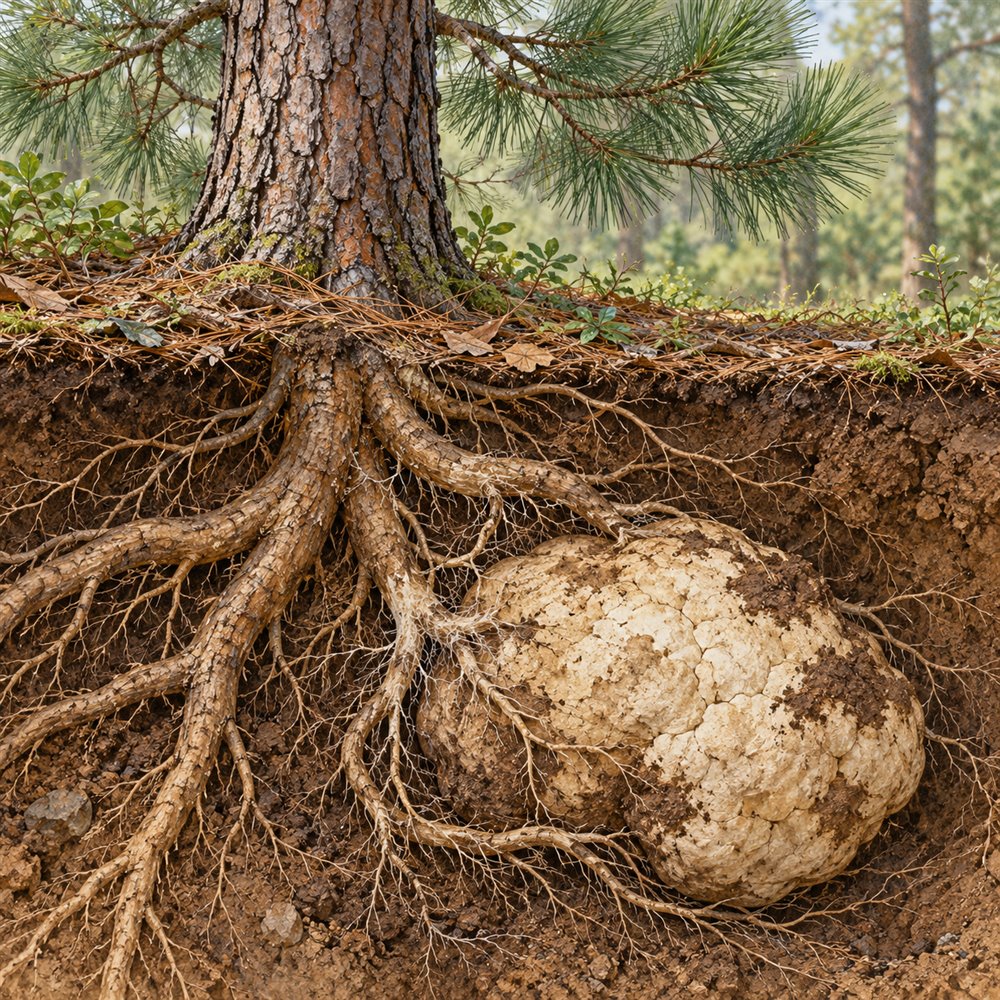
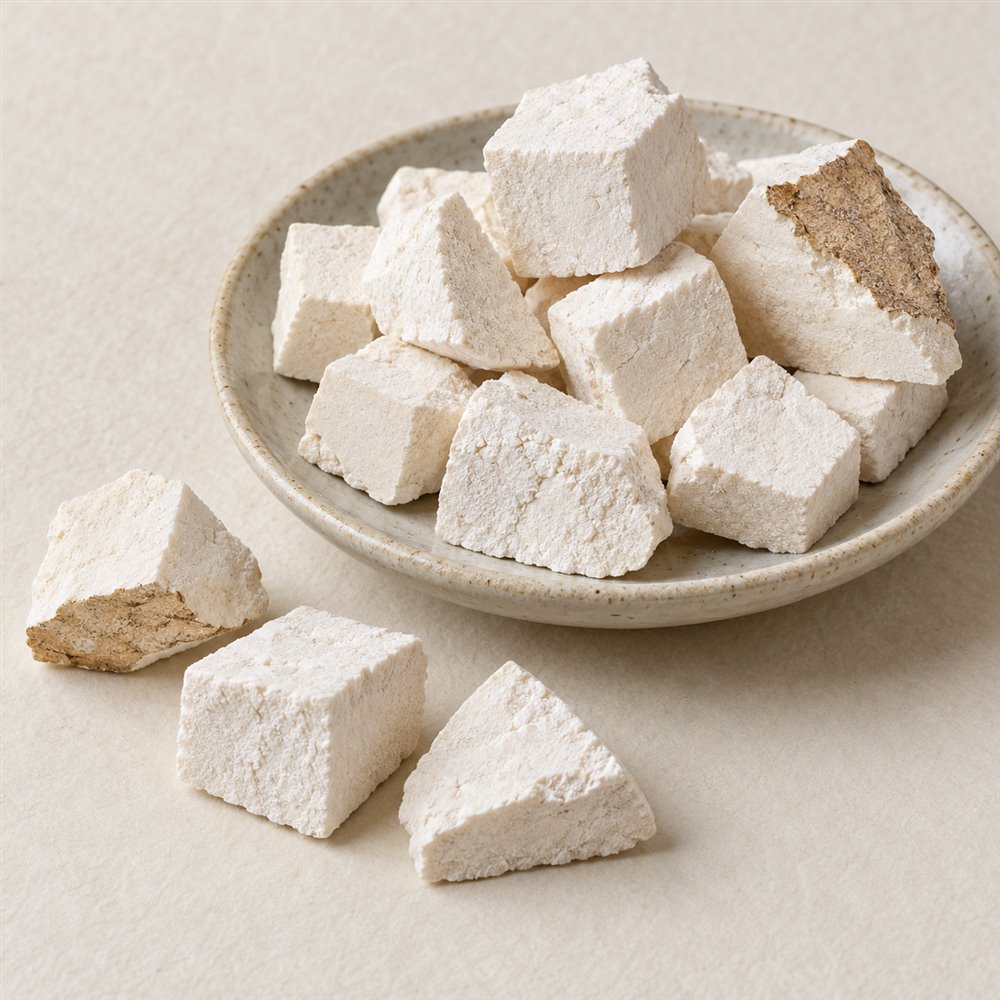
The paired study images show two forms for comparison. Use scientific nomenclature and source records for reference; do not identify real specimens from the image alone.
茯苓 · Fu Ling
Poria · Fu Ling
Wolfiporia extensa (syn. Poria cocos) · Fungal sclerotium
Name and part used
Poria is a subterranean fungal sclerotium associated with pine roots, not a plant root or tuber.
Traditional context
HKBU records Poria from Poria cocos; modern literature may use Wolfiporia extensa. It is a fungal body, not a pine plant part.
Modern evidence
Composition and drying process can change material properties; research does not establish that a commercial product treats disease.
Safety
Do not dig wild fungal material for use: identification and contamination control require expertise. Interaction evidence may be incomplete.
Pairing in reference texts
Poria appears in many classical formulas, including entries catalogued by HKBU. Ingredient records do not establish universal safety.
FROM PLANT / SOURCE HABITAT TO DRIED MATERIAL · REFERENCE HANDLING
- Poria is a subterranean fungal body; harvesting and identification require mycology expertise and a controlled supply chain—do not dig wild material yourself.
- Remove soil and foreign matter under an appropriate procedure and separate fungal material according to qualified materia medica standards.
- Cut into pieces or slices under a professional standard, dry evenly, and control moisture to prevent spoilage.
- Record the scientific name used (Poria cocos/Wolfiporia extensa), source, processing date, and lot; store dry and pest-protected.
These steps describe post-harvest handling for study; they are not directions for self-medication. Processing reference ↗
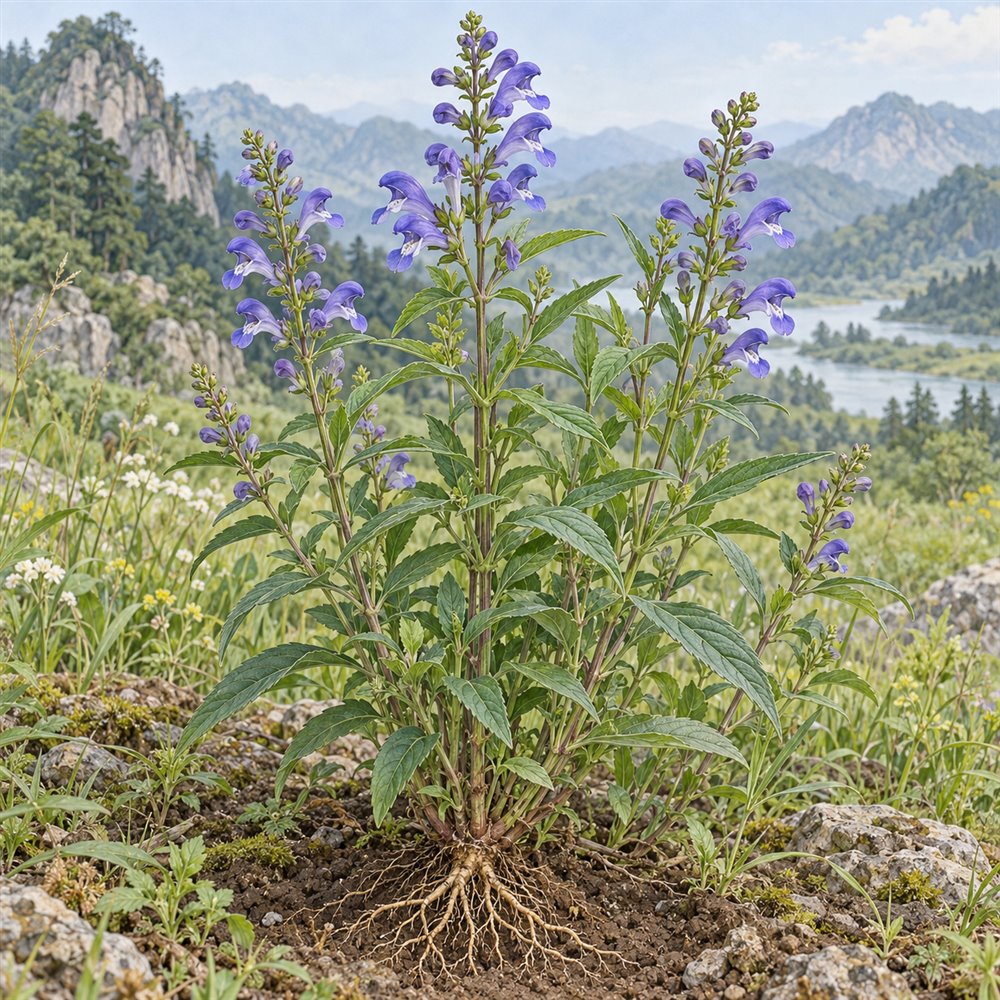
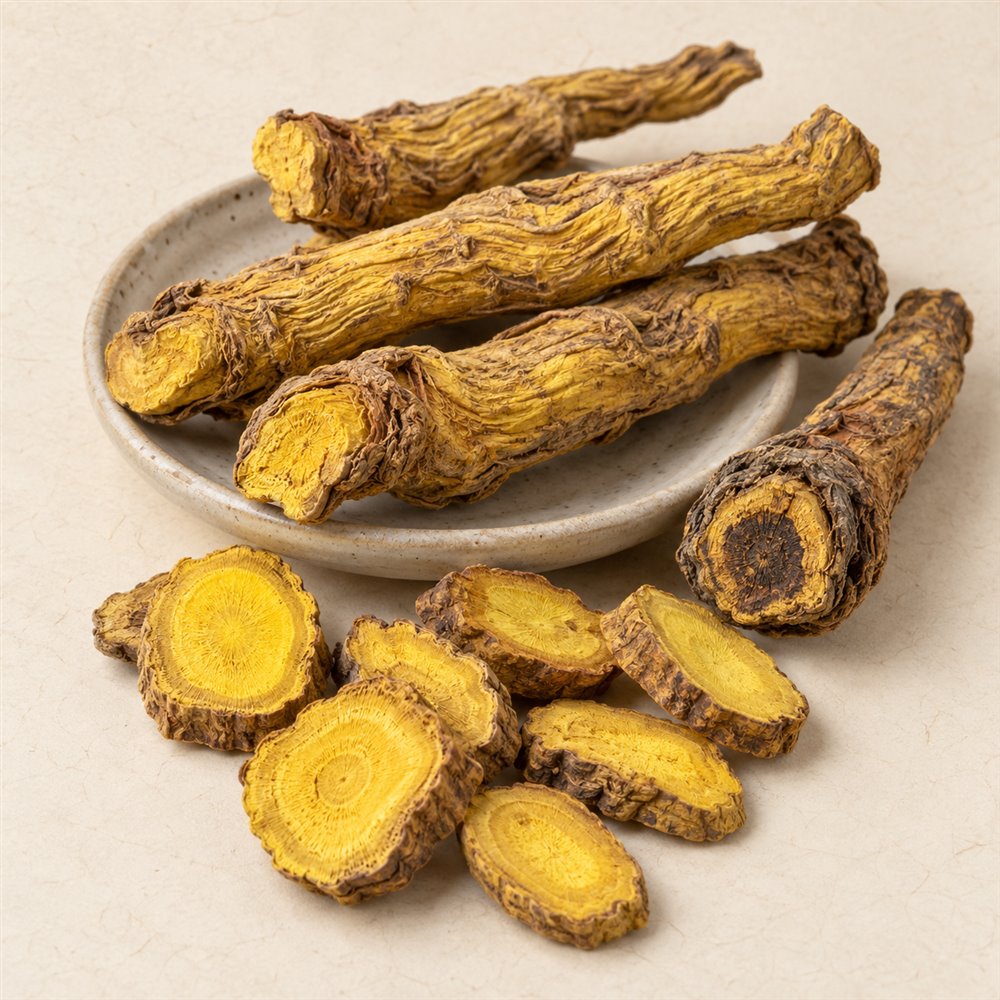
The paired study images show two forms for comparison. Use scientific nomenclature and source records for reference; do not identify real specimens from the image alone.
黃芩 · Huang Qin
Baikal skullcap · Huang Qin
Scutellaria baicalensis Georgi · Root
Name and part used
A Lamiaceae herb with opposite leaves and blue-violet hooded flowers; the materia medica is its yellow root.
Traditional context
Huang Qin refers to the root of Scutellaria baicalensis in HKBU records; do not confuse it with other skullcap species or blends.
Modern evidence
Studies of baicalin/baicalein, extracts, and whole herb are different evidence types; results for one compound cannot be generalized to every preparation.
Safety
Skullcap products have reported adverse effects and interactions; common names can refer to different species. Verify identity and consult a professional.
Pairing in reference texts
It appears in traditional formula references. Common names alone are insufficient to label a pairing safe or toxic.
FROM PLANT / SOURCE HABITAT TO DRIED MATERIAL · REFERENCE HANDLING
- HKBU describes harvesting Huang Qin roots after several years of cultivation, in autumn after the stems and leaves wither.
- Lift the root, trim the stem near the crown, remove soil and damaged material, and verify Scutellaria baicalensis.
- Partially dry and remove outer bark under the materia medica processing procedure; continue drying until the required condition is reached.
- The reference distinguishes young yellow roots from older roots with darker centers; color alone cannot identify a real specimen.
These steps describe post-harvest handling for study; they are not directions for self-medication. Processing reference ↗
READING CLASSICAL FORMULAS
Three formulas, three study questions.
The notes below focus on composition and textual context. They do not claim that a formula treats a modern disease, and they do not provide preparation instructions or doses.
Xiao Yao San · 逍遙散
Memorial Sloan Kettering describes Xiao Yao San as an eight-herb formula, naming Chai Hu, Dang Gui, Bai Shao, Bai Zhu, Fu Ling, Sheng Jiang, Bo He, and Gan Cao. The Hong Kong Baptist University formula database documents the classical source and explains the roles attributed to the ingredients in traditional formula theory. The comparison itself is educational: it shows why a formula should be cited to a particular text or edition, because ingredient lists and later modifications may differ. A report of traditional use is not evidence of proven treatment. MSK notes possible side effects and advises people to discuss formulas with their healthcare providers, especially when hormone-sensitive breast cancer is relevant. MSK monograph ↗ · HKBU formula record ↗
Liu Wei Di Huang Wan · 六味地黃丸
The name means “six-ingredient Rehmannia pill.” HKBU records six substances: prepared Rehmannia, Cornus fruit, Dioscorea rhizome, Poria, Moutan bark, and Alisma rhizome. The entry describes its traditional place in pattern-based practice and notes that it is not suitable for every presentation. Memorial Sloan Kettering reviews this formula from an integrative oncology perspective and lists ingredient-level and product-level considerations. A modern commercial product may differ from a historical decoction or pill in processing, ratios, quality control, and directions. Do not infer a treatment effect for diabetes, blood pressure, or kidney disease from the existence of clinical papers or traditional use. HKBU formula record ↗ · MSK monograph ↗
Gui Pi Tang · 歸脾湯
The Chengdu University of Traditional Chinese Medicine formula database documents Gui Pi Tang with ten named herbs, including Ren Shen, Huang Qi, Bai Zhu, Fu Ling, Long Yan Rou, Suan Zao Ren, Yuan Zhi, Dang Gui, Mu Xiang, and Gan Cao. Other lineages and editions may order or name ingredients differently. This makes Gui Pi Tang a good case study for version control: cite the source, preserve its exact spelling, and state whether you are describing the classical text, a later modification, a commercial product, or a research preparation. Traditional category labels such as “qi and blood tonic” describe a school of interpretation; they are not a diagnosis or an instruction to take the formula for insomnia, appetite, anemia, or fatigue. CDUTCM formula record ↗
慎
AN EDITORIAL STANDARD
Specific sources.
Careful language.
Future entries should state what the source actually supports, identify uncertainty, and avoid turning traditional symptom lists into modern treatment promises. “Traditionally used for” and “shown in a clinical trial to” are different claims. When safety data are missing, say so. When a serious risk is known, place it where a learner will see it before the historical discussion.
Return to the interactive study room ↗