Ginkgo seed · Bai Guo
Ginkgo biloba L. · Cleaned mature seed
Name and part used
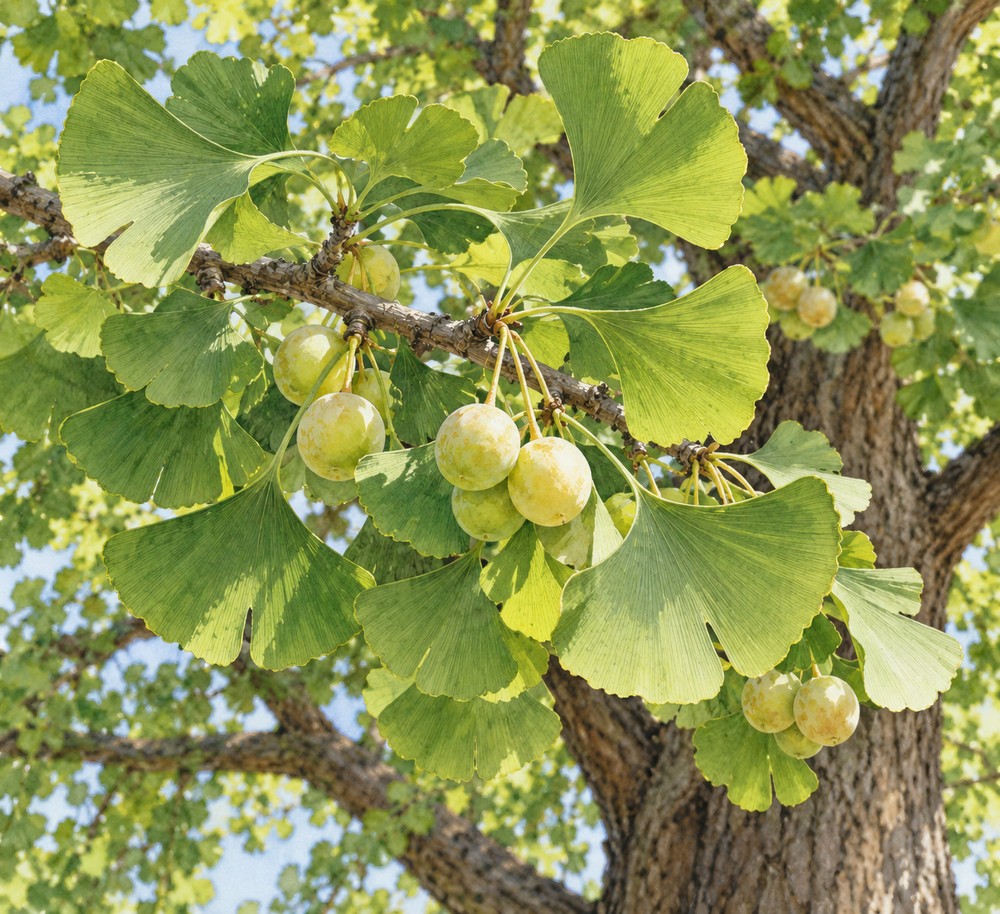
An ancient tree with fan-shaped bilobed leaves and yellow fleshy seed coats; the edible kernel requires careful cleaning and processing.
Traditional context
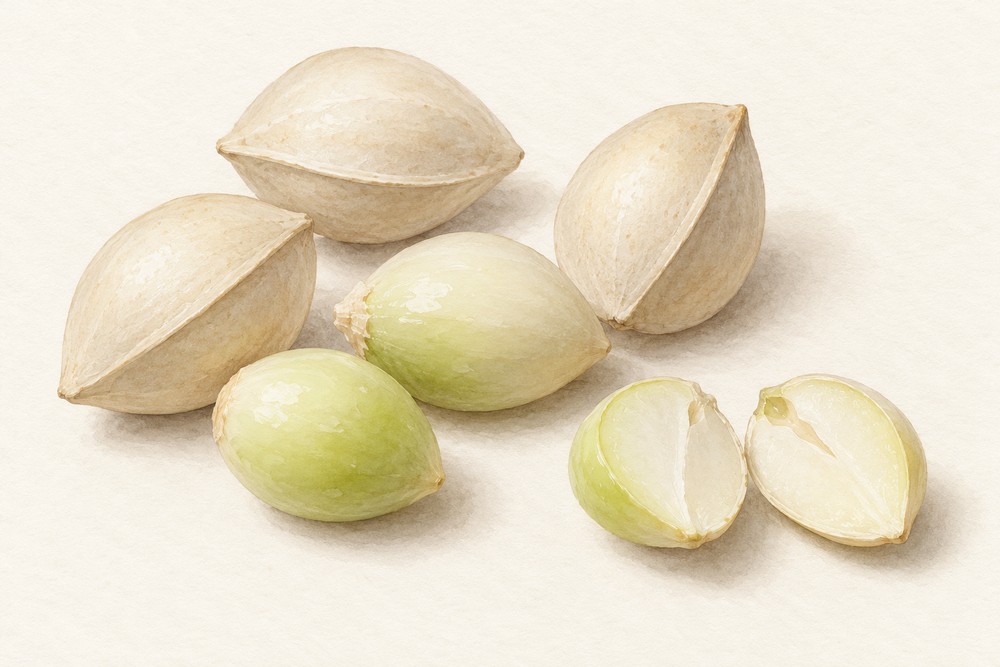
Medicinal Bai Guo is Ginkgo biloba seed, not its leaf. The fleshy outer seed coat can irritate; male and female trees differ in fruiting. The illustration shows kernels after removal of the outer coat.
Modern evidence
Lung-astringing and asthma-calming are traditional claims. Seeds contain potentially toxic compounds; do not consume large amounts or treat asthma with them.
Safety
Raw or undercooked seeds can cause seizures and poisoning; children are at particular risk. Never eat them raw, avoid large amounts, and seek professional advice.
Pairing in reference texts
It appears with Ephedra or Perilla seed in some historical formulas, but this does not establish safety for asthma or compatibility with anti-seizure medicines.
Growing, care, and harvest timing
HKBU habitat record: Growing in natural forests of acidic soil and good drainage at altitude 500-1,000m. Can be cultivated. Distributed in most of the country. The medicinal materials are mainly produced in Guangxi, Sichuan, Henan, Shandong, Hubei, Liaoning and other provinces Harvest and processing as recorded: Seeds: collected in autumn when seeds become mature; after pulp seed coat removed, well washed, slightly steamed or stewed, then baked to dry. Leaves: collected in autumn, sun-dried after foreign matters removed
Source-recorded harvest/processing: Seeds: collected in autumn when seeds become mature; after pulp seed coat removed, well washed, slightly steamed or stewed, then baked to dry. Leaves: collected in autumn, sun-dried after foreign matters removed
The reviewed source does not provide a complete species-specific sowing/growing routine, irrigation/fertilization schedule, or universal plant age. The page therefore does not infer care instructions or years to harvest; consult local cultivation guidance.
Open habitat and season source ↗FROM PLANT / SOURCE HABITAT TO DRIED MATERIAL · REFERENCE WORKFLOW
- Harvest mature fruit in autumn from verified Ginkgo biloba; use protective handling because the fleshy coat can cause dermatitis.
- Remove the fleshy outer coat and wash kernels at a facility; cleaning does not eliminate all kernel toxins.
- HKBU describes light steaming or stewing followed by drying. This controlled process does not make unrestricted consumption safe.
- Test quality and follow applicable limits; label poisoning warnings, especially risk to children.
These are post-harvest study notes, not directions to prepare a remedy for self-treatment. Processing reference ↗
How to read formula amounts
The cited sources do not provide a formula with specific amounts for this profile; no ratio is invented. Absence from the incompatibility list does not establish safety.
Habitat, season, and harvest in the HKBU botanical record
HKBU botanical record (translated summary): Flowering and fruiting dates: Flowering: March to April, seeds mature: September to October Habitat and distribution: Growing in natural forests of acidic soil and good drainage at altitude 500-1,000m. Can be cultivated. Distributed in most of the country. The medicinal materials are mainly produced in Guangxi, Sichuan, Henan, Shandong, Hubei, Liaoning and other provinces Harvest and processing as recorded: Seeds: collected in autumn when seeds become mature; after pulp seed coat removed, well washed, slightly steamed or stewed, then baked to dry. Leaves: collected in autumn, sun-dried after foreign matters removed
Open botanical source ↗