Cogongrass rhizome · Bai Mao Gen
Imperata cylindrica (L.) P. Beauv. · Rhizome
Name and part used
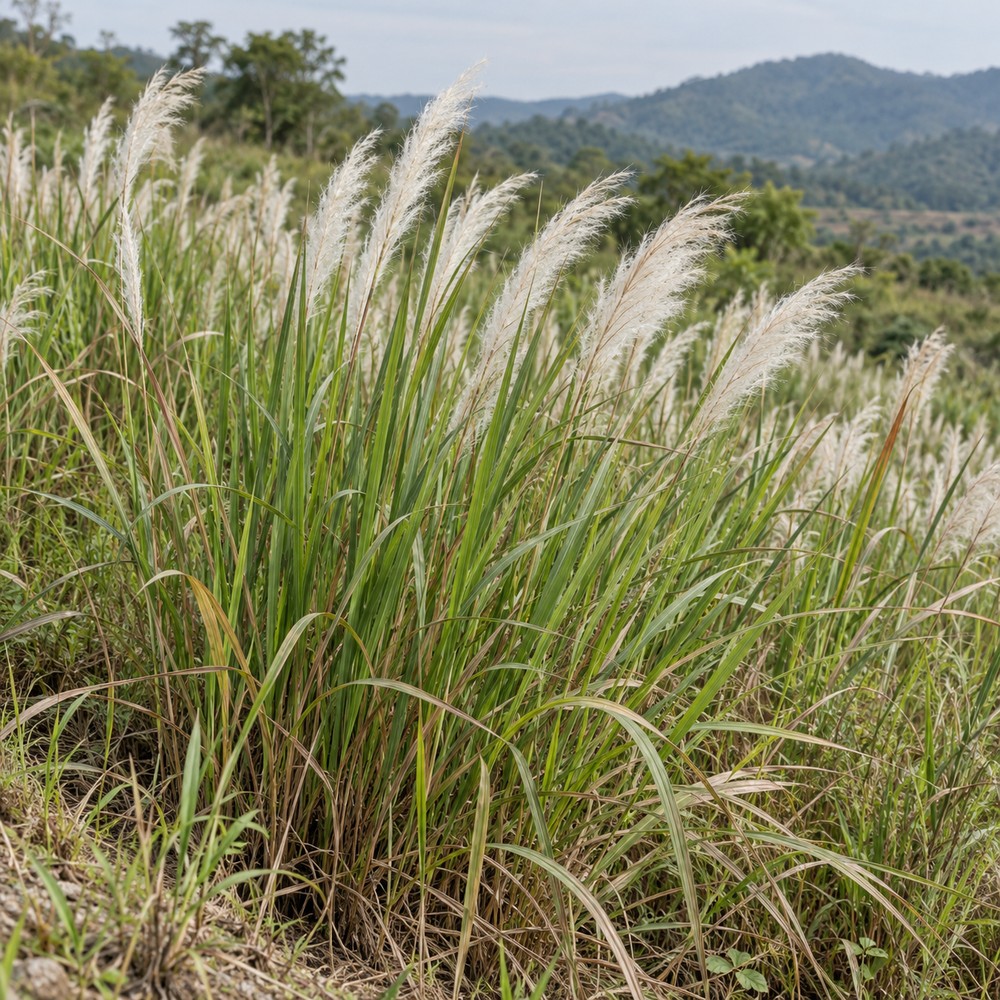
A perennial grass with narrow blades, a silvery-white cylindrical plume, and long creeping rhizomes underground.
Traditional context
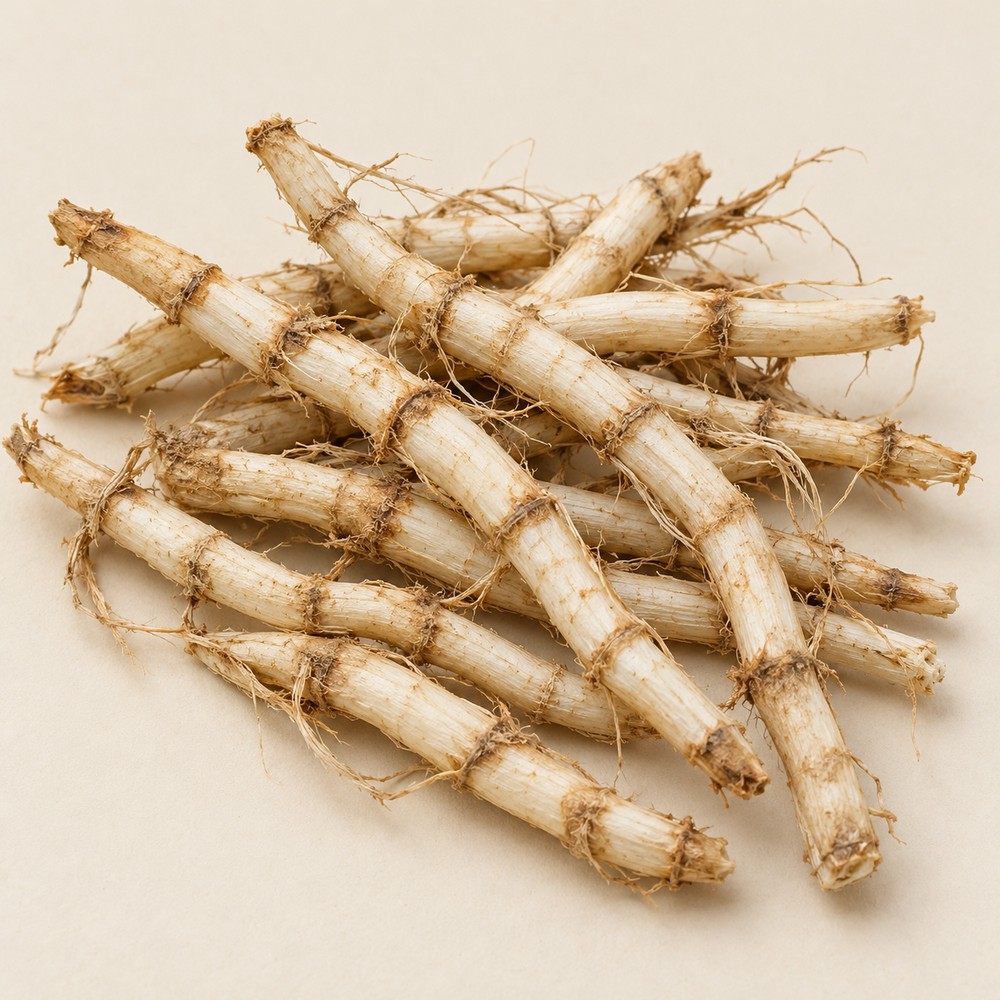
Bai Mao Gen is Imperata cylindrica rhizome. HKBU describes long cylindrical rhizomes with distinct nodes and leaf-sheath remnants; avoid collecting from contaminated sites.
Modern evidence
Heat-clearing, blood-cooling, and diuresis are traditional descriptions. Do not self-treat bleeding, painful urination, jaundice, or kidney disease.
Safety
Urine output or electrolytes may be affected; people on diuretics or with kidney/cardiovascular disease or pregnancy should seek advice.
Pairing in reference texts
Bai Mao Gen appears with reed rhizome, Gardenia, or arborvitae leaf in historical references. Do not self-combine for bleeding without evaluating its cause.
Growing, care, and harvest timing
HKBU habitat record: Growing on river banks in low-altitude plains, grasslands, sandy meadow, deserts or seacoast. Distributed in all parts of China. The medicinal materials are mainly produced in Liaoning, Hebei, Shanxi, Shandong, Shaanxi, Jiangxi and other northern parts Harvest and processing as recorded: Excavated in summer and autumn, removed aboveground parts and earth, washed, sundried, and rub off fibril and membranous leaf
Source-recorded harvest/processing: Excavated in summer and autumn, removed aboveground parts and earth, washed, sundried, and rub off fibril and membranous leaf
The reviewed source does not provide a complete species-specific sowing/growing routine, irrigation/fertilization schedule, or universal plant age. The page therefore does not infer care instructions or years to harvest; consult local cultivation guidance.
Open habitat and season source ↗FROM PLANT / SOURCE HABITAT TO DRIED MATERIAL · REFERENCE WORKFLOW
- Excavate rhizomes in spring or autumn from clean cultivation; avoid roadsides, industrial sites, and heavy-metal soils.
- Remove leaves, sheaths, and soil; wash rhizomes and discard damaged sections and fine roots.
- Sun- or machine-dry, then rub away fine roots and membranous sheaths while retaining diagnostic nodes.
- Grade by whiteness, thickness, and aroma; test soil, metals, and moisture and document traceable lot.
These are post-harvest study notes, not directions to prepare a remedy for self-treatment. Processing reference ↗
How to read formula amounts
The cited sources do not provide a formula with specific amounts for this profile; no ratio is invented. Absence from the incompatibility list does not establish safety.
Habitat, season, and harvest in the HKBU botanical record
HKBU botanical record (translated summary): Habitat and distribution: Growing on river banks in low-altitude plains, grasslands, sandy meadow, deserts or seacoast. Distributed in all parts of China. The medicinal materials are mainly produced in Liaoning, Hebei, Shanxi, Shandong, Shaanxi, Jiangxi and other northern parts Harvest and processing as recorded: Excavated in summer and autumn, removed aboveground parts and earth, washed, sundried, and rub off fibril and membranous leaf
Open botanical source ↗