Bai Tou Weng · Chinese pulsatilla root · Bai Tou Weng
Pulsatilla chinensis (Bunge) Regel · Dried root
Name and part used
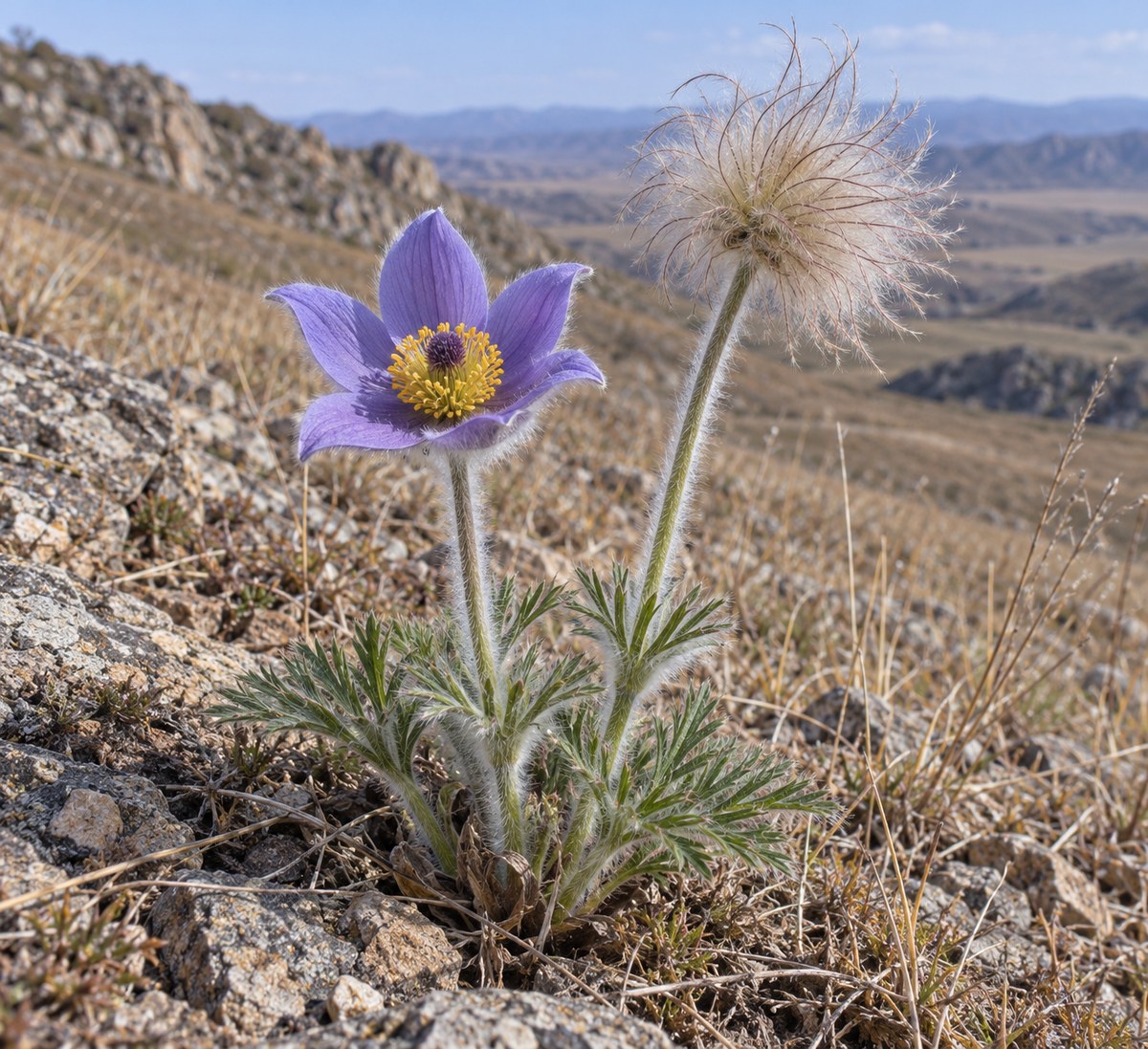
Bai Tou Weng uses the root of Pulsatilla chinensis, a low perennial with deeply divided basal leaves and a solitary blue-violet flower on a hairy stalk. After flowering, achenes with persistent styles form a white feathery head. HKBU records plants around 15–35 cm from grasslands, hill slopes, forest margins, and dry rocky ground. Do not confuse the name with other Pulsatilla species or unidentified roots.
Traditional context
HKBU records a bitter, cold nature and traditional actions of clearing heat-toxin, cooling blood, and checking dysentery. Historical indications in a database are not evidence for treating infectious diarrhea, dysentery, malaria, or bleeding. Bloody diarrhea, fever, or dehydration needs prompt medical care.
Modern evidence
HKBU provides identity, traditional actions, and historical formulas, not modern clinical trial evidence. Chemical constituents such as saponins or anemonin and preclinical work do not prove benefit or safe human dosing. Do not delay stool testing, rehydration, or clinician-directed infection treatment.
Safety
Do not self-use in children, pregnancy, breastfeeding, frailty, or acute diarrhea. Misidentified Ranunculaceae roots are a concern; a photograph alone is not enough. Seek care for persistent or bloody diarrhea, high fever, inability to keep fluids down, or reduced urination.
Safety reference ↗Pairing in reference texts
A historical pairing in Bai Tou Weng Tang is recorded by HKBU as Bai Tou Weng 15 g, Huang Bai 12 g, Huang Lian 6 g, and Qin Pi 12 g in its converted version. This is a source-recorded formula for comparison, not a prescription or home dose. Reviewed sources do not identify a specific toxic pair; do not self-combine with antidiarrheals or antibiotics.
Identification and study notes
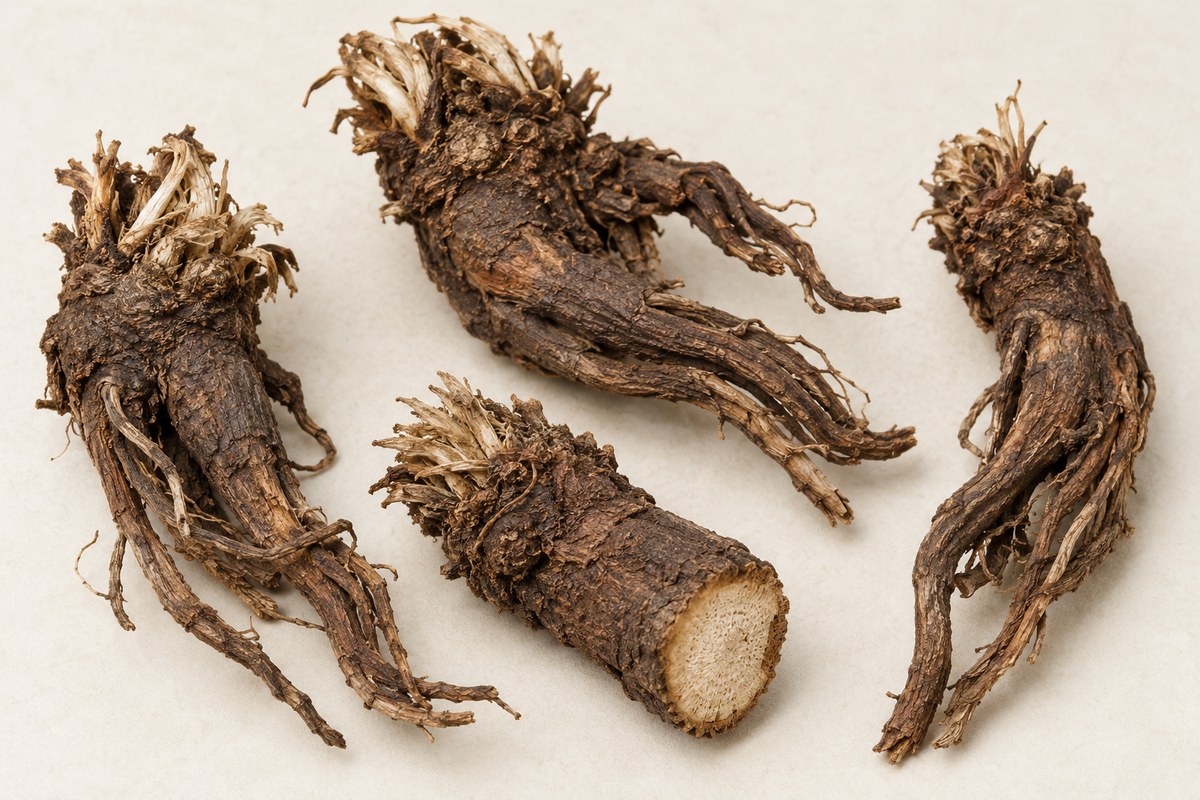
A low plant, commonly 15–35 cm tall, with a short thick rhizome. Basal leaves form a cluster on hairy petioles; each blade is divided into three main sections and then into smaller lobes. A flowering stalk usually carries one solitary blue-violet flower with six petal-like sepals; true petals are absent. After flowering, achenes with long persistent styles form a conspicuous white fluffy head. The drug is the root, not the fluffy fruit; dried roots are dark brown and somewhat curved, sometimes retaining white hairs at the crown. HKBU records spring excavation, removal of aerial parts, washing, and sun-drying. Do not use generated images alone to separate similar Pulsatilla species.
Growth and habitat
Chinese Pulsatilla occurs on plains, grassy slopes, forest edges, and dry rocky hillsides in temperate northern and central China. It favors open light and drained soil; rhizomes can rot in waterlogged ground. It is wild in some regions; do not collect from protected or unauthorized sites.
Identification and study notes
A low plant, commonly 15–35 cm tall, with a short thick rhizome. Basal leaves form a cluster on hairy petioles; each blade is divided into three main sections and then into smaller lobes. A flowering stalk usually carries one solitary blue-violet flower with six petal-like sepals; true petals are absent. After flowering, achenes with long persistent styles form a conspicuous white fluffy head. The drug is the root, not the fluffy fruit; dried roots are dark brown and somewhat curved, sometimes retaining white hairs at the crown. HKBU records spring excavation, removal of aerial parts, washing, and sun-drying. Do not use generated images alone to separate similar Pulsatilla species.
Growing and care
- Gieo vào khay giá thể sạch, ẩm nhẹ; hạt có thể nảy mầm không đồng đều. Chuyển cây con khi có rễ ổn định, hạn chế làm tổn thương rễ chính.
- Sow in clean, lightly moist propagation medium; germination may be uneven. Transplant once roots are established and avoid damaging the main root.
How long until harvest? A perennial; HKBU records root harvest in March–May but does not give years of cultivation. Seasonal harvest timing is not a safe home-use date; identity and quality control are still required.
Documented formula pairing: Bai Tou Weng Tang
HKBU describes this classical formula for a traditional heat-toxin pattern affecting the intestines; this is for studying combination structure and does not establish treatment of infection.
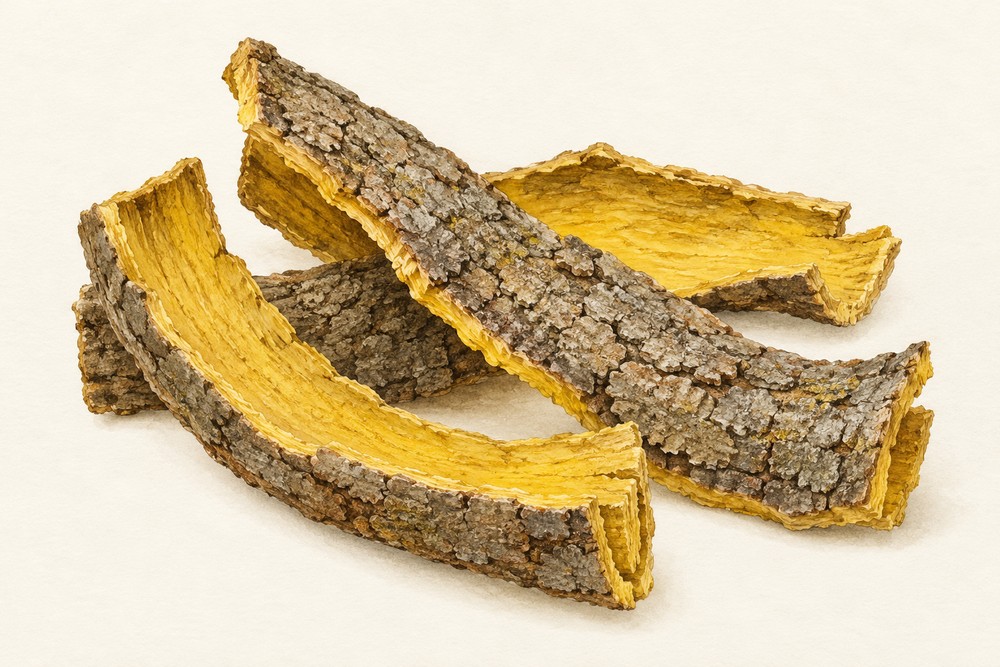
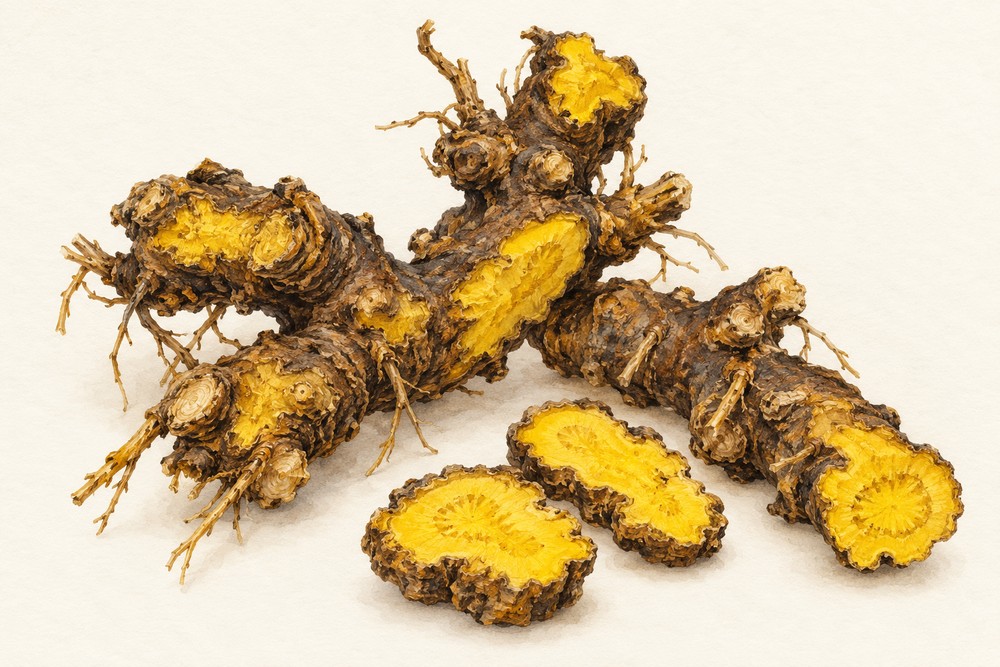
Source-recorded amounts: One HKBU-converted version: 15 : 12 : 6 : 12 g in the ingredient order above; historical versions and conversions can differ.
Caution: Not a self-use dose. Bloody diarrhea, fever, or dehydration needs medical evaluation; do not replace care with a historical formula.
Open formula record ↗Documented toxic incompatibility
Reviewed sources do not establish a specific toxic herb pair for Bai Tou Weng. This is not evidence that arbitrary formulas or combinations are safe; key concerns are misidentification and self-treating severe diarrhea.
AI study illustrations; not for specimen identification.
FROM PLANT / SOURCE HABITAT TO DRIED MATERIAL · REFERENCE WORKFLOW
- Excavate roots in March–May per HKBU only from authenticated Pulsatilla chinensis and a lawful site.
- Cut off the aboveground parts; retain the white hairs at the root crown as described, then wash away soil with clean water.
- Sun-dry under clean conditions without leaving roots damp; discard moldy, damaged, or mixed-species material.
- Package separately with Latin name and harvest date. Do not grind or decoct roots at home for diarrhea; dried appearance cannot establish safety.
These are post-harvest study notes, not directions to prepare a remedy for self-treatment. Processing reference ↗
Material source, dried appearance, and processing forms (HKBU)
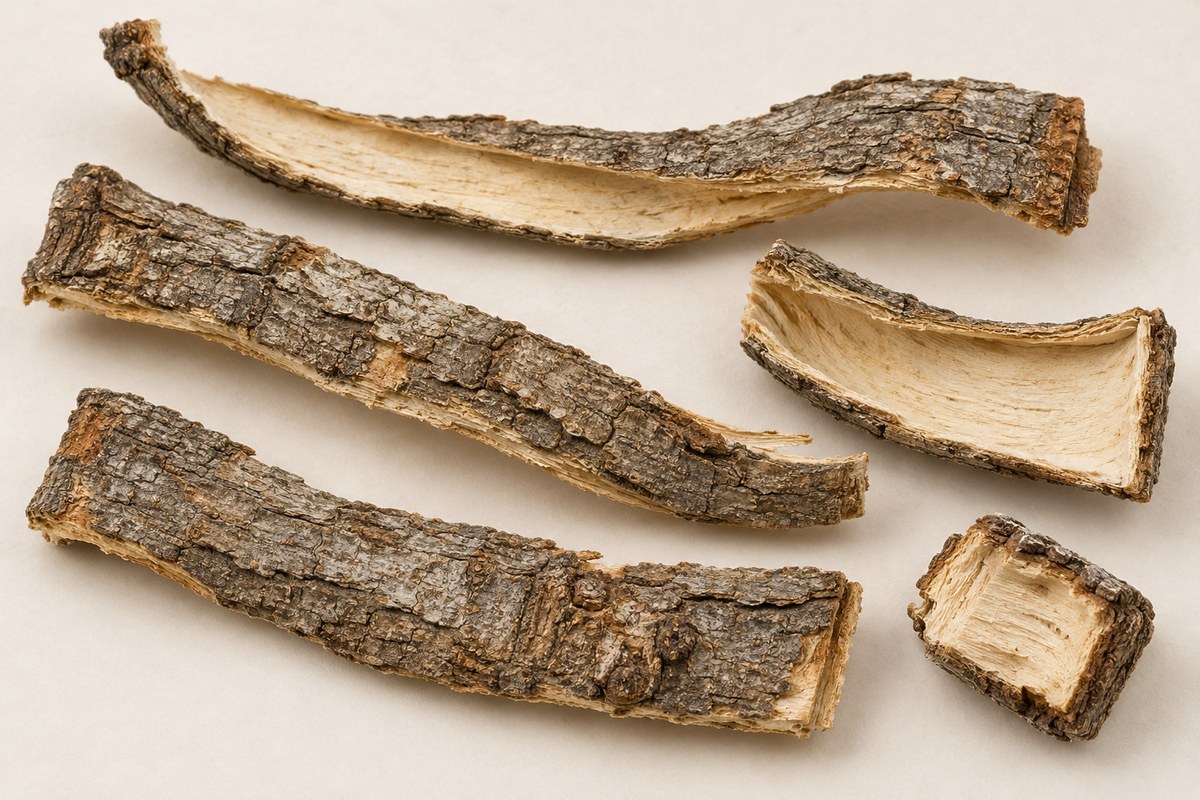
HKBU identifies Bai Tou Weng as the root of Pulsatilla chinensis (Bunge) Regel, Ranunculaceae. Plants are 15–35 cm tall, with hairy divided basal leaves, solitary blue-violet flowers, and feathery achenes. The drug is the root; the source records March–May excavation, removal of aerial parts while retaining white hairs at the root crown, washing, and sun-drying.
Open original materia medica record ↗Habitat, season, and harvest in the HKBU botanical record
HKBU records a 15–35 cm perennial from grassland, slopes, forest edges, and dry rocky hillsides; flowering is April–May and fruiting June–July. Roots are excavated in March–May, washed, and sun-dried. No sowing-to-harvest schedule is supplied.
Open botanical source ↗