Bai Xian Pi · densefruit pittany root bark · Bai Xian Pi
Dictamnus dasycarpus Turcz. · Dried root bark
Name and part used
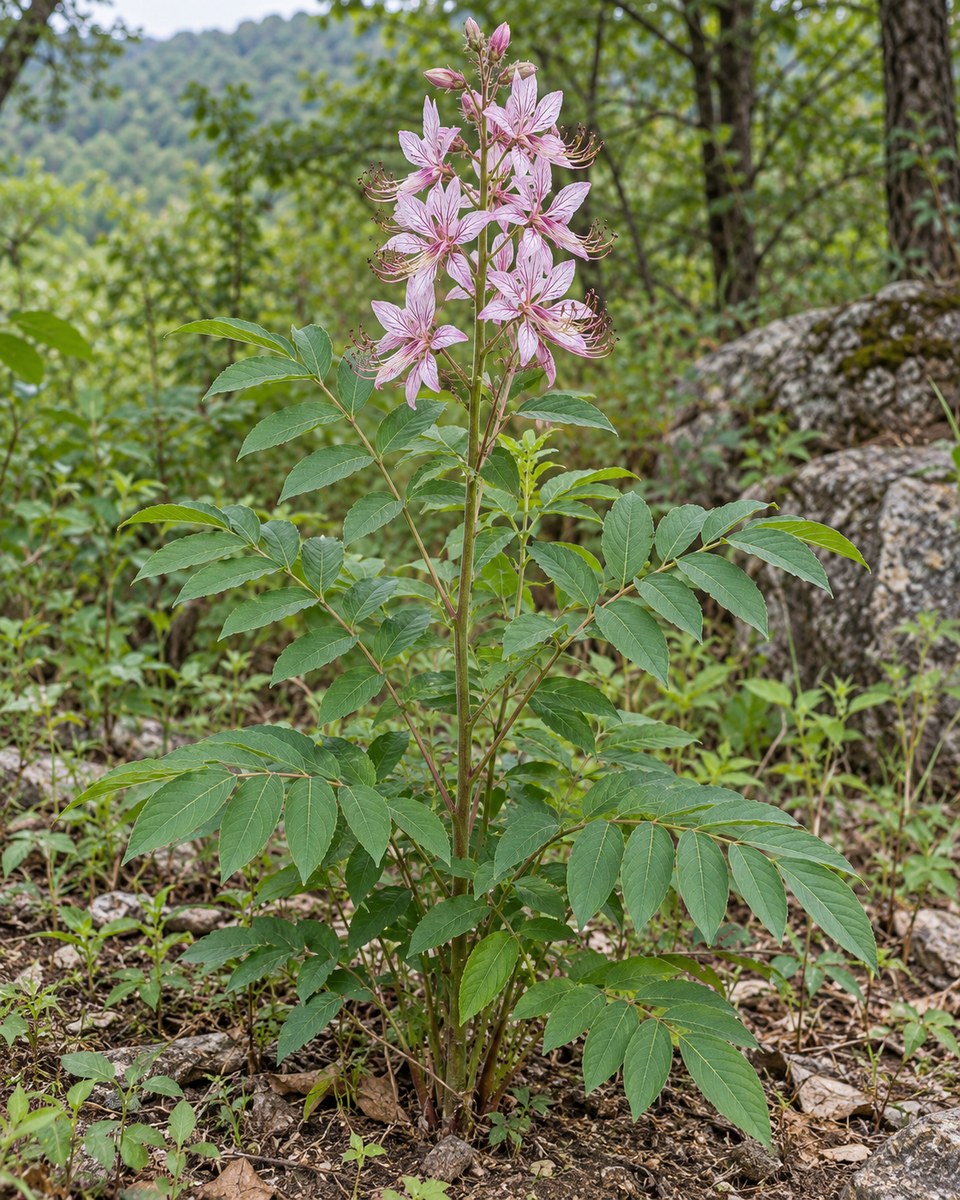
Bai Xian Pi is the root bark of Dictamnus dasycarpus Turcz., a perennial herb in the Rutaceae. It has pinnate leaves with multiple leaflets and pale pink flowers striped purple; clustered roots provide the pale yellow to cream root-bark strips used as the materia medica. HKBU lists it among commonly used materials while noting the broader problem of look-alikes. Liver-injury reports are associated with Bai Xian Pi use; do not self-decoct it or treat skin disease with the plant.
Traditional context
HKBU’s specimen record places the drug among heat-clearing materials and records traditional actions of clearing heat, drying dampness, dispelling wind, and detoxifying. These terms reflect traditional theory and do not establish treatment for eczema, fungal infection, scabies, jaundice, or autoimmune disease.
Modern evidence
Phytochemical reviews describe many constituents and cell/animal effects, but this does not prove that Bai Xian Pi treats human skin disease. In contrast, clinical literature includes hepatitis reports after decoctions of Dictamnus dasycarpus or products containing it; one case attributed liver injury to root-bark powder. Laboratory anti-inflammatory activity cannot be used to conclude that ingestion is beneficial or safe.
Safety
Human liver injury has been reported with this materia medica. Avoid self-use, especially with liver disease, medicines that may affect the liver, or multiple herbal products. Jaundice, dark urine, persistent nausea, right-upper-abdominal pain, or unusual fatigue warrants stopping the suspected product and prompt medical assessment. Do not apply fresh plant material; handlers should wear gloves and wash their hands. Reviewed sources do not establish a safe self-use dose.
Safety reference ↗Pairing in reference texts
No combination ratio can be established as safe here. Liver-injury reports involve both Bai Xian Pi decoctions and multi-ingredient products; adding licorice or another herb cannot be assumed to neutralize toxicity. A toxic pair should not be claimed when a report concerns a mixture and does not identify the causal ingredient. Avoid self-combining it with prescriptions or other herbs, especially products with liver risk.
Identification and study notes
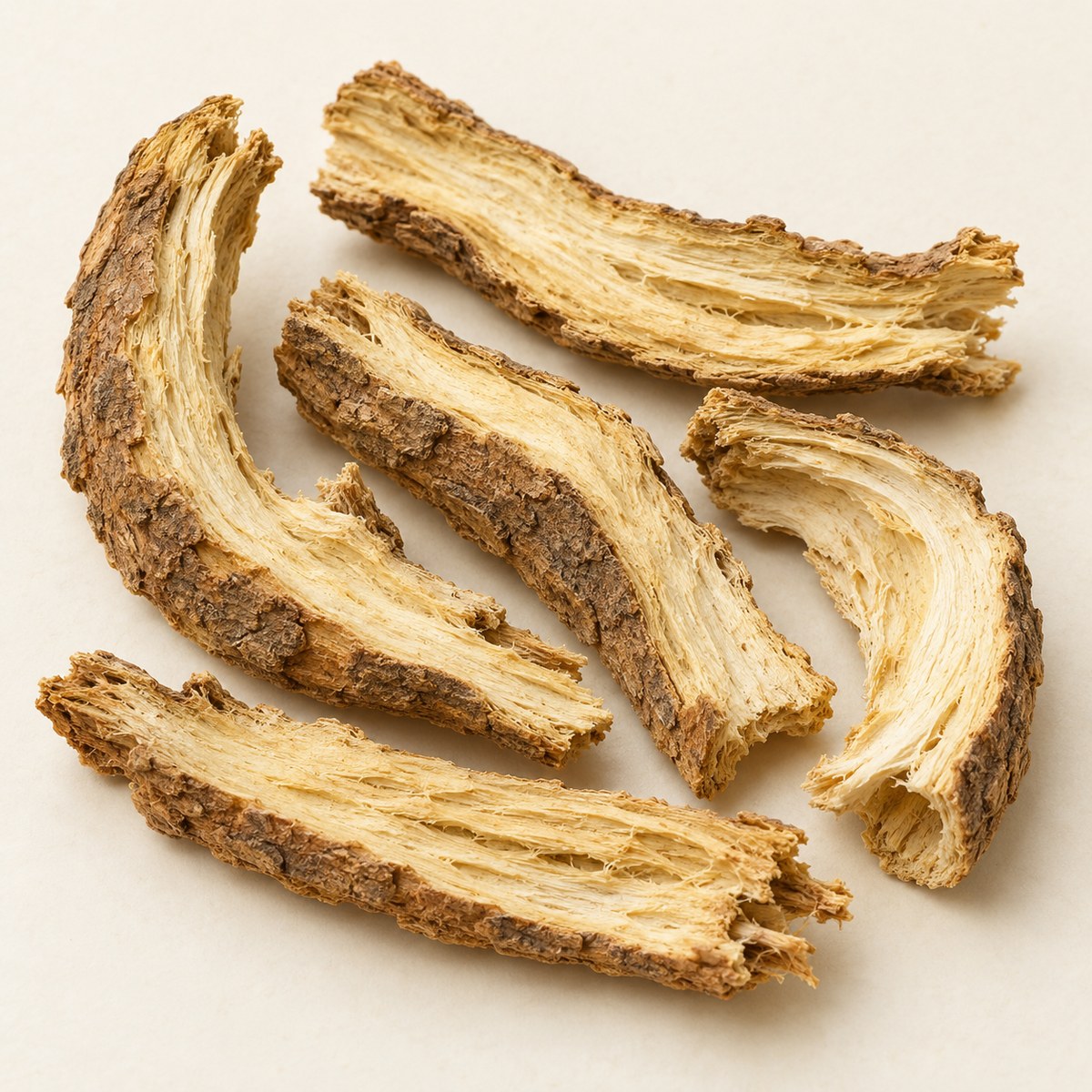
The living plant has an upright, slightly woody base; alternate pinnate leaves often bear 9–13 oval leaflets, with glandular dots on foliage or inflorescences. Terminal clusters carry five pale pink petals with purple veins; the fruit is a multi-chambered capsule. Bai Xian Pi is peeled root bark, not leaf or whole root: dried strips curve, with a yellow-brown/pale outer surface and cream-yellow fibrous inner surface. Materia medica sources describe its odor separately; do not closely sniff or taste material of uncertain provenance. Commercial lots vary in strip shape, color, and thickness due to peeling and drying. A polished image cannot reliably distinguish Bai Xian Pi from confusing materials; scientific name, lot traceability, and testing are needed. Correct identification also does not remove the reported liver-injury risk.
Growth and habitat
Dictamnus dasycarpus occurs in East Asia, including China, Korea, and neighboring regions; it is a perennial associated with hillsides, woodland edges, and drained soils. HKBU describes hairy stems with glandular dots, alternate pinnate leaves with 9–13 leaflets, pink flowers with purple veins, and plants approaching 1 m. This is botanical study information, not guidance to harvest wild plants.
Identification and study notes
The living plant has an upright, slightly woody base; alternate pinnate leaves often bear 9–13 oval leaflets, with glandular dots on foliage or inflorescences. Terminal clusters carry five pale pink petals with purple veins; the fruit is a multi-chambered capsule. Bai Xian Pi is peeled root bark, not leaf or whole root: dried strips curve, with a yellow-brown/pale outer surface and cream-yellow fibrous inner surface. Materia medica sources describe its odor separately; do not closely sniff or taste material of uncertain provenance. Commercial lots vary in strip shape, color, and thickness due to peeling and drying. A polished image cannot reliably distinguish Bai Xian Pi from confusing materials; scientific name, lot traceability, and testing are needed. Correct identification also does not remove the reported liver-injury risk.
Growing and care
- Chọn vị trí ngoài trời, sáng hoặc nắng nhẹ, đất tơi thoát nước; tránh đất úng. Tài liệu canh tác cho cây dược liệu này không thống nhất đủ để đưa lịch bón phân, độ pH hay năng suất bảo đảm tại vườn nhà.
- Choose an outdoor bright or lightly sunny site with loose, well-drained soil; avoid waterlogging. Available cultivation sources are insufficiently consistent to prescribe a universal fertilizer schedule, pH, or home-garden yield.
How long until harvest? A perennial herb, but the reviewed HKBU cultivation record does not give a fixed number of years until root-bark harvest. A review describes spring or autumn root collection, washing, removal of rough outer material/soil, peeling the root bark, and drying. Because human liver injury has been reported, harvest maturity does not mean it is suitable for self-use.
Documented toxic incompatibility
The reviewed sources do not establish a classical herb pair that “becomes toxic” when combined. What is published is liver injury associated with Dictamnus dasycarpus itself and with multi-herb products; a mixture case is insufficient to assign causality to one partner. The page therefore does not invent a pair, image, or ratio. Do not add another herb to try to detoxify it or reduce a reaction.
AI study illustrations; not for specimen identification.
FROM PLANT / SOURCE HABITAT TO DRIED MATERIAL · REFERENCE WORKFLOW
- A review records root collection in spring or autumn; do not dig wild plants, particularly in protected or contaminated areas.
- Remove soil and damaged roots under qualified facility procedures; peel root bark identified as Bai Xian Pi, without confusing it with whole root or stem.
- Dry under controlled conditions, segregate lots, and record scientific name and provenance; AI images cannot replace identity, residue, or toxicology checks.
- Package against moisture and retain only controlled study samples; processing does not erase liver-risk warnings or create directions for ingestion.
These are post-harvest study notes, not directions to prepare a remedy for self-treatment. Processing reference ↗
Material source, dried appearance, and processing forms (HKBU)
HKBU identifies Bai Xian Pi as Cortex Dictamni from Dictamnus dasycarpus Turcz. (Rutaceae), with dried root bark as the medicinal part. Botanical and review sources describe spring/autumn root digging, removal of soil and rough outer material, peeling of the root bark, and drying. The resulting material is root-bark strips, not arbitrary stem or root slices. Traditional taste and action descriptors do not replace botanical authentication. Dried lots vary in appearance; provenance, Latin labeling, and professional testing are needed.
Open original materia medica record ↗Habitat, season, and harvest in the HKBU botanical record
HKBU’s botanical record describes Dictamnus dasycarpus as a perennial up to about 1 m, with an erect stem, alternate pinnate leaves of 9–13 leaflets, and pink flowers striped purple. Roots are collected in spring or autumn; a specialist review describes cleaning soil, removing rough outer material, peeling the root bark, and drying. Available cultivation sources do not give a universal sowing-to-harvest duration, so no month/year promise is invented. These are high-level process notes, not instructions to prepare an ingestible remedy at home.
Open botanical source ↗