Chinese arborvitae kernel · Bai Zi Ren
Platycladus orientalis (L.) Franco · Seed kernel
Name and part used
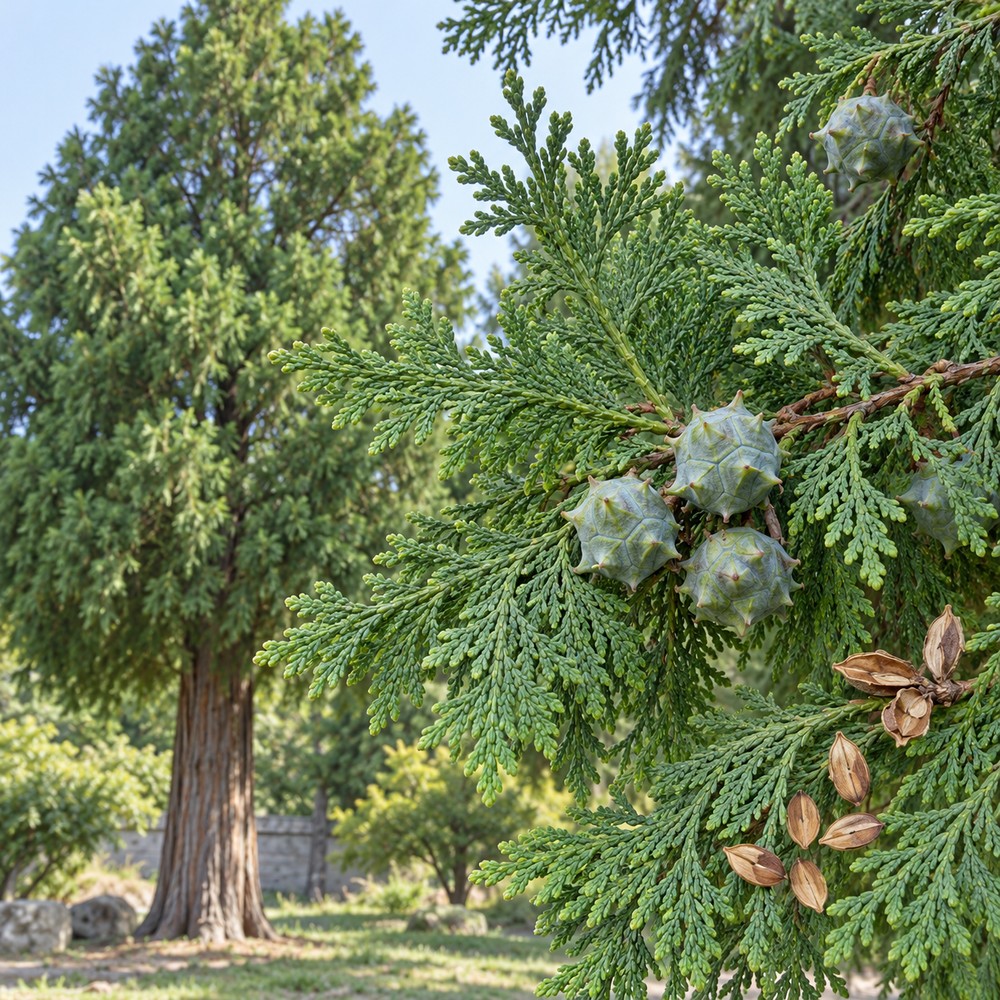
An evergreen conifer with flattened sprays of scale leaves; female cones are blue-green and glaucous, with oily seed kernels.
Traditional context
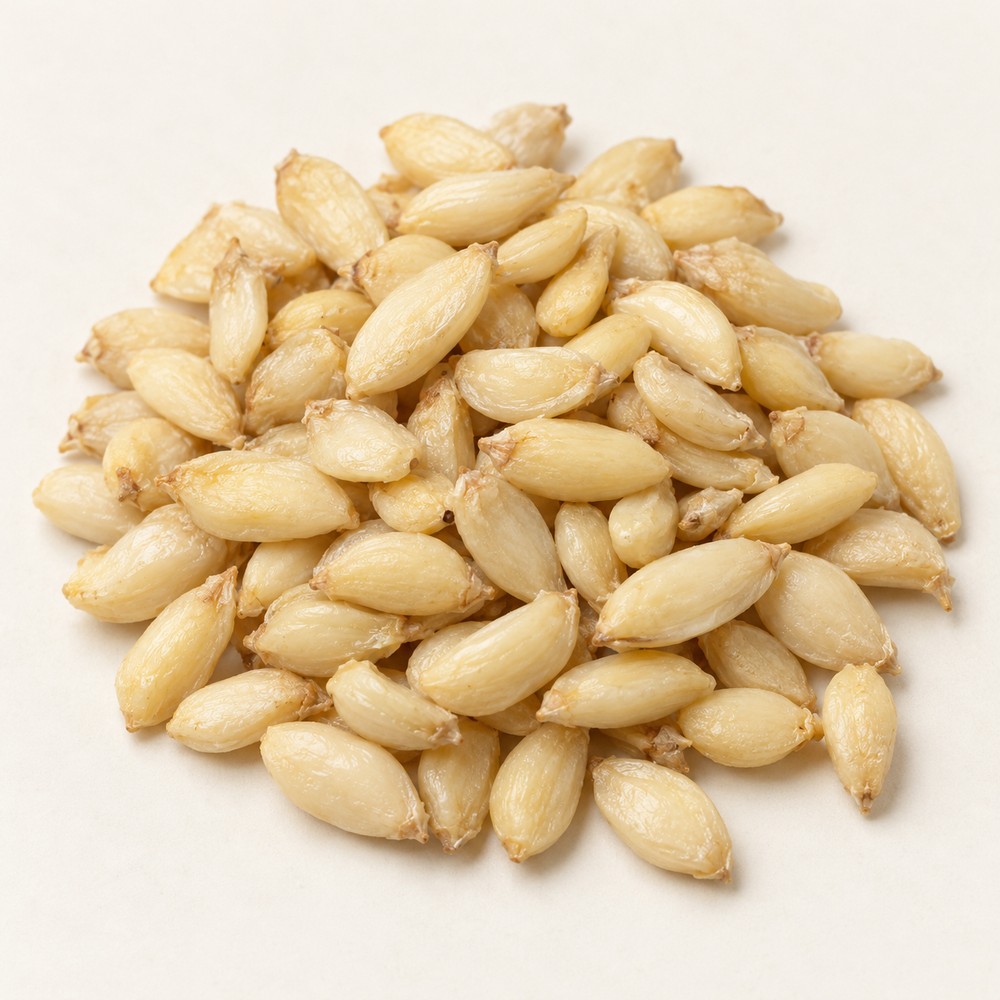
Bai Zi Ren is the kernel of Platycladus orientalis, not leaf or bark. HKBU describes elongated oval pale kernels; remove seed coat and impurities.
Modern evidence
Heart-calming and bowel-moistening are traditional claims. Oil content does not prove treatment of insomnia or chronic constipation.
Safety
Sedative effects may add to sleep medicines; oil may cause diarrhea. Seek advice with anticoagulants, sedatives, or digestive disease.
Pairing in reference texts
Bai Zi Ren appears in Tian Wang Bu Xin Dan with Sheng Di, Mai Men Dong, and others. The classical formula does not establish safety with modern sedatives.
Growing, care, and harvest timing
HKBU habitat record: Growing on moist fertile lands and in limestone mountains. Can be cultivated. Distributed in most of the country. The medicinal materials are produced throughout the country Harvest and processing as recorded: Seeds: harvested when seeds mature in early winter and sun-dried. Seed coat are crushed, tossed on net and dried in the shade. Shoots and leaves: harvested in summer and autumn, and air-dried after the branchlet clipped
Source-recorded harvest/processing: Seeds: harvested when seeds mature in early winter and sun-dried. Seed coat are crushed, tossed on net and dried in the shade. Shoots and leaves: harvested in summer and autumn, and air-dried after the branchlet clipped
The reviewed source does not provide a complete species-specific sowing/growing routine, irrigation/fertilization schedule, or universal plant age. The page therefore does not infer care instructions or years to harvest; consult local cultivation guidance.
Open habitat and season source ↗FROM PLANT / SOURCE HABITAT TO DRIED MATERIAL · REFERENCE WORKFLOW
- Collect mature cones from authenticated Platycladus orientalis; avoid confusion with ornamental conifers.
- Dry cones, separate scales and seeds at a facility, and remove empty seeds, coats, and twigs.
- Extract kernels with clean equipment while preserving the oily kernel; prevent crushing and rancidity.
- Grade color, integrity, and odor; seal, store cool and dry, and monitor for rancidity.
These are post-harvest study notes, not directions to prepare a remedy for self-treatment. Processing reference ↗
How to read formula amounts
The cited sources do not provide a formula with specific amounts for this profile; no ratio is invented. Absence from the incompatibility list does not establish safety.
Habitat, season, and harvest in the HKBU botanical record
HKBU botanical record (translated summary): Flowering and fruiting dates: Flowering: March to April, cones mature: September to October Habitat and distribution: Growing on moist fertile lands and in limestone mountains. Can be cultivated. Distributed in most of the country. The medicinal materials are produced throughout the country Harvest and processing as recorded: Seeds: harvested when seeds mature in early winter and sun-dried. Seed coat are crushed, tossed on net and dried in the shade. Shoots and leaves: harvested in summer and autumn, and air-dried after the branchlet clipped
Open botanical source ↗