Ban Zhi Lian · barbed skullcap · Ban Zhi Lian
Scutellaria barbata D. Don · Whole plant
Name and part used
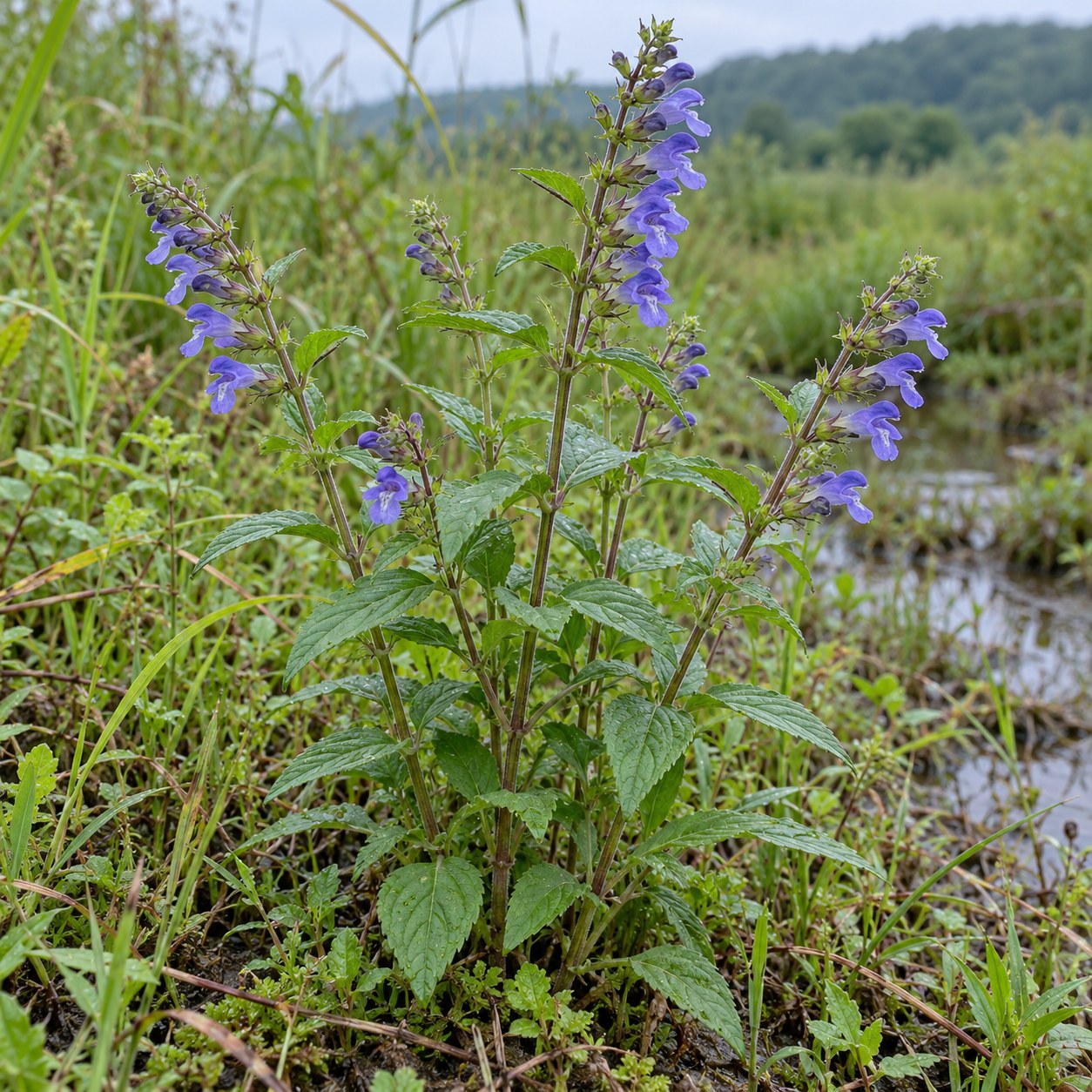
Ban Zhi Lian is Scutellaria barbata D. Don, a perennial mint-family herb. HKBU describes square stems around 15–50 cm tall; small opposite ovate-lanceolate leaves have shallow teeth and may be purple beneath. Blue-purple bilabiate flowers form one-sided terminal or axillary racemes. The whole plant is used. Do not confuse it with Huang Qin, S. baicalensis: same genus, different species, part, and monograph. AI art cannot identify a real plant.
Traditional context
HKBU records acrid, bitter, cold qualities and traditional actions of clearing heat-toxin, dispersing stasis, promoting urination, and easing pain. This is materia medica description, not proof of treating cancer, hepatitis, appendicitis, or bleeding. Disease listings in a specimen record are not modern clinical indications.
Modern evidence
HKBU is a botanical/materia medica record, not a clinical trial. Cell or animal research does not establish that the whole herb treats tumors or infection in people. A classical formula documents a text, not modern lot quality, optimal dose, or outcomes. Severe abdominal pain, jaundice, persistent fever, a mass, or bleeding needs assessment.
Safety
HKBU notes pregnancy caution. Do not self-use during pregnancy, active bleeding, bleeding disorders, cancer/liver treatment, or prescription-medicine use. Species authentication and microbial/heavy-metal controls matter; do not use home-grown or roadside plants as medicine. Jaundice, worsening pain, persistent fever, or bleeding needs care.
Safety reference ↗Pairing in reference texts
HKBU records historical combinations under traditional pattern assessment, not universal safe ratios or cancer protocols. Do not prepare or dose old formulas yourself. No species-specific toxic pair was confirmed, but absence of a report is not proof of safety. Current medicines, pregnancy, and illness require professional review.
Identification and study notes
Compare square stems, opposite leaves, shallow teeth, and one-sided blue-purple bilabiate flowers. The plant may branch and lower leaves have short petioles. Drying shrinks leaves/flowers, so color alone is inadequate. The record uses the whole plant, not just roots. Distinguish S. barbata from Huang Qin S. baicalensis.
Growth and habitat
HKBU places it at paddy margins, ditches, and moist grasslands in eastern, southern, and southwestern China. The habitat is moist but not permanently submerged. For study use moist drained soil and partial sun; avoid stock from sprayed fields or wastewater. As a perennial it can spread, so contain it.
Identification and study notes
Compare square stems, opposite leaves, shallow teeth, and one-sided blue-purple bilabiate flowers. The plant may branch and lower leaves have short petioles. Drying shrinks leaves/flowers, so color alone is inadequate. The record uses the whole plant, not just roots. Distinguish S. barbata from Huang Qin S. baicalensis. When comparing with other Scutellaria, inspect the opposite leaf pairs, square stem, corolla shape, and raceme arrangement. Flower color alone varies with lighting and drying. Record the scientific name next to photographs because common names can be shared by several species. Bán chi liên là Scutellaria barbata, không phải hoàng cầm S. baicalensis hay mọi cây bán tên “skullcap”. Thân vuông, lá đối, hoa xanh tím một phía và nguyên cây là điểm so sánh. Màu hoa không đáng tin tuyệt đối vì đổi theo tuổi, hình minh họa cũng giản lược. HKBU ghi bờ ruộng ẩm; vùng úng hoặc phun thuốc không phù hợp làm nguồn mẫu. Cách nhân giống và mốc thu khác giữa gieo hạt và nhân sinh dưỡng, nên không áp một lịch cho mọi vườn. Tài liệu cổ có nhắc bệnh nghiêm trọng, nhưng hồ sơ thực vật hay nghiên cứu phòng thí nghiệm không chứng minh toàn cây chữa ung thư/viêm gan. Cần lưu ý thai kỳ và thuốc đang dùng; không dựng phác đồ ung thư từ bài thuốc cổ. Nhật ký cần ghi có phải S. barbata, bộ phận, giai đoạn hoa, nguồn trồng, và claim là cổ truyền, tiền lâm sàng hay lâm sàng. Điều này tránh tên chung khiến thay thế nguy hiểm. Điểm đối chiếu quan trọng là so Bán chi liên với Scutellaria tên gần bằng trường Latin trong nguồn, không chỉ tên Hán/Việt. Toàn cây, hình hoa và mốc thu của Scutellaria barbata khác skullcap khác loài. Có mặt cùng bài thuốc không chứng minh lợi ích ung thư hay tỷ lệ tối ưu. Cảnh báo thai kỳ/thuốc cần đọc cùng phân loại cổ, không bỏ qua. Khi học trồng, ghi cách nhân giống vì mốc thu khác giữa gieo hạt và nhân sinh dưỡng. Thời gian ấy chỉ là nông học, không phải xác nhận dùng an toàn.
Growing and care
- Choose stock labeled Scutellaria barbata; generic skullcap may refer to Huang Qin or another species. Use a clean pot, drained soil, and bright light.
- Sow shallowly per supplier and keep the surface lightly moist. HKBU gives no seed treatment, temperature, or emergence interval; record results, do not invent a schedule.
- Thin weak seedlings after true leaves. Water moderately, avoid waterlogging, hand-weed, check mold after rain, and avoid chemicals with unknown preharvest intervals.
- HKBU records May, July, and September harvests from year two for seed-grown plants; vegetative propagation has one September harvest in year one, then more frequent cuts. This varies by region and method.
How long until harvest? The source begins listed harvests in year two for seed-grown plants; vegetatively propagated plants may be cut in September of year one. This is not a days-after-sowing estimate or a claim of ingestion safety.
FROM PLANT / SOURCE HABITAT TO DRIED MATERIAL · REFERENCE WORKFLOW
- Harvest the whole plant under the source’s propagation-based calendar; use authenticated lawful cultivation.
- Remove weeds, soil, damaged parts; rinse briefly and drain. Do not soak or mix unknown lots.
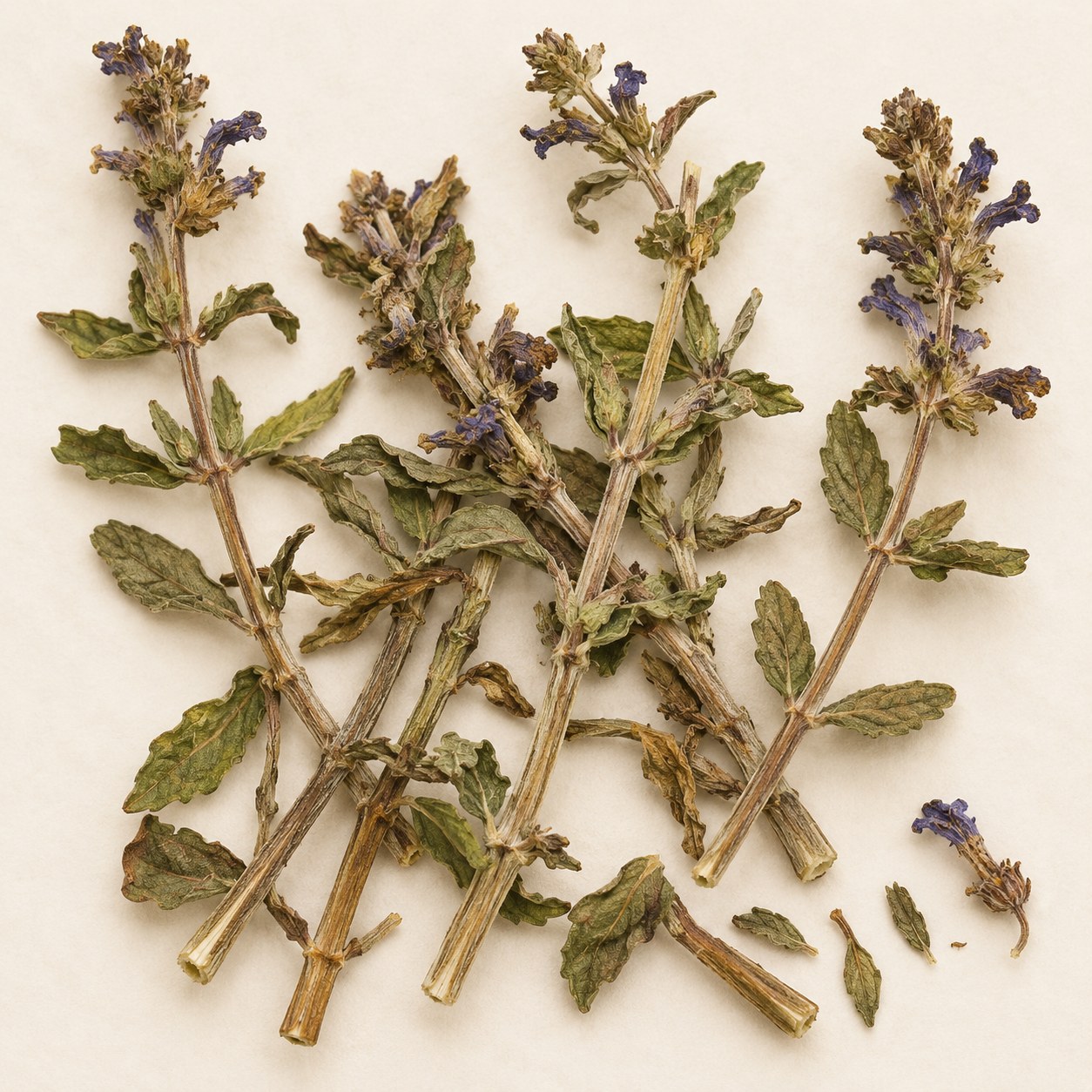
- HKBU records slicing followed by sun- or shade-drying. Spread thinly, ventilate, and turn for even drying.
- Dried material retains square stem pieces, wrinkled opposite leaves, and purple-brown flowers. Label species/origin/date; this is study context, not self-use guidance.
These are post-harvest study notes, not directions to prepare a remedy for self-treatment. Processing reference ↗
Habitat, season, and harvest in the HKBU botanical record
HKBU describes a 15–50 cm perennial with square stems, small opposite leaves, and one-sided blue-purple flowers; it grows by paddies/ditches and moist grass. The whole plant is sliced and sun/shade-dried; harvest depends on propagation.
Open botanical source ↗