Field mint · Bo He
Mentha haplocalyx Briq. · Aerial parts
Name and part used
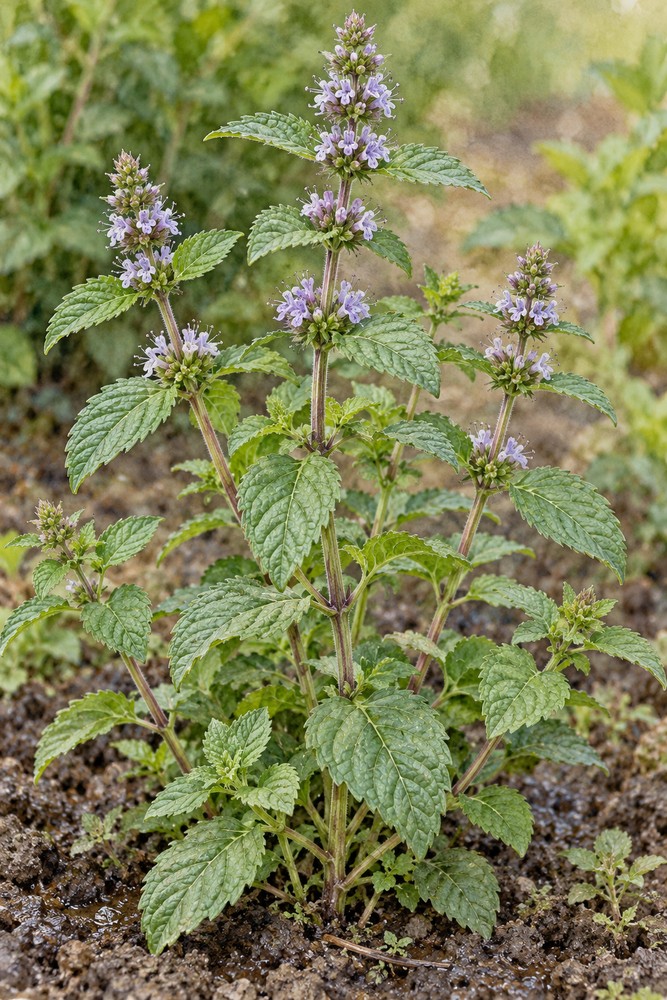
An aromatic plant with a square stem, opposite serrated leaves, pale-violet flower clusters, and creeping rhizomes.
Traditional context
The HKBU record identifies medicinal Bo He as Mentha haplocalyx, a perennial in the mint family. Related mints and cultivars are common; aroma alone cannot authenticate a specimen.
Modern evidence
Dispersing wind-heat and benefiting the head or throat are traditional concepts. Essential-oil chemistry or studies of other mint species do not establish clinical effects for Bo He.
Safety
Concentrated essential oil can irritate and is not equivalent to culinary leaves. Do not ingest or apply it casually; seek professional advice during pregnancy, breastfeeding, for young children, or with medicines.
Pairing in reference texts
Bo He occurs in formulas such as Yin Qiao San with honeysuckle and other ingredients. This is historical context, not a basis for self-treating fever or colds.
Growing, care, and harvest timing
HKBU habitat record: Growing in limesmarginis, on roadsides and wet lands of mountains and plains. Can be cultivated. Distributed in all parts of China. The medicinal materials are mainly produced in Jiangsu, Zhejiang, Jiangxi and etc Harvest and processing as recorded: Cut twice per year, the first time (the initial cut) between Slight Heat and Great Heat; the second time (the second cut) between Cole Dew and Frost Descent, sliced the whole plant
Source-recorded harvest/processing: Cut twice per year, the first time (the initial cut) between Slight Heat and Great Heat; the second time (the second cut) between Cole Dew and Frost Descent, sliced the whole plant
The reviewed source does not provide a complete species-specific sowing/growing routine, irrigation/fertilization schedule, or universal plant age. The page therefore does not infer care instructions or years to harvest; consult local cultivation guidance.
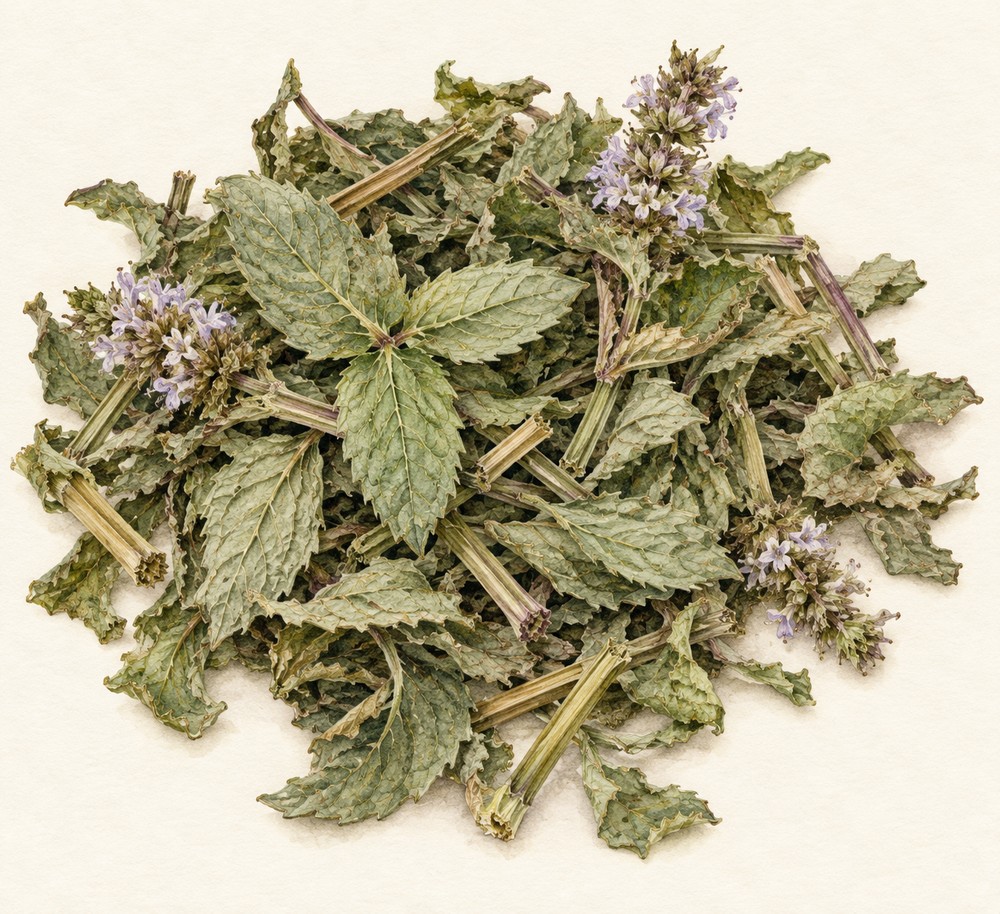
Open habitat and season source ↗FROM PLANT / SOURCE HABITAT TO DRIED MATERIAL · REFERENCE WORKFLOW
- HKBU describes two harvests per year in growing regions; actual timing depends on cultivar and local conditions.
- Cut aerial parts with clean equipment, avoid weeds, and authenticate Mentha haplocalyx lots at the facility.
- Wilt or dry promptly with ventilation and controlled temperature to limit loss of aromatic constituents; never dry on contaminated ground.
- Cool, grade, seal, and record the lot; protect from prolonged heat, light, and moisture.
These are post-harvest study notes, not directions to prepare a remedy for self-treatment. Processing reference ↗
How to read formula amounts
The cited sources do not provide a formula with specific amounts for this profile; no ratio is invented. Absence from the incompatibility list does not establish safety.
Habitat, season, and harvest in the HKBU botanical record
HKBU botanical record (translated summary): Flowering and fruiting dates: Flowering: July to September, fruiting: October to November Habitat and distribution: Growing in limesmarginis, on roadsides and wet lands of mountains and plains. Can be cultivated. Distributed in all parts of China. The medicinal materials are mainly produced in Jiangsu, Zhejiang, Jiangxi and etc Harvest and processing as recorded: Cut twice per year, the first time (the initial cut) between Slight Heat and Great Heat; the second time (the second cut) between Cole Dew and Frost Descent, sliced the whole plant
Open botanical source ↗