Cang Er Zi · Cang Er Zi
Xanthium sibiricum Patr. ex Widder · Processed dried fruit with involucre
Name and part used
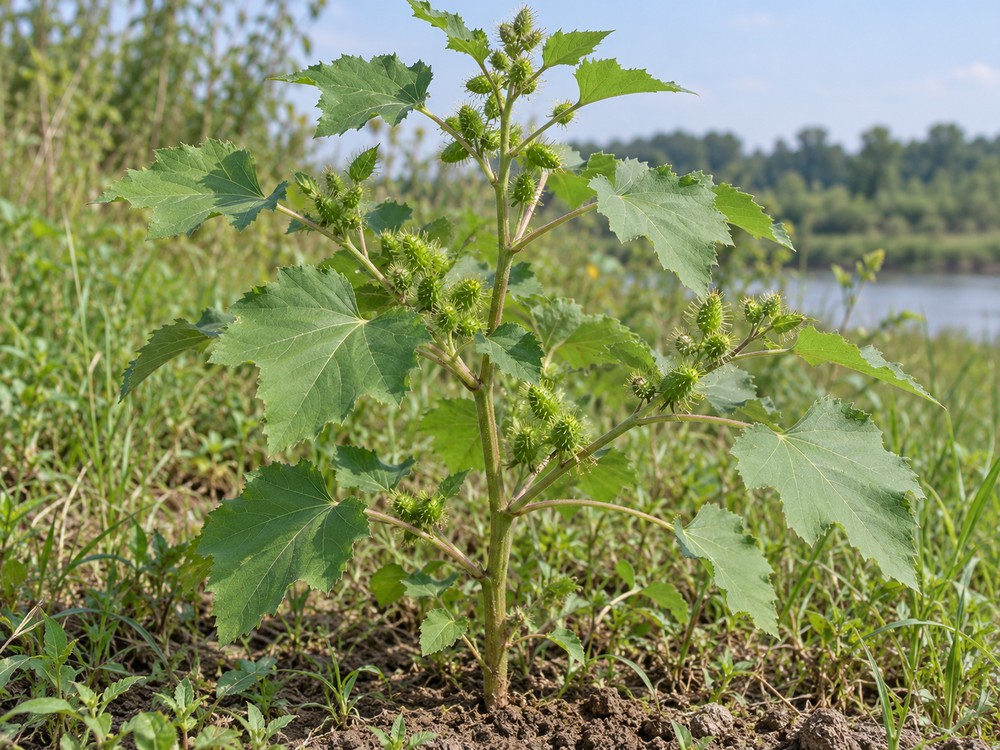
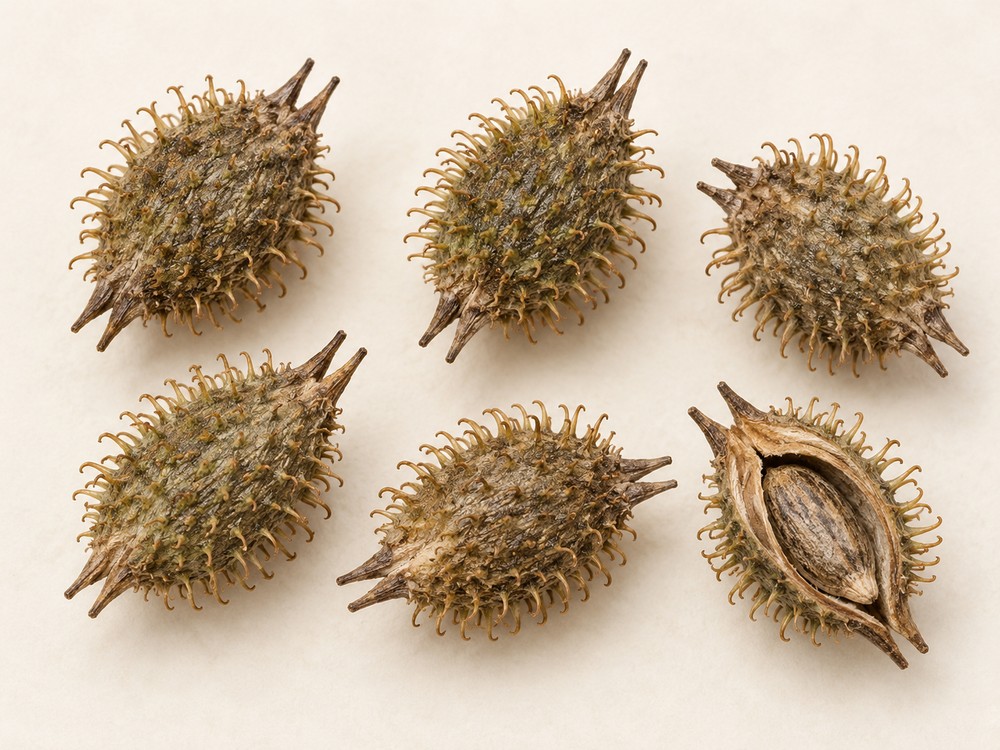
Cang Er Zi is the mature burred fruit of Xanthium sibiricum, an annual Asteraceae herb. The plant is erect and branched, with alternate triangular/heart-shaped coarsely toothed leaves; oval hooked burs have two stout tips. Dried fruits are yellow-brown or yellow-green and two-loculed in cross-section. Do not confuse the monograph material with seeds or seedlings, which may contain high toxin levels. AI art cannot verify identity or detoxification.
Traditional context
Traditional sources describe acrid, bitter, warm properties for pattern-based nasal obstruction/wind. This does not prove treatment of sinusitis, allergy, or infection.
Modern evidence
Xanthium contains carboxyatractyloside/atractyloside associated with toxicity; poisonings involve unprocessed or improperly processed material. Health Canada requires spines removed and stir-baking before medicinal-ingredient use. Heating does not guarantee safety or replace testing. Seeds, seedlings, and uncontrolled fruits are not food.
Safety
Do not harvest, de-spine, and roast it for home ingestion. De-spining/stir-baking describes professional processing with identity and toxin controls. Children, pregnancy, liver disease, medicines, or symptoms after ingestion require medical/poison-center advice. Never use seeds/seedlings.
Pairing in reference texts
Some historical formulas pair Cang Er Zi with Magnolia flower, Angelica dahurica, or mint for nasal patterns; no source establishes personal ratios or that a formula removes toxicity. Do not self-combine for sinusitis/allergy. Known toxicity is intrinsic to Xanthium and improper processing, not an unverified pair.
Growth and habitat
An annual of disturbed field margins; HKBU records autumn fruit harvest but no safe medicinal-use age.
Growing, care, and harvest timing
The profile above includes sourced steps and a documented harvest window. Harvest timing is agronomic information, not a self-use instruction.
Identification and study notes
Thương nhĩ tử cho thấy cần tách độ chín, bộ phận và hồ sơ chế biến. Dược liệu là quả già có bao gai; hạt, cây mầm và quả non có rủi ro khác, không coi là thực phẩm. Cây một năm có lá mọc so le, mép răng thô và quả bầu dục có gai móc, thường có hai mỏ cứng. Dấu hiệu này giúp hiểu hình nhưng không cho phép tự thu hái: các loài Xanthium có thể lẫn nhau và độc chất không nhìn thấy được. Chuyên luận Health Canada được dẫn yêu cầu kiểm soát chuyên nghiệp, như bỏ gai và sao theo quy trình cho nguyên liệu được liệt kê; trang không hướng dẫn khử độc tại nhà, và không thể mặc định gia nhiệt loại bỏ mọi nguy hiểm. Mốc quả chín mùa thu không phải lời rủ hái quả hoang. Mẫu thô, mẫu đã chế biến và ảnh học tập cần được tách, ghi cảnh báo. Sản phẩm thiếu định danh loài, lịch sử xử lý và kiểm nghiệm lô thì màu/mùi giống ảnh không chứng minh an toàn. Nhãn Thương nhĩ tử cần phân biệt quả già đã chế với quả gai sống, quả non, cây mầm và hạt; các loại này không thay thế nhau. Người học không thể nhìn ảnh mà phát hiện chất độc. Vì vậy trang chỉ mô tả quy trình chuyên nghiệp ở mức khái quát, không đưa trình tự làm tại nhà. Cây một năm có thể lan ở đất bị xáo trộn, quả gai móc vào quần áo; thử trồng còn tạo nguy cơ phát tán và phơi nhiễm. Không gieo hạt/ủ phân quả để làm thuốc. Mẫu tham khảo được phép phải niêm kín, ghi cảnh báo, để xa thức ăn, trẻ và vật nuôi. Mùa thu là thời điểm chuỗi cung ứng đủ năng lực thu, không mời người đọc hái ven đường. Dù sản phẩm sạch và đã bỏ gai vẫn cần loài xác thực, hồ sơ chế biến và kiểm nghiệm. Nếu nghi phơi nhiễm/nuốt nhầm, liên hệ y tế/độc chất, không tự rang/ngâm. Khi học Thương nhĩ tử, nêu cảnh báo trước hình thái: Xanthium chưa chế biến không phải thực phẩm, ảnh không cho phép thu hái. Yêu cầu chế chuyên môn áp dụng chuỗi cung ứng được quản lý, không phải công thức tại nhà. Nhãn học cần ghi loài được chấp nhận, quả già có bao gai, trạng thái chế và hồ sơ lô. Không suy mẫu hết gai/nhẵn là đã khử độc; kiểm nghiệm/chế chuẩn khác vẻ ngoài. Để xa trẻ và vật nuôi; không đặt trong bộ học cảm quan để sờ/nếm.
Growing and care
- Do not cultivate Xanthium for home medicine; research observation requires an isolated, fenced plot and a plan to prevent seed spread.
- Use only authenticated Xanthium sibiricum seed, wear gloves, and keep burred fruit away from children, pets, and clothing.
- Monitor the plant and remove fruiting heads before dispersal under local invasive-species rules; do not compost burs or seeds.
- Never collect, roast, soak, or use fruit at home. Xanthium material is toxic and belongs in a professional supply chain.
How long until harvest? HKBU records fruit maturity in autumn, depending on climate. Maturity is a biological note, not permission for home medicinal use.
Documented toxic incompatibility
No specific toxic pair is confirmed; this does not make the herb safe. Xanthium fruit/seed itself contains toxic constituents; unprocessed material and seed/seedling confusion are risks.
FROM PLANT / SOURCE HABITAT TO DRIED MATERIAL · REFERENCE WORKFLOW
- Grow only in a contained observation plot; never collect fruits for ingestion.
- Record plant and fruit traits; do not taste fruits, seeds, or seedlings.
- Medicinal fruits require professional de-spining, monograph-based stir-baking, and toxin controls.
- Seal plant waste, keep it from children/pets, and follow local weed rules.
These are post-harvest study notes, not directions to prepare a remedy for self-treatment. Processing reference ↗
How to read formula amounts
The cited sources do not provide a formula with specific amounts for this profile; no ratio is invented. Absence from the incompatibility list does not establish safety.