Tangerine peel · Chen Pi
Citrus reticulata Blanco · Dried mature fruit peel
Name and part used
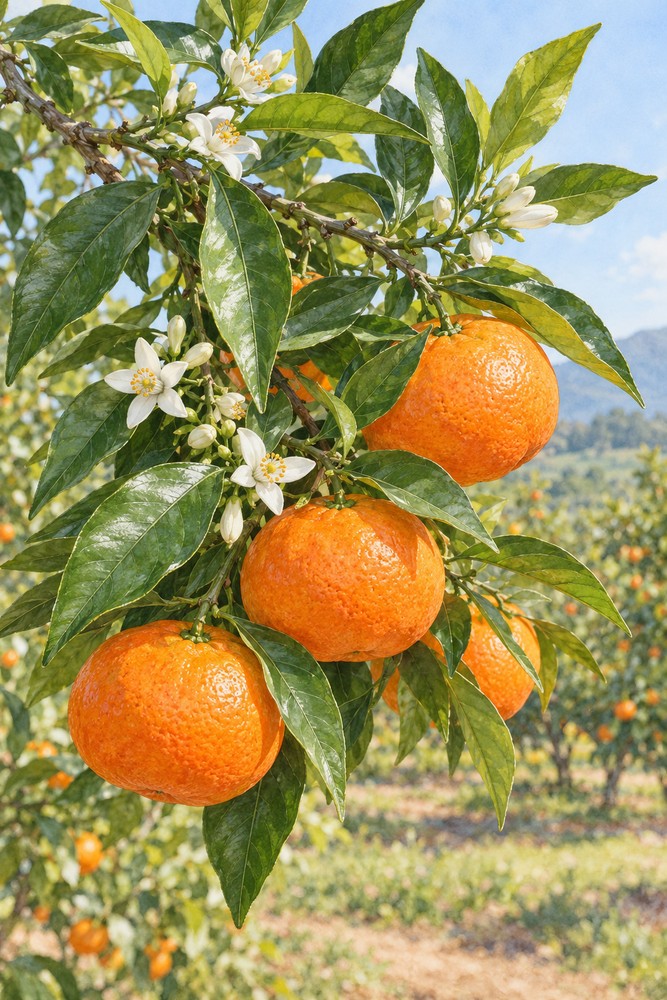
An evergreen mandarin with orange fruit; the materia medica is mature peel, not peel from any citrus.
Traditional context
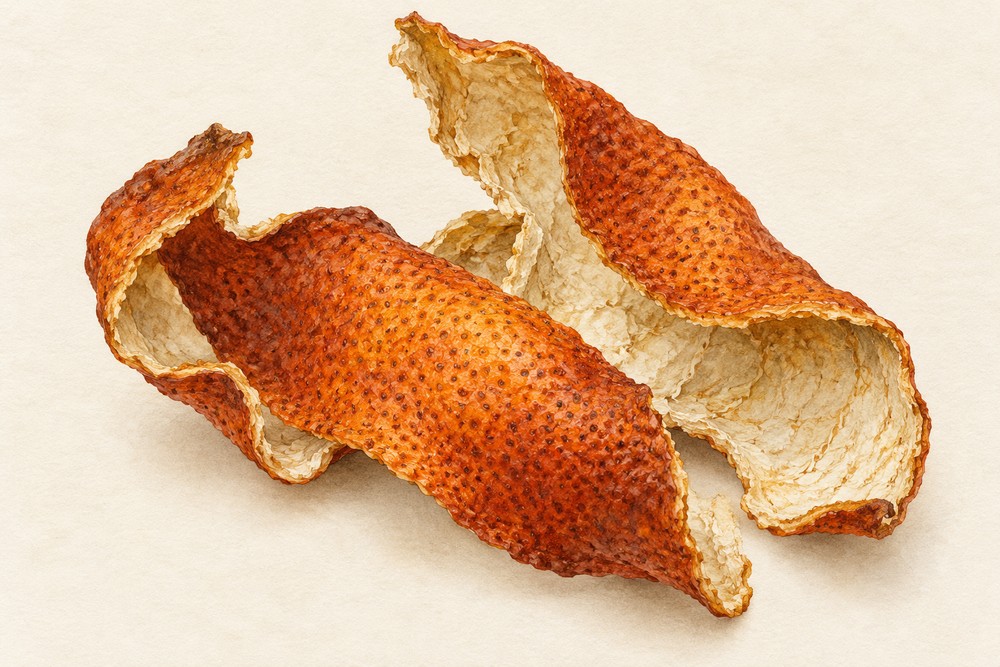
In Chinese materia medica, Chen Pi is mature peel of Citrus reticulata and accepted cultivars. The outer surface has tiny oil glands and the inner side is paler and spongier. The name refers to aging under controlled provenance, not simply keeping any peel.
Modern evidence
Qi-regulating and phlegm-transforming actions are traditional descriptions. Research on citrus flavonoids or oils does not establish that supplements treat cough or digestive disease.
Safety
Citrus allergy is possible. Unverified peel may contain pesticide residues, added color, or mold. Ask a qualified clinician before medicinal use during pregnancy, chronic illness, or prescription treatment.
Pairing in reference texts
Chen Pi appears with Ban Xia, Poria, or licorice in some classical formulas. This documents formula structure; it does not establish safety for an individual.
Growing, care, and harvest timing
HKBU habitat record: Growing on hills, hilly areas, river and lake banks or plains. Can be cultivated. Distributed in Jiangsu, Anhui, Zhejiang, Jiangxi, Taiwan, Hubei, Hunan, Guangdong, Guangxi, Hainan, Sichuan, Guizhou, Yunnan and etc. The medicinal materials are mainly produced in Guangdong, Sichuan and etc Harvest and processing as recorded: Chenpi: excavated from November to December, stripped pericarp, sun-dried or dried in low temperature. Qingpi: collected naturally fallen fruitlets from May to June, sun-dried, called "Geqingpi"; picked immature fruits from July- August, cut the pericarp vertically into four pieces to the fruits base, removed pulp disc, called “Sihuaqingpi”. Juhong: cut off the outer pericarp from November to December, sun-dried or air-dried. Juhe: collected when fruits get mature, well washed and sun-dried
Source-recorded harvest/processing: Chenpi: excavated from November to December, stripped pericarp, sun-dried or dried in low temperature. Qingpi: collected naturally fallen fruitlets from May to June, sun-dried, called "Geqingpi"; picked immature fruits from July- August, cut the pericarp vertically into four pieces to the fruits base, removed pulp disc, called “Sihuaqingpi”. Juhong: cut off the outer pericarp from November to December, sun-dried or air-dried. Juhe: collected when fruits get mature, well washed and sun-dried
The reviewed source does not provide a complete species-specific sowing/growing routine, irrigation/fertilization schedule, or universal plant age. The page therefore does not infer care instructions or years to harvest; consult local cultivation guidance.
Open habitat and season source ↗FROM PLANT / SOURCE HABITAT TO DRIED MATERIAL · REFERENCE WORKFLOW
- Harvest mature mandarins in autumn or winter according to the growing region; verify species, cultivar, and lot origin.
- Clean fruit under facility procedures, drain, and separate mature peel; reject moldy, damaged, or residue-unknown fruit.
- Sun-dry or use controlled low-temperature drying until evenly dry; protect from smoke, dust, and moisture re-entry.
- Grade and record region and processing date; store dry and sealed under quality controls.
These are post-harvest study notes, not directions to prepare a remedy for self-treatment. Processing reference ↗
How to read formula amounts
The cited sources do not provide a formula with specific amounts for this profile; no ratio is invented. Absence from the incompatibility list does not establish safety.
Habitat, season, and harvest in the HKBU botanical record
HKBU botanical record (translated summary): Flowering and fruiting dates: Flowering: March to April, fruiting: October to December Habitat and distribution: Growing on hills, hilly areas, river and lake banks or plains. Can be cultivated. Distributed in Jiangsu, Anhui, Zhejiang, Jiangxi, Taiwan, Hubei, Hunan, Guangdong, Guangxi, Hainan, Sichuan, Guizhou, Yunnan and etc. The medicinal materials are mainly produced in Guangdong, Sichuan and etc Harvest and processing as recorded: Chenpi: excavated from November to December, stripped pericarp, sun-dried or dried in low temperature. Qingpi: collected naturally fallen fruitlets from May to June, sun-dried, called "Geqingpi"; picked immature fruits from July- August, cut the pericarp vertically into four pieces to the fruits base, removed pulp disc, called “Sihuaqingpi”. Juhong: cut off the outer pericarp from November to December, sun-dried or air-dried. Juhe: collected when fruits get mature, well washed and sun-dried
Open botanical source ↗