Chrysanthemum flower · Ju Hua
Chrysanthemum morifolium Ramat. · Flower head
Name and part used
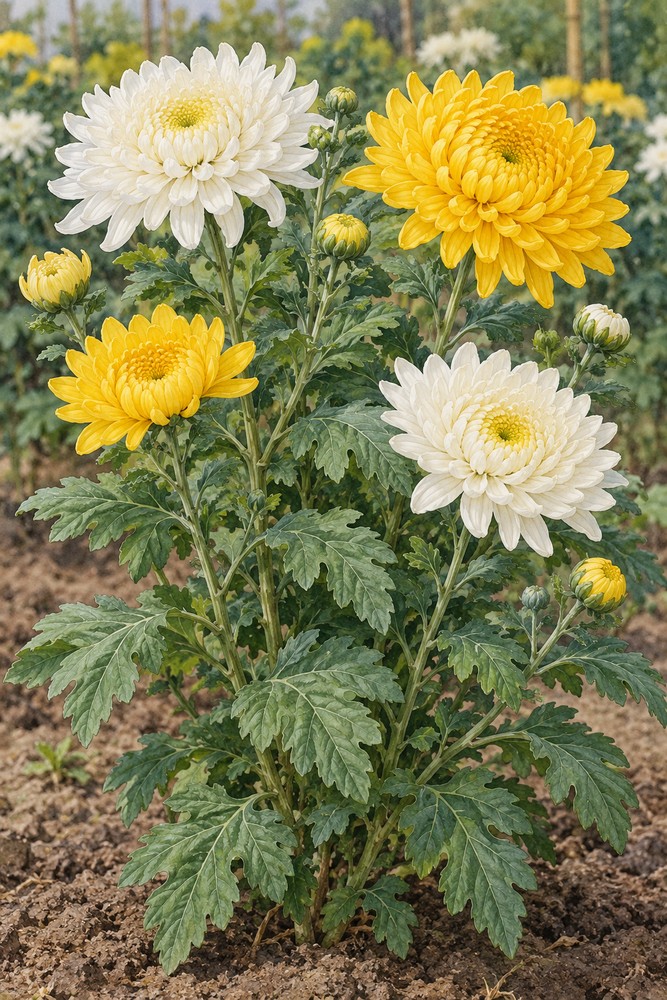
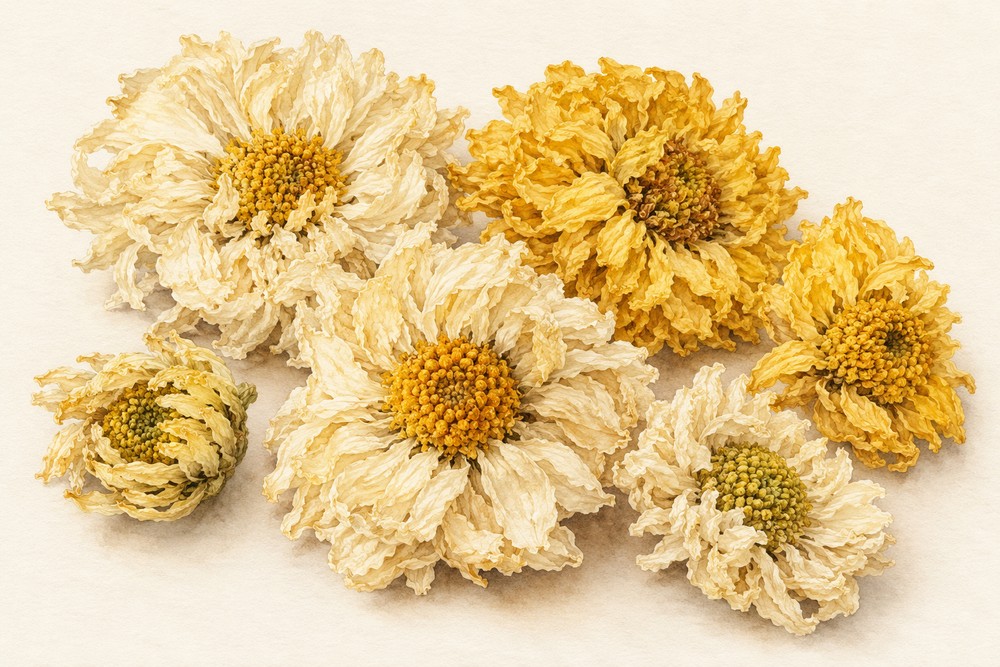
A cultivated chrysanthemum with lobed leaves and daisy-like heads; the materia medica is the dried flower head.
Traditional context
HKBU records Juhua as the flower head of Chrysanthemum morifolium. Region and processing produce distinct commercial types such as Hang Ju, Bo Ju, Gong Ju, and Chu Ju.
Modern evidence
Evidence for flower tea, whole heads, extracts, and isolated constituents is not interchangeable; traditional descriptions are not treatment claims.
Safety
It may trigger allergy in people sensitive to Asteraceae. Avoid if allergic; consult a professional if taking medicines or managing chronic conditions.
Pairing in reference texts
Juhua appears in teas and some traditional formulas. Brewed food use is not equivalent to concentrated extracts or multi-ingredient products.
Growing, care, and harvest timing
HKBU habitat record: Cultivated throughout China. The medicinal materials produced in Haoxian of Anhui, Luoyang and Shangqiu of Henan are called as “Hao Chrysanthemum”; the medicinal materials produced in Chuxian of Anhui area called “Chu Chrysanthemum”; the medicinal materials produced in Jiaxing, Tongxiang and Wuxing of Zhejiang are mainly “Tea Chrysanthemum”, produced in Haining of Zhejiang are mainly “Yellow Chrysanthemum”, both called “Hang Chrysanthemum” Harvest and processing as recorded: Picked in batches after dew drying or after noon on sunny days of early Nov when petals open flat, turn to white from yellow while flower heart slightly yellow. Flowers of that period are lack of water, easy to dry, in good color and high quality. After picking dried them timely or thin spread in well-ventilated places rather than piled up. Processing methods vary due to different breeds and dried in the shade for small-scale processing. Cut flower branches on sunny days when mostly blooming, wisped, hung in well-ventilated places for 30-40days till dry, then slightly sun-dried; spread fresh Juhua in steamer thinner than 3 ones piled, then steamed for 3-4 minutes after water boils, taken out and sundried, better not ruffle; baked to dry in 60℃, (spread on baking screen, thinner than 3cm.)
Source-recorded harvest/processing: Picked in batches after dew drying or after noon on sunny days of early Nov when petals open flat, turn to white from yellow while flower heart slightly yellow. Flowers of that period are lack of water, easy to dry, in good color and high quality. After picking dried them timely or thin spread in well-ventilated places rather than piled up. Processing methods vary due to different breeds and dried in the shade for small-scale processing. Cut flower branches on sunny days when mostly blooming, wisped, hung in well-ventilated places for 30-40days till dry, then slightly sun-dried; spread fresh Juhua in steamer thinner than 3 ones piled, then steamed for 3-4 minutes after water boils, taken out and sundried, better not ruffle; baked to dry in 60℃, (spread on baking screen, thinner than 3cm.)
The reviewed source does not provide a complete species-specific sowing/growing routine, irrigation/fertilization schedule, or universal plant age. The page therefore does not infer care instructions or years to harvest; consult local cultivation guidance.
Open habitat and season source ↗FROM PLANT / SOURCE HABITAT TO DRIED MATERIAL · REFERENCE WORKFLOW
- Harvest in batches at the appropriate flower-head stage; HKBU notes that processing varies by cultivar and region.
- Remove leaves, insects, and damaged blooms; do not pile fresh flowers because this slows moisture removal.
- Spread thinly in a ventilated place or dry under the procedure for the intended commercial type; avoid rough handling to preserve flower heads.
- Cool and sort by origin and processing type; store dry, away from light, dust, and mold.
These are post-harvest study notes, not directions to prepare a remedy for self-treatment. Processing reference ↗
How to read formula amounts
The cited sources do not provide a formula with specific amounts for this profile; no ratio is invented. Absence from the incompatibility list does not establish safety.
Habitat, season, and harvest in the HKBU botanical record
HKBU botanical record (translated summary): Habitat and distribution: Cultivated throughout China. The medicinal materials produced in Haoxian of Anhui, Luoyang and Shangqiu of Henan are called as “Hao Chrysanthemum”; the medicinal materials produced in Chuxian of Anhui area called “Chu Chrysanthemum”; the medicinal materials produced in Jiaxing, Tongxiang and Wuxing of Zhejiang are mainly “Tea Chrysanthemum”, produced in Haining of Zhejiang are mainly “Yellow Chrysanthemum”, both called “Hang Chrysanthemum” Harvest and processing as recorded: Picked in batches after dew drying or after noon on sunny days of early Nov when petals open flat, turn to white from yellow while flower heart slightly yellow. Flowers of that period are lack of water, easy to dry, in good color and high quality. After picking dried them timely or thin spread in well-ventilated places rather than piled up. Processing methods vary due to different breeds and dried in the shade for small-scale processing. Cut flower branches on sunny days when mostly blooming, wisped, hung in well-ventilated places for 30-40days till dry, then slightly sun-dried; spread fresh Juhua in steamer thinner than 3 ones piled, then steamed for 3-4 minutes after water boils, taken out and sundried, better not ruffle; baked to dry in 60℃, (spread on baking screen, thinner than 3cm.)
Open botanical source ↗