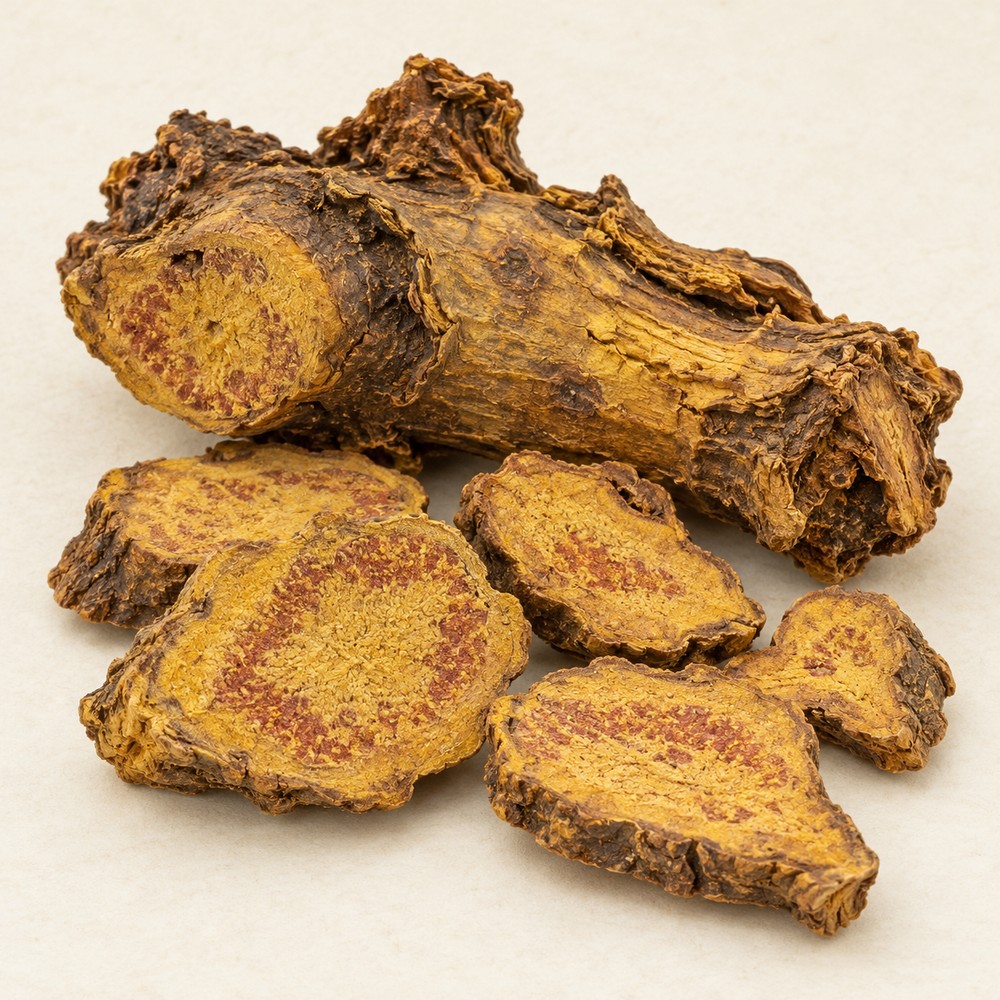
Rhubarb root and rhizome · Da Huang
Rheum palmatum L., R. tanguticum Maxim. ex Balf., R. officinale Baill. · Root and rhizome
Name and part used
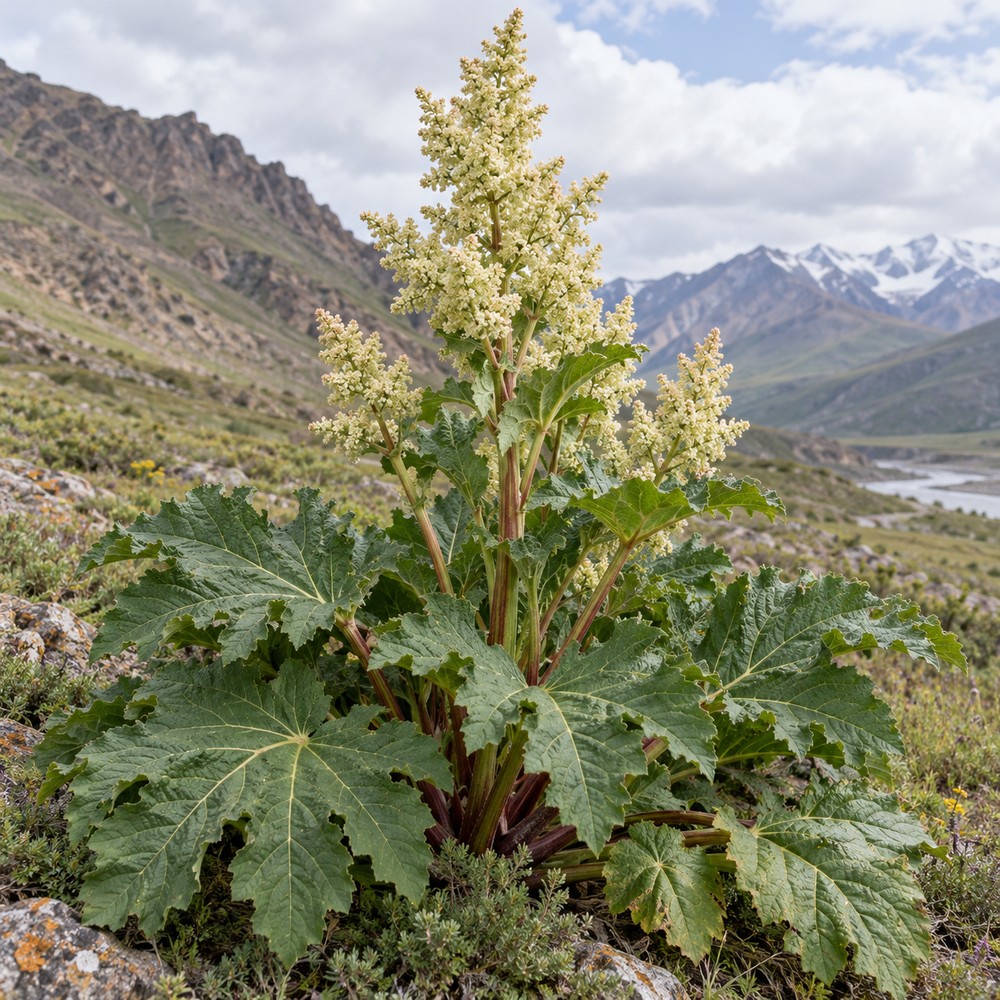
Medicinal Da Huang is root/rhizome of selected Rheum species; plants have large lobed leaves, thick petioles, and tall flowering stems. Not all culinary rhubarb is equivalent.
Traditional context
Purgative and heat-clearing actions are traditional descriptions; do not self-treat constipation, fever, or abdominal pain.
Modern evidence
Anthraquinone studies do not establish long-term safety or suitability; pharmacopoeial identity and processing matter.
Safety
May cause cramping, diarrhea, dehydration/electrolyte disturbance, and interactions. Avoid pregnancy, nursing, obstruction, inflammatory bowel disease, and children; use only under professional guidance.
Pairing in reference texts
Da Huang occurs in purgative formulas with Mang Xiao; potent combinations can be dangerous when self-used.
Growing, care, and harvest timing
HKBU habitat record: Growing in mountains, forest edges or grasslands; can be wild or cultivated. Distributed in Shaanxi, Sichuan, Gansu, Qinghai, Tibet, Yunnan and other provinces. The medicinal materials are mainly produced in Sichuan, Gansu and other provinces Harvest and processing as recorded: Excavated in late autumn when stems and leaves blighted or the next spring when germinated before excavation. Removed fine roots, scraped the skin, cut into segments or pieces, stringed up, indirectly or directly dried
Source-recorded harvest/processing: Excavated in late autumn when stems and leaves blighted or the next spring when germinated before excavation. Removed fine roots, scraped the skin, cut into segments or pieces, stringed up, indirectly or directly dried
The reviewed source does not provide a complete species-specific sowing/growing routine, irrigation/fertilization schedule, or universal plant age. The page therefore does not infer care instructions or years to harvest; consult local cultivation guidance.
Open habitat and season source ↗FROM PLANT / SOURCE HABITAT TO DRIED MATERIAL · REFERENCE WORKFLOW
- Thu rễ/thân rễ theo mùa; rửa đất và cắt bỏ phần hư.
- Harvest roots/rhizomes seasonally, wash soil, and trim damaged tissue.
These are post-harvest study notes, not directions to prepare a remedy for self-treatment. Processing reference ↗
How to read formula amounts
Displayed amounts belong to the cited formula and source; they are not a general safe ratio, treatment dose, or home-decoction instruction. Do not transfer amounts to another formula or adjust them by body weight.
Habitat, season, and harvest in the HKBU botanical record
HKBU botanical record (translated summary): Flowering and fruiting dates: Flowering: June to July. Fruiting: July to August Habitat and distribution: Growing in mountains, forest edges or grasslands; can be wild or cultivated. Distributed in Shaanxi, Sichuan, Gansu, Qinghai, Tibet, Yunnan and other provinces. The medicinal materials are mainly produced in Sichuan, Gansu and other provinces Harvest and processing as recorded: Excavated in late autumn when stems and leaves blighted or the next spring when germinated before excavation. Removed fine roots, scraped the skin, cut into segments or pieces, stringed up, indirectly or directly dried
Open botanical source ↗HKBU formula record containing this herb: Da Cheng Qi Tang / Major Purgative Decoction
Traditional action in the source: Drastically purges heat accumulation
Ingredient images and source amounts are shown for comparison only; this is not a treatment recipe.
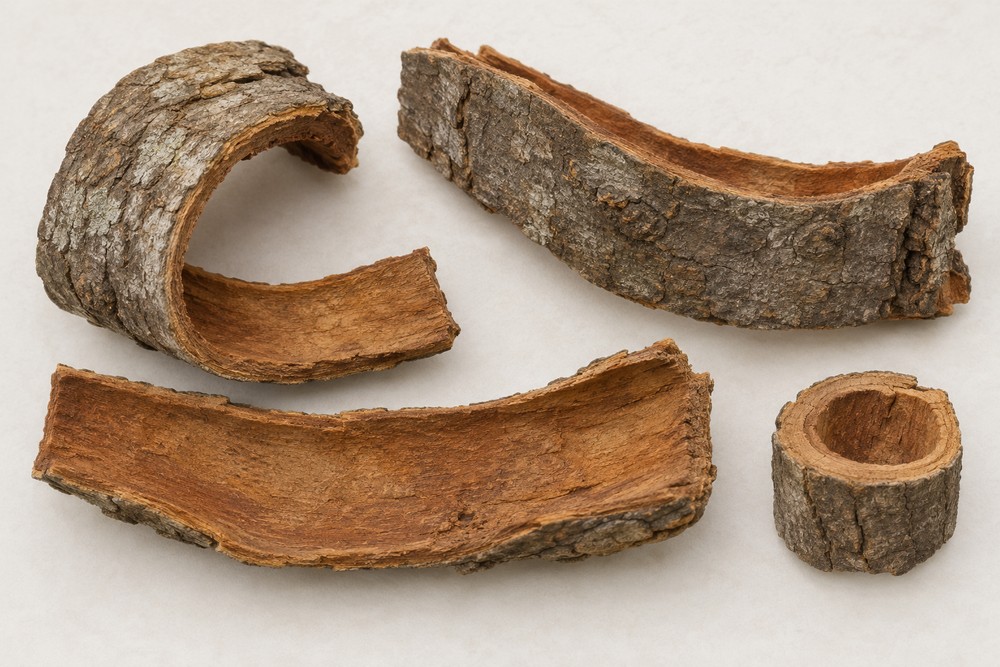
HKBU source-recorded composition
Rhei Radix et Rhizoma (Da Huang) 4 liang (12g), Magnoliae Officinalis Cortex (Hou Po) 0.5 jin (24g), Aurantii Fructus Immaturus (Zhi Shi) 5 pieces (12g), Natrii Sulfas (Mang Xiao) 3 he (9g)
The ingredients and amounts below are one HKBU-recorded version; texts, historical units, processing, and modern products can differ. This is comparative reference data, not a home-preparation recipe or personal dose.
Open complete HKBU formula record ↗