Divaricate saposhnikovia root · Fang Feng
Saposhnikovia divaricata (Turcz.) Schischk. · Root
Name and part used
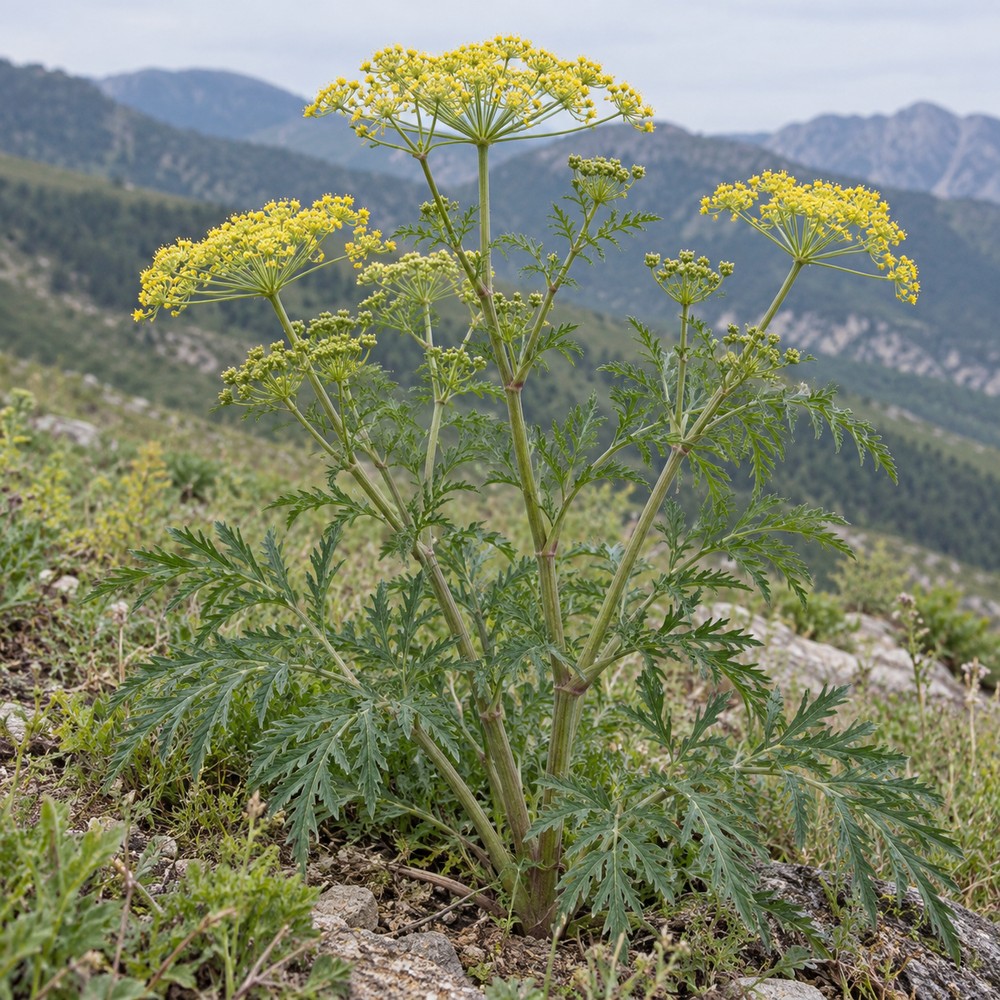
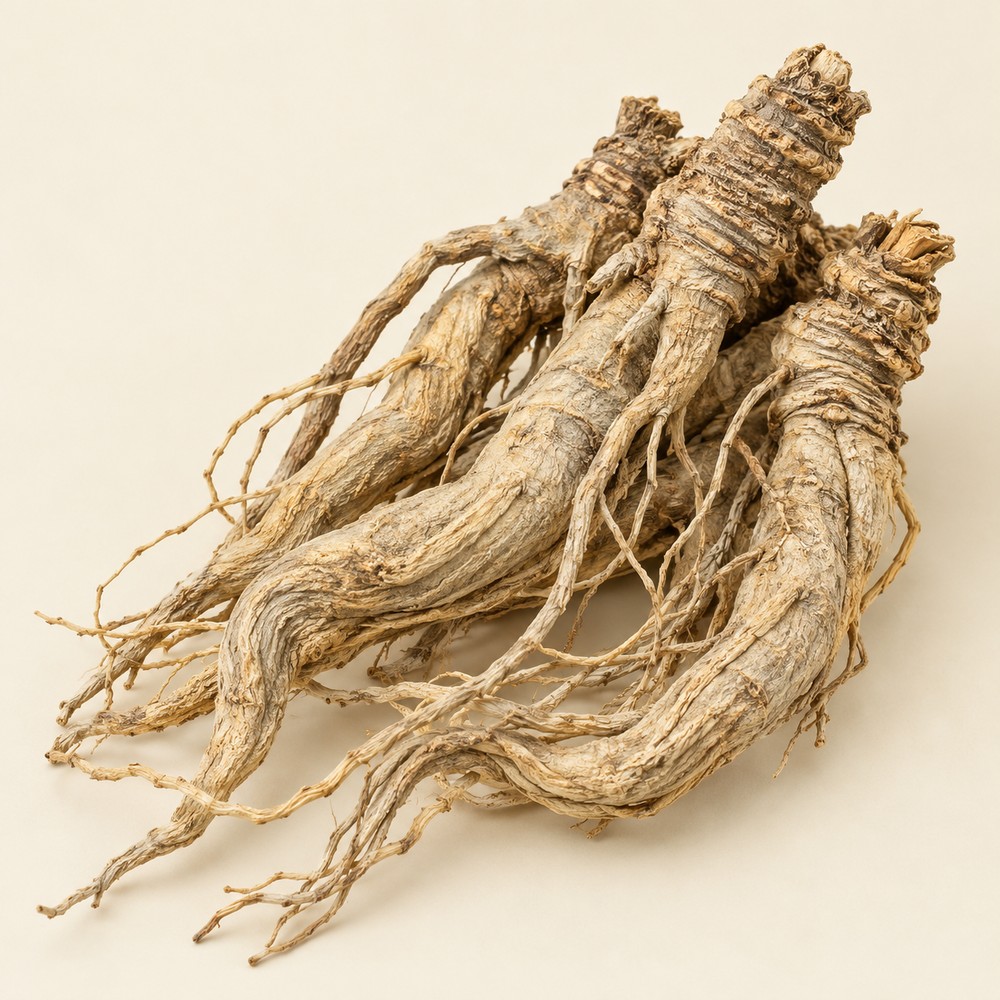
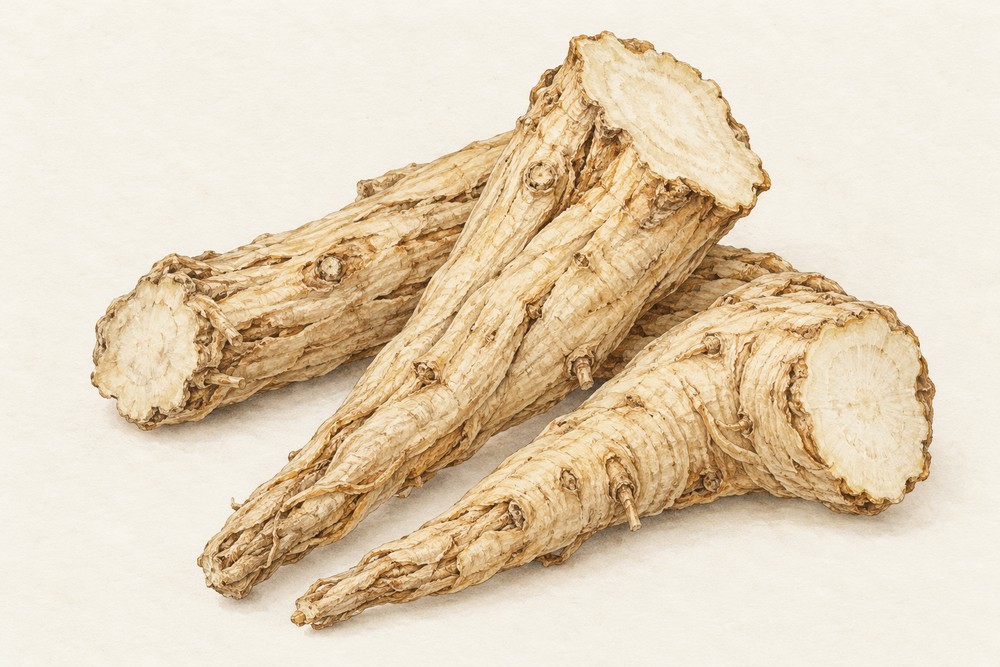
A glabrous perennial with deeply divided basal leaves and yellow umbels; dried roots are spindle/conical with dense neck rings.
Traditional context
Wind-dispersing and pain-relieving actions are traditional descriptions, not treatment for causes of fever, headache, or spasms.
Modern evidence
HKBU describes annular neck rings and chrysanthemum-like radial cut; identification must use authenticated references.
Safety
Apiaceae contains toxic lookalikes; never wild-harvest. Review anticoagulants, pregnancy, and allergies.
Pairing in reference texts
Fang Feng occurs with Huang Qi and Bai Zhu in historical formulas; this does not establish allergy prevention or treatment.
Growing, care, and harvest timing
HKBU habitat record: Growing wild on hills, in hill-slope grass, or by paddies, roadsides and below mid-alps. Distributed in Northeast China, Inner Mongolia, Hebei, Shandong, Henan, Shaanxi, Shanxi, Hunan and etc. The medicinal materials are mainly produced in Heilongjiang, Jilin, Inner Mongolia and Hebei. Also produced in Liaoning, Shandong, Shanxi, Shaanxi and etc Harvest and processing as recorded: Excavated roots of those with un-sprouting flower stem in spring and autumn, removed fibril, stem leaves and sediment, sun-dried to 80 percent dried, wisped, sun-dried again
Source-recorded harvest/processing: Excavated roots of those with un-sprouting flower stem in spring and autumn, removed fibril, stem leaves and sediment, sun-dried to 80 percent dried, wisped, sun-dried again
The reviewed source does not provide a complete species-specific sowing/growing routine, irrigation/fertilization schedule, or universal plant age. The page therefore does not infer care instructions or years to harvest; consult local cultivation guidance.
Open habitat and season source ↗FROM PLANT / SOURCE HABITAT TO DRIED MATERIAL · REFERENCE WORKFLOW
- Thu rễ cây chưa trổ ngồng vào xuân/thu, bỏ rễ tơ, lá thân và đất theo mô tả HKBU.
- Harvest roots before bolting in spring/autumn; remove fibrous roots, stem leaves, and sediment per HKBU.
These are post-harvest study notes, not directions to prepare a remedy for self-treatment. Processing reference ↗
How to read formula amounts
Displayed amounts belong to the cited formula and source; they are not a general safe ratio, treatment dose, or home-decoction instruction. Do not transfer amounts to another formula or adjust them by body weight.
Habitat, season, and harvest in the HKBU botanical record
HKBU botanical record (translated summary): Flowering and fruiting dates: Flowering: August to September, fruiting: September to October Habitat and distribution: Growing wild on hills, in hill-slope grass, or by paddies, roadsides and below mid-alps. Distributed in Northeast China, Inner Mongolia, Hebei, Shandong, Henan, Shaanxi, Shanxi, Hunan and etc. The medicinal materials are mainly produced in Heilongjiang, Jilin, Inner Mongolia and Hebei. Also produced in Liaoning, Shandong, Shanxi, Shaanxi and etc Harvest and processing as recorded: Excavated roots of those with un-sprouting flower stem in spring and autumn, removed fibril, stem leaves and sediment, sun-dried to 80 percent dried, wisped, sun-dried again
Open botanical source ↗HKBU formula record containing this herb: Jiu Wei Qiang Huo Tang / Nine Ingredients Notopterygium Decoction
Traditional action in the source: Induces sweating, expels dampness, and clears internal heat
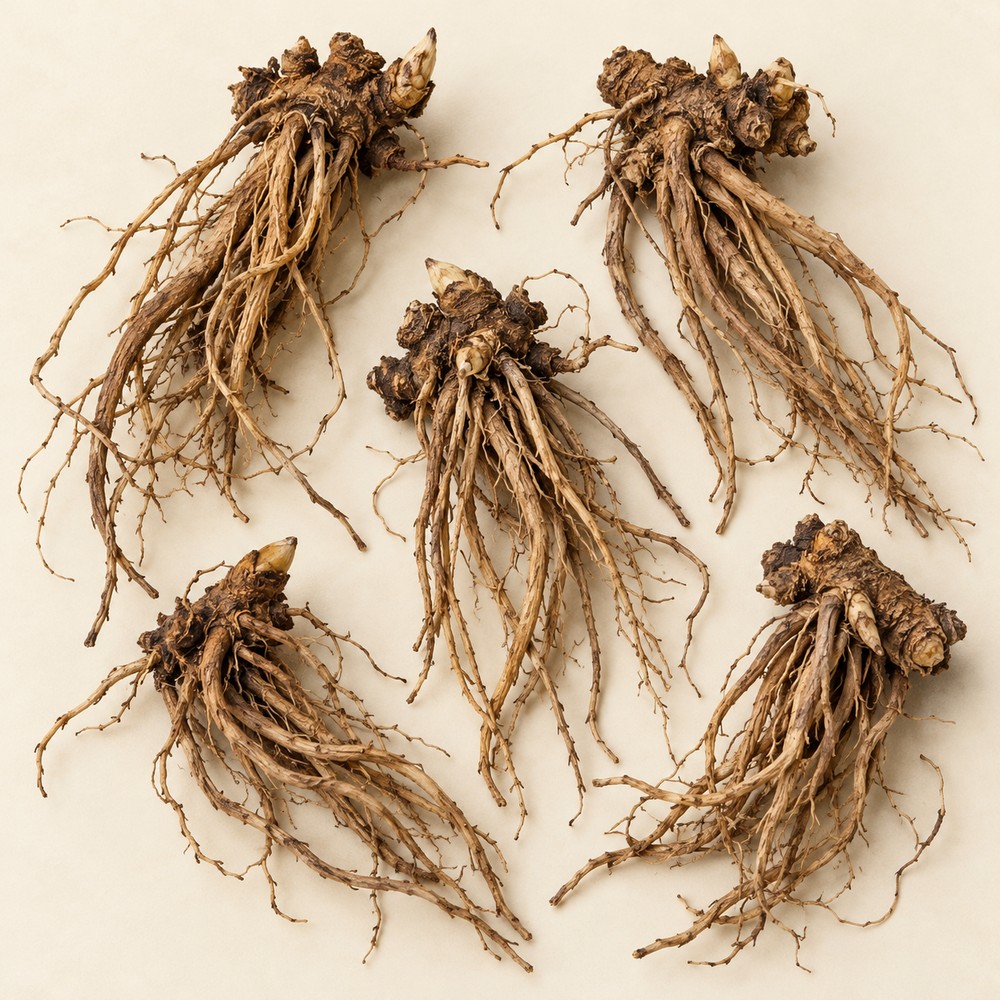
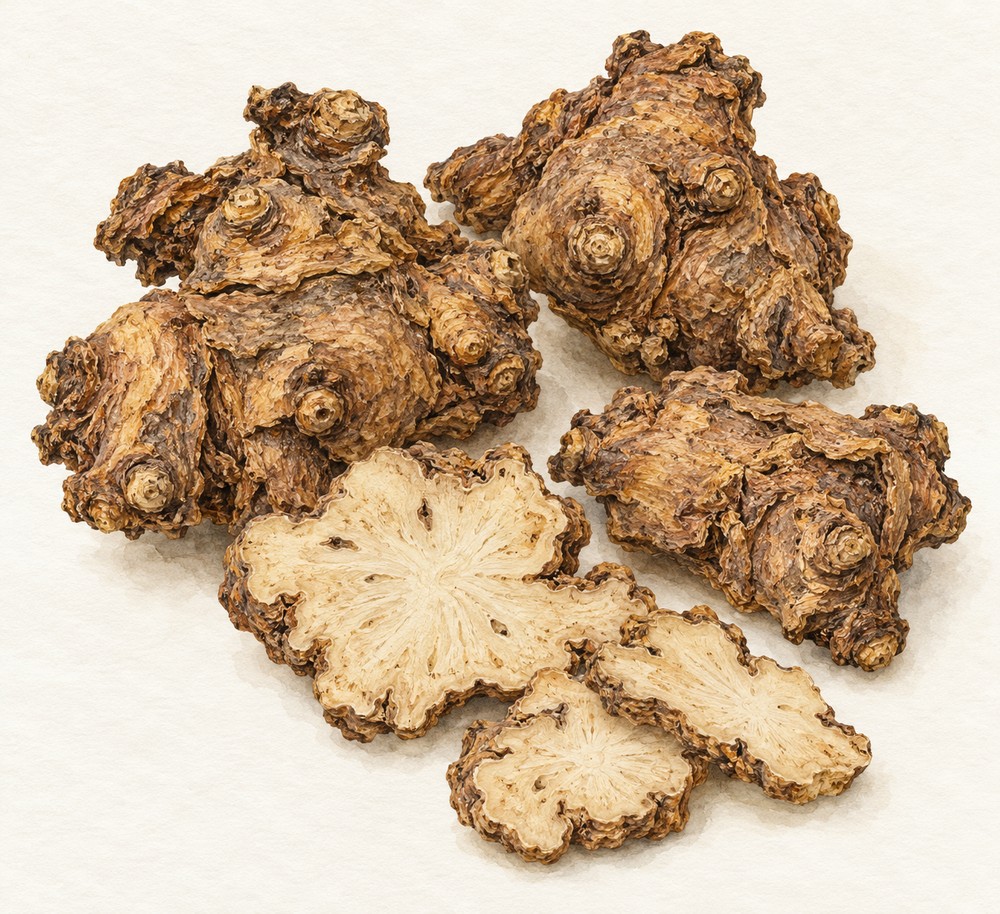
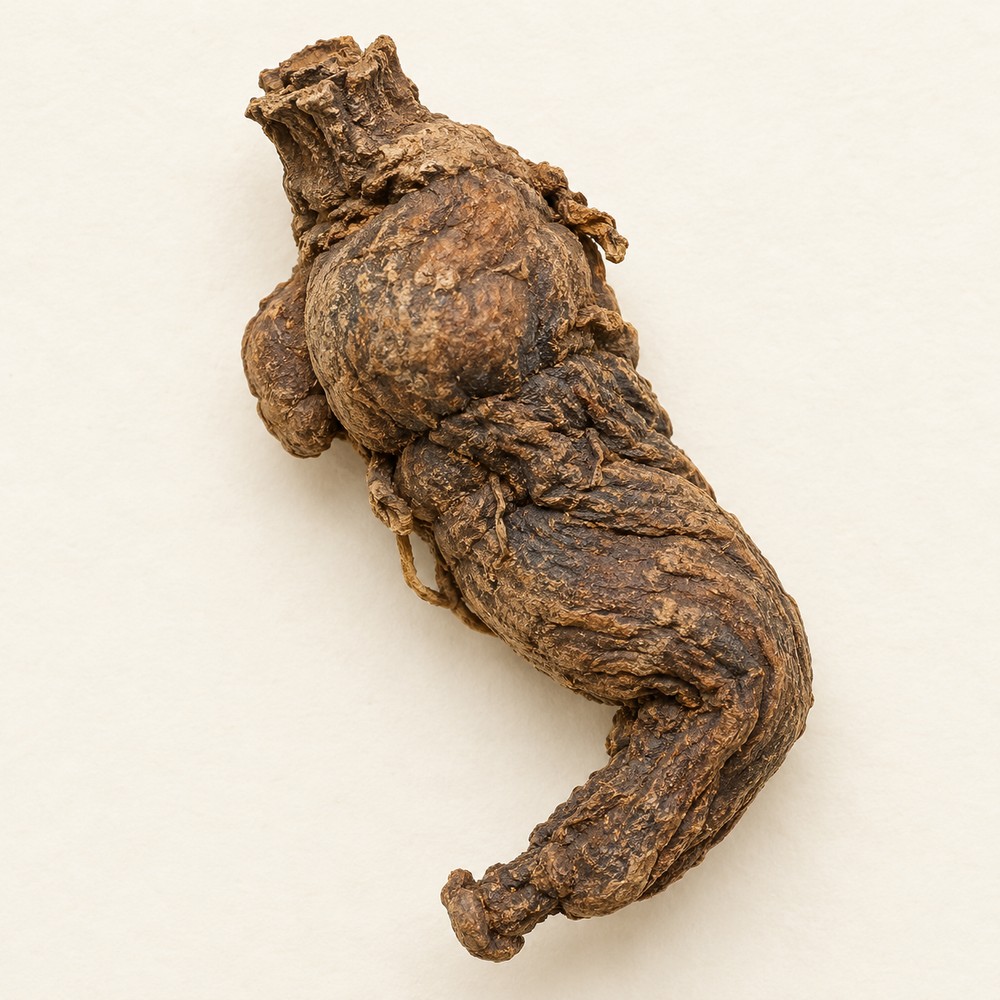
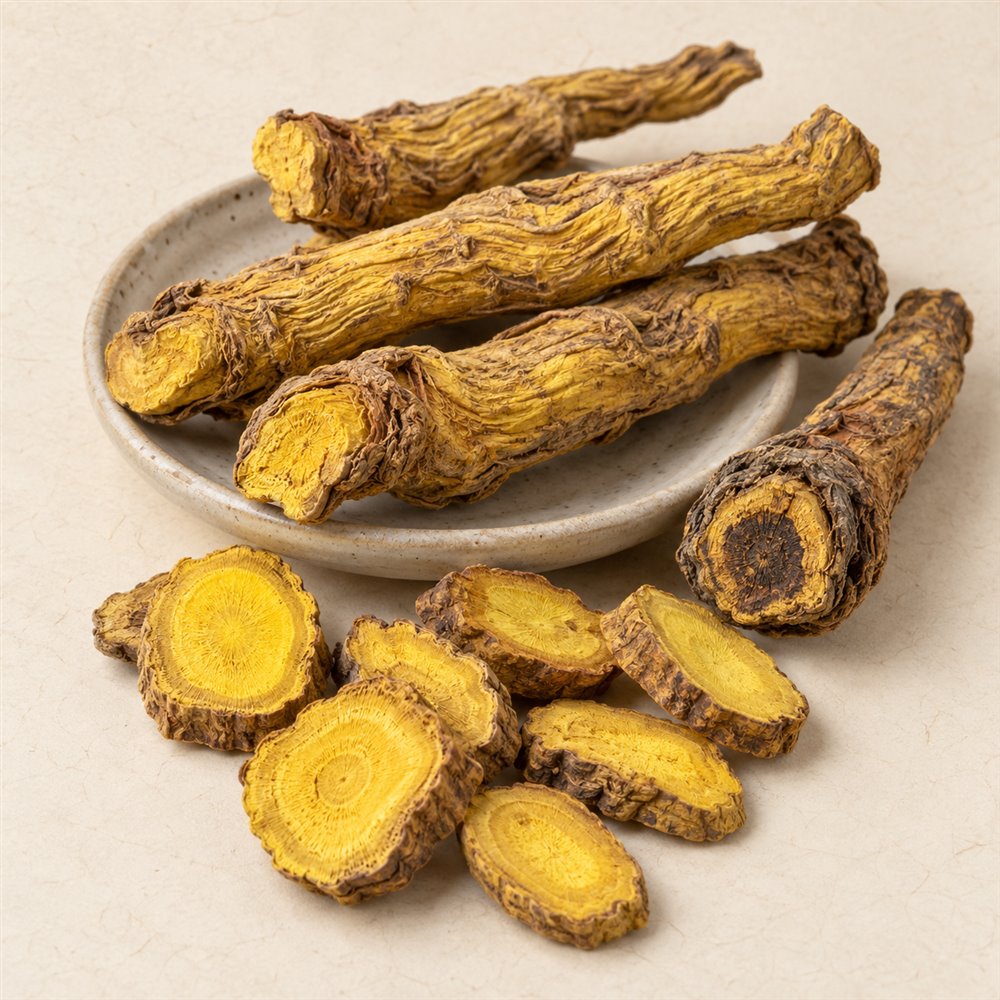
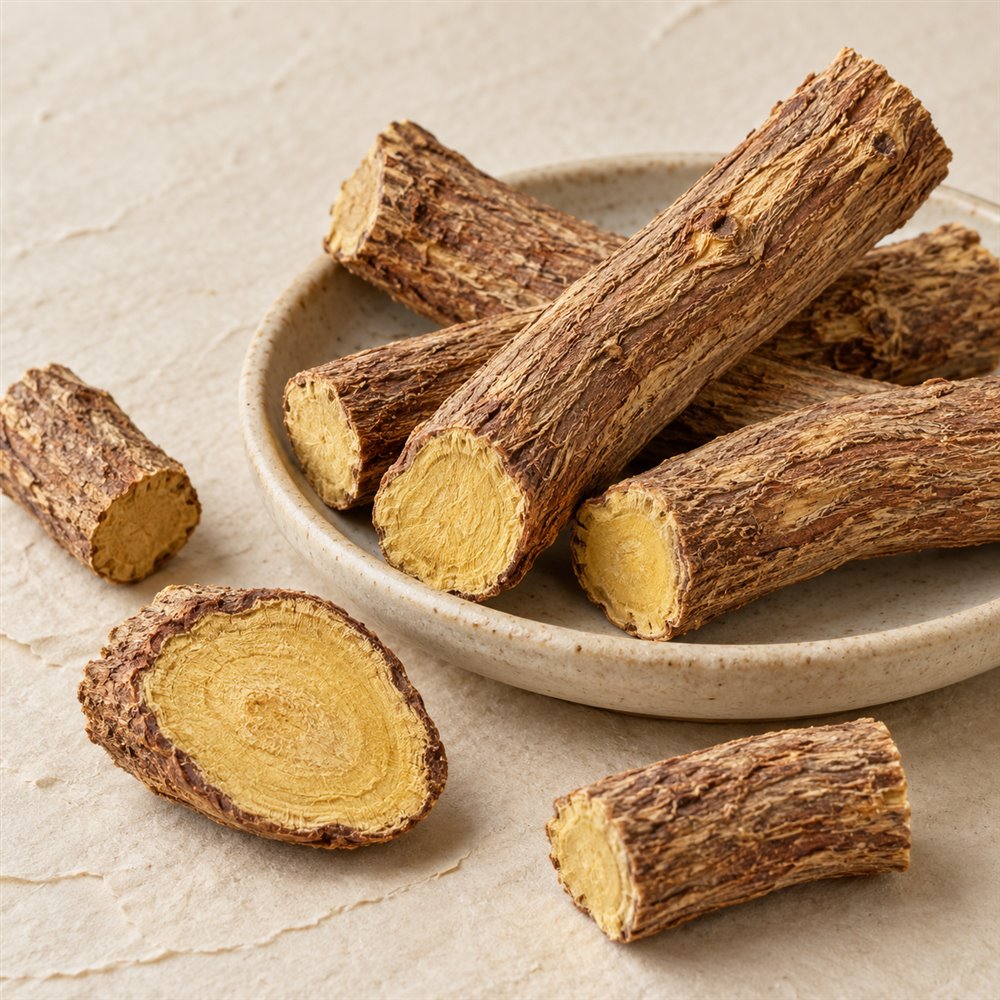
Ingredient images and source amounts are shown for comparison only; this is not a treatment recipe.
HKBU source-recorded composition
Notopterygii Rhizoma et Radix (Qiang Huo) 1.5 liang (9g), Saposhnikoviae Radix (Fang Feng) 1.5 liang (9g), Atractylodis Rhizoma (Cang Zhu) 1.5 liang (9g), Asari Radix et Rhizoma (Xi Xin) 5 fen (3g), Chuanxiong Rhizoma (Chuan Xiong) 1 liang (6g), Angelicae Dahuricae Radix (Bai Zhi) 1 liang (3g), Rehmanniae Radix (Sheng Di Huang) 1 liang (6g), Scutellariae Radix (Huang Qin) 1 liang (6g), Glycyrrhizae Radix et Rhizoma (Gan Cao) 1 liang (6g)
The ingredients and amounts below are one HKBU-recorded version; texts, historical units, processing, and modern products can differ. This is comparative reference data, not a home-preparation recipe or personal dose.
Open complete HKBU formula record ↗