Fo Shou · Finger citron · Fo Shou
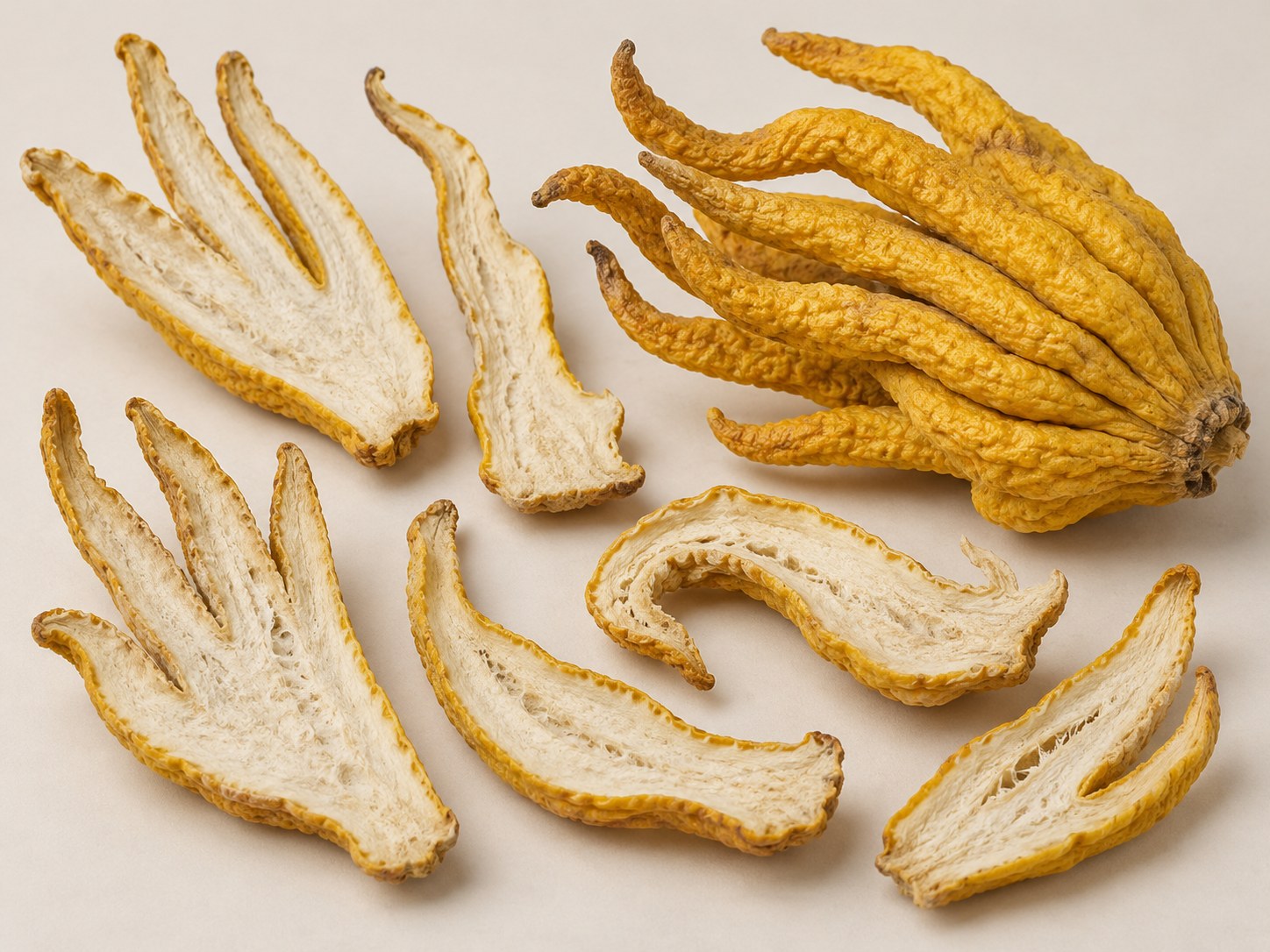
Citrus medica L. var. sarcodactylis Swingle · Dried sliced mature fruit
Name and part used
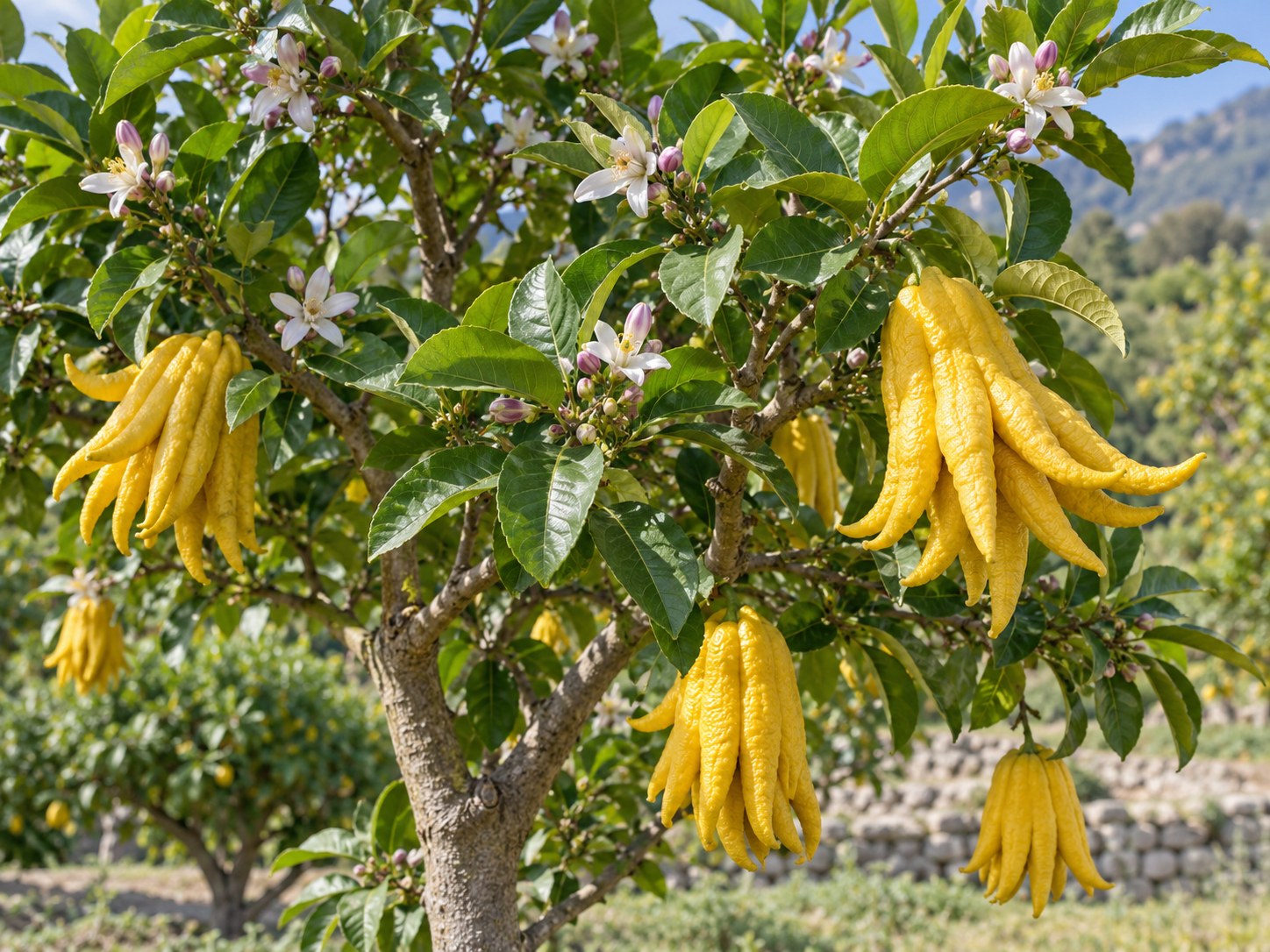
Fo Shou is the fruit of Citrus medica L. var. sarcodactylis Swingle, an evergreen shrub or small tree in Rutaceae. Branches bear short hard thorns; aromatic simple leaves have oil glands, and flowers are white inside with a purple tint outside. Mature fruit turns yellow and divides into three to five elongated finger-like lobes. The fruit has little pulp and thick, fragrant rind and pith. Commercial materia medica consists of thin dried fruit slices, often curled or wrinkled; skin and pith colors vary by region. Do not confuse it with an untreated ornamental Buddha’s hand fruit or ordinary lemon peel. Although the plant may be grown ornamentally, a medicinal lot requires traceable sourcing and appropriate post-harvest processing.
Traditional context
HKBU records Fo Shou as acrid, bitter, sour, and warm, with traditional actions of coursing liver qi, harmonizing the stomach, and relieving pain. These are traditional concepts, not evidence that the fruit treats gastritis, vomiting, reflux, hepatobiliary disease, or anxiety. Persistent abdominal pain, blood in vomit, weight loss, or jaundice requires medical evaluation.
Modern evidence
Citrus peel oils, aroma, and flavonoids may be studied separately, but chemical data do not establish clinical benefit from a dried Fo Shou slice. Lobe size, cultivar, and maturity affect composition. Images cannot show pesticide residues, mold, or oil degradation during drying. Edible fruit or fragrance use does not prove safety of high-dose products, ingested essential oil, or concentrated extracts.
Safety
Citrus peel oil can irritate skin or cause photosensitivity; never apply undiluted essential oil. Avoid if allergic to citrus. Glucose effects and interactions depend on the specific product, so concentrated extracts or mixtures warrant caution. Pregnancy, breastfeeding, hepatobiliary disease, medicines, or persistent digestive symptoms call for professional advice. Do not use a fruit liquor to self-treat abdominal pain.
Safety reference ↗Pairing in reference texts
Materia-medica records place Fo Shou in some traditional qi-regulating or stomach-harmonizing formulas, but texts differ in amount and preparation. There is no universal ratio; do not add turmeric, licorice, or stomach medicines simply because they appear together in texts. Classical formulas are historical records, not personal prescriptions.
Identification and study notes
Fo Shou fruit may have open or closed “fingers,” with yellow skin at maturity; dried medicinal slices curl and show yellow rind with pale pith. It is a citron form and lacks juicy segments like an orange. Leaves have oil glands and branches carry thorns. Compare whole fruit and cut surfaces rather than the hand-like outline alone. Aroma does not prove pesticide absence or safety of ingested essential oil. Fo Shou fruit varies: some lobes spread open, while others curl together like a fist. Not every fruit is a medicinal grade; ornamental and medicinal crops may use different stock and processing. Leaves are aromatic when crushed but should not be tasted. For dried material, inspect thick rind, pale pith, slices following the fruit axis, and natural aroma; do not infer quality from yellow color alone. Wear gloves when pruning thorny branches and keep peel oil away from eyes. Fresh fruit may be waxed, so clean it and record the supplier if used as food. An illustration cannot confirm pesticide residues, microbes, or which part was used. Hình quả đặc biệt do các thùy tách ở đầu; ngón có thể xòe hoặc khép. Lát thương phẩm thường bổ dọc, cho thấy cùi sáng và vỏ chứa tinh dầu. Hút ẩm làm lát giòn mềm hơn nhưng đó không phải kiểm tra an toàn. Bảo quản tránh sáng, nóng, ẩm; bỏ lô bị côn trùng hoặc nấm. Dị ứng cam chanh và tiếp xúc tinh dầu vẫn cần lưu ý dù quả được mô tả trong dược liệu cổ truyền.
Growth and habitat
Fo Shou prefers warm, humid conditions, full sun, and is frost-sensitive; it suits deep, well-drained, organic, slightly acidic soil. In cold climates it needs a greenhouse or bright indoor winter shelter. Excess shade may reduce flowering, while prolonged waterlogging harms roots. Branches are spiny, so site safely and wear gloves when pruning.
Identification and study notes
Fo Shou fruit may have open or closed “fingers,” with yellow skin at maturity; dried medicinal slices curl and show yellow rind with pale pith. It is a citron form and lacks juicy segments like an orange. Leaves have oil glands and branches carry thorns. Compare whole fruit and cut surfaces rather than the hand-like outline alone. Aroma does not prove pesticide absence or safety of ingested essential oil. Fo Shou fruit varies: some lobes spread open, while others curl together like a fist. Not every fruit is a medicinal grade; ornamental and medicinal crops may use different stock and processing. Leaves are aromatic when crushed but should not be tasted. For dried material, inspect thick rind, pale pith, slices following the fruit axis, and natural aroma; do not infer quality from yellow color alone. Wear gloves when pruning thorny branches and keep peel oil away from eyes. Fresh fruit may be waxed, so clean it and record the supplier if used as food. An illustration cannot confirm pesticide residues, microbes, or which part was used. Hình quả đặc biệt do các thùy tách ở đầu; ngón có thể xòe hoặc khép. Lát thương phẩm thường bổ dọc, cho thấy cùi sáng và vỏ chứa tinh dầu. Hút ẩm làm lát giòn mềm hơn nhưng đó không phải kiểm tra an toàn. Bảo quản tránh sáng, nóng, ẩm; bỏ lô bị côn trùng hoặc nấm. Dị ứng cam chanh và tiếp xúc tinh dầu vẫn cần lưu ý dù quả được mô tả trong dược liệu cổ truyền.
Growing and care
- Buy grafted or cutting-grown Citrus medica var. sarcodactylis from a traceable nursery.
- Plant in full sun and slightly acidic well-drained soil; in containers use loam-based citrus mix with grit and drainage holes.
- Water thoroughly, then allow the surface to begin drying; feed with a citrus fertilizer as labelled during active growth and reduce winter watering.
- Remove dead branches, monitor scale/mealybugs and mites, protect from frost, and record flowering and fruit maturity.
How long until harvest? A horticultural source estimates roughly 5–10 years to maturity depending on conditions; medicinal references describe harvesting mature large fruits, often in late autumn in producing regions. Timing varies by cultivar and climate; harvest when the fruit has developed and skin turns yellow rather than by a fixed calendar date.
Habitat, season, and harvest in the HKBU botanical record
HKBU identifies Citrus medica var. sarcodactylis in Rutaceae as an evergreen shrub or small tree about 3–4 m tall, with aromatic leaves, thorny branches, and a finger-lobed ripe fruit. The drug is sliced dried fruit; producing regions include Guangdong, Guangxi, Sichuan, and Chongqing. Source morphology does not prove treatment of stomach disease.
Open botanical source ↗FROM PLANT / SOURCE HABITAT TO DRIED MATERIAL · REFERENCE WORKFLOW
- Select mature, undamaged, mold-free fruit and record cultivar, growing region, and harvest date.
- Wash the rind, slice lengthwise thinly while preserving the characteristic lobes, and remove seeds and damaged tissue.
- Dry on clean ventilated trays or under the facility’s validated standard; avoid excessive heat that degrades aroma and protect from dust.
- Cool, grade by color and region, seal dry, label Latin name, lot, and processing date, and inspect periodically for mold.
These are post-harvest study notes, not directions to prepare a remedy for self-treatment. Processing reference ↗