Fu Pen Zi · palmleaf raspberry fruit · Fu Pen Zi
Rubus chingii Hu · Processed, unripe aggregate fruit
Name and part used
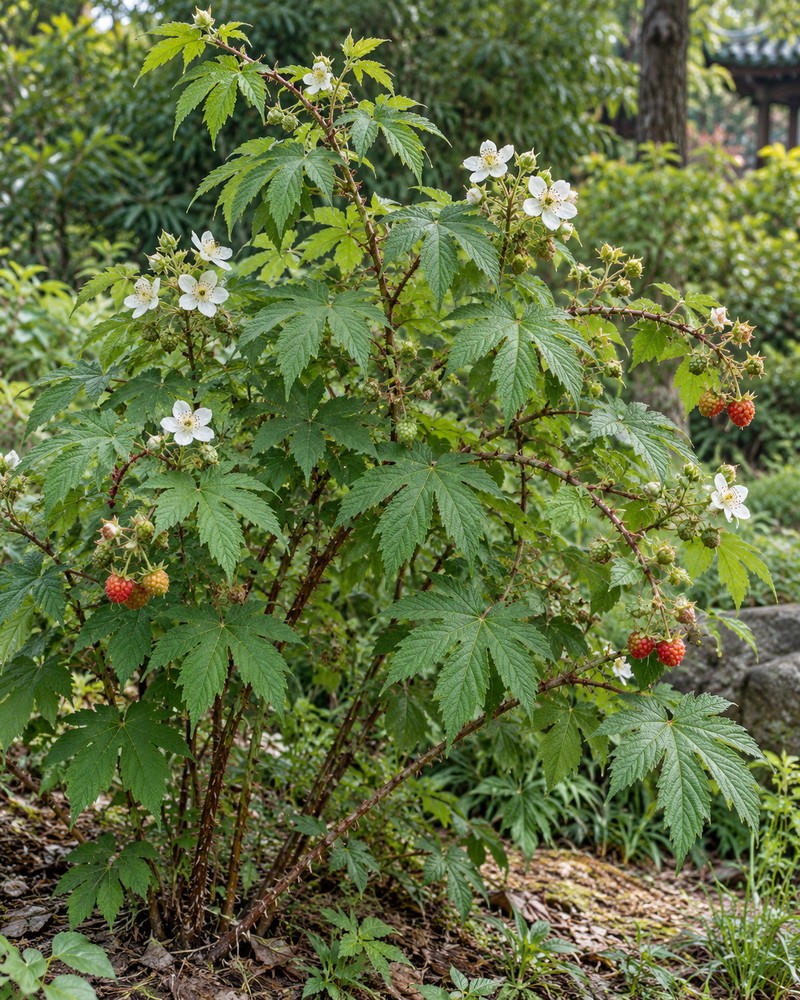
Rubus chingii is a perennial shrub with arching canes, palmately lobed leaves, and white flowers. HKBU’s Fu Pen Zi is dried aggregate fruit; it is not the same material as ripe culinary raspberries.
Traditional context
HKBU records the traditional actions “boosts kidney, secures essence, reduces urine.” These are traditional terms, not proof of treatment for nocturia, infertility, erectile dysfunction, or blurred vision.
Modern evidence
Studies of constituents and laboratory or animal activity do not establish that the medicinal fruit treats disease in people. The unripe medicinal fruit must be distinguished from ripe fruit eaten as food.
Safety
Interaction and safety data for concentrated materia medica are limited. People with Rosaceae allergy, pregnancy or breastfeeding, chronic conditions, or medicines should consult a professional before considering preparations; do not self-treat urinary symptoms.
Pairing in reference texts
HKBU classifies it as a traditional tonic, but reviewed sources do not support a therapeutic formula or self-use ratio. No specific toxic pair was established in the records checked; that does not mean all combinations are safe.
Growth and habitat
Reviews describe cultivation mainly in eastern China, including Zhejiang, Jiangxi, Anhui, Jiangsu, and Fujian; the shrub favors subtropical conditions and moist but drained soil. HKBU material records list Zhejiang, Fujian, Hubei, Anhui, Jiangxi, and Guangdong as production regions.
Identification and study notes
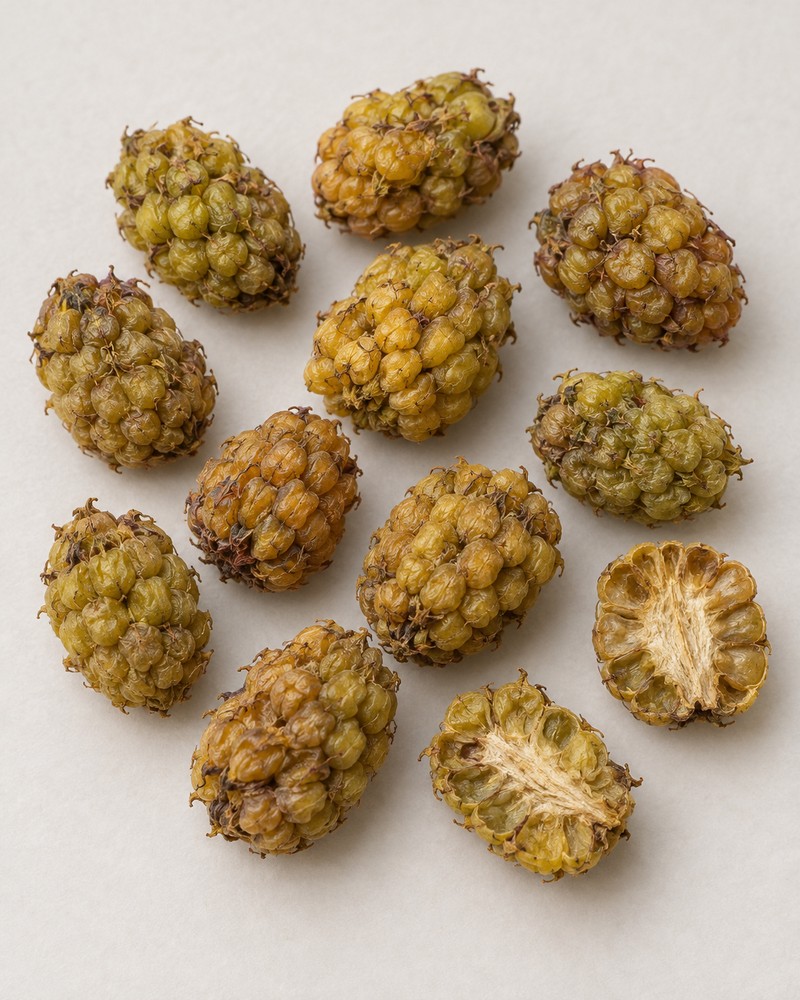
Useful identification features include nearly round leaves usually divided into five to seven palm-like lobes with toothed margins; young canes are green and become reddish brown, with sparse prickles. White five-petaled flowers develop into an aggregate of many small drupelets. Common culinary raspberries can look similar, so the species name and nursery provenance matter. The medicinal fruit is collected green turning yellow, unlike the soft ripe red berry. After processing, the aggregate fruit is firm, light, yellow-brown or pale brown; individual fruitlets have a netted, wrinkled surface and fine hairs on the back. The AI image is a general study illustration and cannot verify cultivar, maturity, or commercial quality. Prickles can scratch during pruning, while waterlogged soil increases root-rot risk. A garden plant is not guaranteed to meet medicinal specifications, cleanliness, or safety; the word “raspberry” does not transfer the herb’s traditional claims to fresh culinary fruit.
Growing and care
- Chọn vị trí thoáng, có nắng buổi sáng hoặc nắng nhẹ; đất tơi, giàu hữu cơ, giữ ẩm nhưng không úng. Làm luống cao nếu đất nặng hoặc mưa nhiều.
- Choose an airy site with morning or gentle sun and loose organic soil that holds moisture without waterlogging. Use a raised bed in heavy soil or wet climates.
How long until harvest? A Zhejiang cultivation report says plants may begin bearing in year two and reach fuller production around years three to four; climate, cultivar, and propagation alter timing. Medicinal fruit is harvested in early summer while green turning yellow.
Documented toxic incompatibility
Reviewed sources did not identify a toxic herb pair specific to Fu Pen Zi. No general combination ratio is established; this is not a recommendation to combine herbs or self-treat. Distinguish ripe edible fruit from the unripe medicinal material.
AI study illustrations; not for specimen identification.
FROM PLANT / SOURCE HABITAT TO DRIED MATERIAL · REFERENCE WORKFLOW
- HKBU identifies the dried aggregate fruit of Rubus chingii; another materia medica reference records early-summer harvest as fruit turns green-yellow.
- Remove leaves, stalks, rotten fruit, and debris; keep lots separated by species, field, and maturity stage.
- A specialist source describes brief blanching or light steaming followed by drying; producers must follow current quality standards, not home-process for ingestion.
- Cool fully, seal, and store dry; reject moldy, off-odor, or contaminated lots.
These are post-harvest study notes, not directions to prepare a remedy for self-treatment. Processing reference ↗