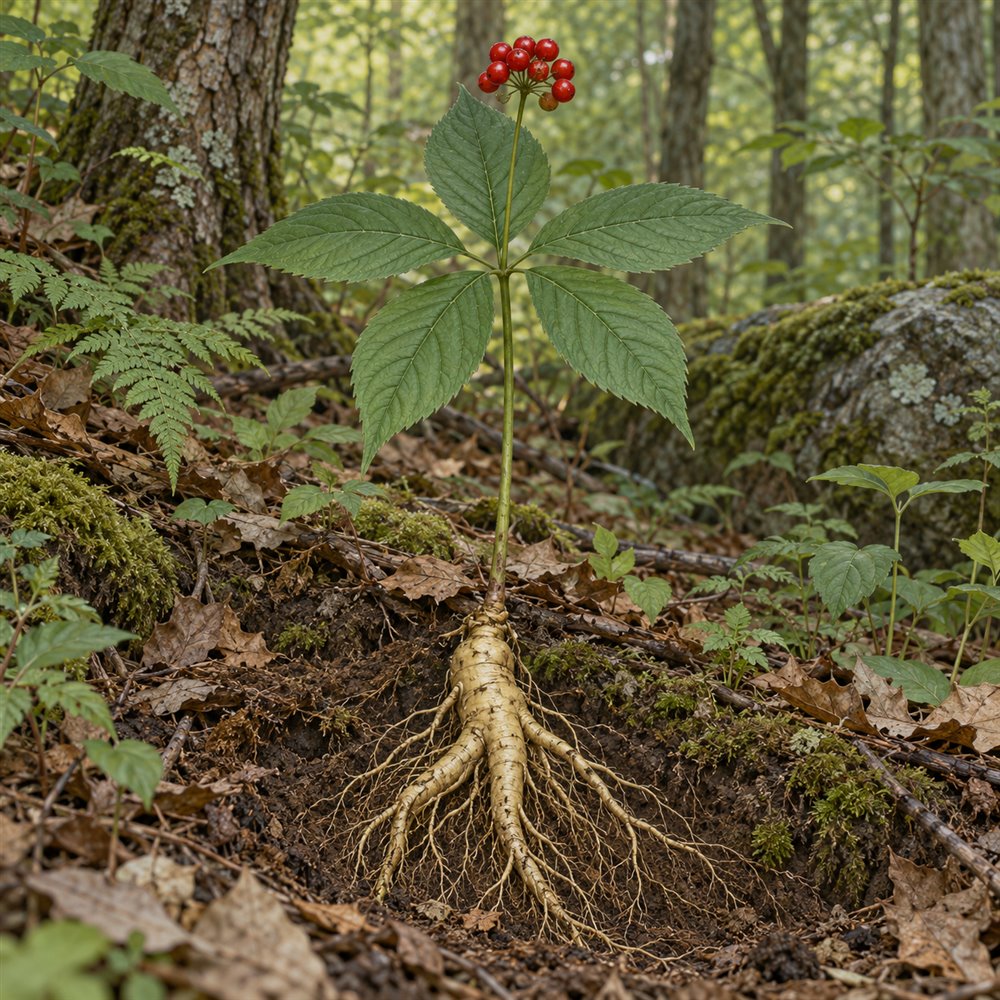
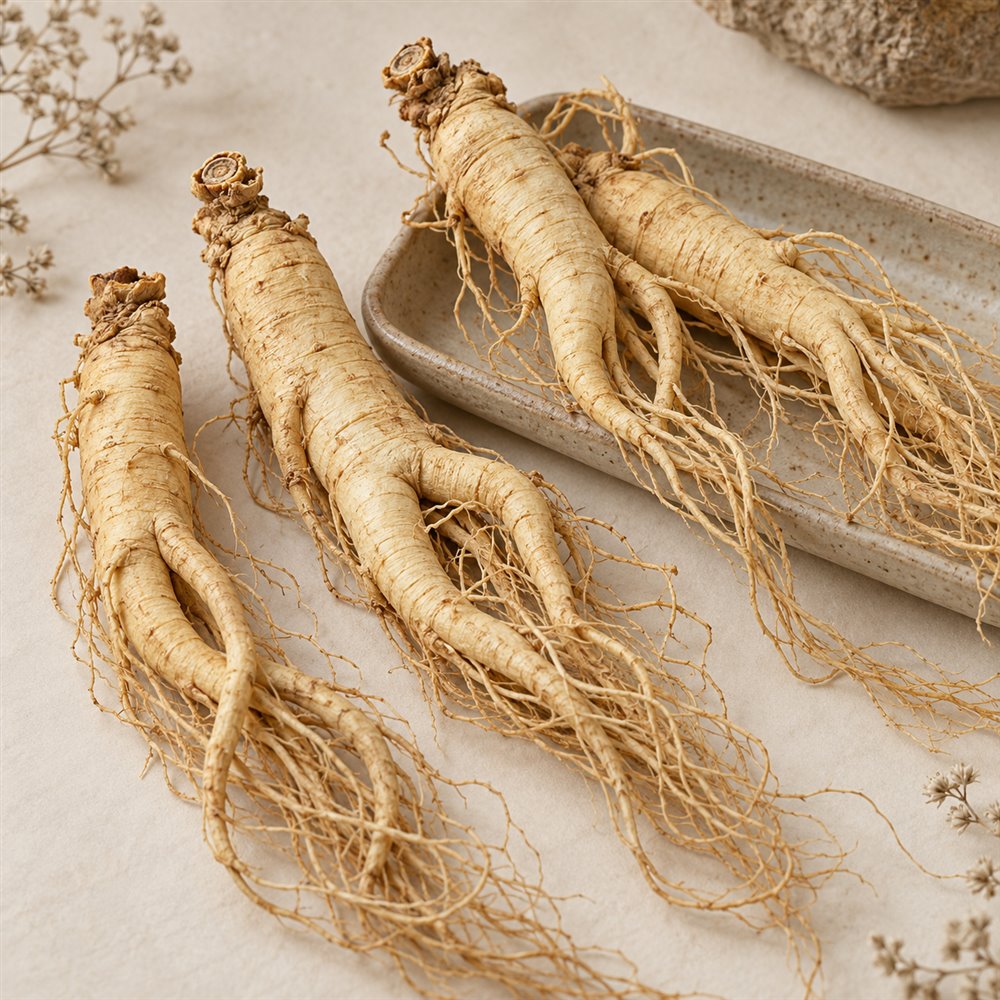
Asian ginseng · Ren Shen
Panax ginseng C.A. Meyer · root
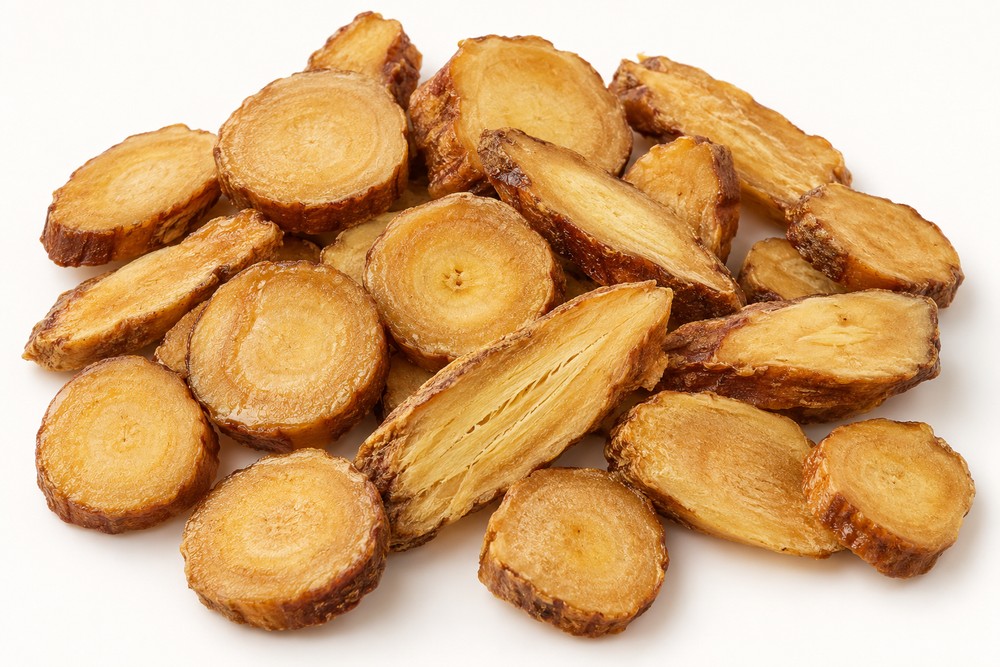
“Ren Shen” is the Chinese materia medica name commonly associated with Asian ginseng root. Keep it distinct from American ginseng (Panax quinquefolius), Siberian ginseng (Eleutherococcus senticosus), and products sold under broad “ginseng” labels. They are not botanical synonyms. A study record should capture species, root preparation, and product form before it summarizes traditional function.
Traditional texts place Ren Shen among qi-supporting substances. That classification explains how the herb is organized in the traditional system; it does not establish a biomedical effect for fatigue, diabetes, immunity, or any other diagnosis. NCCIH summarizes research on cognition and blood sugar as limited or inconclusive rather than a basis for replacing care.
Safety notes matter even in a learning atlas. Insomnia is a common reported side effect; ginseng may affect blood sugar and clotting. Evidence about warfarin interactions is mixed, and possible interactions with blood-pressure medicines, statins, and antidepressants remain uncertain. A formula containing Ren Shen is therefore a historical reference, not an automatic “safe tonic” for someone taking medicines. Read NCCIH’s Asian ginseng review ↗
Growth and habitat
HKBU records the plant under mixed coniferous and broadleaf woodland and thickets at several hundred metres elevation; major medicinal production is in northeastern China. Its native setting is cool, moderately moist, humus-rich, drained, and shaded. Hot dry exposure or prolonged waterlogging is unsuitable; wild collection affects populations and trade is regulated.
Habitat source ↗Growing and care
- Start only with traceable seed or nursery plants labeled Panax ginseng; do not plant wild-collected seed of unknown origin.
- Choose a cool site with a cold winter, woodland shade or shade cloth, and loose humus-rich, well-drained soil.
- Use raised beds, clean mature organic matter, and steady moisture without standing water; mulch with clean leaves to reduce heat and weeds.
- Maintain airflow, hand-weed shallowly, remove diseased plants, and avoid pesticides with unknown residues.
- Record planting year and monitor root development; do not dig young roots. HKBU records root harvest after six cultivated years in September–October; local Vietnamese conditions may change growth and need local trials.
How long until harvest? HKBU records roots harvested after six years of cultivation in September–October. This is a source-region benchmark, not a guarantee that another climate produces equivalent size or quality in exactly six years. Medicinal lots still require identity checks, cleaning, grading, and testing.
Cultivation / season source ↗Si Jun Zi Tang · Four Gentlemen Decoction
HKBU records Ren Shen with Bai Zhu, Fu Ling, and honey-prepared licorice for a pattern-diagnosed presentation. The source lists 9:9:9:6 g; this is historical formula data, not a self-decoction instruction.
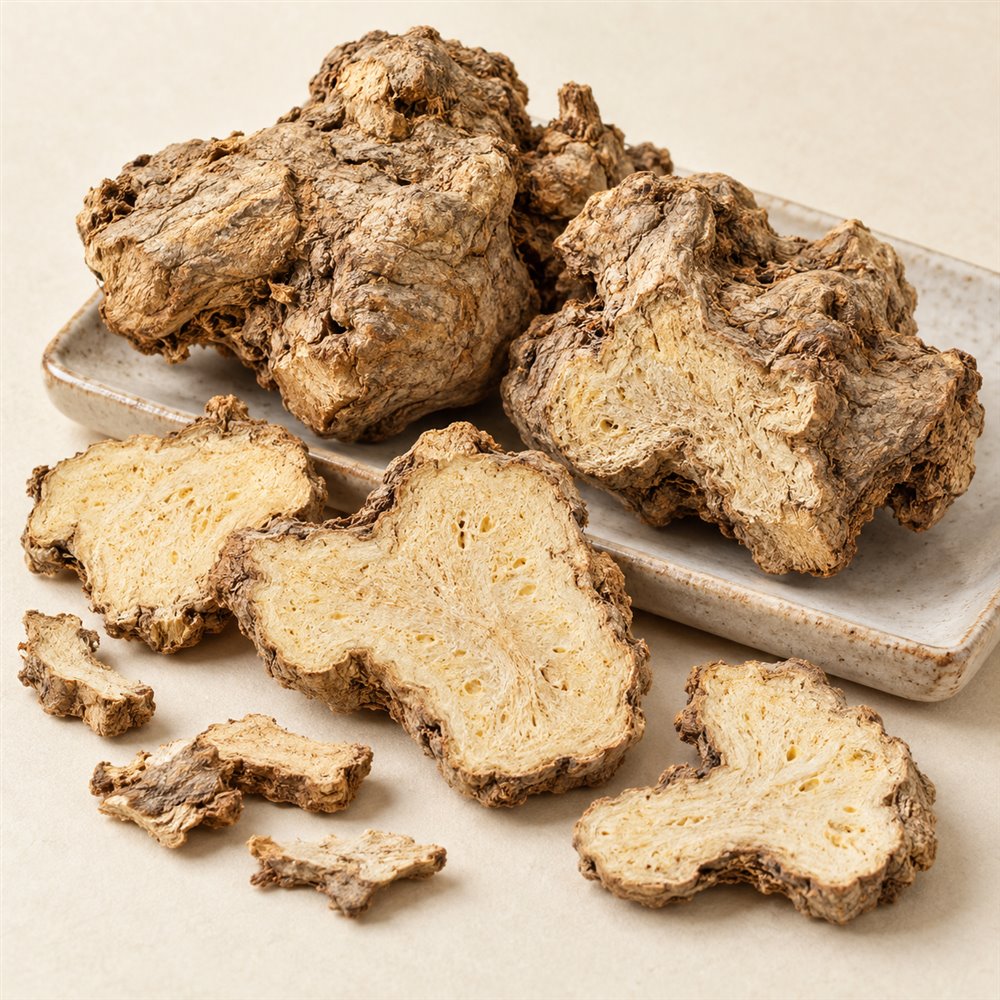
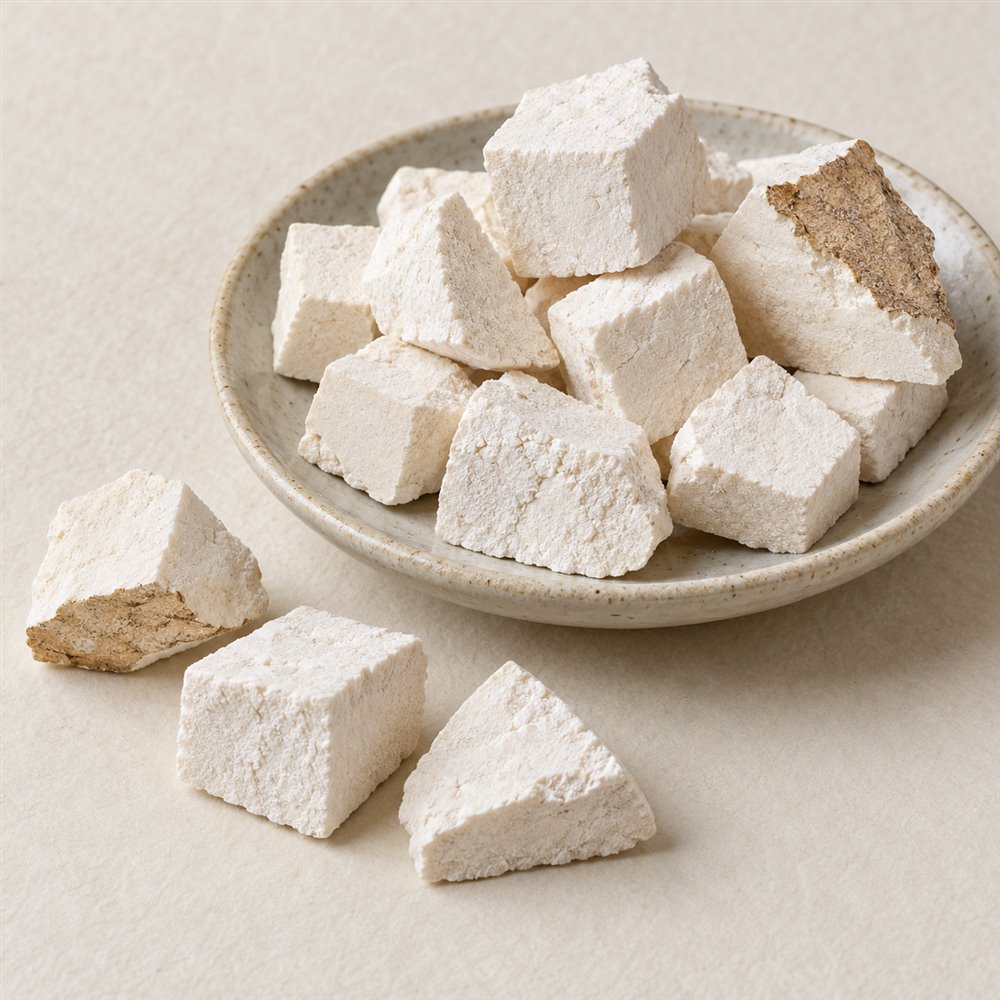
Source-recorded ratio: 9:9:9:6 g in ingredient order; reduced ratio 3:3:3:2. Not a personal dose.
Do not self-combine or use this ratio; a qualified clinician must review conditions, medicines, processing, and batch quality.
Open original formula record ↗Pairings, incompatibilities, and interactions
Reviewed sources do not establish a specific herb pair that is toxic for every form or amount of ginseng. NCCIH notes potential medication interactions and mixed warfarin findings; do not add herbs to medicines without review. No universal safe pairing ratio is established.
From plant to dried material · reference workflow
- Professional harvest follows a long cultivation cycle; roots are excavated carefully to preserve fine roots, washed, and separated from tops. HKBU records dry, red, and white ginseng as processed forms. Heat/steaming steps and grading must follow a monograph; do not home-steam or dry roots for ingestion.
Source-based process description, not a home preparation or self-use guide.
Processing source ↗How to read formula amounts
Displayed amounts belong to the cited formula and source; they are not a general safe ratio, treatment dose, or home-decoction instruction. Do not transfer amounts to another formula or adjust them by body weight.