Goji berry · Gou Qi Zi
Lycium barbarum L. · fruit
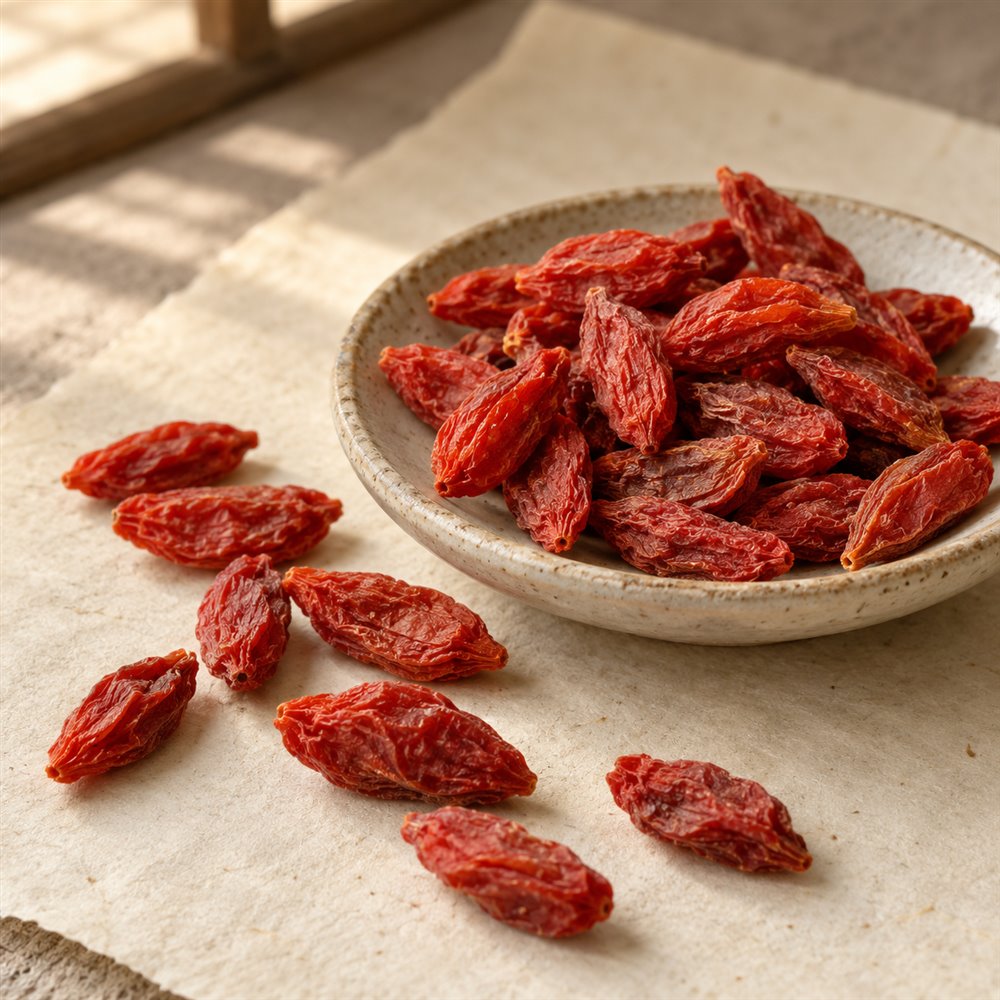
Gou Qi Zi refers to the fruit used in food and traditional materia medica contexts. The fruit is commonly sold dried, but the market also includes juices, powders, extracts, and blended supplements. These are different products. A study entry should identify the botanical species, plant part, and product form rather than implying that evidence from one preparation applies to all of them.
Traditional descriptions often place the fruit in a nourishing context associated with liver and kidney theory. Those phrases help explain the classical classification; they do not mean the fruit has been shown to prevent or treat eye, liver, kidney, or metabolic disease. Contemporary product research varies by preparation and study design, so the evidence must be assessed product by product.
Food use is not the same as concentrated supplement use. People taking anticoagulants or medicines for chronic conditions should ask a clinician or pharmacist before adding concentrated products. The interaction information for many herbs is incomplete, and web pages frequently overstate certainty. For a learning site, “not enough evidence to determine” is a useful conclusion, not a weakness. Read Memorial Sloan Kettering’s goji berry monograph ↗
Growth and habitat
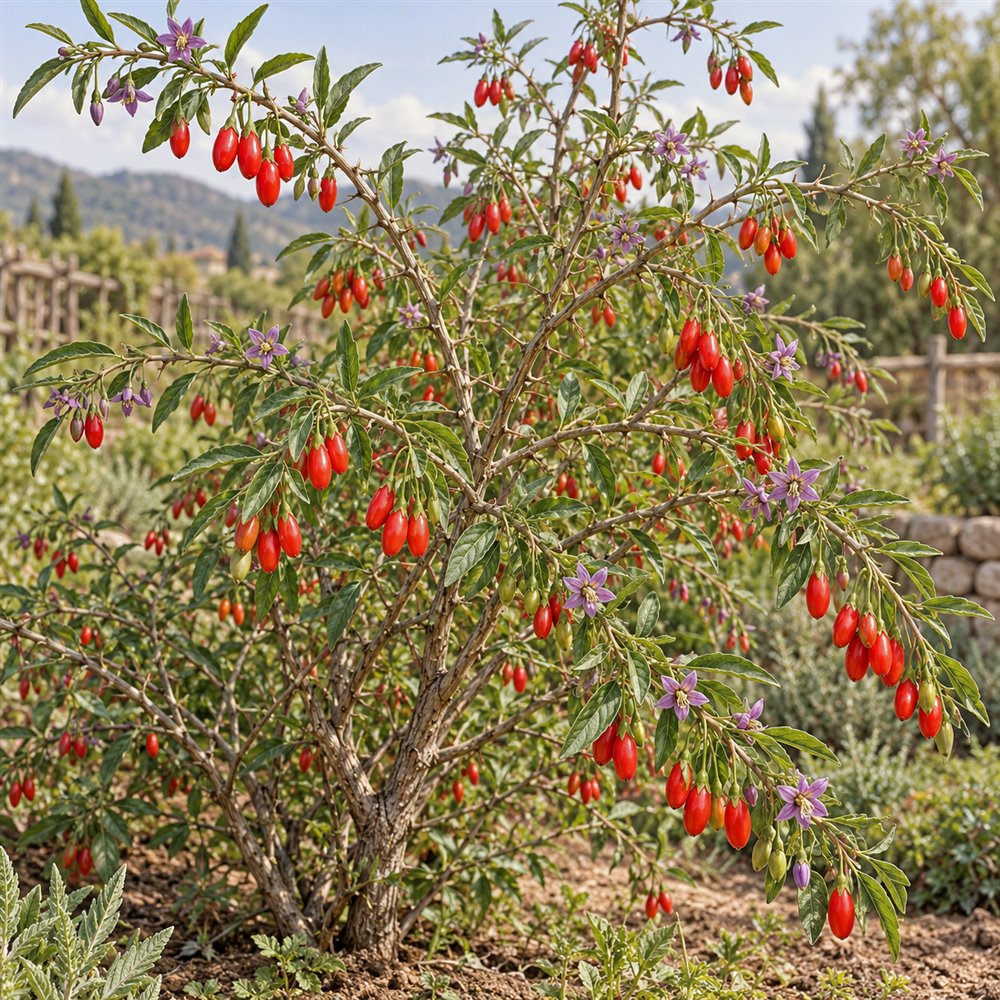
HKBU records wild and cultivated shrubs on cliffs, slopes, irrigated field margins, and ditches; production occurs in northern and northwestern China. The shrub prefers sun and well-drained soil and tolerates some dryness after establishment; waterlogging weakens roots. Branches may be thorny, so plant away from walkways.
Habitat source ↗Growing and care
- Choose labeled Lycium barbarum nursery stock with traceable origin; do not transplant unidentified wild plants.
- Plant in a mostly sunny site with drained garden soil; add moderate mature compost and keep the crown out of standing water.
- Water steadily while establishing; after that, water deeply when soil dries instead of frequent shallow watering.
- Prune dead or broken branches to keep airflow; wear gloves around possible thorns and monitor aphids/leaf disease.
- Pick red ripe berries in successive rounds and discard damaged or moldy fruit. HKBU records fruiting/harvest from June–November; age to first crop varies by cultivar, stock, and region and is not fixed by the source.
How long until harvest? HKBU records berries ripening from June–November and harvested in successive rounds; medicinal drying includes shade drying until the skin wrinkles and further drying. The source does not set a universal plant age for first harvest; do not transfer another cultivar’s timing. Food or materia-medica harvest requires identity, hygiene, and mold checks.
Cultivation / season source ↗Qi Ju Di Huang Wan · Lycium-Chrysanthemum-Rehmannia Pill
HKBU records this as Liu Wei Di Huang Wan with Gou Qi Zi and Ju Hua added at 3 qian each. This page shows the added pair and source ratio; it does not convert historical amounts to a modern dose or recommend it for eye disease.
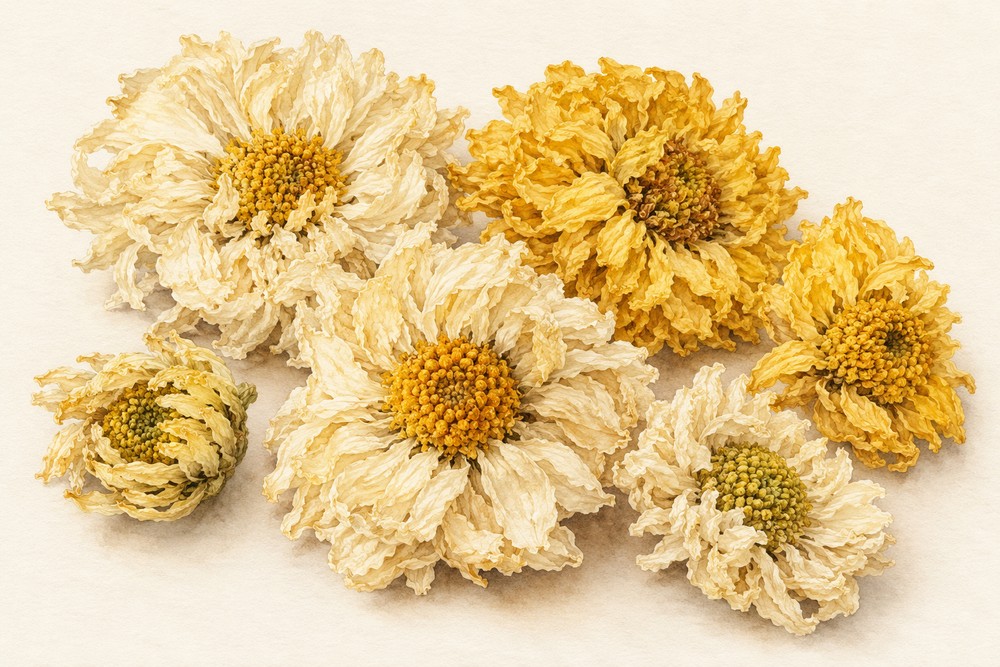
Source-recorded ratio: Gou Qi Zi:Ju Hua = 3:3 qian, reduced 1:1; the full formula also contains the six Liu Wei Di Huang Wan ingredients in the source record.
Do not self-combine or infer a dose; review medicines, product quality, and symptoms with a clinician. Sudden vision loss or eye pain needs assessment.
Open original formula record ↗Pairings, incompatibilities, and interactions
Reviewed sources do not establish a specific universally toxic herb pair with goji. Interactions with warfarin have been reported for goji products; this is a drug interaction, not an herb-herb pair. No universal safe ratio exists; check species, extract form, product label, and medicines.
From plant to dried material · reference workflow
- HKBU describes successive harvests of ripe berries, thin spreading on a reed mat, shade drying until skins wrinkle, then sun drying until the skin firms while pulp remains soft; stalks are removed before further drying. This is one source’s processing note, not a universal safety standard. Commercial lots require moisture, mold, and contaminant control.
Source-based process description, not a home preparation or self-use guide.
Processing source ↗How to read formula amounts
Displayed amounts belong to the cited formula and source; they are not a general safe ratio, treatment dose, or home-decoction instruction. Do not transfer amounts to another formula or adjust them by body weight.