Hai Zao (Sargassum seaweed) · Hai Zao
Sargassum pallidum (Turner) C.Agardh / Sargassum fusiforme (Harv.) Setch. · Dried seaweed thallus
Name and part used
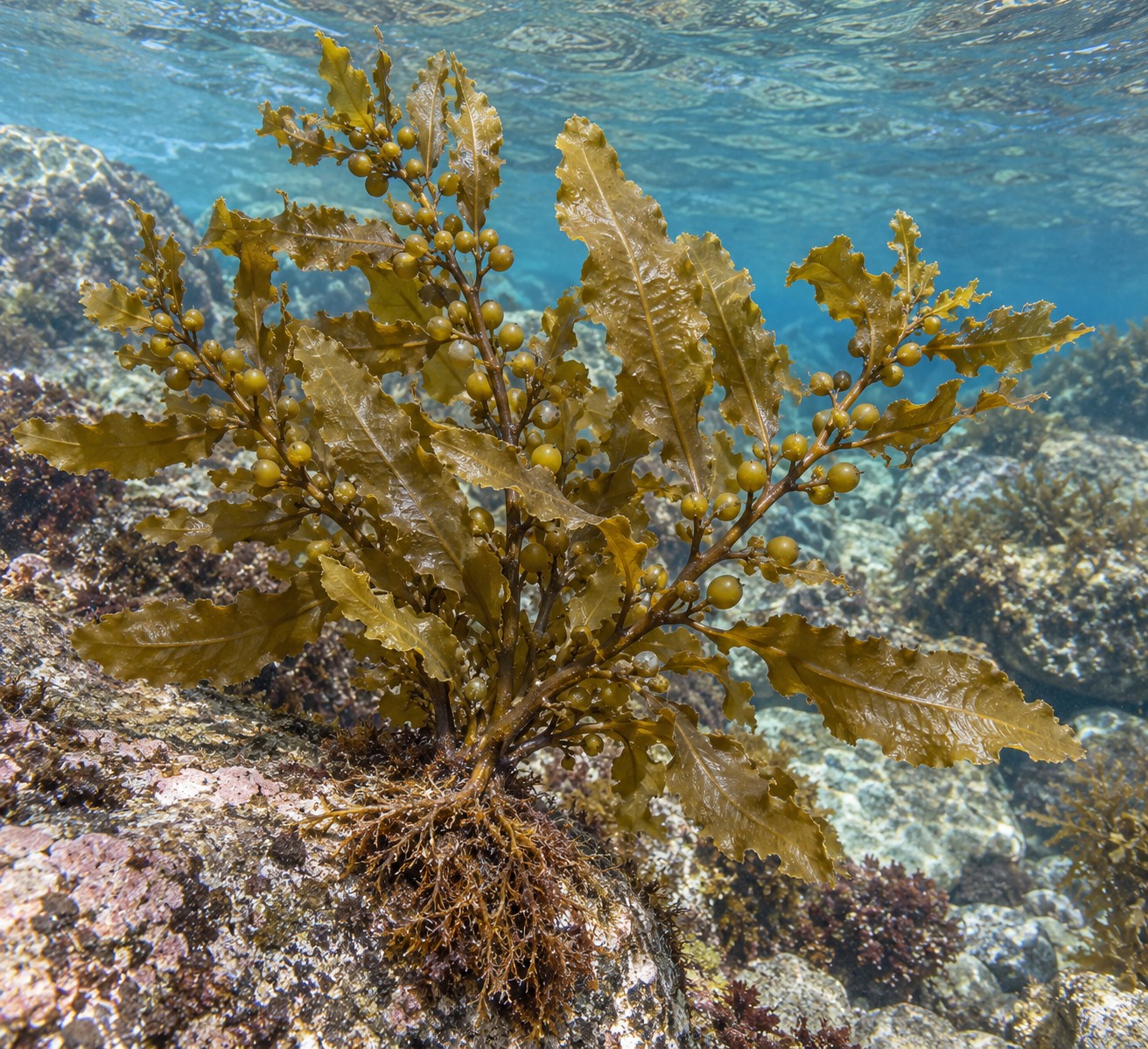
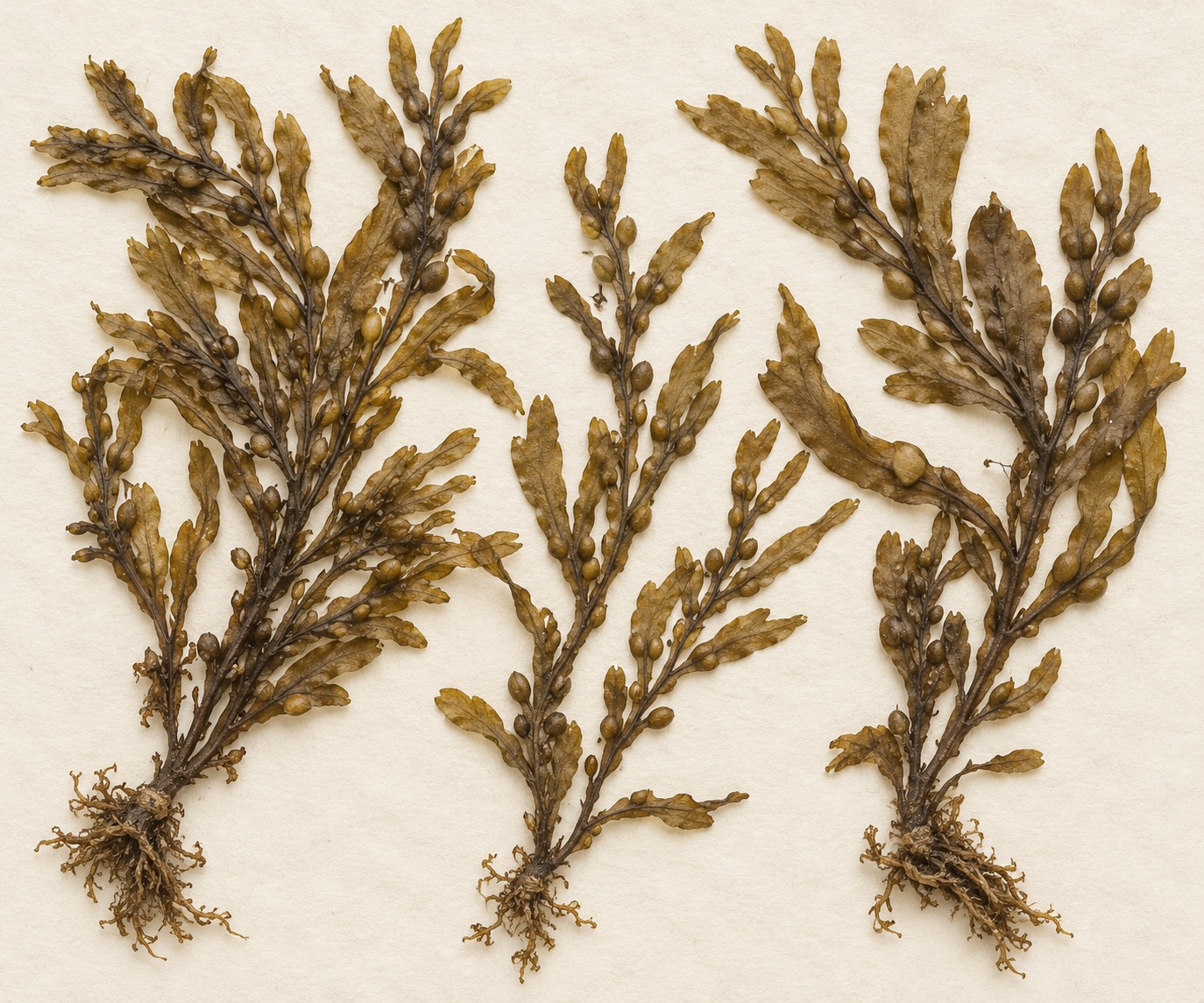
Hai Zao is a materia medica name for brown seaweed thalli in Sargassum; HKBU lists Sargassum pallidum or S. fusiforme. Thalli have branched axes, smaller branches, and species-dependent air bladders; the dried drug is the whole thallus. It is not a land plant; the underwater AI image cannot replace species identification or harvest-site testing.
Traditional context
Traditional texts describe phlegm-transforming and softening masses actions in historical pattern theory. This does not establish treatment of thyroid nodules, goiter, or cancer; neck masses need clinical assessment.
Modern evidence
HKBU supports source-species, morphology, and harvest-range reference, not efficacy trials. Iodine, heavy metals, arsenic, and other contaminants vary by species and site, making traceability and batch testing important.
Safety
It may contain high iodine and marine contaminants; use particular caution with thyroid or kidney disease, pregnancy, seaweed allergy, or thyroid medicines. Never collect from polluted waters or ingest untested material. Traditional incompatibility with licorice has no established safe self-combination ratio.
Pairing in reference texts
Hai Zao–licorice is listed as an incompatibility in some traditional texts. Modern reviews describe ongoing study of constituent interactions; this does not mean every form is proven toxic, but no safe combination ratio is established.
Growth and habitat
Wild Sargassum attaches to rocky coastal substrates/reefs; HKBU records Liaoning and Shandong coastal sources. Clean water, salinity, light, and season depend on species and site; do not collect near ports, outfalls, or protected areas.
Growing, care, and harvest timing
The profile above includes sourced steps and a documented harvest window. Harvest timing is agronomic information, not a self-use instruction.
Identification and study notes
Hải tảo là tên nhóm dược liệu rong biển, không phải một loài thay thế cho nhau. Hồ sơ HKBU nêu Sargassum pallidum và S. fusiforme, khác nhau về nhánh và túi khí. Thể rong khô có thể mất dấu hiệu, nên ghi Latin, bờ biển/vùng nuôi, độ sâu, mùa và phiếu kiểm nghiệm lô. Rong có thể tích lũy i-ốt, arsenic, kim loại nặng hoặc chất ô nhiễm tùy loài và nơi thu; ảnh nước trong không nói lên chất lượng vùng khai thác. Không thu ở cảng, cửa xả hay rạn được bảo vệ; rửa không chắc loại bỏ chất tích lũy. Một số danh sách cổ ghi tương kỵ Hải tảo–cam thảo, nhưng bằng chứng hiện đại không xác lập ngưỡng độc hay tỷ lệ an toàn chung. Cảnh báo này không phải khuyến nghị thử lượng nhỏ. Lịch trồng cây trên cạn không áp dụng: sinh trưởng rong phụ thuộc loài, độ mặn, ánh sáng, nền bám và điều kiện nuôi biển. Luôn gắn nguồn và kiểm nghiệm với mẫu. Hồ sơ Sargassum cần ghi bờ biển/loài, không chỉ “rong nâu”. Thể rong phân nhánh, có thể có túi khí nhưng đặc điểm thay đổi theo loài nguồn và dễ hỏng khi sấy. Nhầm loài, ô nhiễm nơi thu và hàm lượng i-ốt là ba câu hỏi chất lượng riêng. Bó rong nhìn sạch không cho biết arsenic/kim loại nặng; cần kiểm nghiệm. Không thu ở cảng, cửa xả hoặc rạn cấm; rửa bếp không chứng minh loại chất tích lũy. Tương kỵ Hải tảo–cam thảo là ghi chép cổ; bằng chứng hiện đại không có tỷ lệ an toàn chung. Thiếu ngưỡng độc số học không cho phép thử lượng nhỏ. Nhật ký rong cần ghi Latin, tự nhiên/nuôi, ngày thu, nước, sấy và phiếu phân tích. Ảnh dưới nước chỉ giải thích hình thái, không nói mọi loài Sargassum hay bờ biển thay thế nhau. Rong tự nhiên và rong nuôi cần hồ sơ nguồn khác nhau. Với rong tự nhiên, ghi bờ biển/giấy phép; với rong nuôi, ghi nơi nuôi và lô thu. Cả hai không thay thế định danh loài và kiểm nghiệm tạp chất. Nhãn chung “rong biển” không đủ cho hồ sơ dược liệu vì Sargassum nguồn được chấp nhận, i-ốt và tạp chất có thể khác.
Growing and care
- This is seaweed, not a soil- or pot-grown plant. Sargassum mariculture depends on species, currents, salinity, light, season, and local regulation.
- For growth study, use verified research images/vouchers; do not introduce unidentified seaweed into aquaria or coastal waters.
- Commercial culture requires licensed facilities, verified stock, water-quality monitoring, and invasive-species controls.
- Do not harvest for materia medica without identification and batch contaminant testing; the cited source provides no universal household culture protocol.
How long until harvest? HKBU describes mature thalli collected in certain coastal regions but gives no universal cultivation age or days-after-seeding. Harvest timing is species/farm-specific; only identified and tested lots belong in a materia medica supply chain.
Documented toxic incompatibility
Some traditional sources list Hai Zao as incompatible with licorice. Modern review says constituent interactions remain under study and does not define a universal toxicity threshold or safe ratio. Do not self-combine; images are AI illustrations.
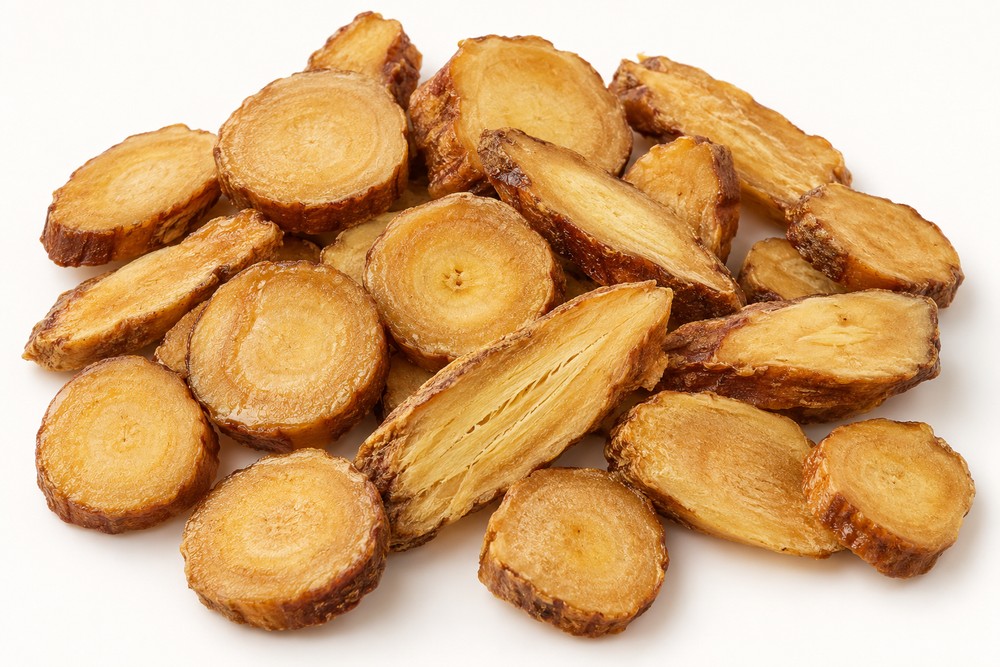
AI study illustrations; not for specimen identification.
HKBU licorice record ↗ ↗ Modern review of incompatibility research ↗ ↗FROM PLANT / SOURCE HABITAT TO DRIED MATERIAL · REFERENCE WORKFLOW
- The materia medica record lists dried whole thalli and source regions but no cleaning/drying parameters universal to all species. A professional chain identifies the species, removes seawater/sediment, dries to specification, and tests iodine/contaminants under the applicable monograph; do not forage, rinse, and ingest it yourself.
- Record the seaweed species, harvest area, and material part; Hai Zao can refer to different materials across references.
- Remove sand, attached organisms, and other seaweeds; never collect from polluted water or closed areas.
- Medicinal lots require moisture, microbiological, heavy-metal, and other applicable quality checks.
- Moisture-proof packaging should identify species and source; neither iodine content nor safety can be inferred from an image or common name.
These are post-harvest study notes, not directions to prepare a remedy for self-treatment. Processing reference ↗
How to read formula amounts
The cited sources do not provide a formula with specific amounts for this profile; no ratio is invented. Absence from the incompatibility list does not establish safety.