He Shou Wu · fleeceflower tuber · He Shou Wu
Polygonum multiflorum Thunb. (syn. Fallopia multiflora) · Tuberous root; raw and processed forms are distinct materials
Name and part used
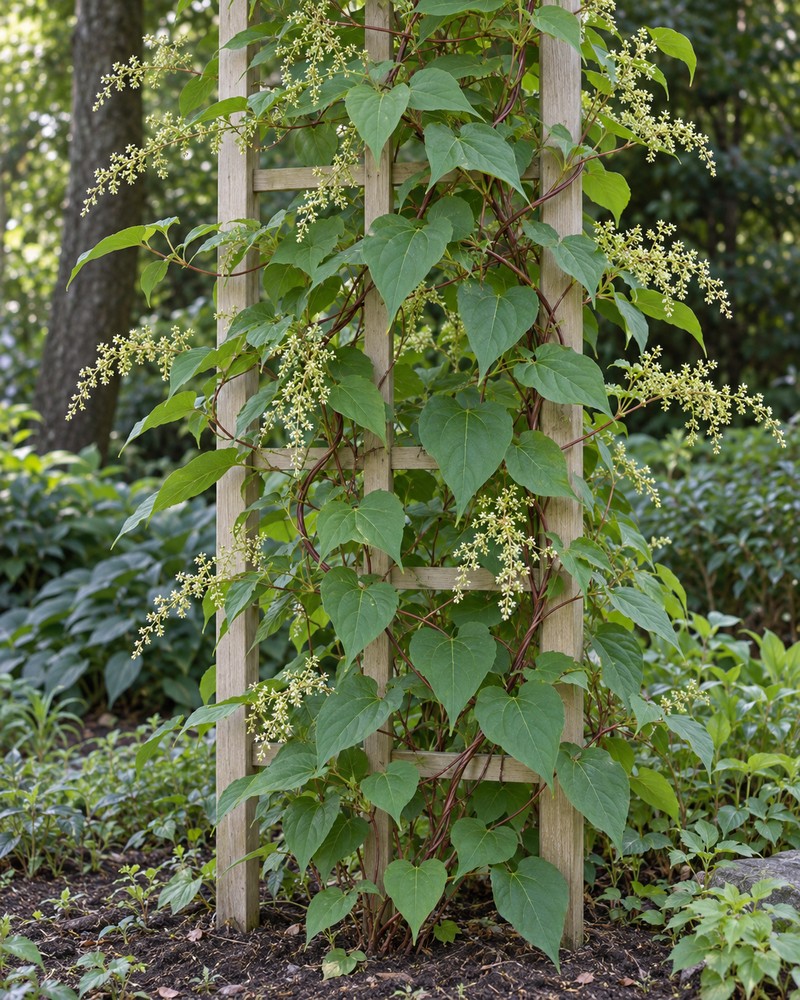
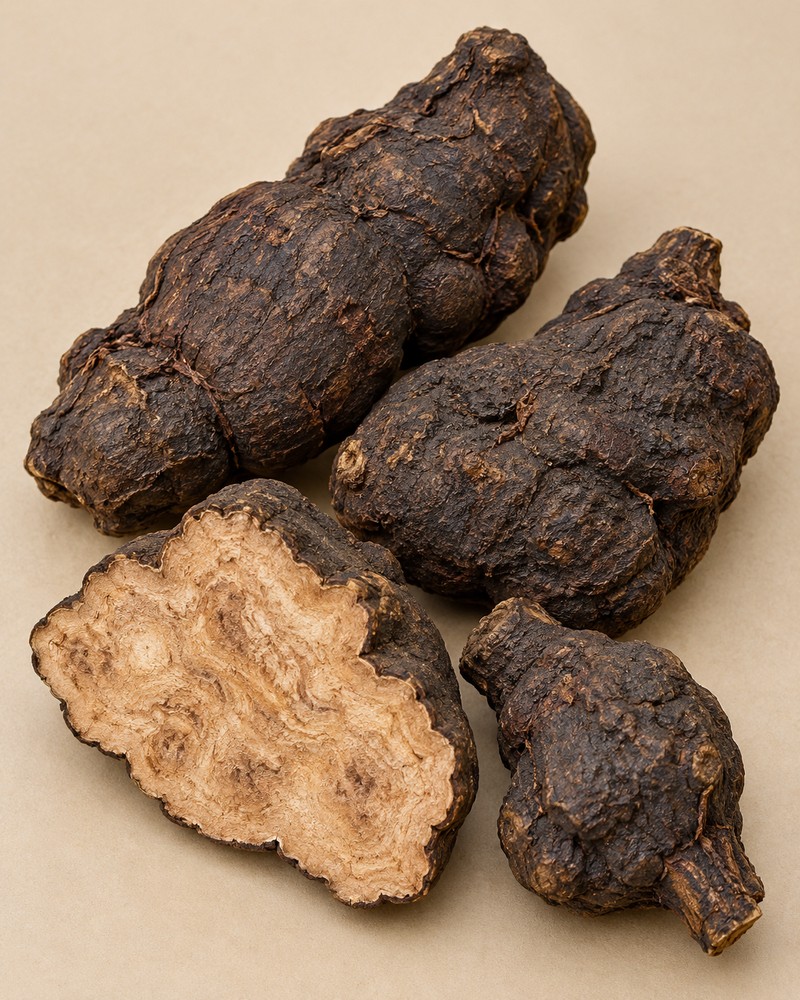
A perennial climber with alternate heart-shaped leaves and small green-white flower panicles; the materia medica is the dark-brown tuberous root. “He Shou Wu” may refer to raw or processed material; these are not interchangeable.
Traditional context
Traditional texts describe different actions for raw and processed He Shou Wu. This is historical use, not proof that it promotes hair growth, supports liver or kidney function, or treats constipation in people.
Modern evidence
The U.S. National Library of Medicine’s LiverTox identifies Polygonum multiflorum as an established cause of herbal liver injury; severe, prolonged, recurrent, and rarely fatal cases have been reported. This is evidence of risk, not therapeutic benefit.
Safety
Can cause herb-induced hepatitis, including products labeled processed. Do not self-use, combine, or prepare it; avoid re-exposure after a prior reaction. Jaundice, dark urine, persistent nausea, or right upper abdominal pain needs urgent medical assessment.
Safety reference ↗Pairing in reference texts
HKBU records historical formulas containing this herb, but its liver-injury risk means doses and ratios are not reproduced for self-use. Modern sources do not establish a specific “toxic incompatibility” pair; the confirmed concern is the herb itself and products with uncertain composition.
Growth and habitat
HKBU records it in grasslands, roadsides, hillsides, rock crevices, and thickets, distributed widely in eastern and south-central China and other provinces. It is a climbing vine requiring support; medicinal material should come from traceable cultivation.
Identification and study notes
When studying the living plant, note the long twining stem, alternate rather than opposite leaves, and ovate to oblong blades with a heart-shaped or arrow-like base. Branched flower panicles arise at stem tips or leaf axils; individual flowers are tiny, so a whole-plant image cannot replace close botanical examination. Slender roots enlarge into an oblong tuber with reddish-brown to dark-brown skin; this is the medicinal part. HKBU distinguishes the tuber from the vine material known as Ye Jiao Teng. Raw and processed tubers also have different records. The AI illustration is for morphology study, not a verified voucher specimen and not suitable for field identification. Human liver injury is documented, so traditional claims should not become hair-care or home-processing instructions. Product labels should be checked for Latin identity, plant part, processing state, other ingredients, and traceable manufacturer; marketing names such as “Fo-ti” or “He Shou Wu” alone do not establish quality. Bài tập so sánh hữu ích là tách Hà thủ ô đỏ sống và chế thành hai hồ sơ riêng ngay từ đầu. Cùng nguồn Polygonum multiflorum nhưng dạng chế biến làm thay đổi mô tả dược liệu; sách cổ cũng nêu vai trò khác nhau. Không dạng nào được chứng minh làm đen tóc hay cải thiện chức năng gan. Dây leo, lá hình tim và rễ củ sẫm giúp hình dung cây, nhưng ảnh rễ không cho biết chế biến đúng hay lô có tạp chất. LiverTox được dẫn xác định cây này là nguyên nhân tổn thương gan, kể cả báo cáo với sản phẩm đã chế. Vì vậy trang không cho tỷ lệ tự dùng và không gợi ý vị khác có thể trung hòa rủi ro. Thời gian trồng trên 3–4 năm trong một nguồn Việt Nam chỉ là ghi chép nông học, không phải ngưỡng an toàn. Mẫu học cần ghi sống/chế, loài, nhà cung cấp, hồ sơ chế và mã lô. Vàng da, nước tiểu sẫm, buồn nôn kéo dài hay đau hạ sườn phải cần khám gấp. Nhãn mẫu Hà thủ ô cần ghi dạng sống/chế và nguồn bằng chứng. Rễ sẫm màu không cho biết đã qua phương pháp được sách ghi hay chưa. Thời gian trên 3–4 năm trong một báo cáo chỉ nói quá trình phát triển củ ở điều kiện cụ thể; không xác lập chất lượng, an toàn hay khuyến nghị tự thu. Công dụng tóc/“can thận” cổ truyền cần tách khỏi nguy cơ tổn thương gan đã được ghi nhận. Hồ sơ không đưa vị phối nào hứa ngăn biến cố gan. Người học nên xem định danh sản phẩm, công bố chế biến và báo cáo tổn thương gan khi đọc quảng cáo. Nếu từng nghi phản ứng gan, không tự dùng lại. Trường hợp này cho thấy an toàn làm đổi cách học bài thuốc: ghi như văn bản, không như công thức.
Growing and care
- Bố trí giàn chắc để thân leo; đất vườn thoát nước nhưng giữ ẩm vừa, bổ sung hữu cơ hoai và đặt ở nắng nhẹ đến bán râm. Không để gốc ngập nước.
- Provide a sturdy trellis; use moisture-retentive but well-drained soil with mature organic matter in light sun to partial shade. Do not waterlog the crown.
How long until harvest? A review discussing Vietnamese supply reports a tuber-growing period usually exceeding 3–4 years; this is an agricultural reference, not proof that a home-grown tuber meets medicinal standards. Do not self-use after harvest.
Documented toxic incompatibility
The principal warning is established liver toxicity from Polygonum multiflorum itself; available evidence does not justify naming a specific toxic herb pair or a safe ratio. Avoid products with undisclosed ingredients and tell a clinician about all medicines and supplements.
AI study illustrations; not for specimen identification.
FROM PLANT / SOURCE HABITAT TO DRIED MATERIAL · REFERENCE WORKFLOW
- HKBU records the tuberous root as trimmed at both ends, washed, cut into sections when large, and dried.
- Raw and processed materia medica are distinct; do not add black beans, alcohol, steam, or cook by an internet recipe.
- Qualified processors should authenticate the species, control contamination and moisture, and label raw versus processed form.
- Store dry, separate from food, and avoid products without traceable provenance.
These are post-harvest study notes, not directions to prepare a remedy for self-treatment. Processing reference ↗