Magnolia bark · Hou Po
Magnolia officinalis Rehder & E.H.Wilson · Processed stem or branch bark
Name and part used
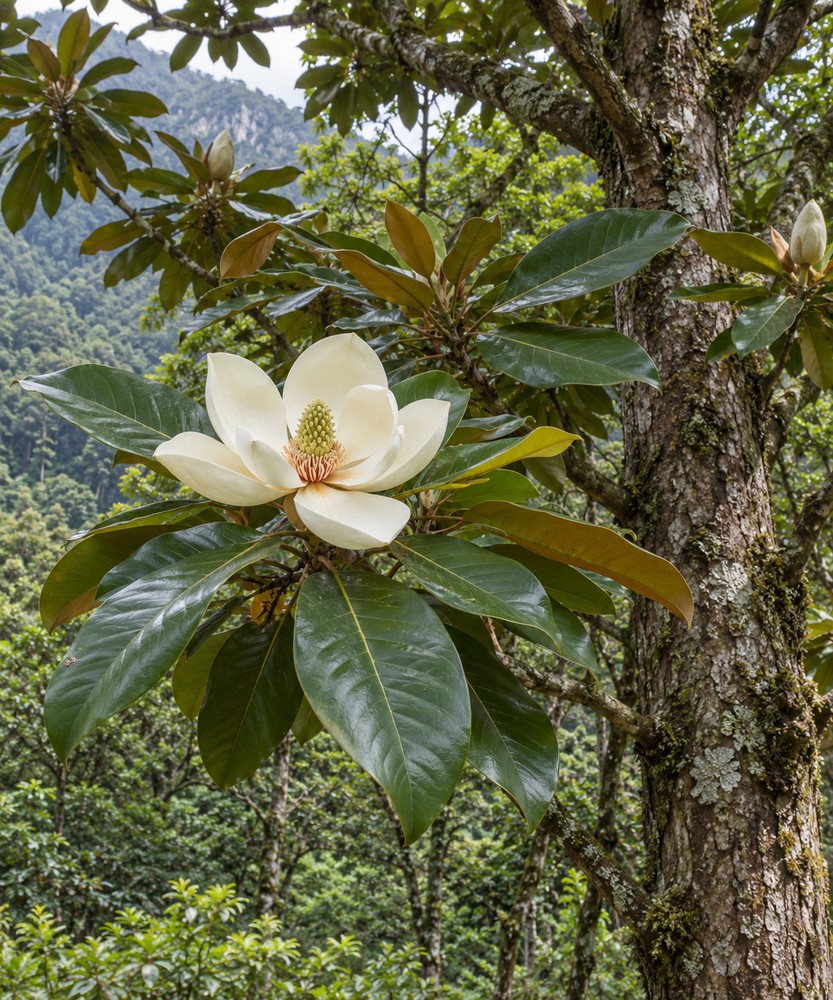
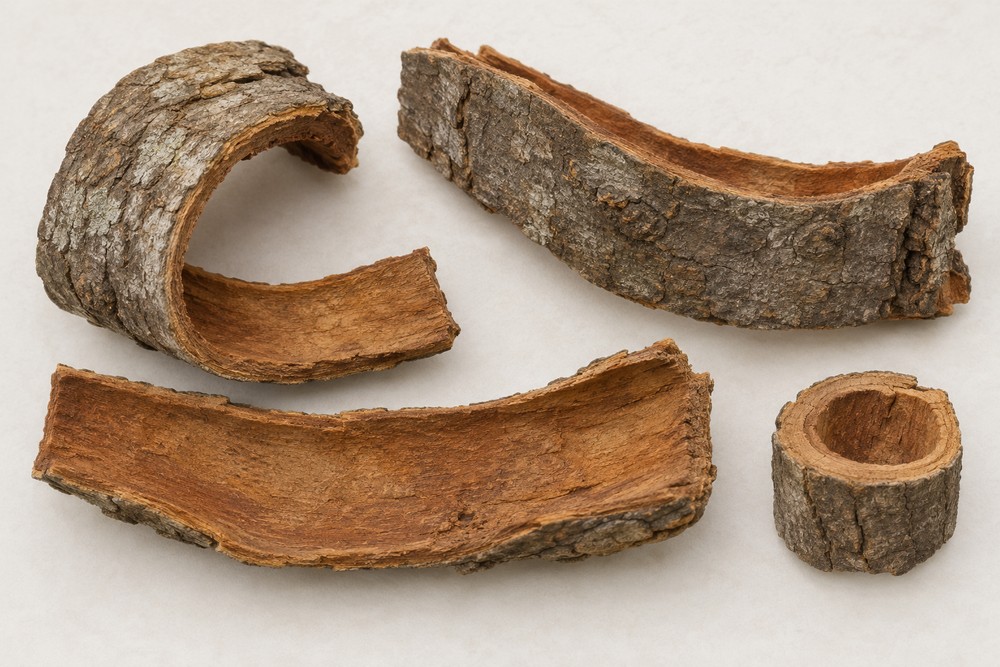
Hou Po is bark from Magnolia officinalis, a deciduous tree with large leaves clustered near branch tips; the leaf underside is paler and often hairy. The material occurs as curled or curved bark pieces, gray-brown outside and reddish brown within, with a characteristic aroma. Do not identify it by a generic Magnolia trade name.
Traditional context
Traditional sources describe Hou Po as bitter, acrid, and warm, with roles in transforming dampness, reducing fullness, and directing qi downward. These descriptions do not prove treatment of bloating, breathlessness, or digestive disease.
Modern evidence
HKBU records Magnolia officinalis bark as the medicinal material. Findings on bark extracts or isolated honokiol/magnolol are not equivalent to clinical evidence for whole processed bark. The species faces conservation pressure; wild bark stripping should not be encouraged.
Safety
May cause sedation, dizziness, irritation, or interactions; do not combine casually with alcohol, sedatives, or neuroactive medicines. Seek professional advice in pregnancy, breastfeeding, liver/kidney disease, or medication use. Do not buy unidentified bark.
Pairing in reference texts
Hou Po appears in Hou Po Wen Zhong Tang with tangerine peel, honey-fried licorice, poria, Cao Dou Kou, Aucklandia, and dried ginger. HKBU records 30, 30, 15, 15, 15, 15, and 2 g in one version; historical source amounts, not dosing advice.
Identification and study notes
Vỏ cây là nguyên liệu tái sinh chậm, không giống lá có thể hái mà không hại cây. Bóc vòng kín thân có thể làm cây chết, vì vậy thu hái cần cơ sở trồng hợp pháp và người có chuyên môn, không phải tự làm ở nhà. Định danh phải dựa trên cây và mẫu chuẩn; vỏ mộc lan cảnh không tự động là Hậu phác. Dược liệu khô có thể cuộn, thơm, nhưng mùi không chứng minh loài hay độ tinh khiết. Ghi rõ lô lấy từ vỏ thân, cành hay rễ vì các dạng này không thay thế lẫn nhau. Lưu nguồn trồng và tình trạng bảo tồn trong ghi chú. Vì thu vỏ có thể hại cây, hồ sơ cần ghi tuổi cây, thân/cành được lấy và có quản lý tái sinh hay không. Mẫu cần cất tránh ẩm vì vỏ thơm có thể mất mùi hoặc mốc. Không bóc vỏ mộc lan cảnh để tập; tổn hại cây và nguy cơ sai loài không đáng. Bộ mẫu học nên dùng mẫu chuẩn bị có chứng nhận và lưu giấy nguồn. Vỏ đã sơ chế cần truy xuất cây Magnolia trồng và kiểm tra ẩm, sâu mọt, pha tạp; không tự bóc vỏ làm mẫu.
Growth and habitat
Magnolia officinalis is native to southern and central China, commonly found in moist, forested mountain slopes with deep, humus-rich and well-drained soil. Young plants prefer light shade; Mature plants need large space, mild humid climate and avoid prolonged hot and dry conditions.
Identification and study notes
Vỏ cây là nguyên liệu tái sinh chậm, không giống lá có thể hái mà không hại cây. Bóc vòng kín thân có thể làm cây chết, vì vậy thu hái cần cơ sở trồng hợp pháp và người có chuyên môn, không phải tự làm ở nhà. Định danh phải dựa trên cây và mẫu chuẩn; vỏ mộc lan cảnh không tự động là Hậu phác. Dược liệu khô có thể cuộn, thơm, nhưng mùi không chứng minh loài hay độ tinh khiết. Ghi rõ lô lấy từ vỏ thân, cành hay rễ vì các dạng này không thay thế lẫn nhau. Lưu nguồn trồng và tình trạng bảo tồn trong ghi chú. Vì thu vỏ có thể hại cây, hồ sơ cần ghi tuổi cây, thân/cành được lấy và có quản lý tái sinh hay không. Mẫu cần cất tránh ẩm vì vỏ thơm có thể mất mùi hoặc mốc. Không bóc vỏ mộc lan cảnh để tập; tổn hại cây và nguy cơ sai loài không đáng. Bộ mẫu học nên dùng mẫu chuẩn bị có chứng nhận và lưu giấy nguồn. Vỏ đã sơ chế cần truy xuất cây Magnolia trồng và kiểm tra ẩm, sâu mọt, pha tạp; không tự bóc vỏ làm mẫu.
Growing and care
- Buy traceable nursery seed/stock identified as Magnolia officinalis; do not collect wild plants.
- Sow fresh seed using nursery guidance or plant young stock in deep, drained, organic soil with light shade while small.
- Keep moisture even for the first seasons, mulch, protect roots, and avoid prolonged standing water.
- Remove broken branches, hand-weed, add mature organic matter, and monitor leaf feeders and root disease. Allow room for a large tree.
- Do not strip bark from ornamental trees for medicine; bark harvest is a professional activity requiring conservation controls and specialized technique.
- For ornamental cultivation, record planting date and growth; obtain any medicinal bark only from legal, traceable suppliers and record its lot and processing.
How long until harvest? There is no verified general application harvest schedule in the crop sources reviewed. This is a large tree, and harvesting the bark is related to conservation; It is not recommended to grow it yourself to peel it for medicinal use or to determine the number of years of collection.
Documented formula pairing: Hou Po Wen Zhong Tang
HKBU describes a traditional action involving warming the middle, moving qi, and transforming dampness; this is not a recommendation to treat abdominal pain.
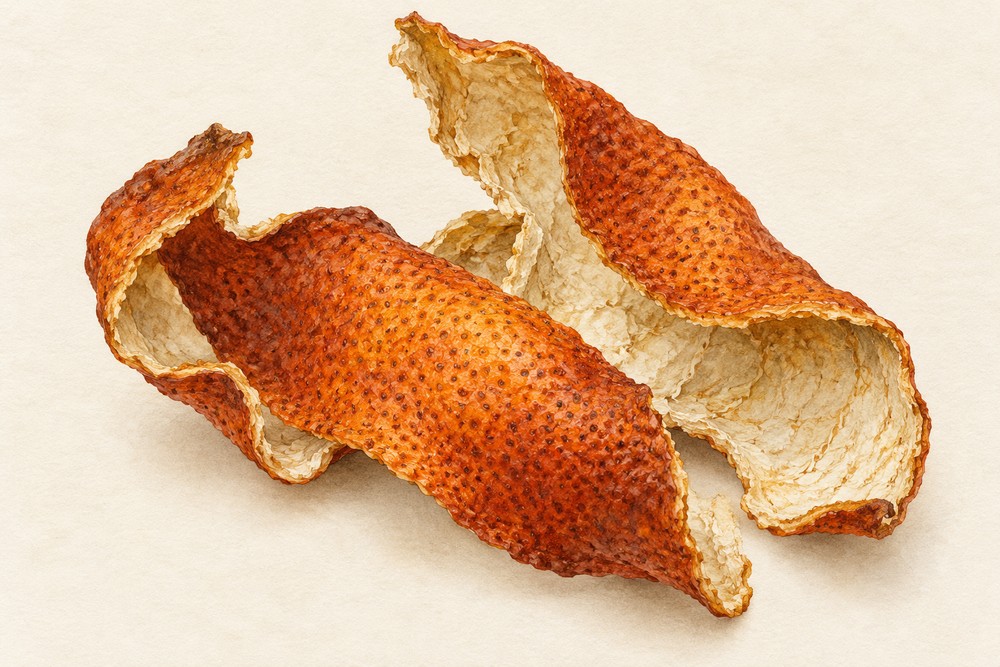
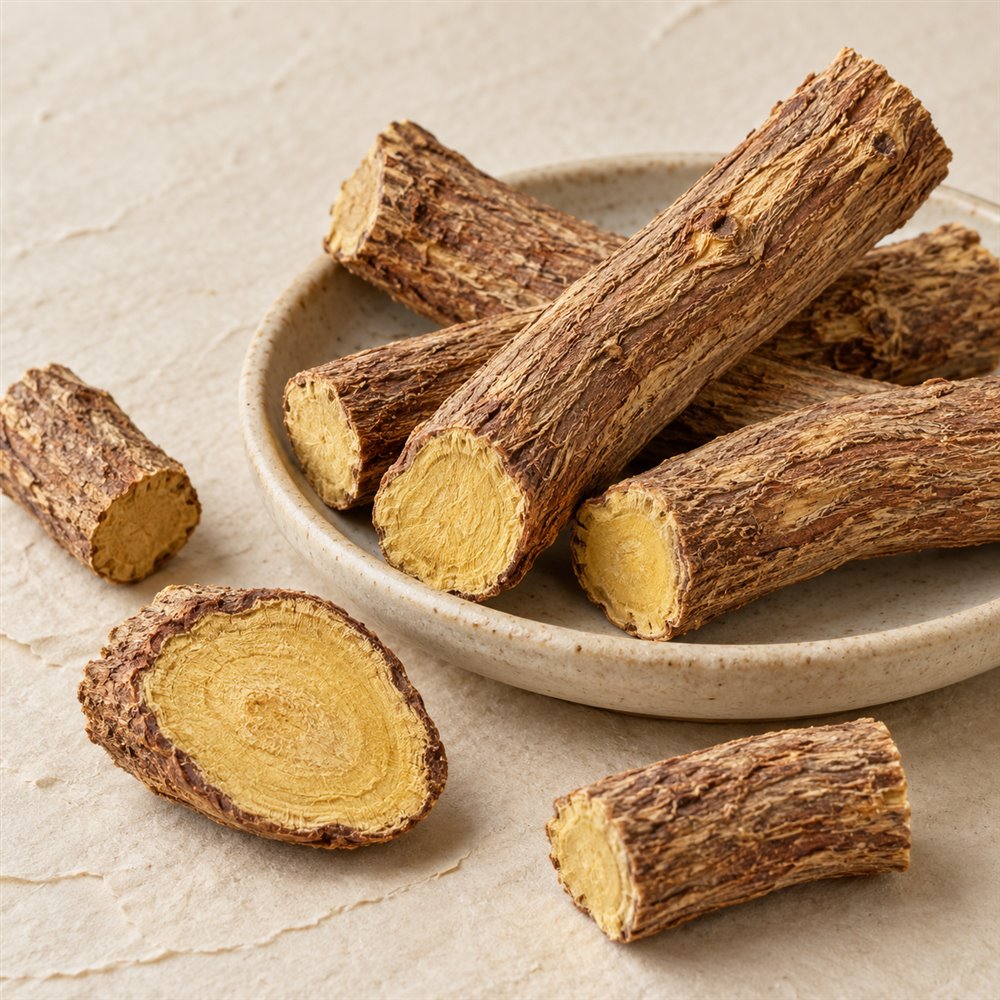
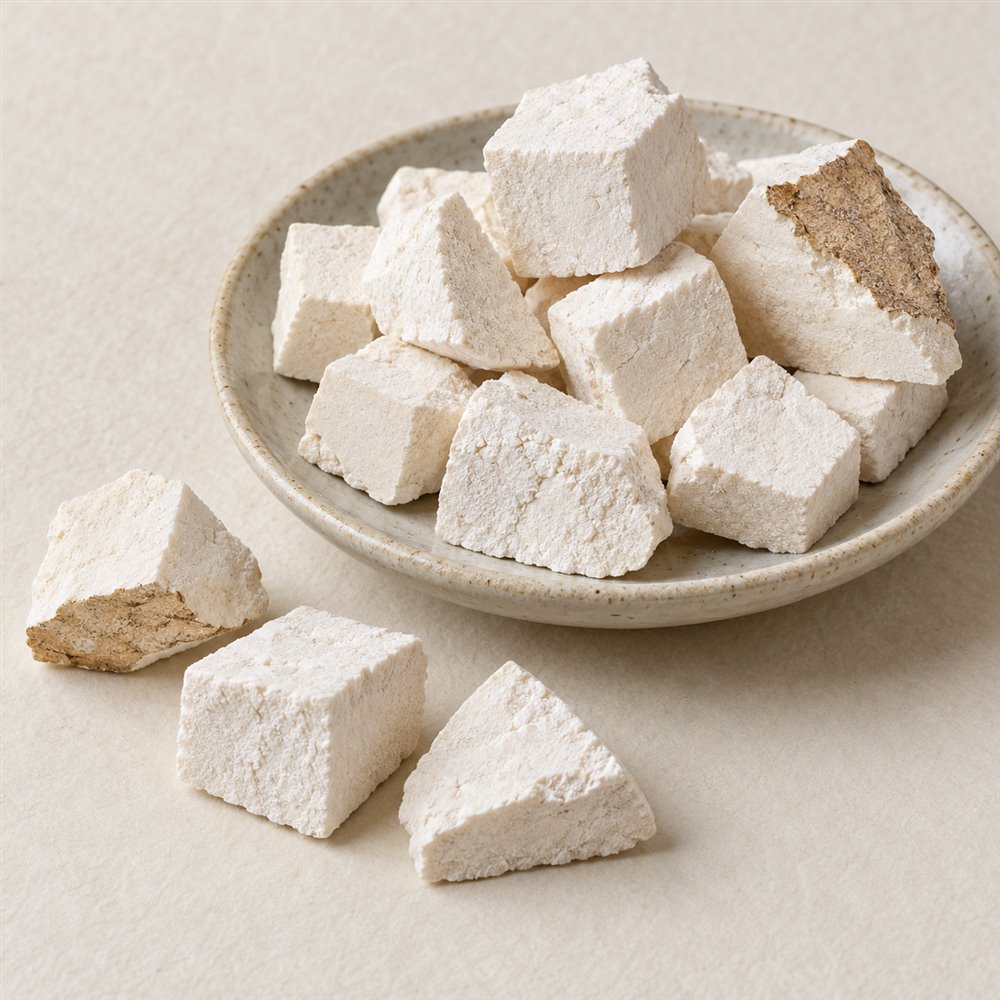
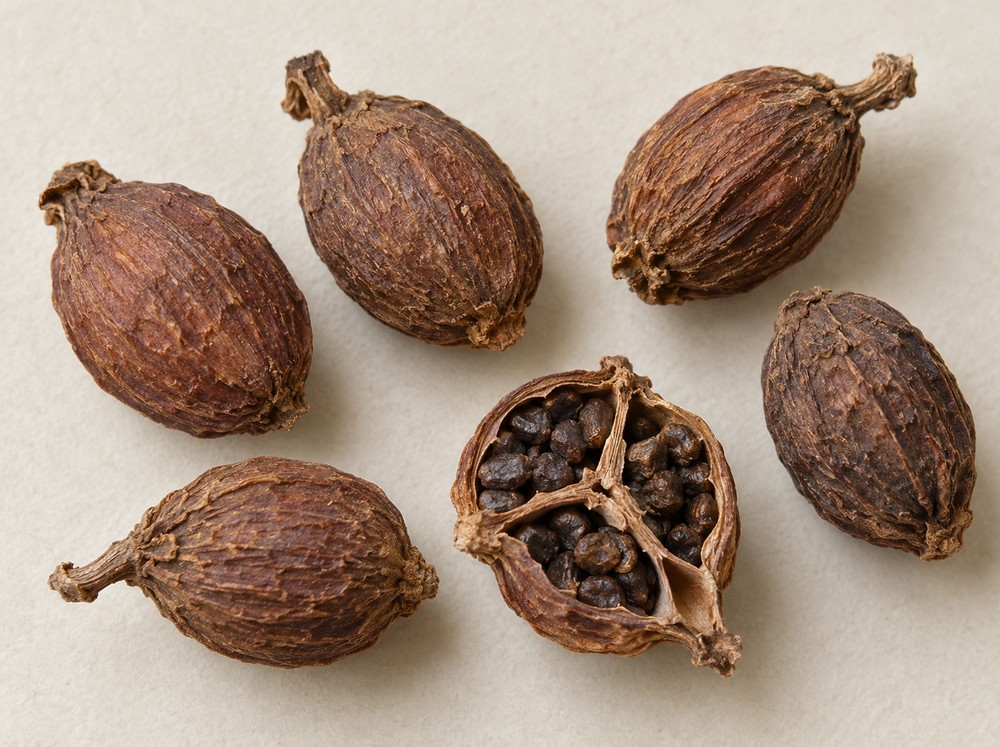
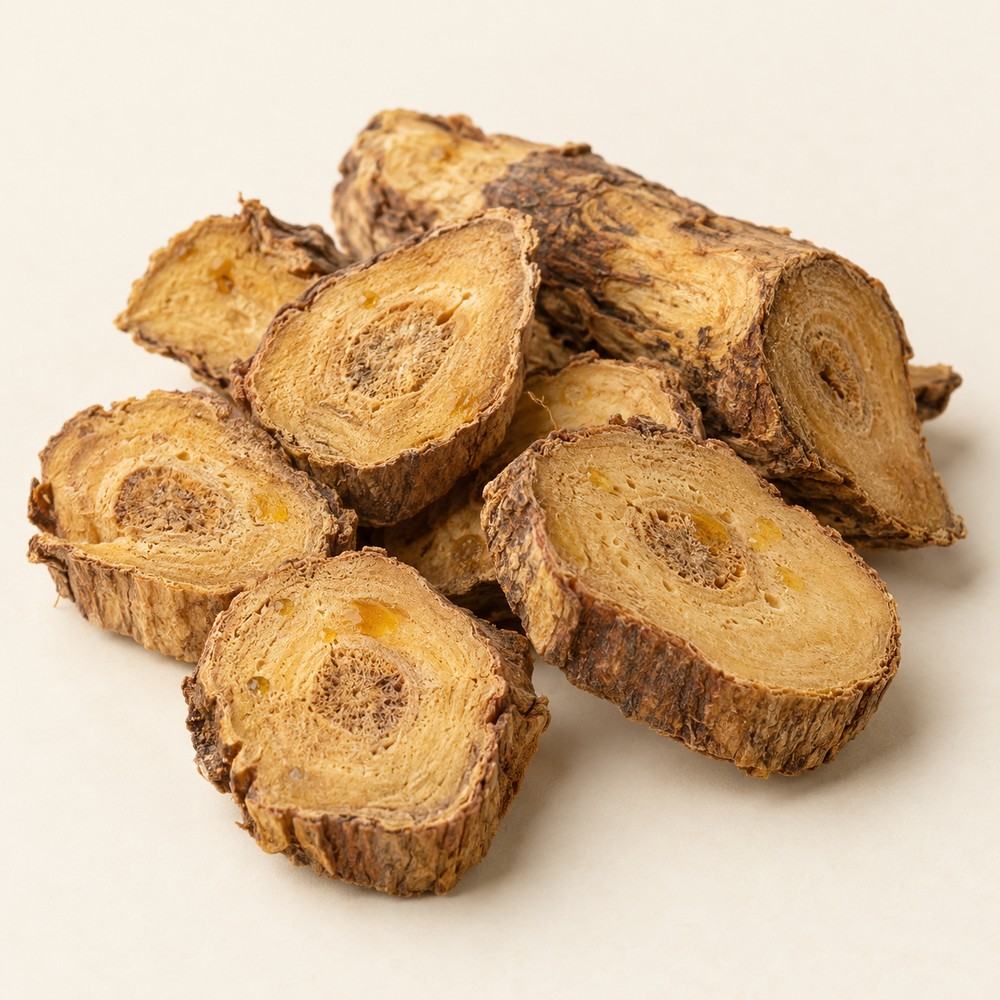
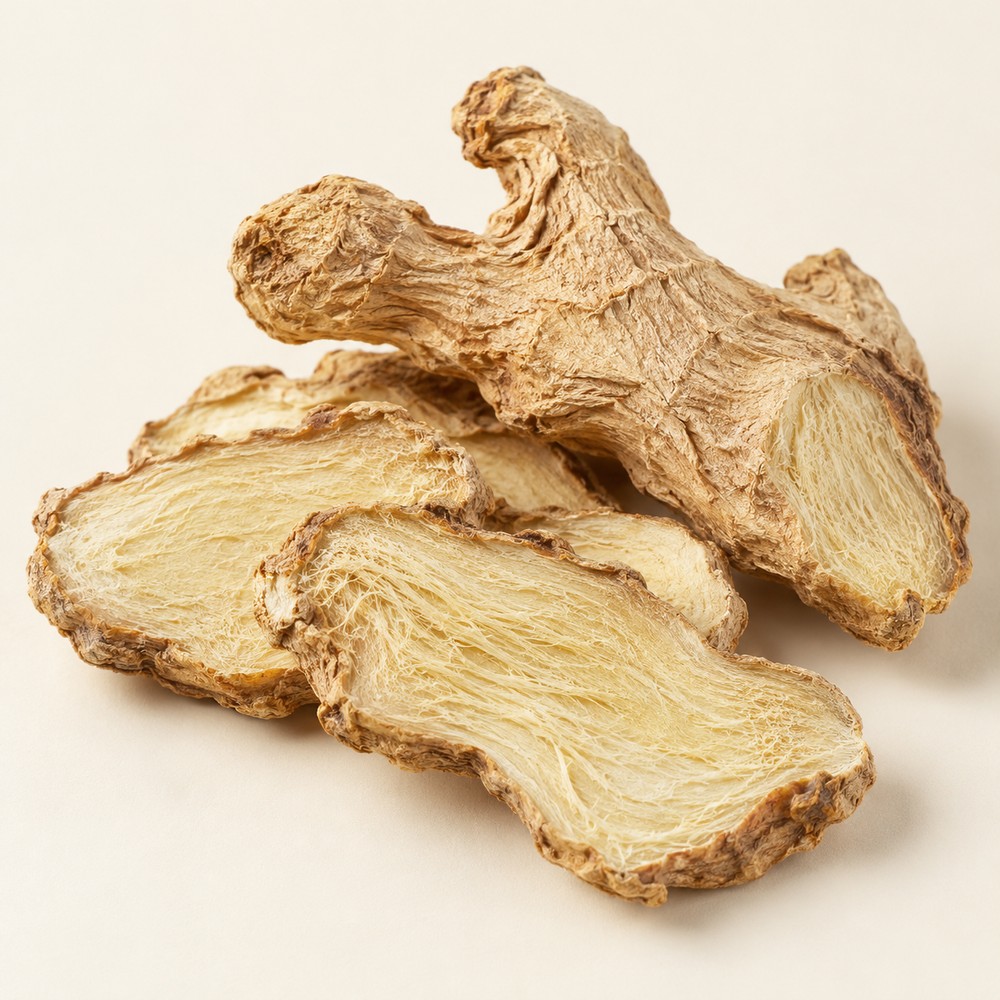
Source-recorded amounts: Source-recorded amounts are 30:30:15:15:15:15:2 g in the order shown; versions and historical units may vary.
Caution: Aucklandia and Magnolia bark require authenticated, legal sourcing; do not self-combine because the record does not assess an individual, illness, or interactions. Do not wild-harvest Hou Po bark.
Open formula record ↗Documented toxic incompatibility
No reviewed source confirms an isolated Hou Po pair as poisonous. Extracts may still interact with medicines; safety depends on preparation, amount, and person. A multi-herb historical formula does not establish a pairwise toxicity rule.
AI study illustrations; not for specimen identification.
FROM PLANT / SOURCE HABITAT TO DRIED MATERIAL · REFERENCE WORKFLOW
- Medicinal bark is usually obtained from cultivated plants and must follow professional procedures. Clean, sort, chop/compost according to facility standards, dry evenly and then pack to prevent moisture; There are no instructions for peeling and processing at home because it can kill the tree, confuse the species, and damage the medicinal herbs.
- Medicinal bark should come from cultivated trees and be harvested under professional standards. Clean, grade, slice/process according to a controlled protocol, dry evenly, then protect from moisture. Home bark stripping is discouraged because it can kill trees, misidentify species, and yield unsafe material.
- Verify the cultivated Magnolia source and harvest authorization before any bark work; never ring-bark a living tree.
- Under facility protocol, clean, grade, dry and label bark pieces by stem/branch source; preserve traceability and reject mold.
These are post-harvest study notes, not directions to prepare a remedy for self-treatment. Processing reference ↗