Wrinkled giant hyssop · Huo Xiang
Agastache rugosa (Fisch. & C.A.Mey.) Kuntze · Aerial parts
Name and part used
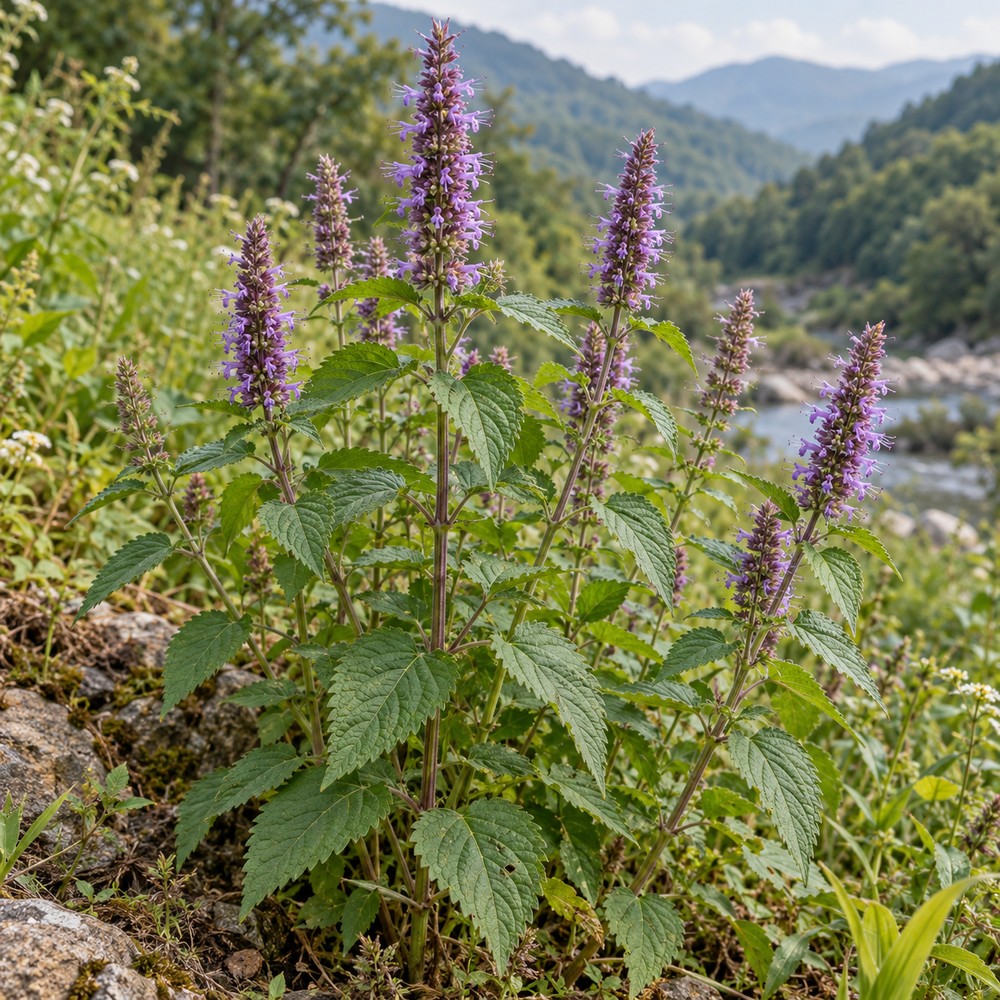
A square-stemmed herb with opposite ovate serrated leaves and purple terminal flower spikes.
Traditional context
This profile uses Agastache rugosa as medicinal Huo Xiang. HKBU records whole-plant harvest when inflorescences emerge before full bloom; the common name may also refer to other plants in trade.
Modern evidence
Dampness-transforming, exterior-releasing, and stomach-harmonizing are traditional concepts. Aroma or essential-oil research does not prove treatment of vomiting, food poisoning, or infection.
Safety
Concentrated essential oils can irritate; do not ingest homemade oils. Pregnancy, breastfeeding, young children, and medicines warrant professional advice.
Pairing in reference texts
Huo Xiang appears in Huo Xiang Zheng Qi San with Perilla, Pinellia, Chen Pi, and others. The classical formula is not a self-treatment for diarrhea or flu.
Growing, care, and harvest timing
HKBU habitat record: Growing on slopes or roadsides. Usually cultivated. Distributed in Guangdong, Hunan, Hubei, Henan, Shaanxi, Hebei and etc. The medicinal materials are mainly produced in Sichuan, Jiangsu, Zhejiang, Hunan and etc Harvest and processing as recorded: Harvested whole plant on sunny days when inflorescence shoots out but blooms in June-July; thin ted till sunset, collected and keep for the night and ted again next day
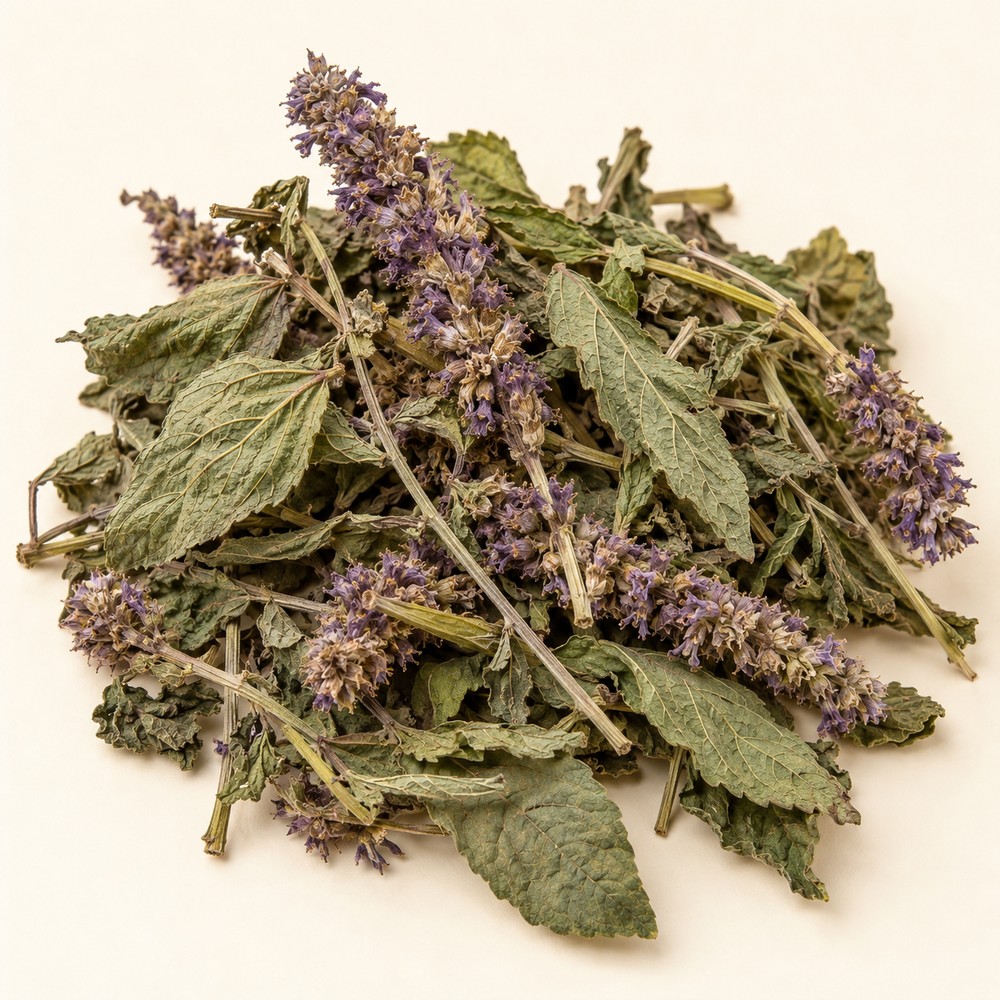
Source-recorded harvest/processing: Harvested whole plant on sunny days when inflorescence shoots out but blooms in June-July; thin ted till sunset, collected and keep for the night and ted again next day
The reviewed source does not provide a complete species-specific sowing/growing routine, irrigation/fertilization schedule, or universal plant age. The page therefore does not infer care instructions or years to harvest; consult local cultivation guidance.
Open habitat and season source ↗FROM PLANT / SOURCE HABITAT TO DRIED MATERIAL · REFERENCE WORKFLOW
- HKBU records whole-plant harvest on a dry day as flower spikes emerge; authenticate Agastache rugosa and avoid other mints.
- Remove soil and weeds, cut to facility specifications, and avoid tight piles that heat and lose aroma.
- The source describes thin drying until evening, clean overnight storage, and redrying under validated procedures.
- Pack after cooling, document species and harvest date, control moisture, and protect from light and heat.
These are post-harvest study notes, not directions to prepare a remedy for self-treatment. Processing reference ↗
How to read formula amounts
The cited sources do not provide a formula with specific amounts for this profile; no ratio is invented. Absence from the incompatibility list does not establish safety.
Habitat, season, and harvest in the HKBU botanical record
HKBU botanical record (translated summary): Flowering and fruiting dates: Flowering: June to September, fruiting: September to November Habitat and distribution: Growing on slopes or roadsides. Usually cultivated. Distributed in Guangdong, Hunan, Hubei, Henan, Shaanxi, Hebei and etc. The medicinal materials are mainly produced in Sichuan, Jiangsu, Zhejiang, Hunan and etc Harvest and processing as recorded: Harvested whole plant on sunny days when inflorescence shoots out but blooms in June-July; thin ted till sunset, collected and keep for the night and ted again next day
Open botanical source ↗