Jue Ming Zi · sickle senna seed · Jue Ming Zi
Senna tora (L.) Roxb. (syn. Cassia tora L.) · Dried ripe seed
Name and part used
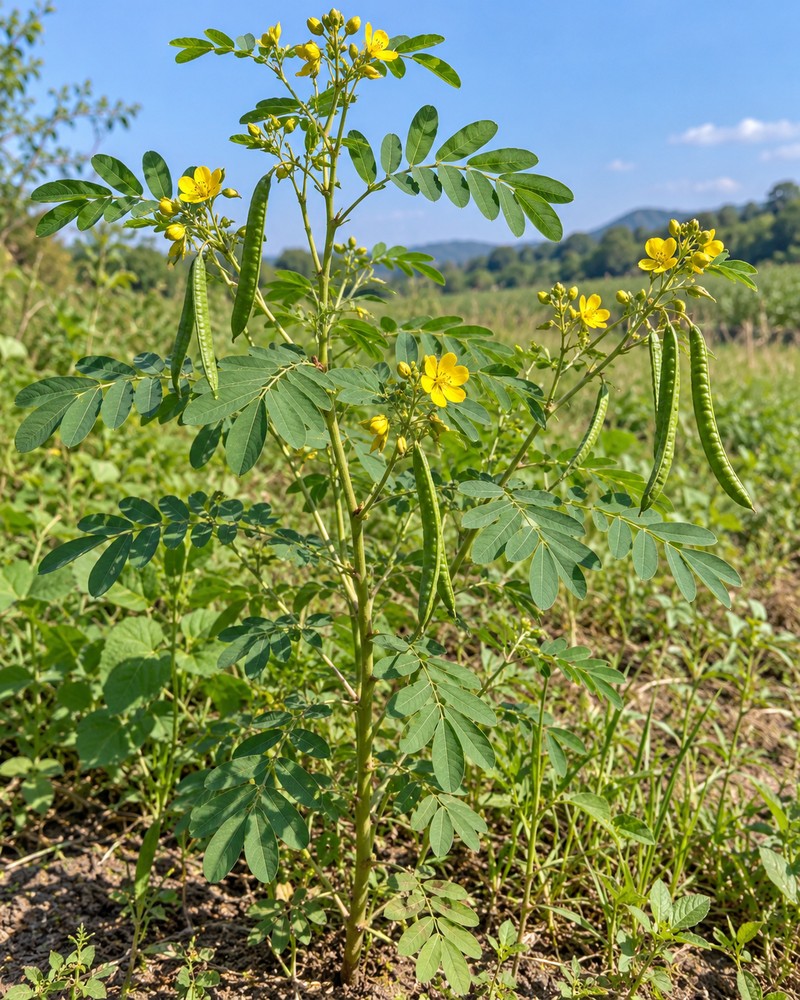
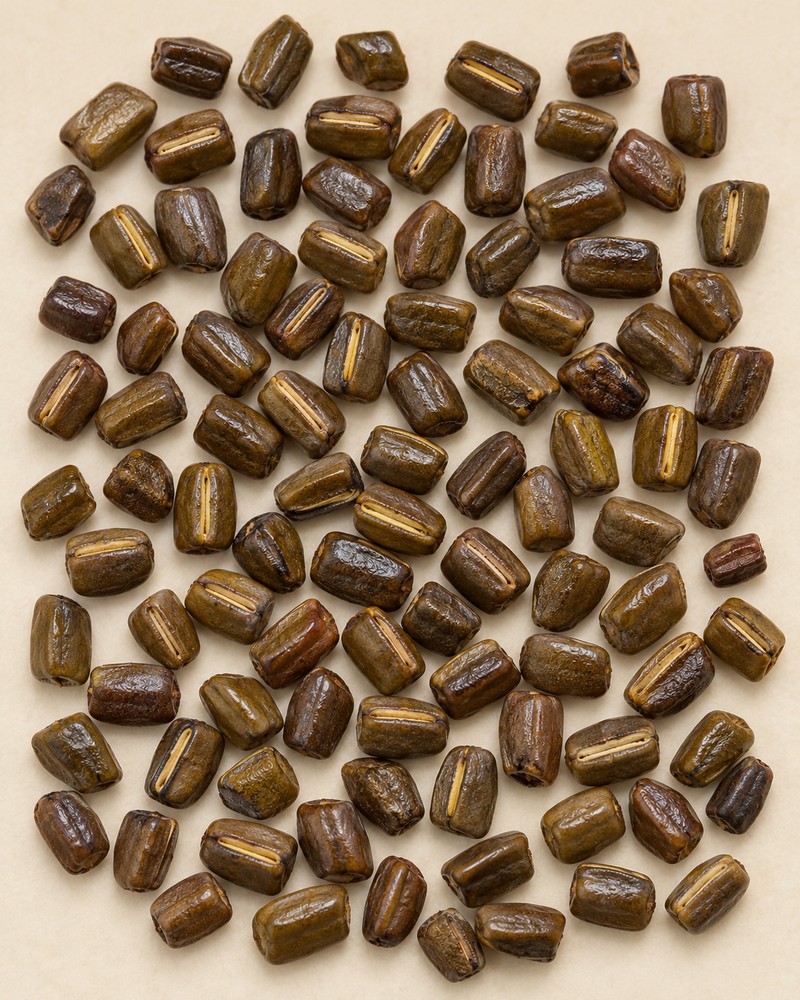
Senna tora is an annual herb with pinnate leaves, yellow flowers, and long pods. Jue Ming Zi is the dried ripe seed, usually greenish to dark brown, short cylindrical to angular, with raised ridges.
Traditional context
HKBU records traditional actions of clearing heat, brightening the eyes, and moistening the bowels. These belong to a traditional framework and are not proof of treating eye disease, hypertension, or weight loss.
Modern evidence
Studies of constituents, extracts, or animal effects do not show that Jue Ming Zi seed or tea treats disease in people. Rare adverse reactions have been reported; “eye-brightening tea” marketing does not guarantee benefit or safety.
Safety
It may cause gastrointestinal effects. People with loose stools, frailty, chronic liver disease, pregnancy or breastfeeding, or medicines should consult a professional before considering it. Hong Kong Polytechnic University notes liver-toxicity concern in chronic hepatitis B and a report of abnormal bleeding; do not take it long-term on your own.
Safety reference ↗Pairing in reference texts
It appears in traditional drinks and formulas, but reviewed sources do not establish a specific toxic pair for Jue Ming Zi. Lack of a named pair does not prove arbitrary combinations safe; do not self-combine with laxatives or treatment medicines.
Identification and study notes
Senna tora has alternate pinnate leaves, usually with several pairs of oval leaflets; yellow flowers arise from leaf axils. The fruit is a long narrow, slightly curved pod with seeds in a row. Dried Jue Ming Zi is short, angular or cylindrical, with nearly parallel ends; the smooth, glossy green-brown to dark-brown seed has a ridge and pale groove on each side. Seeds are only a few millimeters long and hard. Materia medica records may accept Cassia tora or C. obtusifolia; this plant image illustrates Senna tora rather than every accepted source. An AI dried-seed image cannot prove chemical composition or cleanliness. Harvest depends on the season; HKBU describes collecting yellow-brown mature pods, drying the plant, and threshing the seed. “Clears heat, brightens the eyes, moistens the bowels” is traditional terminology, not treatment for myopia, glaucoma, liver disease, or weight loss. PolyU cites liver-toxicity and abnormal-bleeding concerns; daily tea cannot be presumed harmless.
Growth and habitat
HKBU records it along rivers, wasteland, and hillsides, wild or cultivated in several Chinese regions. It favors a bright site and loose, drained soil; Guangxi and Yunnan are listed production regions.
Identification and study notes
Senna tora has alternate pinnate leaves, usually with several pairs of oval leaflets; yellow flowers arise from leaf axils. The fruit is a long narrow, slightly curved pod with seeds in a row. Dried Jue Ming Zi is short, angular or cylindrical, with nearly parallel ends; the smooth, glossy green-brown to dark-brown seed has a ridge and pale groove on each side. Seeds are only a few millimeters long and hard. Materia medica records may accept Cassia tora or C. obtusifolia; this plant image illustrates Senna tora rather than every accepted source. An AI dried-seed image cannot prove chemical composition or cleanliness. Harvest depends on the season; HKBU describes collecting yellow-brown mature pods, drying the plant, and threshing the seed. “Clears heat, brightens the eyes, moistens the bowels” is traditional terminology, not treatment for myopia, glaucoma, liver disease, or weight loss. PolyU cites liver-toxicity and abnormal-bleeding concerns; daily tea cannot be presumed harmless.
Growing and care
- Gieo vào đất tơi, thoát nước ở nơi có nắng; giữ ẩm nhẹ trong lúc nảy mầm, sau đó tưới khi lớp mặt khô. Chừa khoảng để cây phân nhánh.
- Sow in loose, drained soil in a sunny location; keep lightly moist during germination, then water when the surface dries. Leave room for branching.
How long until harvest? HKBU records flowering around June–August and fruiting September–October; harvest mature yellow-brown pods, dry the plants, thresh, and clean the seeds. Sowing-to-harvest time varies by climate; the source gives no fixed number of days.
Documented toxic incompatibility
Reviewed sources do not establish a specific toxic pair; key concerns are laxative effects and adverse reports involving the seed itself. Do not infer that combining it with another herb is safe.
AI study illustrations; not for specimen identification.
FROM PLANT / SOURCE HABITAT TO DRIED MATERIAL · REFERENCE WORKFLOW
- Harvest mature pods when they turn yellow-brown, as recorded by HKBU; avoid unripe pods and mixed species.
- Cut and dry the plants, thresh out the seed, and winnow away husks and debris; label species, field, and harvest date.
- Control moisture, insects, and contamination in qualified processing; do not roast or brew it as a home treatment for eyes, constipation, or weight loss.
- Store dry seed sealed and separate from ornamental and food materials.
These are post-harvest study notes, not directions to prepare a remedy for self-treatment. Processing reference ↗