Ku Shen · lightyellow sophora root · Ku Shen
Sophora flavescens Aiton · Dried root
Name and part used
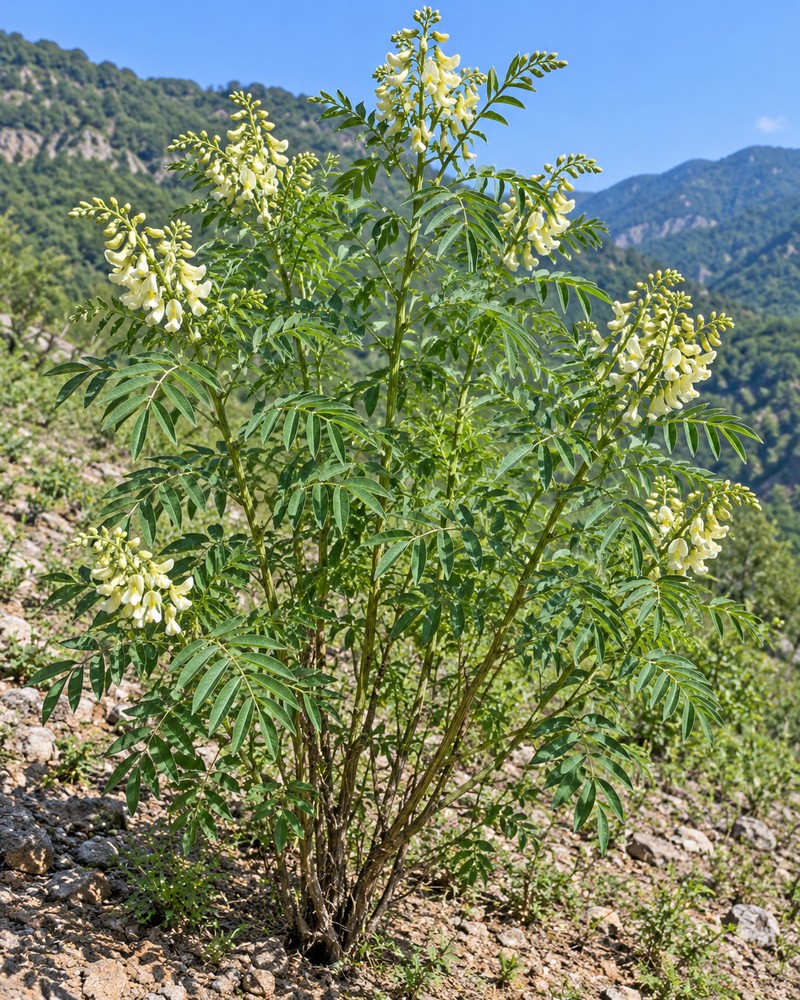
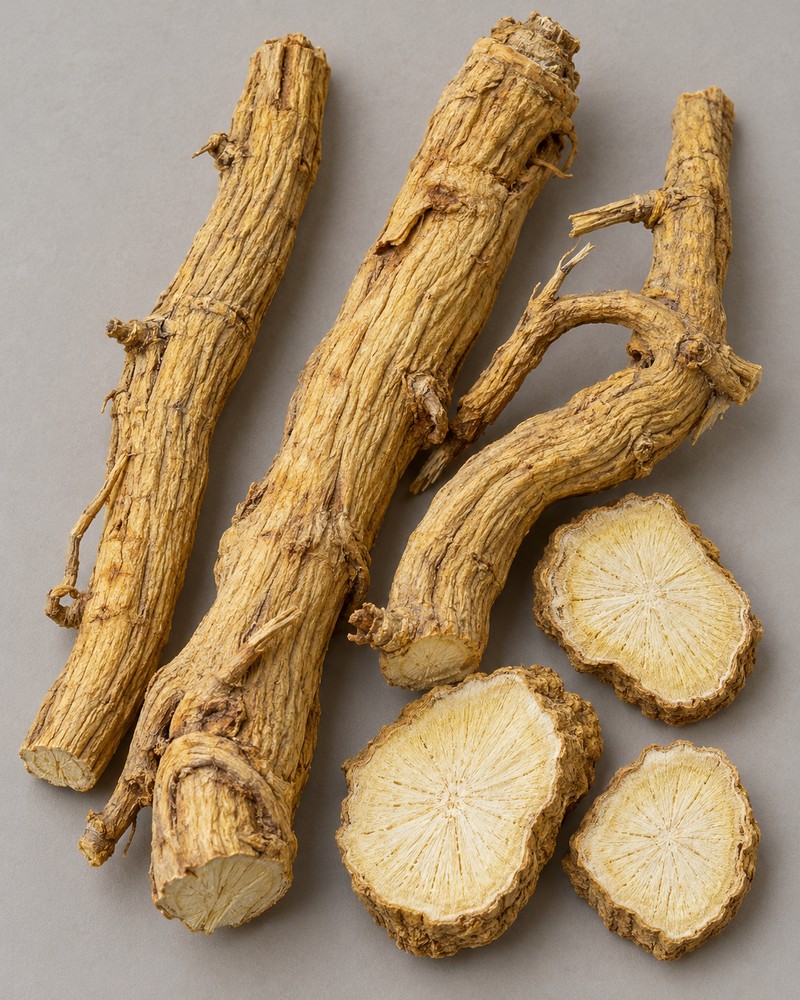
Sophora flavescens is a 1.5–3 m subshrub with pinnate leaves of narrow leaflets, pale yellow pea-like flowers, and long pods. Ku Shen is the pale-yellow dried root; do not confuse it with other Sophora species.
Traditional context
HKBU records traditional actions of clearing heat, drying dampness, promoting urination, and killing parasites. These traditional terms do not prove the root treats eczema, diarrhea, infection, or gynecological disease.
Modern evidence
Studies of constituents, extracts, or specific Sophora flavescens products cannot be applied directly to raw root or every disease. Reviews note limitations in trial quality; a product result does not establish efficacy of the plant alone.
Safety
May cause nausea, abdominal pain, vomiting, or severe reactions with misuse/overuse; Sophora alkaloid poisoning cases are reported. Memorial Sloan Kettering notes potential paclitaxel interactions and concern in hormone-sensitive cancer based on preclinical data; clinical relevance is uncertain. People in cancer treatment, pregnancy or breastfeeding, liver disease, or taking medicines should consult a clinician or pharmacist.
Safety reference ↗Pairing in reference texts
HKBU records Ku Shen in Xiao Feng San with multiple other ingredients. Do not turn the multi-ingredient formula into self-treatment; evidence does not justify calling one isolated herb pair universally “toxic” across products.
Identification and study notes
Sophora flavescens is a deciduous subshrub with erect, branching, longitudinally grooved stems. Alternate pinnate leaves bear many narrow leaflets; terminal cream-yellow pea-shaped flowers are characteristic of Fabaceae. Long pods are slightly constricted between seeds. The taproot can branch; its yellow-white to yellow-brown surface has longitudinal wrinkles and horizontal lenticels, while cut slices show a pale-yellow fibrous interior. This is the bitter Ku Shen root, not Sophora seed or any other root sold under a “ginseng” name. The AI image is a morphology aid; related legumes can look similar, so provenance matters. HKBU records sunny slopes and sandy/red soils, with roots harvested in spring or autumn, but gives no cultivation age; a fixed “years until safe use” cannot be promised. Clearing heat, drying dampness, and promoting urination are traditional actions. Cell/animal findings or results for one proprietary product do not prove raw root treats eczema, diarrhea, or infection. Modern medical sources caution about misuse/poisoning and potential interactions whose clinical significance remains uncertain.
Growth and habitat
HKBU records Sophora flavescens on sunny mountain slopes, plains, roadsides, sandy ground, and red soil across China. It is a light-loving subshrub requiring drainage; medicinal production is recorded in several northern, central, and southern provinces.
Identification and study notes
Sophora flavescens is a deciduous subshrub with erect, branching, longitudinally grooved stems. Alternate pinnate leaves bear many narrow leaflets; terminal cream-yellow pea-shaped flowers are characteristic of Fabaceae. Long pods are slightly constricted between seeds. The taproot can branch; its yellow-white to yellow-brown surface has longitudinal wrinkles and horizontal lenticels, while cut slices show a pale-yellow fibrous interior. This is the bitter Ku Shen root, not Sophora seed or any other root sold under a “ginseng” name. The AI image is a morphology aid; related legumes can look similar, so provenance matters. HKBU records sunny slopes and sandy/red soils, with roots harvested in spring or autumn, but gives no cultivation age; a fixed “years until safe use” cannot be promised. Clearing heat, drying dampness, and promoting urination are traditional actions. Cell/animal findings or results for one proprietary product do not prove raw root treats eczema, diarrhea, or infection. Modern medical sources caution about misuse/poisoning and potential interactions whose clinical significance remains uncertain.
Growing and care
- Đặt cây nơi sáng, đất vườn thoát nước và không úng; cây trưởng thành thành bụi cao nên chừa khoảng và tránh sát lối đi.
- Plant in a bright location with drained soil; mature shrubs grow tall, so allow space and keep them away from walkways.
How long until harvest? HKBU gives root harvest seasons (spring or autumn) but no years-to-harvest. Do not decide that a plant is “ready for use” by age or root color; authentication and materia medica standards are required.
Documented toxic incompatibility
The safety concern is the Sophora root/alkaloids themselves and potential product interactions, not a proven incompatible pair. Do not combine it on your own with cancer, hormone-related, or other medicines; ask a clinician or pharmacist.
AI study illustrations; not for specimen identification.
FROM PLANT / SOURCE HABITAT TO DRIED MATERIAL · REFERENCE WORKFLOW
- HKBU records root excavation in spring or autumn; root harvest requires qualified handling, not digging an ornamental plant for personal use.
- Remove root tips and rootlets, wash soil away, and either dry whole roots or cut thick slices while fresh and dry as the source records.
- Control identity, alkaloids, moisture, contamination, and lot traceability in a qualified facility; do not home-process or apply it for eczema.
- Label Sophora flavescens, region, season, and processing form; store dry, sealed, and away from children.
These are post-harvest study notes, not directions to prepare a remedy for self-treatment. Processing reference ↗