Ling Zhi · Reishi mushroom · Ling Zhi
Ganoderma lucidum (Leyss. ex Fr.) Karst. · Dried fungal fruiting body
Name and part used
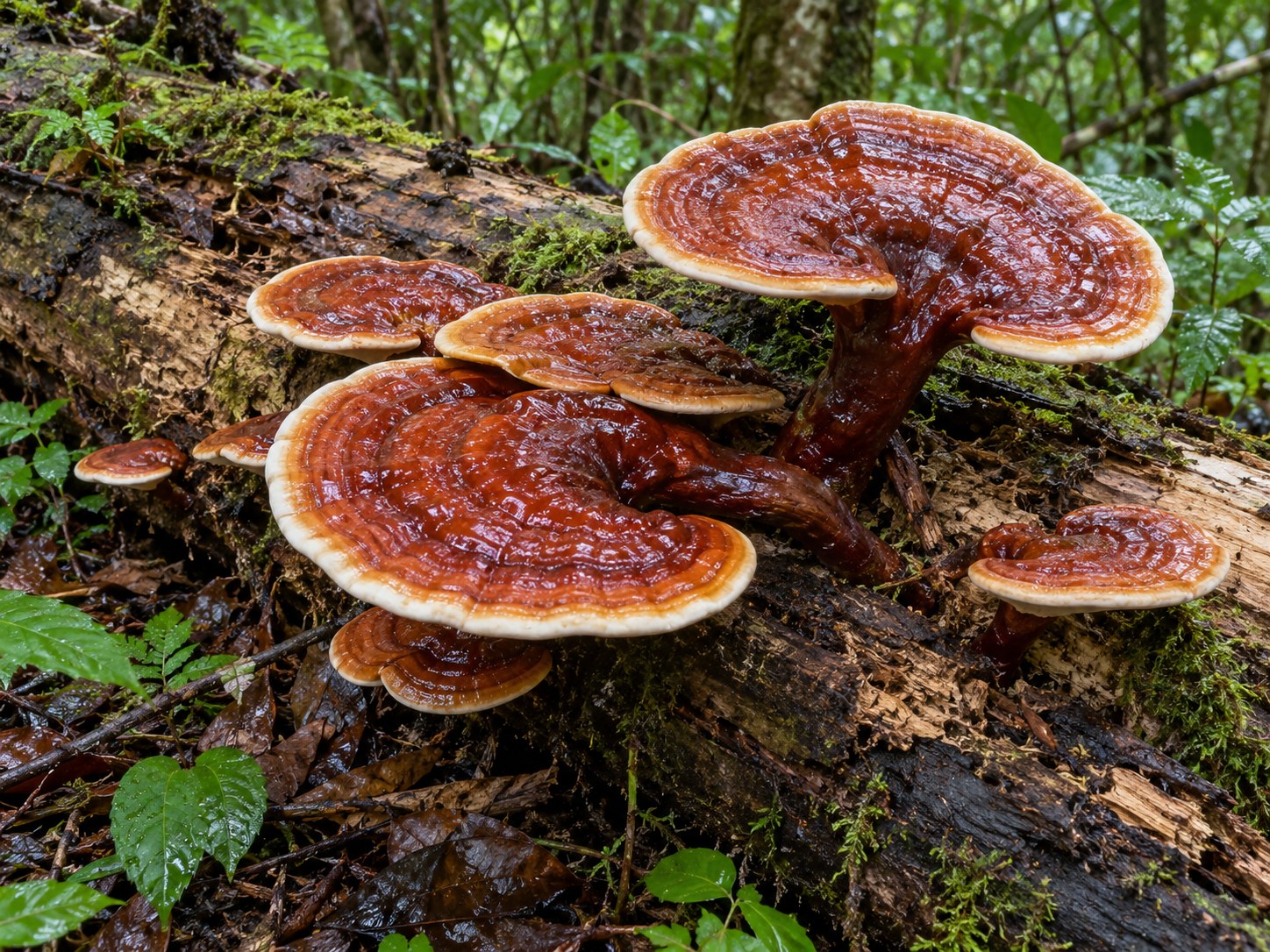
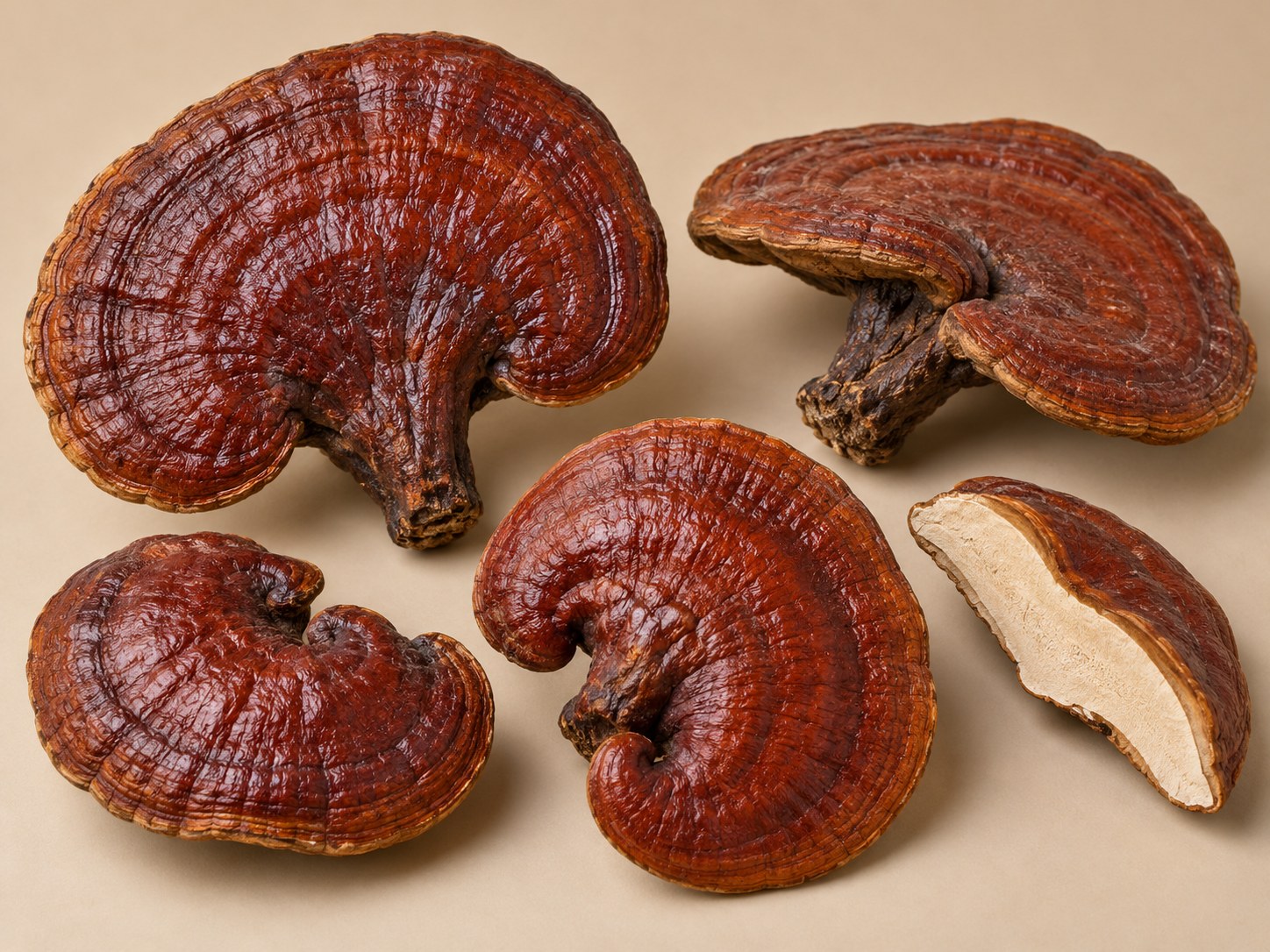
Ling Zhi is the dried fruiting body of Ganoderma fungi. HKBU uses G. lucidum for Chizhi (red reishi), while some materia-medica records also list Ganoderma sinense for Zizhi (purple reishi). Fruiting bodies grow from decaying wood or roots and have lacquer-like fan- or kidney-shaped caps with concentric growth bands, pale margins, and tiny pores underneath rather than gills. The lateral stipe is usually hard. The AI image depicts one red Ganoderma form and cannot determine the species of a commercial mushroom; taxonomy in the genus is complex and look-alikes are common. The drug is the cleaned, dried fruiting body—not spore powder, rotten wood, or every shiny red fungus.
Traditional context
HKBU records a sweet, neutral traditional nature and actions described as supplementing qi, calming the spirit, stopping cough, and easing panting. Historical indications such as dizziness, insomnia, palpitations, or cough are not proof of treatment. Breathlessness, chest pain, coughing blood, or persistent insomnia requires medical assessment; do not replace prescribed care with mushroom products.
Modern evidence
Ling Zhi is studied in many forms: whole fruiting bodies, powders, extracts, polysaccharides, triterpenes, spores, and combination products. Each differs in processing and composition; cell, animal, or small studies do not show that ordinary dried mushroom prevents cancer, boosts immunity, or treats chronic disease. LiverTox notes rare reports of liver injury associated with Ling Zhi products, although causality can be difficult to establish; product quality and mixtures matter. A study of one extract is not a treatment guarantee.
Safety
Possible effects include digestive upset, dry mouth, dizziness, or allergy; rare liver-injury reports exist for oral products. Potential effects on clotting warrant clinician/pharmacist advice for people taking warfarin or anticoagulants, preparing for surgery, with bleeding disorders or liver disease, receiving chemotherapy, or pregnant or breastfeeding. Never eat a wild mushroom identified from a photo; many wood-growing fungi look similar and require mycological expertise.
Safety reference ↗Pairing in reference texts
Ling Zhi appears in traditional teas, tinctures, and formulas, but commercial sources may differ in species, part, and concentration. This profile does not establish a universal ratio; do not self-combine with anticoagulants, blood-pressure or diabetes medicines, or cancer therapy. A pairing in a text is not evidence that the combination is safe in people.
Identification and study notes
Ling Zhi differs from gilled mushrooms: the underside has tiny pores, the fan- or kidney-shaped cap is glossy with concentric bands, and the texture is woody. Dried fruit bodies are firm and dense, with pale to light-brown flesh rather than soft edible-mushroom tissue. HKBU records both Ganoderma lucidum and G. sinense in materia medica; a Reishi/Lingzhi label alone does not identify species. Brown spore dust is not a standalone quality marker; use a documented standard and testing. A cross-section and pore surface often teach structure better than cap color: inspect the tiny pores, internal flesh, lateral stipe, and growth bands. Yet visual characters alone may not resolve closely related Ganoderma species. Cultivated strains and substrates differ, changing appearance and composition. A label claiming “100% Ling Zhi” does not establish species, fruiting body versus spores, purity, or active-compound content. When comparing suppliers, look for Latin identity, part used, country/region of origin, extraction method, microbial and heavy-metal testing, and the responsible manufacturer. If taking prescription medicines, a clinician or pharmacist should review the full label because products may combine several fungi and herbs. A specimen record is more useful than a marketing photo: note where the fungus grew, its host, whether it was cultivated, and who authenticated the species. Record whether a product contains whole fruiting body, extract, spores, or a mixed formula; these are not equivalent study objects. The woody fruiting body can be cut into sections for morphology, but powder removes many recognizable features. The site’s illustration is therefore a visual vocabulary aid, not a field key, laboratory report, or guarantee of the identity of a retail supplement.
Growth and habitat
HKBU records Ganoderma lucidum on roots and stumps of woody hosts, notes cultivation is possible, and places much materia-medica production in eastern and southwestern China. The fungus depends on host wood, moisture, and clean conditions; identification uses cap, pores, stipe, spores, and sometimes DNA—not merely a red lacquered surface. Wild specimens can contain contaminants or be misidentified; prefer documented cultivation sources.
Identification and study notes
Ling Zhi differs from gilled mushrooms: the underside has tiny pores, the fan- or kidney-shaped cap is glossy with concentric bands, and the texture is woody. Dried fruit bodies are firm and dense, with pale to light-brown flesh rather than soft edible-mushroom tissue. HKBU records both Ganoderma lucidum and G. sinense in materia medica; a Reishi/Lingzhi label alone does not identify species. Brown spore dust is not a standalone quality marker; use a documented standard and testing. A cross-section and pore surface often teach structure better than cap color: inspect the tiny pores, internal flesh, lateral stipe, and growth bands. Yet visual characters alone may not resolve closely related Ganoderma species. Cultivated strains and substrates differ, changing appearance and composition. A label claiming “100% Ling Zhi” does not establish species, fruiting body versus spores, purity, or active-compound content. When comparing suppliers, look for Latin identity, part used, country/region of origin, extraction method, microbial and heavy-metal testing, and the responsible manufacturer. If taking prescription medicines, a clinician or pharmacist should review the full label because products may combine several fungi and herbs. A specimen record is more useful than a marketing photo: note where the fungus grew, its host, whether it was cultivated, and who authenticated the species. Record whether a product contains whole fruiting body, extract, spores, or a mixed formula; these are not equivalent study objects. The woody fruiting body can be cut into sections for morphology, but powder removes many recognizable features. The site’s illustration is therefore a visual vocabulary aid, not a field key, laboratory report, or guarantee of the identity of a retail supplement.
Growing and care
- Start with authenticated Ganoderma spawn from a documented supplier; never use wild spores or unidentified mushrooms.
- Use clean hardwood logs or a professionally prepared substrate; sanitize tools and the growing area to limit competing molds.
- Incubate under controlled temperature, ventilation, and moisture; maintain high humidity for fruiting while preventing standing water.
- Monitor pests, molds, cap and pore development; harvest only an authenticated crop and reject specimens with green/black mold or unusual odor.
How long until harvest? HKBU records mature fruiting bodies as harvestable year-round and notes cultivated specimens may be thick; no fixed month count is given because strain, substrate, and conditions differ. Harvest only when caps are developed and pores formed under the facility’s protocol, with species identity and cleanliness verified.
Habitat, season, and harvest in the HKBU botanical record
HKBU describes Ganoderma lucidum as an annual fruiting body with a hard lateral stipe, lacquer-like reddish-brown cap, and pores underneath; it grows on woody roots and stumps and can be cultivated. Harvested bodies are trimmed of wood, soil, and substrate and shade-dried or dried at 40–50°C. These details support morphology and workflow study but do not authenticate every product labelled Ling Zhi.
Open botanical source ↗FROM PLANT / SOURCE HABITAT TO DRIED MATERIAL · REFERENCE WORKFLOW
- Confirm the mushroom belongs to an authenticated cultivation lot; never prepare medicine from a wild fungus identified by photo.
- Harvest mature fruiting bodies and trim away attached rotten wood, soil, and substrate as described by HKBU.
- Dry in shade or under controlled heating around 40–50°C as the HKBU record describes; protect from smoke, dust, harsh sun, and mold.
- Record species, strain, substrate, lot, harvest date, and drying temperature; store dry and discard soft, damp, moldy, or unusual-smelling material.
These are post-harvest study notes, not directions to prepare a remedy for self-treatment. Processing reference ↗