Common purslane herb · Ma Chi Xian
Portulaca oleracea L. · Whole plant
Name and part used
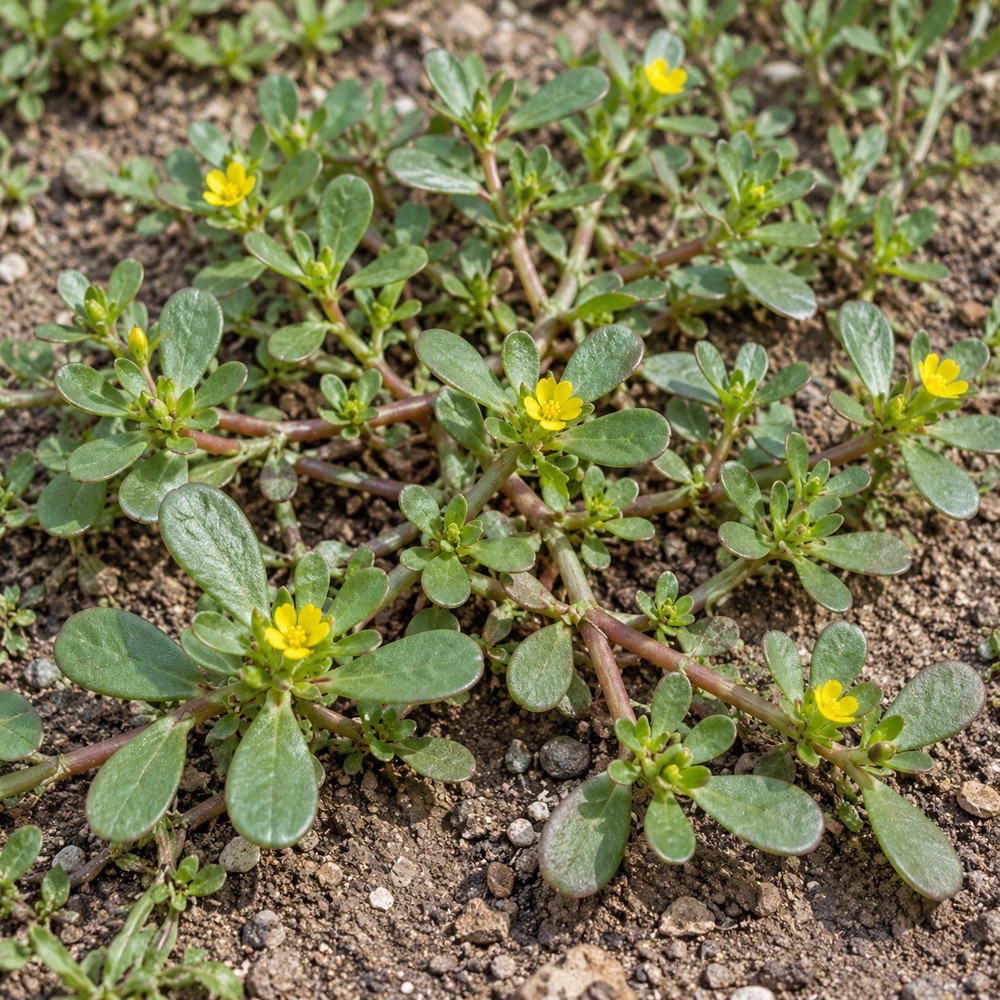
A succulent annual creeps along the ground with green/red stems, spoon-shaped leaves, and yellow flowers; avoid contaminated weeds.
Traditional context
Heat-clearing, blood-cooling, and toxin-resolving are traditional claims, not treatment for severe diarrhea or infection.
Modern evidence
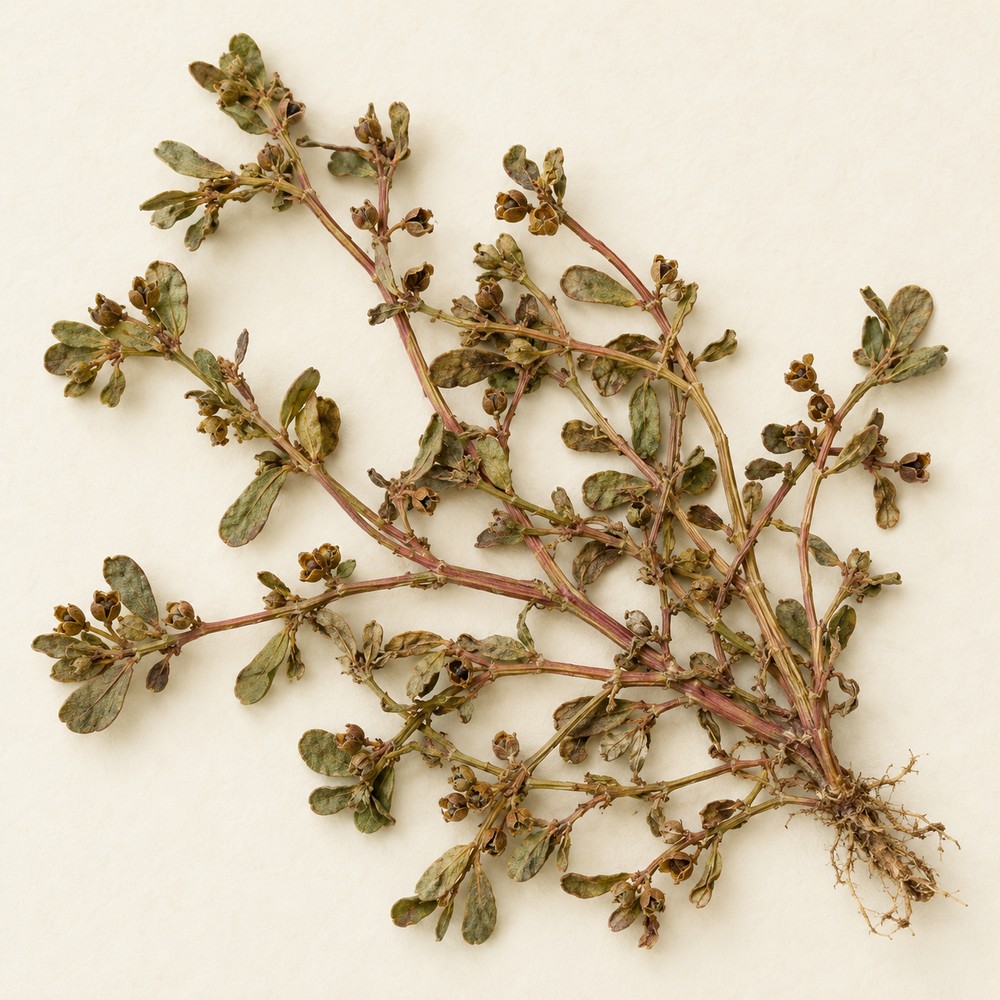
HKBU describes a succulent branched prostrate herb; processing includes washing, brief blanching/steaming, then drying.
Safety
Contains oxalates; use caution with kidney stones/disease, pregnancy, anticoagulants, or diabetes medicines. Wash thoroughly if used as food.
Pairing in reference texts
Ma Chi Xian occurs in traditional cooling formulas; fresh and dried forms differ, and it is not self-treatment for dysentery.
Growing, care, and harvest timing
HKBU habitat record: Growing on fields, roadsides and garden ruins and other sunny places. Distributed in all parts of China. The medicinal materials are mainly produced in all parts of China Harvest and processing as recorded: Whole plant: sliced whole plant in August-Sept, washed off earth, removed impurities, slightly scalded(boiled) or steamed for a while, sun-dried or baked to dry; also used fresh. Seeds: and collected when fruits mature in summer and autumn, sliced aboveground parts, collected seeds, removed sediment and impurities, and dried
Source-recorded harvest/processing: Whole plant: sliced whole plant in August-Sept, washed off earth, removed impurities, slightly scalded(boiled) or steamed for a while, sun-dried or baked to dry; also used fresh. Seeds: and collected when fruits mature in summer and autumn, sliced aboveground parts, collected seeds, removed sediment and impurities, and dried
The reviewed source does not provide a complete species-specific sowing/growing routine, irrigation/fertilization schedule, or universal plant age. The page therefore does not infer care instructions or years to harvest; consult local cultivation guidance.
Open habitat and season source ↗FROM PLANT / SOURCE HABITAT TO DRIED MATERIAL · REFERENCE WORKFLOW
- Cắt toàn cây tháng 8–9 theo hồ sơ; bỏ rễ bẩn, đất và cây lẫn.
- Cut whole plants in August–September per record; remove dirty roots, soil, and mixed species.
These are post-harvest study notes, not directions to prepare a remedy for self-treatment. Processing reference ↗
How to read formula amounts
The cited sources do not provide a formula with specific amounts for this profile; no ratio is invented. Absence from the incompatibility list does not establish safety.
Habitat, season, and harvest in the HKBU botanical record
HKBU botanical record (translated summary): Flowering and fruiting dates: Flowering: May to August, fruiting: July to October Habitat and distribution: Growing on fields, roadsides and garden ruins and other sunny places. Distributed in all parts of China. The medicinal materials are mainly produced in all parts of China Harvest and processing as recorded: Whole plant: sliced whole plant in August-Sept, washed off earth, removed impurities, slightly scalded(boiled) or steamed for a while, sun-dried or baked to dry; also used fresh. Seeds: and collected when fruits mature in summer and autumn, sliced aboveground parts, collected seeds, removed sediment and impurities, and dried
Open botanical source ↗