Mei Gui Hua · rugose rose flower bud · Mei Gui Hua
Rosa rugosa Thunb. · Dried flower bud
Name and part used
Mei Gui Hua in Chinese materia medica is the flower bud of Rosa rugosa Thunb., a thorny Rosaceae shrub, not any ornamental rose or retail tea rose. It has pinnate leaves with 5–9 wrinkled leaflets, dense prickles, and large fragrant pink/purple flowers; medicinal buds are picked just before opening. HKBU lists Jiangsu and Zhejiang as primary production areas.
Traditional context
HKBU records a sweet, slightly bitter, warm nature and traditional actions of moving qi, relieving constraint, harmonizing blood, and easing pain. These descriptors do not prove that the bud treats menstrual disorders, stomach pain, depression, or circulatory disease.
Modern evidence
EMA assessed rose-flower preparations from Rosa gallica, R. centifolia, and R. damascena for certain traditional topical/mucosal uses; this is not an assessment of Rosa rugosa. EMA also found clinical-trial evidence limited for those preparations. Results cannot be transferred across rose species, plant parts, extracts, and Mei Gui Hua buds.
Safety
Allergy to rose-family material or pollen is possible; avoid it after a prior rose-product reaction. Chinese traditional medicine references advise caution during pregnancy or heavy menstruation based on blood-moving theory; clinical evidence on a specific risk is limited. Use authenticated food/medicinal-grade material, not ornamental buds that may carry pesticide residues.
Safety reference ↗Pairing in reference texts
Reviewed sources do not identify a specific toxic incompatibility or standardized pairing ratio for Mei Gui Hua. Traditional formulas may pair qi-regulating herbs with others, but arbitrary combinations are not thereby safe or effective for pain. Do not self-combine with anticoagulants, hormones, or menstrual medicines; ask a pharmacist about medication use.
Identification and study notes
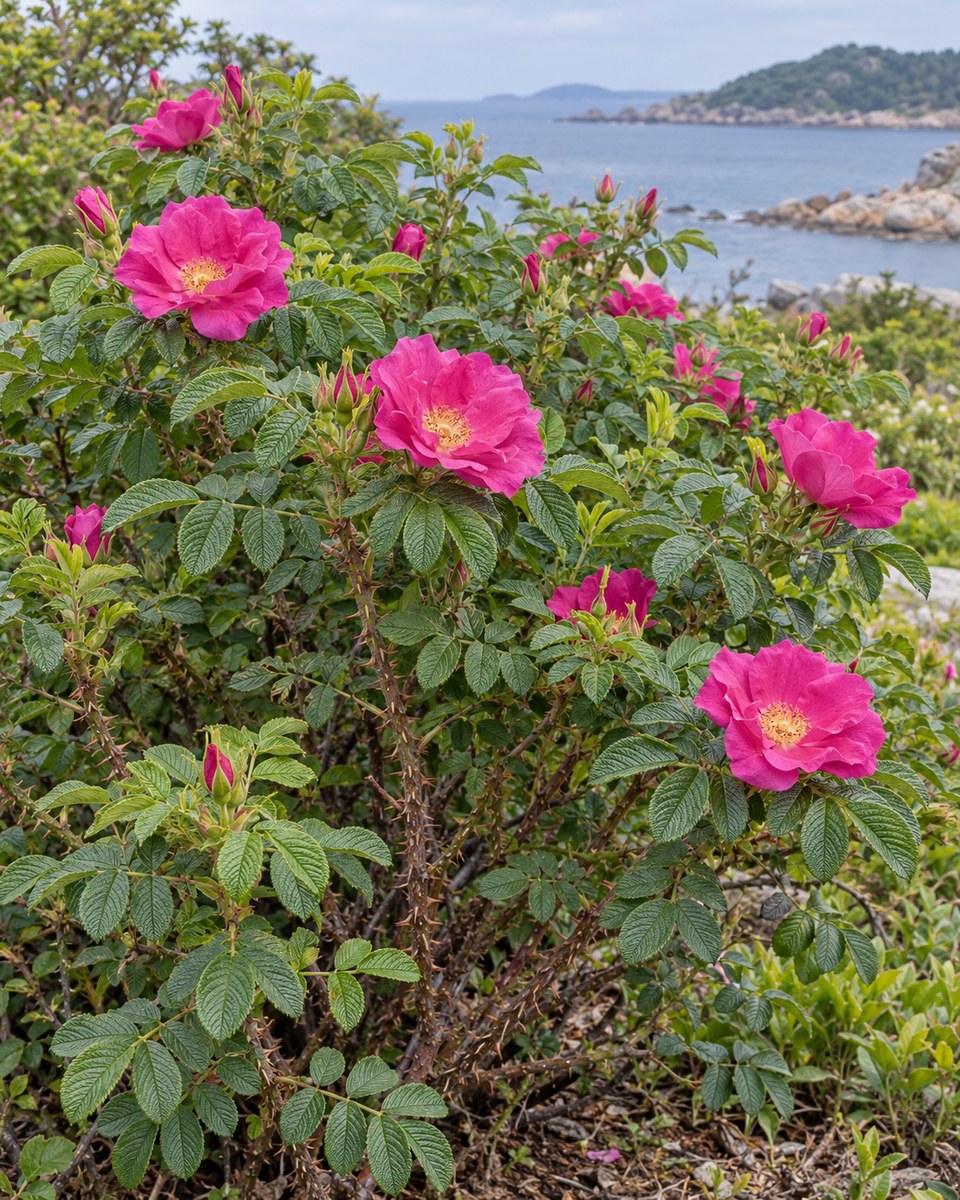
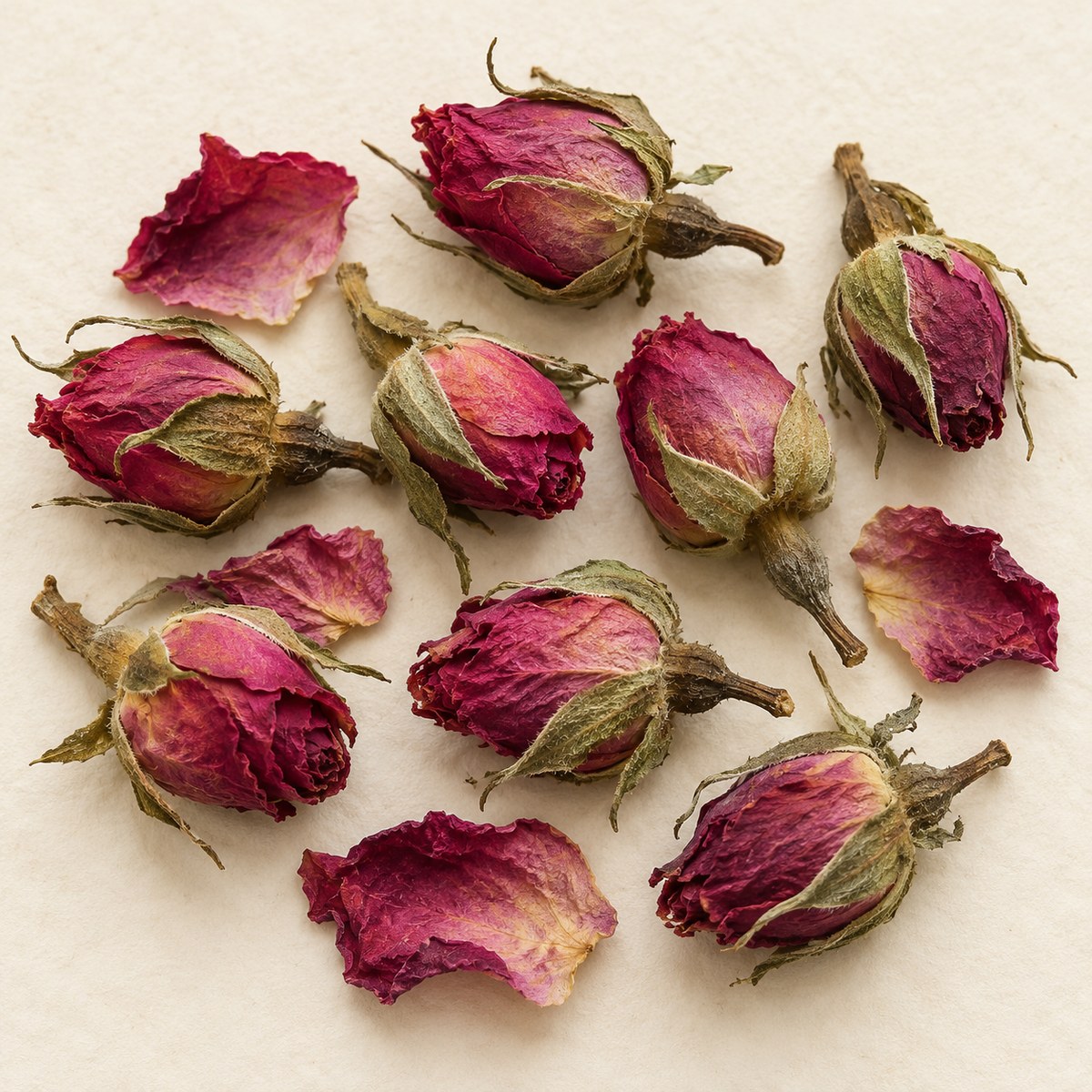
Rosa rugosa shrubs are commonly around 1–2 m, with stout branches bearing prickles and bristles; pinnate leaves have 5–9 thick, strongly wrinkled leaflets with serrated edges. Large fragrant flowers are usually deep pink to purplish pink; fruits are flattened red-orange hips. The medicinal dried bud retains an oval form, with sepals around the petals and a pink-red to reddish-brown color; opened buds may flatten and shed petals. Unlike generic rose tea, Chinese materia medica specifies buds of the correct species picked before opening. A “rose” label does not identify Rosa rugosa, pesticide history, or drying conditions. AI images show one coastal shrub and dried buds but cannot authenticate cultivar or food safety.
Growth and habitat
Rosa rugosa is a deciduous thorny shrub native to East Asia, often associated with coasts and sandy dunes, and cultivated elsewhere. It favors light and well-drained soil and can tolerate coastal exposure; HKBU lists Jiangsu and Zhejiang as medicinal production areas. Hybrid garden roses are not automatically the same species or suitable materia medica.
Identification and study notes
Rosa rugosa shrubs are commonly around 1–2 m, with stout branches bearing prickles and bristles; pinnate leaves have 5–9 thick, strongly wrinkled leaflets with serrated edges. Large fragrant flowers are usually deep pink to purplish pink; fruits are flattened red-orange hips. The medicinal dried bud retains an oval form, with sepals around the petals and a pink-red to reddish-brown color; opened buds may flatten and shed petals. Unlike generic rose tea, Chinese materia medica specifies buds of the correct species picked before opening. A “rose” label does not identify Rosa rugosa, pesticide history, or drying conditions. AI images show one coastal shrub and dried buds but cannot authenticate cultivar or food safety. Hồ sơ Mai khôi hoa này là nụ Rosa rugosa, không phải mọi sản phẩm hoa hồng khô. Nụ, cánh hoa đã nở, quả và tinh dầu là những nguyên liệu khác nhau; hoa hồng cảnh có thể không rõ lịch sử thuốc bảo vệ thực vật. Mô tả cây bụi có gai, lá nhăn, hoa thơm và quả đỏ cam giúp so sánh cây sống với nụ thu hái, nhưng loài Rosa khác vẫn có nguy cơ bị thay thế. Đánh giá EMA ở phần bằng chứng nói về một số loài hoa hồng và đường dùng cụ thể; không thể chuyển kết luận đó sang R. rugosa hoặc cách uống dược liệu. Nguồn đã rà chưa xác lập cặp độc hay tỷ lệ phối chuẩn. Hãy ghi rõ loài, bộ phận, nụ đã khép hay nở, nơi thu và nguồn của từng mô tả cổ truyền.
Growing and care
- Trồng nơi nhiều nắng, đất thoát nước; vùng biển có thể hợp với sức chịu gió, nhưng tránh đất nén úng. Chừa khoảng cho bụi gai lan rộng và thông thoáng.
- Plant in full sun and well-drained soil; coastal exposure may suit its wind tolerance, but avoid compacted waterlogged soil. Allow room for a spreading thorny shrub and airflow.
How long until harvest? Flowering time depends on cultivar and climate; HKBU gives late spring/early summer as the bud-harvest window but no months-from-planting figure. Having buds does not make them medicinal-grade: species, clean provenance, and appropriate drying matter.
Documented toxic incompatibility
Reviewed sources do not establish a specific toxic pair. Traditional caution in pregnancy/heavy menstruation is based on traditional theory, not proof that another herb can neutralize risk. Do not self-combine or use ornamental products of unknown residue status.
AI study illustrations; not for specimen identification.
FROM PLANT / SOURCE HABITAT TO DRIED MATERIAL · REFERENCE WORKFLOW
- Pick well-developed buds just before opening in late spring/early summer, segregated from ornamental roses; harvest only where pesticide history is known.
- Remove leaves, stems, and damaged buds without bruising petals; label Rosa rugosa, site, and harvest date.
- Dry promptly at low temperature as HKBU describes to preserve bud shape and aroma; do not add sugar, essential oil, or preservatives at home.
- Check for mold, insects, and residues; seal against moisture. Ornamental or perfumery buds are not automatically safe for ingestion.
These are post-harvest study notes, not directions to prepare a remedy for self-treatment. Processing reference ↗
Material source, dried appearance, and processing forms (HKBU)
HKBU identifies Flos Rosae Rugosae as the bud of Rosa rugosa Thunb. (Rosaceae), collected in late spring/early summer just before opening, cleaned, and promptly dried at low temperature. The plant has prickles, wrinkled pinnate leaves, and large fragrant flowers; dried buds differ from loose petals or tea mixed from several species. HKBU records a sweet, slightly bitter, warm nature and traditional actions of moving qi, relieving constraint, harmonizing blood, and easing pain.
Open original materia medica record ↗Habitat, season, and harvest in the HKBU botanical record
HKBU lists Jiangsu and Zhejiang as primary production areas; buds are collected just before opening in late spring/early summer and promptly dried at low temperature. The source gives no age at first harvest, so timing should follow bud stage and local climate.
Open botanical source ↗