Akebia stem · Mu Tong
Akebia quinata (Houtt.) Decne. · Dried peeled vine stem sections
Name and part used
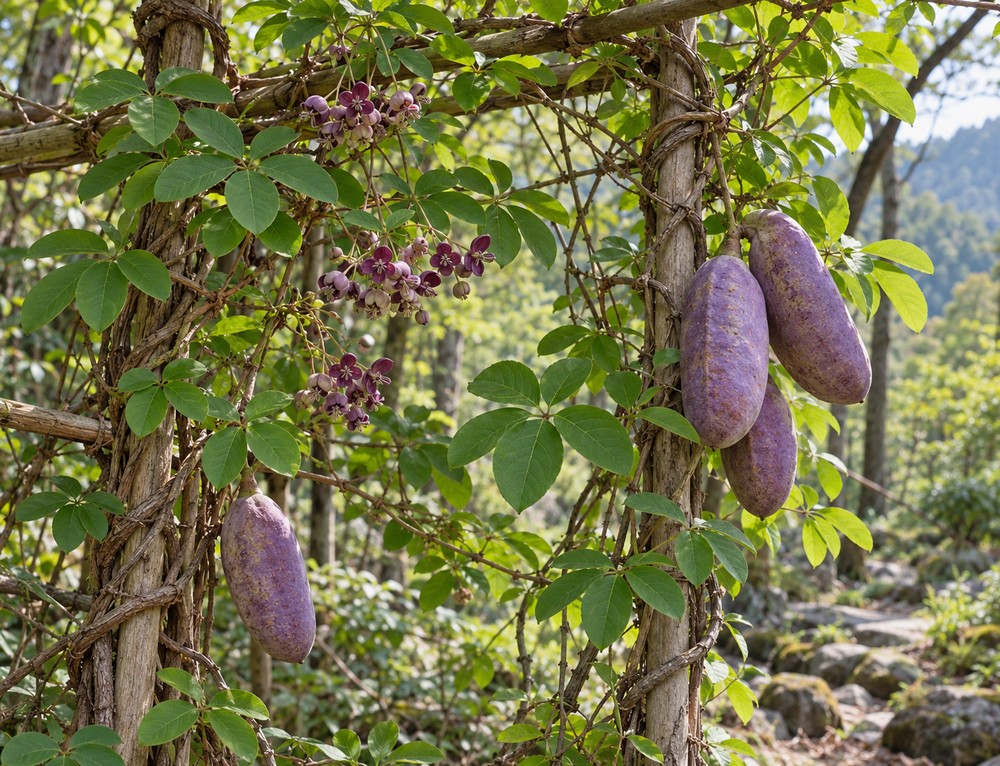
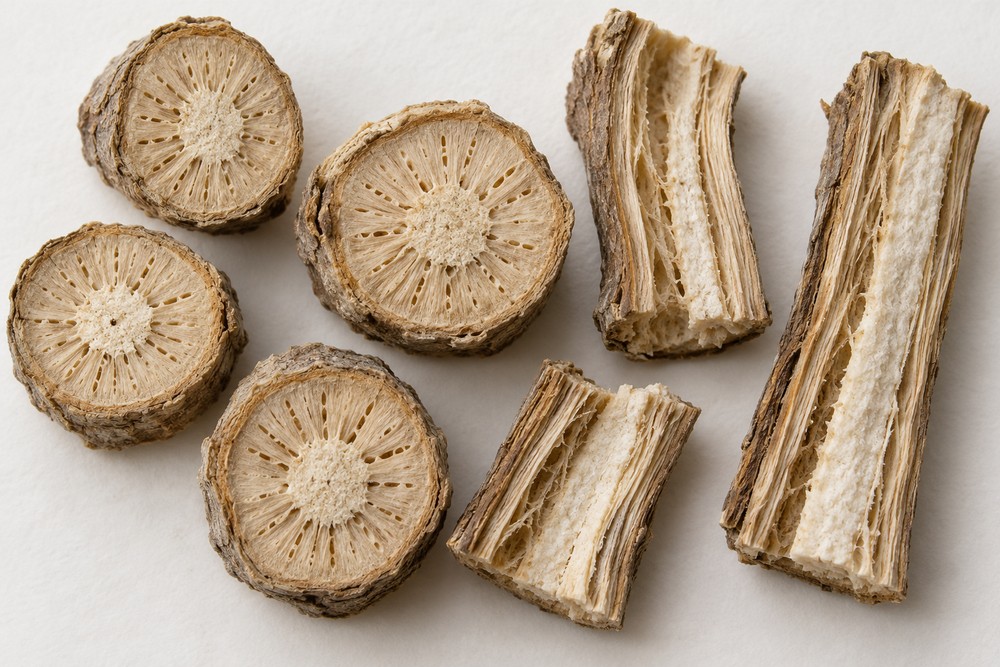
In this materia record, Mu Tong is the stem of Akebia quinata; other standards may accept Akebia trifoliata or Clematis armandii, so the species must be stated. Akebia quinata is a woody vine with five palmate leaflets and elongated purple pods. The drug is a cylindrical stem section, pale yellow, with radial lines and a central pith. It is not Tong Cao (Tetrapanax) or Guan Mu Tong from Aristolochia.
Traditional context
Classical sources describe Mu Tong as bitter and cold, used in traditional formulas for urination and clearing heart heat. It is not treatment for painful urination, edema, or heart/kidney disease.
Modern evidence
“Mu Tong” has referred to several species. Akebia quinata/trifoliata and Clematis armandii differ from Guan Mu Tong (Aristolochia manshuriensis); substitution with Aristolochia can expose users to nephrotoxic and carcinogenic aristolochic acids. Verify Latin identity and lot testing.
Safety
Do not use material labeled only “Mu Tong” without species and source. Kidney disease, pregnancy, breastfeeding, or diuretics require professional advice. Avoid unidentified wild vines.
Pairing in reference texts
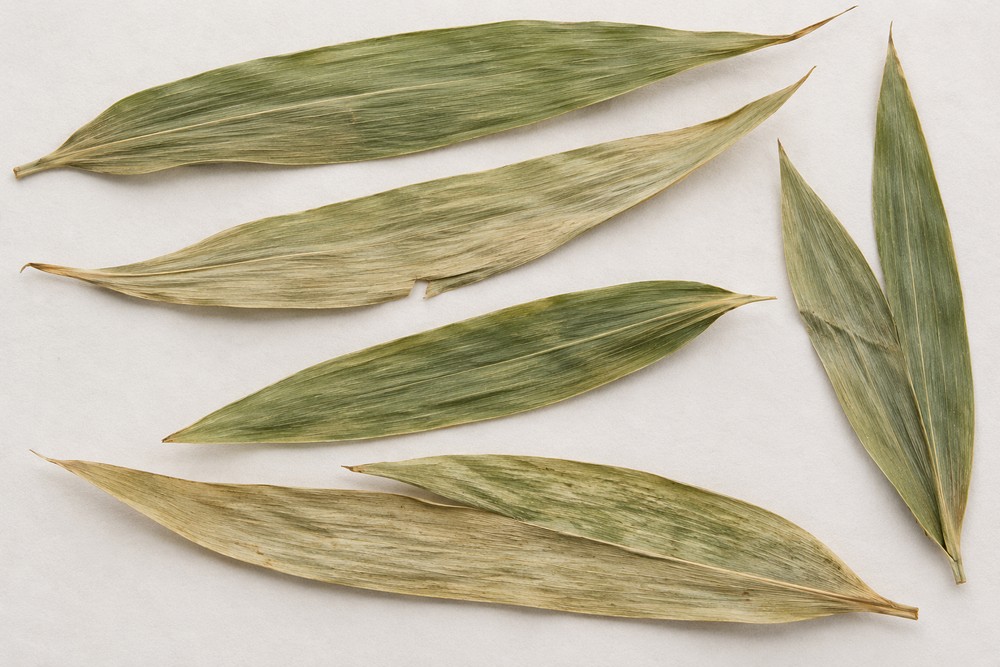
Dao Chi San records Mu Tong with Rehmannia, licorice, and bamboo leaf in the preparation note; HKBU records the three base ingredients at 6 g each and a modern note adding 3 g bamboo leaf. This is documentary data, not a prescription; bamboo-leaf identity has its own standard.
Growth and habitat
Akebia quinata grows at woodland margins, thickets, and temperate East Asian slopes. It is a cold-hardy vine preferring humus-rich drained soil and light sun to partial shade. Provide a trellis; genetically distinct compatible plants improve fruit set.
Growing, care, and harvest timing
The profile above includes sourced steps and a documented harvest window. Harvest timing is agronomic information, not a self-use instruction.
Growing and care
- Propagate from stratified fresh seed, cuttings, or layering from authenticated mother stock; record source.
- Plant beside a sturdy trellis in drained organic soil with morning sun or light shade; avoid waterlogged roots.
- Water through dry periods, mulch, hand-weed, and prune tangled vines after growth; maintain airflow.
- Monitor aphids, leaf spots, and root rot; avoid spraying during flowering/young-fruit development.
- For medicinal stems, prune mature stems sustainably rather than stripping/killing the plant; confirm species and market standard.
- Dry and record by lot; do not use stems from ornamental plants without verified identity.
How long until harvest? The sources checked do not give a fixed plant age for Mu Tong stem harvest. Harvest only when stems meet a local materia standard; fruiting age is not a proxy for stem maturity.
Documented formula pairing: Dao Chi San
HKBU describes traditional actions of clearing heart heat, nourishing yin, and promoting urination. Painful urination with fever, flank pain, or blood needs medical care; do not self-prepare the historical formula.
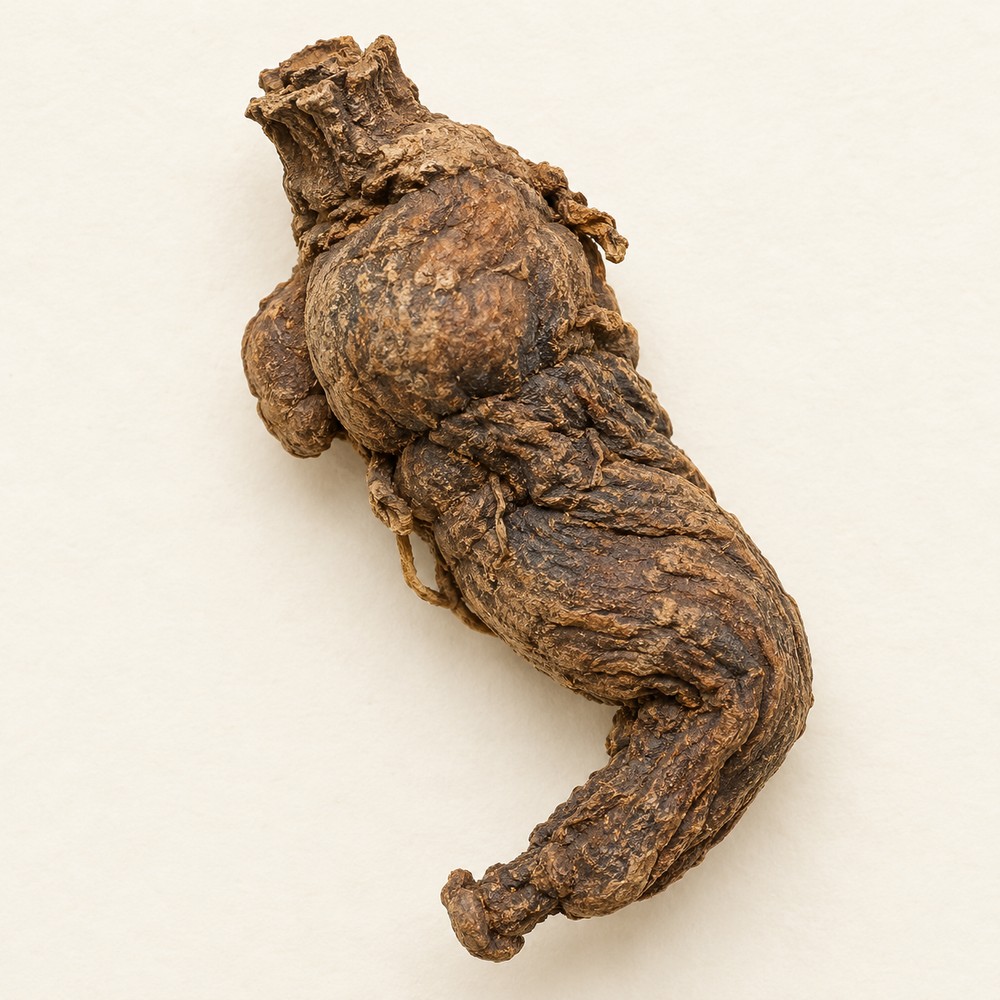
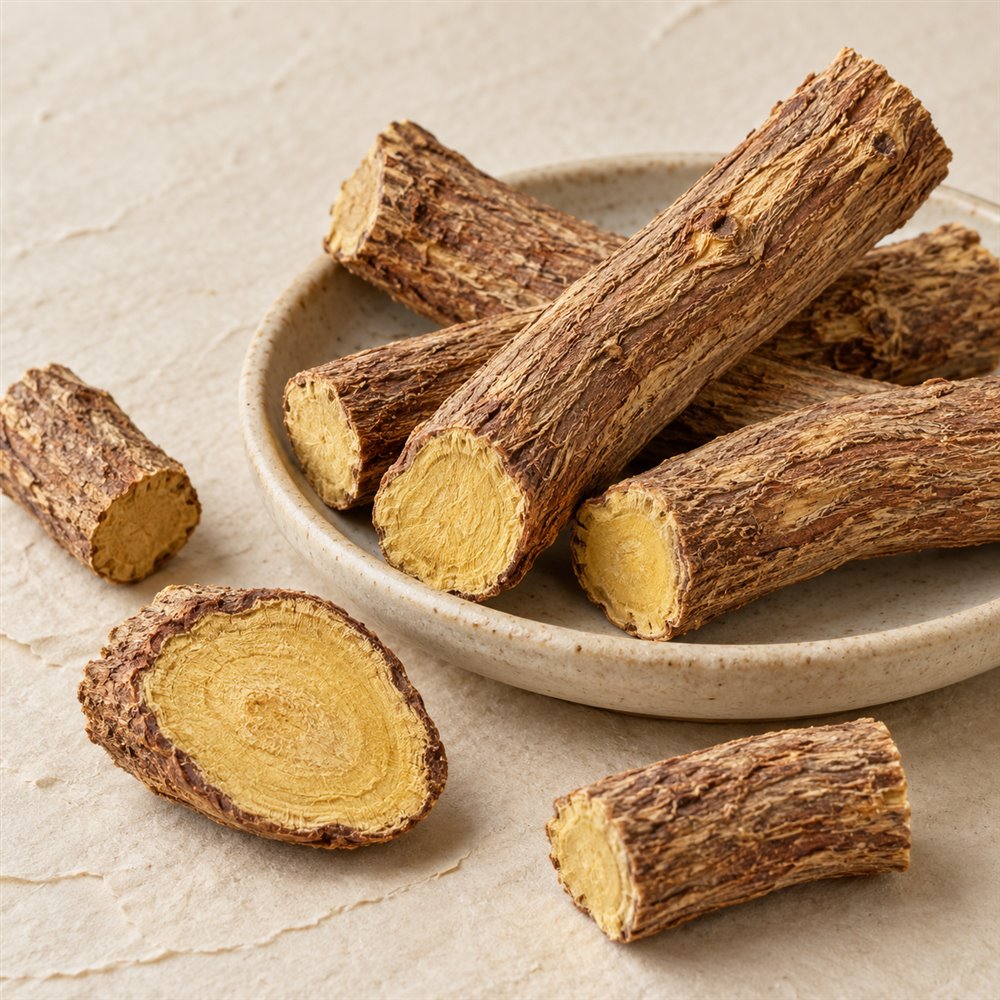
Source-recorded amounts: Three base herbs at 6:6:6 g; modern note adds 3 g bamboo leaf. This record gives no other standalone Mu Tong dose.
Caution: The critical hazard is substitution by Aristolochia Guan Mu Tong; licorice does not make that safe. Use only authenticated, tested material; do not self-prepare.
Open formula record ↗Documented toxic incompatibility
No source reviewed confirms Akebia Mu Tong with Rehmannia/licorice as a toxic pair. The known hazard is species substitution with Aristolochia Guan Mu Tong and aristolochic acid, an identity/adulteration issue rather than toxicity caused by the Akebia pair.
FROM PLANT / SOURCE HABITAT TO DRIED MATERIAL · REFERENCE WORKFLOW
- Harvest only authenticated Akebia stems, never wild vines identified by leaf alone. Use mature healthy stems away from sprayed areas.
- Clean and remove outer bark if the local monograph requires it, then cut evenly; never process material suspected to be Aristolochia.
- Air-dry or gently dry through the core, control insects and mold, and sample for identity/quality testing.
- Keep lots separate and label Latin name, source, part used, and peeling status; never mix species.
These are post-harvest study notes, not directions to prepare a remedy for self-treatment. Processing reference ↗
How to read formula amounts
Displayed amounts belong to the cited formula and source; they are not a general safe ratio, treatment dose, or home-decoction instruction. Do not transfer amounts to another formula or adjust them by body weight.