Nan Sha Shen · fourleaf ladybell root · Nan Sha Shen
Adenophora tetraphylla (Thunb.) Fisch. · Dried root
Name and part used
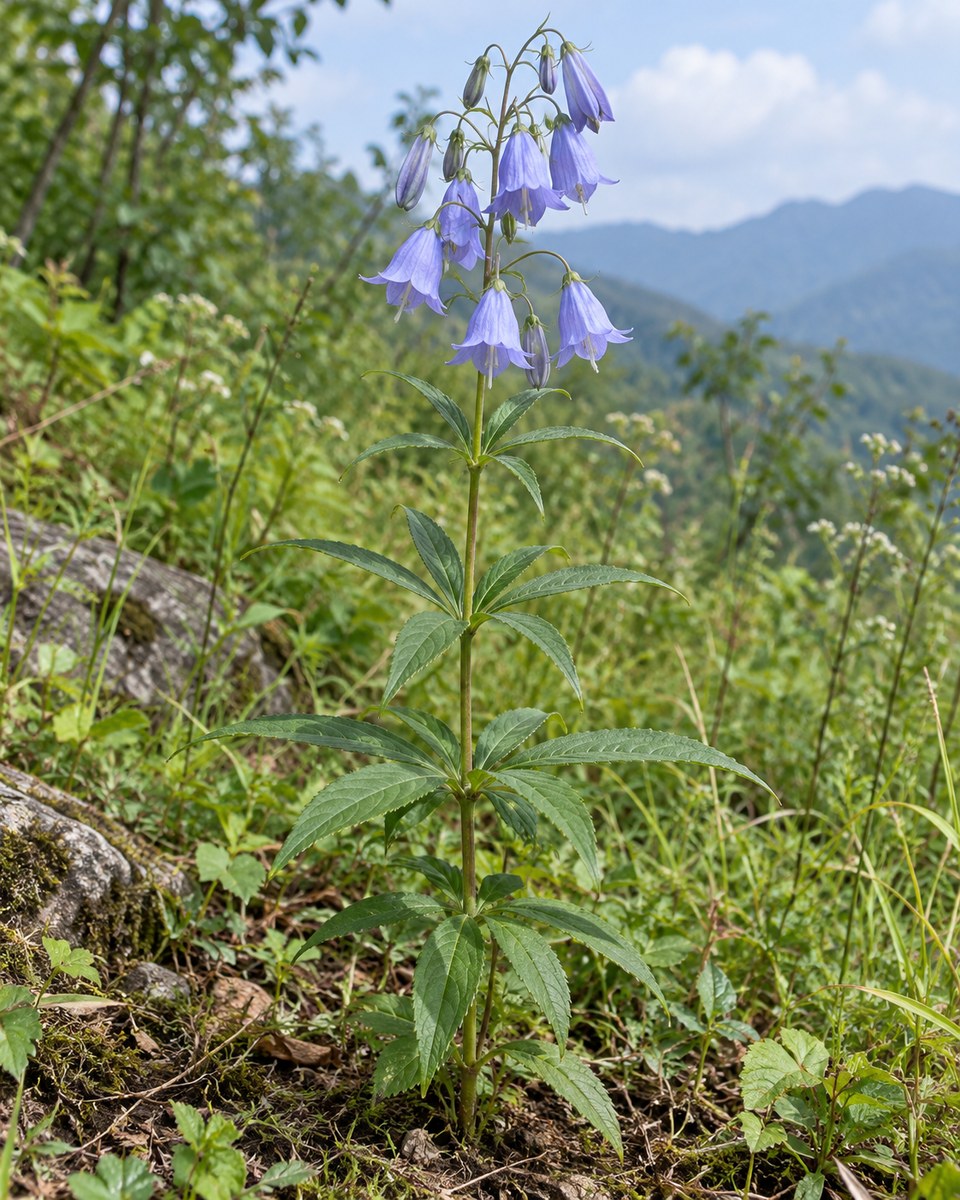
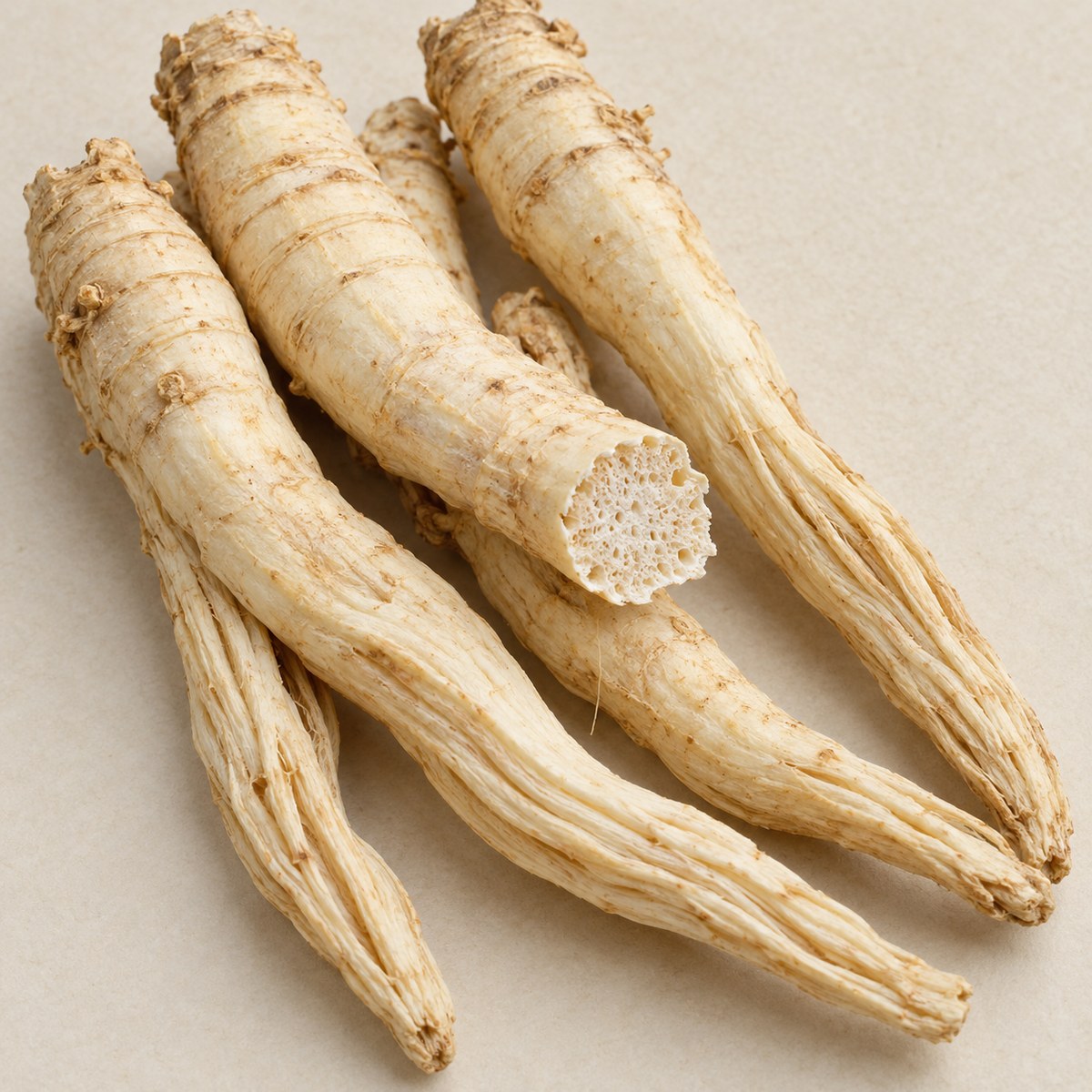
Nan Sha Shen is the dried root of Adenophora tetraphylla, a perennial bellflower. It has erect stems, leaves in whorls or alternately arranged at different levels, and blue-violet bell flowers. The dried root is cylindrical or conical, slightly curved, yellowish-white to pale brown, with transverse rings near the top and longitudinal grooves lower down. Nan Sha Shen differs from Bei Sha Shen (Glehnia littoralis); the generic name “sha shen” is not sufficient species identification.
Traditional context
HKBU records a sweet, slightly cold nature and traditional actions of nourishing yin, clearing the lung, generating fluids, and resolving phlegm. These are traditional concepts and do not show that the root treats pneumonia, dry cough, fatigue, or gastric disease.
Modern evidence
Botanical and chemistry reviews discuss Adenophora and related species, but much pharmacology is preclinical. Constituents, animal results, or findings about combination products cannot prove that Nan Sha Shen root treats cough, infection, or chronic disease in people.
Safety
Morphology sources do not establish an individual dose or long-term safety. People with Campanulaceae allergy, pregnancy or breastfeeding, chronic conditions, or medicines should consult a professional before considering any preparation. Breathlessness, high fever, chest pain, coughing blood, or unexplained weight loss needs assessment rather than self-treatment. Do not confuse Nan Sha Shen with Bei Sha Shen or ornamental roots.
Safety reference ↗Pairing in reference texts
HKBU records honey-processing with 10 kg Nan Sha Shen and 2.5 kg refined honey in a facility process; this is a material-processing ratio, not a medicinal combination or home-use recipe. Reviewed sources do not establish a specific toxic pair, which does not prove arbitrary combinations are safe.
Identification and study notes
Nan Sha Shen must be distinguished from Bei Sha Shen: the species here is Adenophora tetraphylla (Campanulaceae), whereas Bei Sha Shen usually refers to Glehnia littoralis (Apiaceae). The living plant has erect stems, lance-shaped leaves that may be whorled on portions of the stem, and clusters of blue-violet bell flowers at the top. HKBU describes the medicinal root as cylindrical or conical, slightly curved, usually 7–27 cm long and 0.8–3 cm wide; the surface is yellowish-white or pale brownish-yellow, with transverse rings above and longitudinal grooves lower down. The root is light and brittle, with an uneven, cracked yellow-white fracture. Odor is faint and taste slightly sweet. AI images show one plant and one root form, not every size or production lot. “Sha Shen” without Latin labeling risks species confusion.
Growth and habitat
HKBU lists Jiangsu, Anhui, Zhejiang, and Guizhou as Chinese production provinces. Adenophora tetraphylla is associated with open meadows and slopes with drained soil, though HKBU does not condense medicinal cultivation into one universal recipe. Each growing site needs species verification and monitoring of soil, water, and pests; location alone does not establish medicinal quality.
Identification and study notes
Nan Sha Shen must be distinguished from Bei Sha Shen: the species here is Adenophora tetraphylla (Campanulaceae), whereas Bei Sha Shen usually refers to Glehnia littoralis (Apiaceae). The living plant has erect stems, lance-shaped leaves that may be whorled on portions of the stem, and clusters of blue-violet bell flowers at the top. HKBU describes the medicinal root as cylindrical or conical, slightly curved, usually 7–27 cm long and 0.8–3 cm wide; the surface is yellowish-white or pale brownish-yellow, with transverse rings above and longitudinal grooves lower down. The root is light and brittle, with an uneven, cracked yellow-white fracture. Odor is faint and taste slightly sweet. AI images show one plant and one root form, not every size or production lot. “Sha Shen” without Latin labeling risks species confusion.
Growing and care
- Use traceable seed or nursery stock labeled Adenophora tetraphylla; do not confuse it with Glehnia littoralis (Bei Sha Shen) or ornamental bellflowers.
- Choose loose, well-drained soil with light; prepare a deep bed for taproot development. Avoid contaminated soil or wastewater and retain plant labels throughout the season.
- Water moderately to maintain moisture and reduce watering during rain; shallow-weed to avoid damaging roots. Monitor leaf pests and root rot; do not use pesticides with unknown preharvest intervals on study plants.
- HKBU describes root processing but does not specify a universal cultivation age; wait for a professionally defined lot-harvest condition. Do not harvest young plants as medicine or taste them.
How long until harvest? HKBU gives root morphology and processing but no sowing-to-harvest duration. There is no basis to promise a one-season “ready to use” date; timing depends on cultivar, climate, and production standards. A garden root is not automatically medicinal-grade.
Documented toxic incompatibility
Reviewed records do not establish a specific toxic pair. Honey processing is described as a material-preparation step, not a medicinal combination. Do not infer that any Nan Sha Shen–honey mixture or pairing with another herb is safe or effective.
AI study illustrations; not for specimen identification.
FROM PLANT / SOURCE HABITAT TO DRIED MATERIAL · REFERENCE WORKFLOW
- Harvest at a facility that authenticates Adenophora tetraphylla; sources describe washing off soil, removing debris, and drying. Do not use unidentified wild roots.
- Keep lots segregated and labeled Nan Sha Shen with the Latin name. Do not mix with Bei Sha Shen or ornamental roots even if dried shapes appear similar.
- HKBU describes one honey-processing form: 10 kg root with 2.5 kg refined honey diluted and filtered, then slow-fried to slightly yellow and non-sticky. This is a facility process, not a home remedy recipe.
- Control moisture, debris, and provenance; store sealed in dry conditions. Processing does not establish therapeutic benefit.
These are post-harvest study notes, not directions to prepare a remedy for self-treatment. Processing reference ↗
Material source, dried appearance, and processing forms (HKBU)
HKBU identifies Nan Sha Shen as dried Adenophora tetraphylla (Thunb.) Fisch. root (Campanulaceae), Adenophorae Radix. The root is cylindrical/conical and slightly curved, 7–27 cm long, 0.8–3 cm across, yellowish-white or pale brownish-yellow; the upper part has transverse rings, the lower part longitudinal grooves, and the crown one or two rhizome necks. It is light and brittle with an uneven, cracked yellow-white fracture. HKBU also describes honey processing with 10 kg Nan Sha Shen and 2.5 kg refined honey at a facility. That source ratio documents processing, not an oral-use recipe.
Open original materia medica record ↗Habitat, season, and harvest in the HKBU botanical record
HKBU lists Jiangsu, Anhui, Zhejiang, and Guizhou as production areas; roots are harvested, cleaned, dried, and may be honey-processed at a facility. It identifies Adenophora tetraphylla, distinct from Bei Sha Shen, Glehnia littoralis. The record gives neither years to harvest nor a standardized care calendar; this page states that limit rather than guessing.
Open botanical source ↗