Mongolian dandelion · Pu Gong Ying
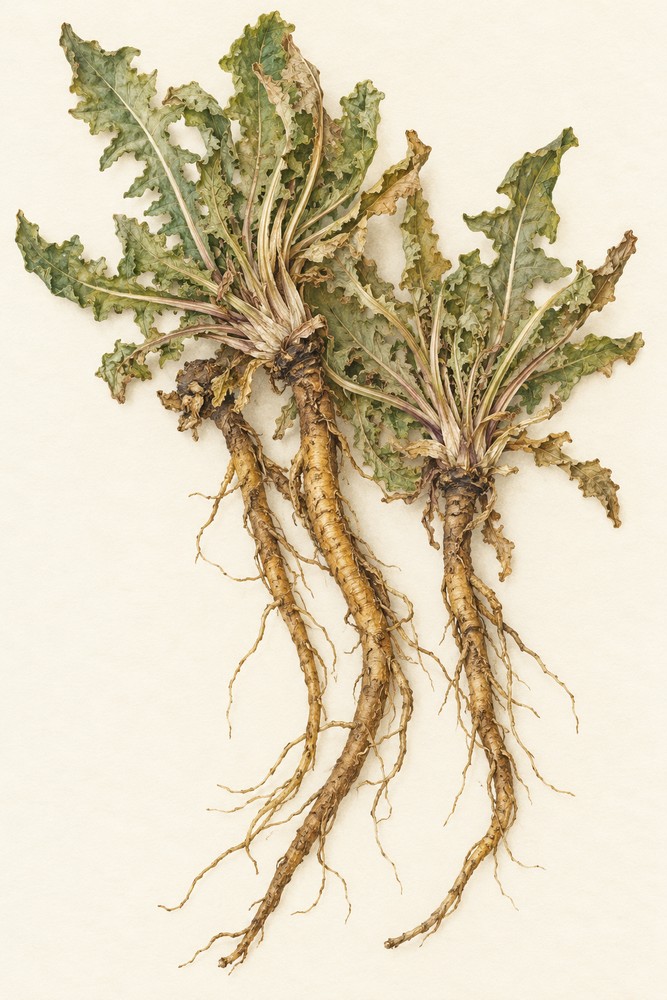
Taraxacum mongolicum Hand.-Mazz. · Whole plant with root
Name and part used
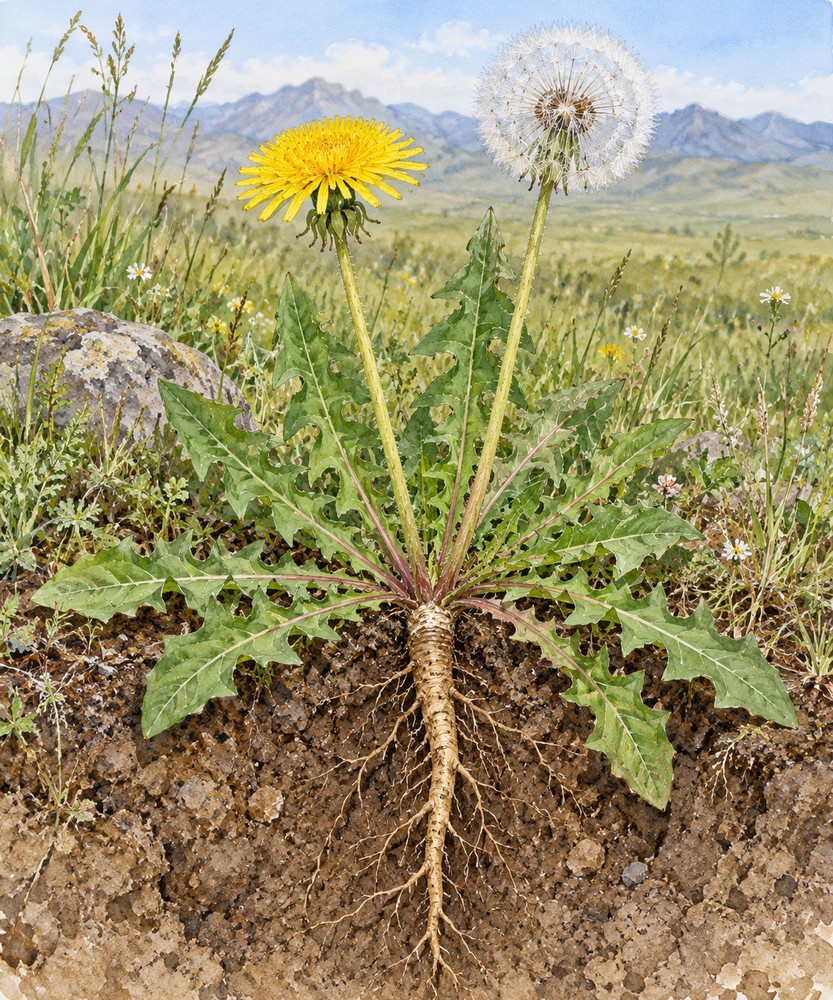
A low herb with a basal rosette of lobed leaves, yellow flower heads, and a long taproot with white latex.
Traditional context
This profile covers Taraxacum mongolicum, not every plant called dandelion. HKBU records whole-plant harvest with root before or around flowering; many Taraxacum species are similar.
Modern evidence
Heat-clearing, detoxifying, and swelling-reducing are traditional descriptions. Evidence is insufficient for self-treating inflammation, infection, or cancer with wild plants.
Safety
Asteraceae allergy is possible; roadside plants may contain chemicals or metals. Do not wild-harvest for use; seek advice during pregnancy, kidney disease, or medication use.
Pairing in reference texts
Dandelion appears with honeysuckle in some historical references. This does not demonstrate safety or adequate treatment of an infection for an individual.
Growing, care, and harvest timing
HKBU habitat record: Growing on grasslands of hill-slopes, roadsides, riverbanks, sandy soil and fields. Distributed in Northeast, North, East, Central and Southwest China, Shaanxi, Gansu, Qinghai and etc. The medicinal materials are mainly produced in most parts of China Harvest and processing as recorded: Excavated entire plant with root in April and May before or just flowering, removed soil, and sun-dried
Source-recorded harvest/processing: Excavated entire plant with root in April and May before or just flowering, removed soil, and sun-dried
The reviewed source does not provide a complete species-specific sowing/growing routine, irrigation/fertilization schedule, or universal plant age. The page therefore does not infer care instructions or years to harvest; consult local cultivation guidance.
Open habitat and season source ↗FROM PLANT / SOURCE HABITAT TO DRIED MATERIAL · REFERENCE WORKFLOW
- HKBU records whole-plant harvest with root in April–May before or at early flowering; use verified supply and avoid roadsides.
- Remove soil and clean at a facility, reject mixed or bruised plants, and retain root, leaf, and flower for identity checks.
- Spread thinly for ventilated drying or use controlled equipment; prevent soil, insects, and moisture contamination.
- Grade whole material, document species/origin/date, and test moisture, metals, and residues before storage.
These are post-harvest study notes, not directions to prepare a remedy for self-treatment. Processing reference ↗
How to read formula amounts
The cited sources do not provide a formula with specific amounts for this profile; no ratio is invented. Absence from the incompatibility list does not establish safety.
Habitat, season, and harvest in the HKBU botanical record
HKBU botanical record (translated summary): Flowering and fruiting dates: Flowering: April to May; fruiting: June to July Habitat and distribution: Growing on grasslands of hill-slopes, roadsides, riverbanks, sandy soil and fields. Distributed in Northeast, North, East, Central and Southwest China, Shaanxi, Gansu, Qinghai and etc. The medicinal materials are mainly produced in most parts of China Harvest and processing as recorded: Excavated entire plant with root in April and May before or just flowering, removed soil, and sun-dried
Open botanical source ↗