Pu Huang · cattail pollen · Pu Huang
Typha angustifolia L. · Dried pollen from male spikes
Name and part used
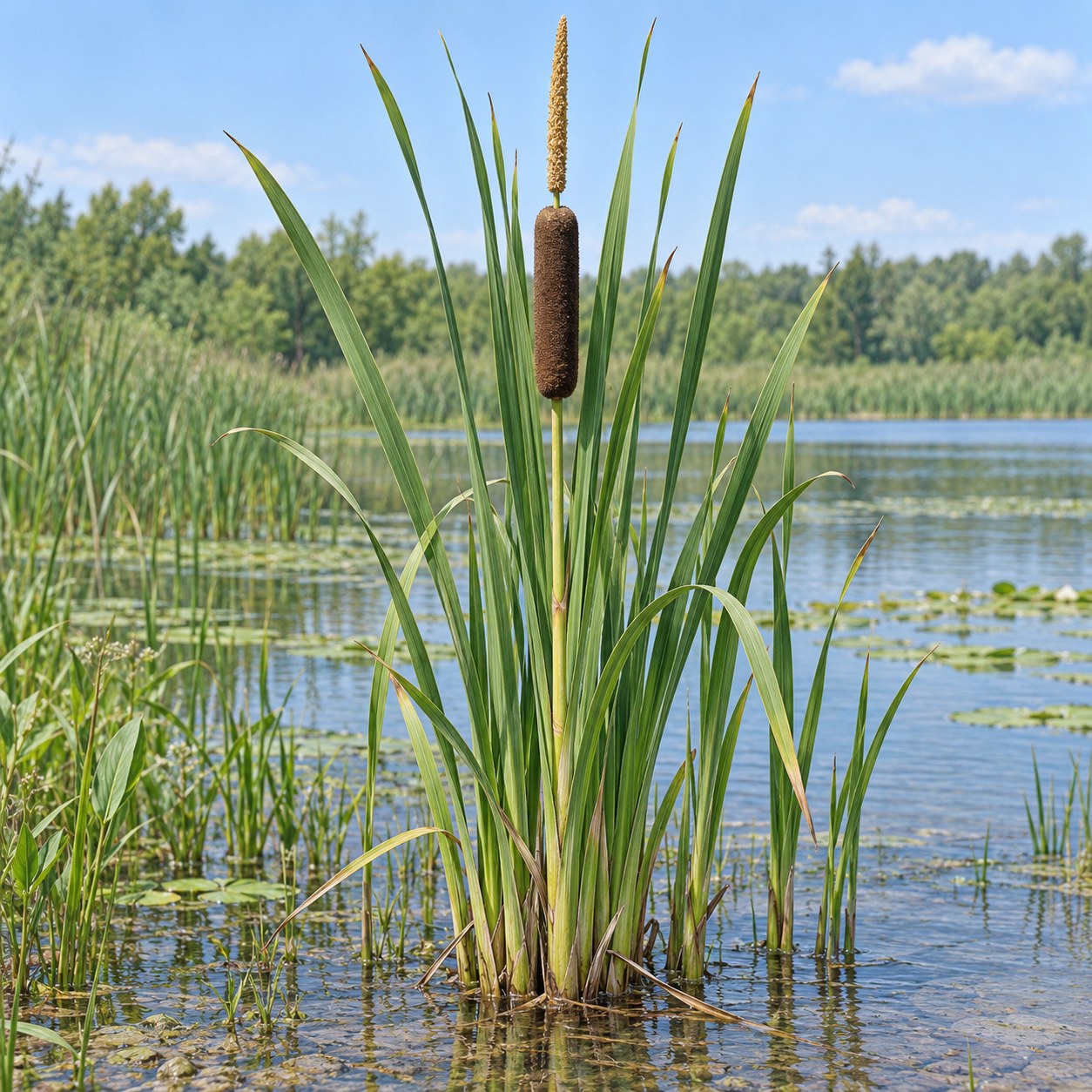
Pu Huang is pollen from the male spike of narrowleaf cattail, Typha angustifolia L., not the entire brown cigar-like head. This perennial aquatic plant has creeping rhizomes in mud, long narrow strap leaves, and cylindrical flower spikes with the male portion above the female portion. HKBU places it in shallow water and along banks; in summer, collect the male portion at early flowering, sun-dry, grind, and sieve the pollen. The conspicuous brown female spike is not the golden pollen material; other Typha species may be accepted in local standards, so verify the applicable monograph.
Traditional context
HKBU describes traditional actions of cooling blood/stopping bleeding and invigorating blood to disperse stasis; traditional records mention bleeding and stasis-type pain. “Stopping bleeding” and “moving blood” can imply opposite uses depending on context. Do not self-treat hemorrhage, heavy menstruation, postpartum pain, or trauma.
Modern evidence
HKBU is a botanical/materia medica record, not a clinical trial. Animal effects or flavonoid content do not prove that Pu Huang controls bleeding, menstrual pain, or heart disease in people. Pollen grade, processing, amount, and topical/oral route vary; only a clinician can assess the context.
Safety
Because sources describe both hemostatic and blood-moving actions, do not self-use during active bleeding, bleeding disorders, before surgery, pregnancy/breastfeeding, or with anticoagulant/antiplatelet medicines. Fine pollen may irritate or be inhaled; people with pollen allergy should avoid exposure. Heavy bleeding, faintness, black stools, or blood in urine requires urgent care.
Safety reference ↗Pairing in reference texts
HKBU does not provide a standard pairing ratio or specific toxic pair in the plant record. Do not combine by hearsay with “hemostatic” or “blood-moving” herbs, especially with anticoagulants or antiplatelet medicines. Absence of an incompatibility entry does not prove safety.
Identification and study notes
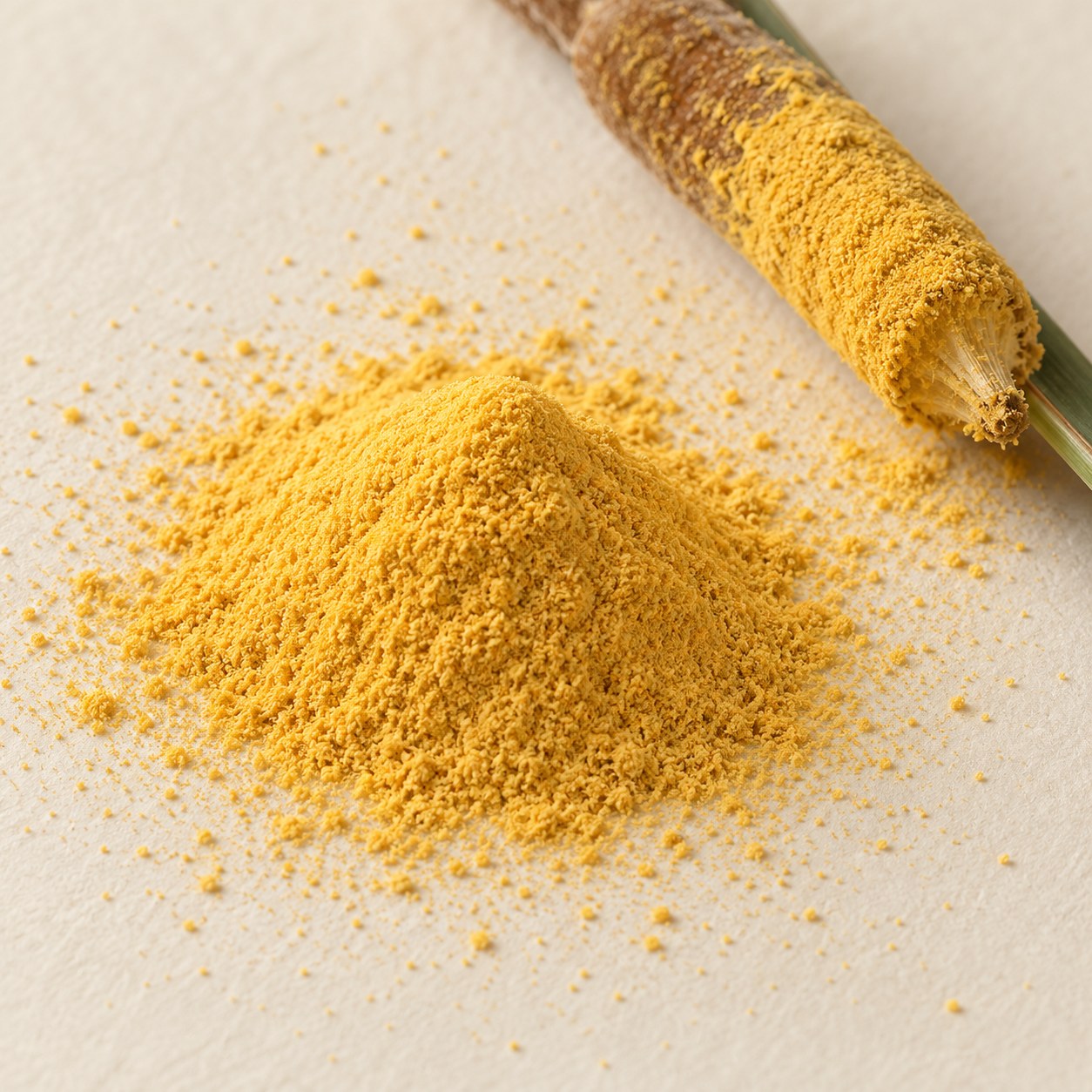
Separate the living inflorescence from the drug material: a cattail head is a long cylinder with two sections. HKBU describes a thinner upper male section and a thicker lower female section that later becomes brown. Pu Huang is collected, dried, ground, and sieved male pollen, yellow to golden-brown; it is not powder from female spikes or crushed leaves. Living plants have long strap leaves rising from mud above water. Pollen can disperse, absorb moisture, or contain contaminants; a study specimen cannot replace species, microbial, heavy-metal, or quality testing. AI art shows general structure and does not represent a commercial lot.
Growth and habitat
Cattail grows in shallow water, pond/lake edges, marshes, and seasonally flooded mud. Rhizomes creep through saturated substrate while leaves rise above the water; the plant needs sun and consistently wet roots. For cultivation, use a contained wetland bed or aquatic pot because rhizomes spread; use clean water, not wastewater or industrially contaminated sites.
Identification and study notes
Separate the living inflorescence from the drug material: a cattail head is a long cylinder with two sections. HKBU describes a thinner upper male section and a thicker lower female section that later becomes brown. Pu Huang is collected, dried, ground, and sieved male pollen, yellow to golden-brown; it is not powder from female spikes or crushed leaves. Living plants have long strap leaves rising from mud above water. Pollen can disperse, absorb moisture, or contain contaminants; a study specimen cannot replace species, microbial, heavy-metal, or quality testing. AI art shows general structure and does not represent a commercial lot.
Growing and care
- Đặt thân rễ nông trong bùn sạch hoặc giá thể thủy sinh, giữ nước nông ổn định. Đừng để nước tù bẩn; không trồng sát nơi nước thải, thuốc trừ sâu hoặc kim loại nặng chảy vào.
- Set rhizomes shallowly in clean mud/aquatic substrate and maintain shallow water. Avoid stagnant polluted water and sites receiving wastewater, pesticides, or heavy metals.
How long until harvest? Typha is perennial; HKBU places pollen collection in summer at early flowering but does not specify years or days after planting. Spikes form after establishment and seasonal growth; timing varies with climate, water level, and rhizome age. This is a study harvest stage, not a medicinal-quality guarantee.
FROM PLANT / SOURCE HABITAT TO DRIED MATERIAL · REFERENCE WORKFLOW
- Collect the upper male portion of Typha angustifolia spikes at early flowering in summer, only from clean permitted sites. The lower brown female portion is different.
- Dry spikes on clean trays with dust protection and airflow; keep them away from chemicals and soil-laden wind.
- When dry, gently separate/crush and sieve the yellow pollen; minimize dust, use suitable respiratory protection, and keep children/asthmatic people away.
- Seal and label species, source, season, and lot. This is a study process, not an oral-use recipe; untested pollen must not be used to stop bleeding or regulate menstruation.
These are post-harvest study notes, not directions to prepare a remedy for self-treatment. Processing reference ↗
Habitat, season, and harvest in the HKBU botanical record
HKBU records Typha angustifolia as a perennial with creeping rhizomes in mud, growing in shallow water and along banks. The medicinal part is pollen; collect the upper male spike at early summer flowering, sun-dry, grind, and sieve.
Open botanical source ↗