Qianhu root · Qian Hu
Peucedanum praeruptorum Dunn · Main root
Name and part used
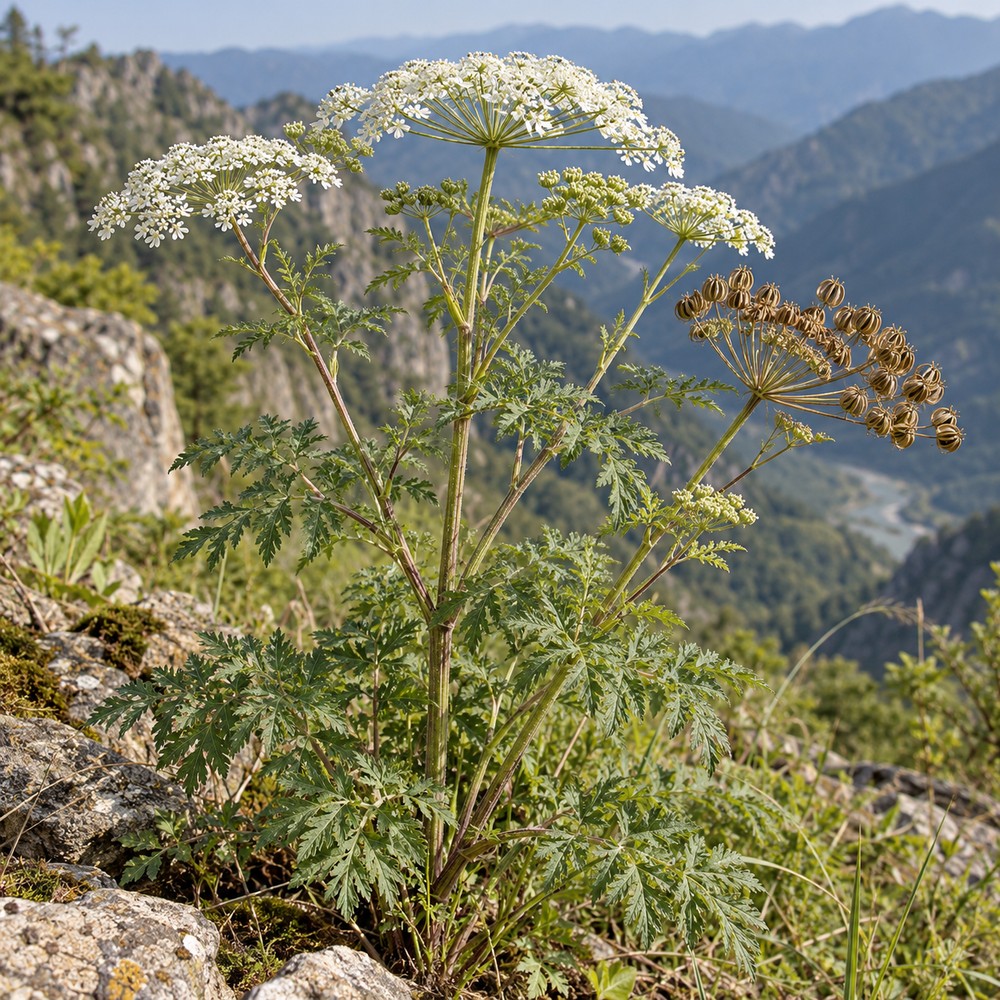
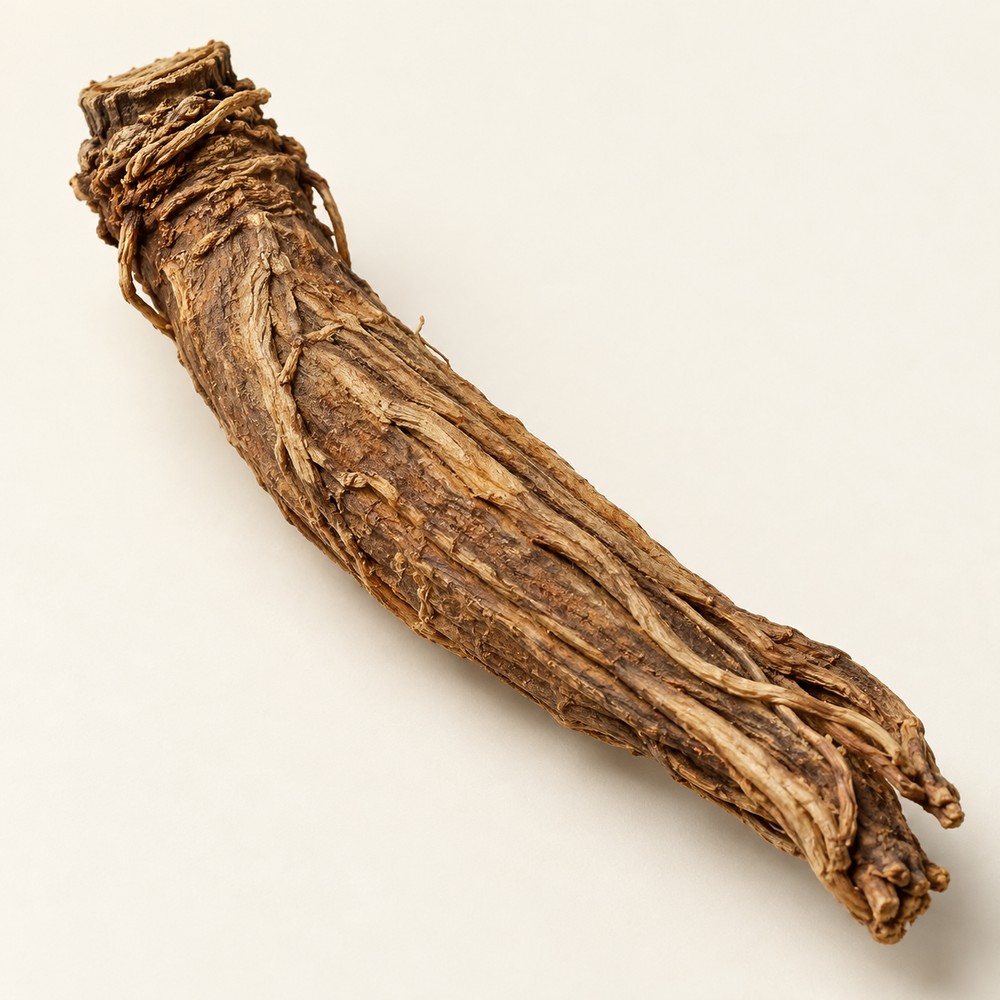
This Apiaceae herb has divided leaves and compound white umbels; the medicinal root is commonly harvested before winter dormancy.
Traditional context
Qi-descending and phlegm-transforming are traditional claims; breathlessness, bloody sputum, or persistent fever need medical assessment. HKBU records autumn-winter excavation after tops wither, removal of fibrous roots, washing, and sun- or low-temperature drying.
Modern evidence
The root contains coumarins and volatile oil; chemical findings do not establish clinical cough treatment.
Safety
Never wild-harvest Apiaceae without expert identification because highly toxic species occur; review anticoagulants and pregnancy with a clinician.
Pairing in reference texts
Qian Hu appears in some phlegm formulas with Jie Geng, Ban Xia, or Xing Ren; composition varies across texts.
Growing, care, and harvest timing
HKBU habitat record: Growing in tussock of sunny hill slopes. Distributed in Shandong, Shaanxi, Anhui, Jiangsu, Zhejiang, Fujian, Guangxi, Jiangxi, Hunan, Hubei, Sichuan and etc. The medicinal materials are mainly produced in Zhejiang, Hunan and Sichuan Harvest and processing as recorded: Excavated main root in autumn and winter when the aboveground part withered, removed fibrous roots, well washed, sun-dried or dried in low temperature
Source-recorded harvest/processing: Excavated main root in autumn and winter when the aboveground part withered, removed fibrous roots, well washed, sun-dried or dried in low temperature
The reviewed source does not provide a complete species-specific sowing/growing routine, irrigation/fertilization schedule, or universal plant age. The page therefore does not infer care instructions or years to harvest; consult local cultivation guidance.
Open habitat and season source ↗FROM PLANT / SOURCE HABITAT TO DRIED MATERIAL · REFERENCE WORKFLOW
- Authenticate Peucedanum praeruptorum with voucher specimens and sourcing records; Apiaceae includes toxic lookalikes.
- Excavate the main root in autumn or winter after aerial growth withers; remove fibrous roots and wash promptly.
- Sun-dry or low-temperature dry as recorded by HKBU; avoid prolonged wet storage and mold.
- Grade intact, dry, mold-free roots and check botanical identity and impurities before packaging.
These are post-harvest study notes, not directions to prepare a remedy for self-treatment. Processing reference ↗
How to read formula amounts
The cited sources do not provide a formula with specific amounts for this profile; no ratio is invented. Absence from the incompatibility list does not establish safety.
Habitat, season, and harvest in the HKBU botanical record
HKBU botanical record (translated summary): Flowering and fruiting dates: Flowering: August to October; fruiting: October to November Habitat and distribution: Growing in tussock of sunny hill slopes. Distributed in Shandong, Shaanxi, Anhui, Jiangsu, Zhejiang, Fujian, Guangxi, Jiangxi, Hunan, Hubei, Sichuan and etc. The medicinal materials are mainly produced in Zhejiang, Hunan and Sichuan Harvest and processing as recorded: Excavated main root in autumn and winter when the aboveground part withered, removed fibrous roots, well washed, sun-dried or dried in low temperature
Open botanical source ↗