Qian Li Guang · climbing groundsel · Qian Li Guang
Senecio scandens Buch.-Ham. ex D.Don · Dried aerial parts · identification study only, not for self-use
Name and part used
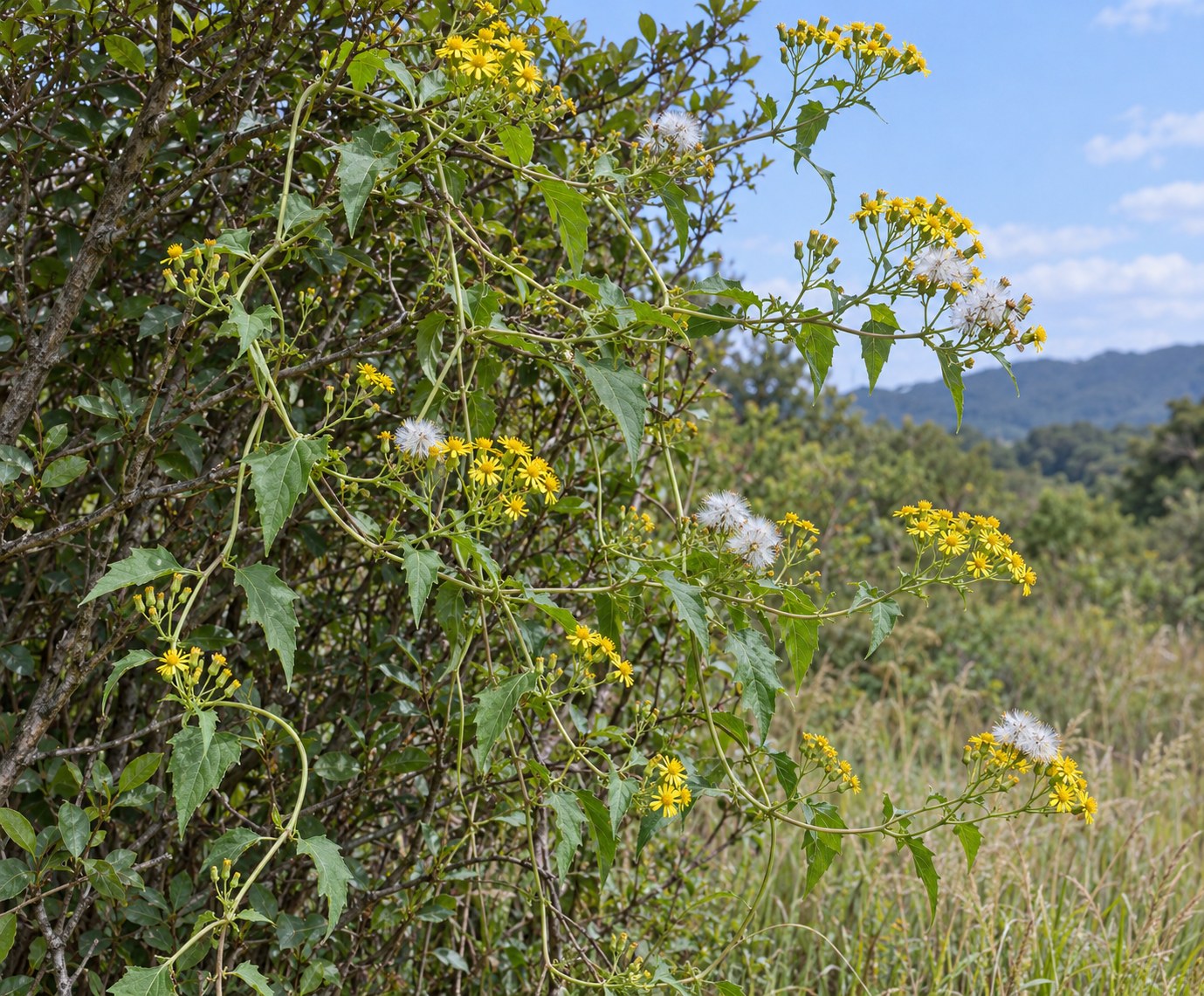
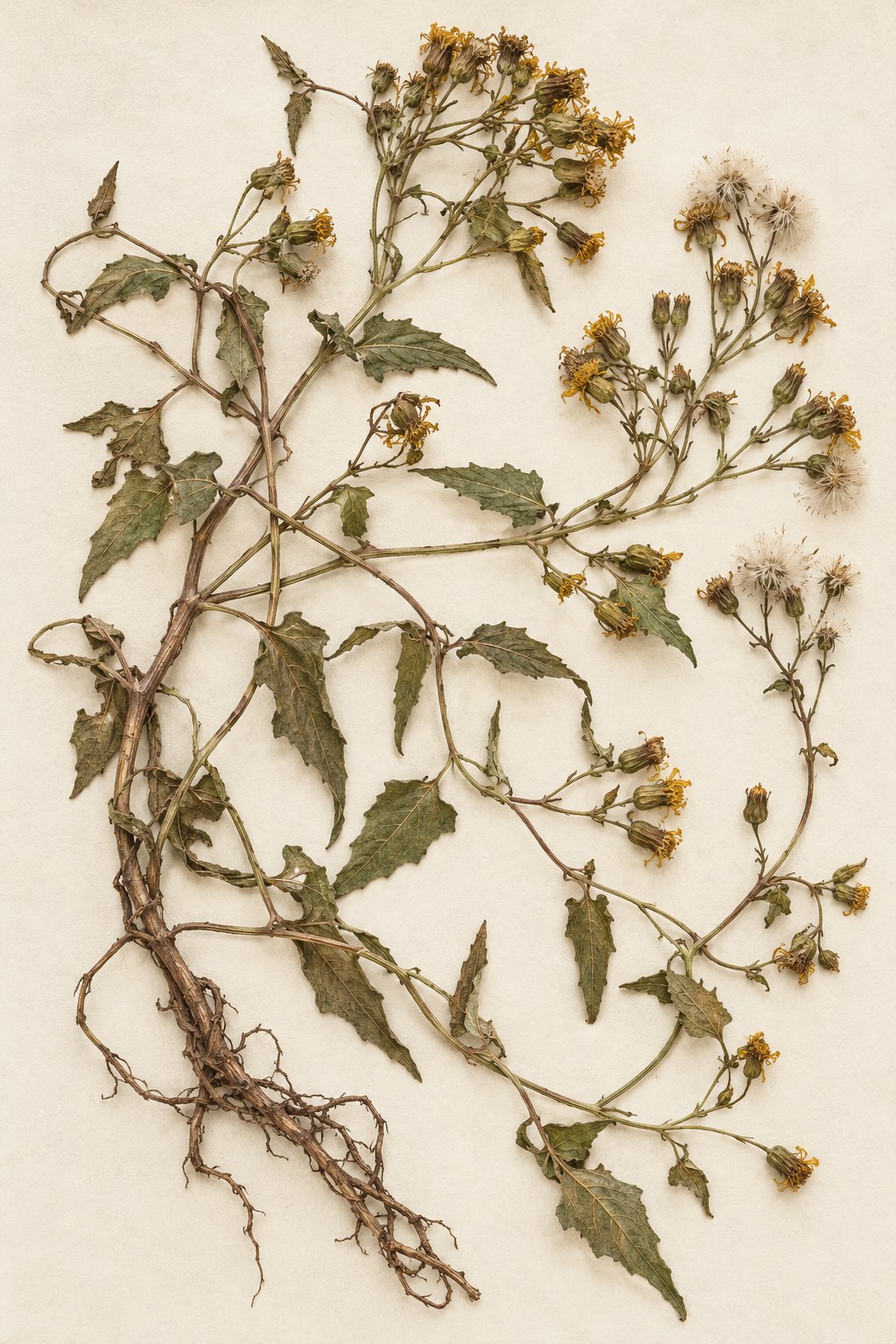
This profile identifies Qian Li Guang as Senecio scandens Buch.-Ham. ex D.Don, a climbing herb in Asteraceae. Slender branching stems may lean on shrubs; alternate triangular-lanceolate or lance-shaped leaves have toothed margins. Yellow composite heads contain ray and disk florets, later forming fruits with white pappus for dispersal. HKBU records the aerial part as materia medica and describes autumn harvest. The name “Qian Li Guang” alone is insufficient because it may be applied to other Senecio species. More importantly, chemical research confirms S. scandens contains pyrrolizidine alkaloids (PAs) of concern for liver toxicity; PA levels vary among samples. This page is for identification study only and does not guide harvesting, processing for ingestion, or dosing.
Traditional context
Some HKBU specimen records list traditional categories such as clearing heat, resolving toxin, antiparasitic use, and supporting the eyes. These are historical records, not proof that Qian Li Guang treats eye disease, skin infection, sore throat, or diarrhea. Because of the PA-related liver hazard, do not ingest, decoct, tincture, apply, or use products containing Qian Li Guang yourself. Eye pain, fever, pus-forming lesions, or bloody diarrhea needs appropriate medical assessment.
Modern evidence
Analytical research on S. scandens detected multiple hepatotoxic PAs; EMA evaluates unsaturated PAs as a toxicological concern, including liver toxicity and other serious risks. Content varies by region and lot, so safety cannot be inferred from traditional dose or drying. These sources do not establish a safe home dose; a reference page must not turn them into use advice. Traditional materia-medica claims and modern toxicology need to be presented side by side, not conflated.
Safety
Do not self-use Qian Li Guang by any oral or topical route. PAs can injure the liver; risk cannot be judged by appearance, smell, or herb color, and drying does not reliably eliminate the hazard. Avoid exposure during pregnancy/breastfeeding, in children, people with liver disease, and anyone taking potentially hepatotoxic medicines. Do not harvest it for tea, animal feed, or remedies; keep it away from children and pets. After an exposure, persistent nausea, jaundice, dark urine, right-upper abdominal pain, or unusual fatigue warrants prompt medical/toxicology advice.
Safety reference ↗Pairing in reference texts
No combination ratio is recommended on this page. Do not mix Qian Li Guang with any herb, alcohol tincture, tea, or prescription medicine to “detox” or treat the eyes; adding another ingredient does not prove PA removal. Research documents PAs in S. scandens and EMA provides guidance for herbal products containing PAs; this is a constituent-level hazard, not a single pair interaction. No formula ingredient image is presented because no use recipe is being supplied. Any historical prescription must remain clearly separate from modern guidance and must not be reproduced as a self-use ratio.
Identification and study notes
This is a climbing Asteraceae, unlike many erect Senecio species. Alternate leaves are commonly lanceolate or triangular-lanceolate and may have small basal lobes; yellow heads form branched clusters. Mature fruits bear white pappus, so yellow flowers and cottony white seed heads can appear together. The fresh image shows the climbing habit and alternate leaves; the dried image shows stems, foliage, and heads after collection. AI art must not be used to identify a wild field specimen: several yellow-flowered climbing daisies look similar. The hazard is invisible—PA has no reliable color or smell cue. The key lesson is to retain the Latin name S. scandens, recognize the risk group, and never self-use it.
Growth and habitat
HKBU records Qian Li Guang in thickets, hedges, forest edges, hillsides, and sites with supporting vegetation; the climbing herb is associated with warm, moist habitats. The profile does not provide a safe medicinal cultivation protocol and, given the PA concern, this page does not encourage growing it for remedies. For morphology study, use images or sealed voucher material in an educational setting; do not plant it beside vegetables, animal feed, or children’s play areas. Never use wild material as food or medicine.
Identification and study notes
This is a climbing Asteraceae, unlike many erect Senecio species. Alternate leaves are commonly lanceolate or triangular-lanceolate and may have small basal lobes; yellow heads form branched clusters. Mature fruits bear white pappus, so yellow flowers and cottony white seed heads can appear together. The fresh image shows the climbing habit and alternate leaves; the dried image shows stems, foliage, and heads after collection. AI art must not be used to identify a wild field specimen: several yellow-flowered climbing daisies look similar. The hazard is invisible—PA has no reliable color or smell cue. The key lesson is to retain the Latin name S. scandens, recognize the risk group, and never self-use it.
Growing and care
- Do not grow Qian Li Guang for medicine, tea, or animal feed. The species contains hazardous PAs; use images and sealed vouchers for study.
- If an educational institution requires a living specimen for identification, use legally labeled stock, a fenced plot, dedicated tools, and a waste-control protocol; prevent seed dispersal.
- No medicinal irrigation, fertilizer, or propagation protocol was verified in the cited source. Do not infer a protocol from another Senecio species because ecology and PA content may differ.
- Do not harvest for use. At the end of an observation, contain seeds and plant parts from people/pets under institutional procedures; document the species and dispose safely, never into feed or pet-accessible compost.
How long until harvest? There is no “time until use”: this profile does not recommend using Qian Li Guang because of hepatotoxic PAs. HKBU’s harvest season describes historical materia-medica practice, not a home-harvest instruction. If permitted for study, grow only as an observation plant and never ingest it.
Habitat, season, and harvest in the HKBU botanical record
HKBU identifies Senecio scandens as a climbing Asteraceae and records aerial material, with autumn harvest and drying in its materia-medica profile. A specimen record places it within traditional heat-clearing categories. Toxicological chemistry research found multiple hepatotoxic PAs in the species; EMA assesses unsaturated PAs as a concern in herbal products. This page places modern risk information beside the historical record and provides no dose.
Open botanical source ↗FROM PLANT / SOURCE HABITAT TO DRIED MATERIAL · REFERENCE WORKFLOW
- HKBU records autumn aerial harvest as historical materia-medica information. Do not turn it into a home-collection instruction because the species contains hazardous PAs.
- Do not wash, dry, or decoct wild plants for ingestion; ordinary processing does not demonstrate PA removal. Never add it to tea, alcohol tinctures, or animal feed.
- For education, use an authenticated sealed voucher labeled with Latin name, family, and PA warning; wear gloves and do not grind it or create dust.
- Keep specimens away from children and pets and follow institutional safety procedures. Do not trial a product suspected to contain S. scandens; seek health/toxicology advice after exposure.
These are post-harvest study notes, not directions to prepare a remedy for self-treatment. Processing reference ↗