Largeleaf gentian root · Qin Jiao
Gentiana macrophylla Pall. and accepted Gentiana species · Root
Name and part used
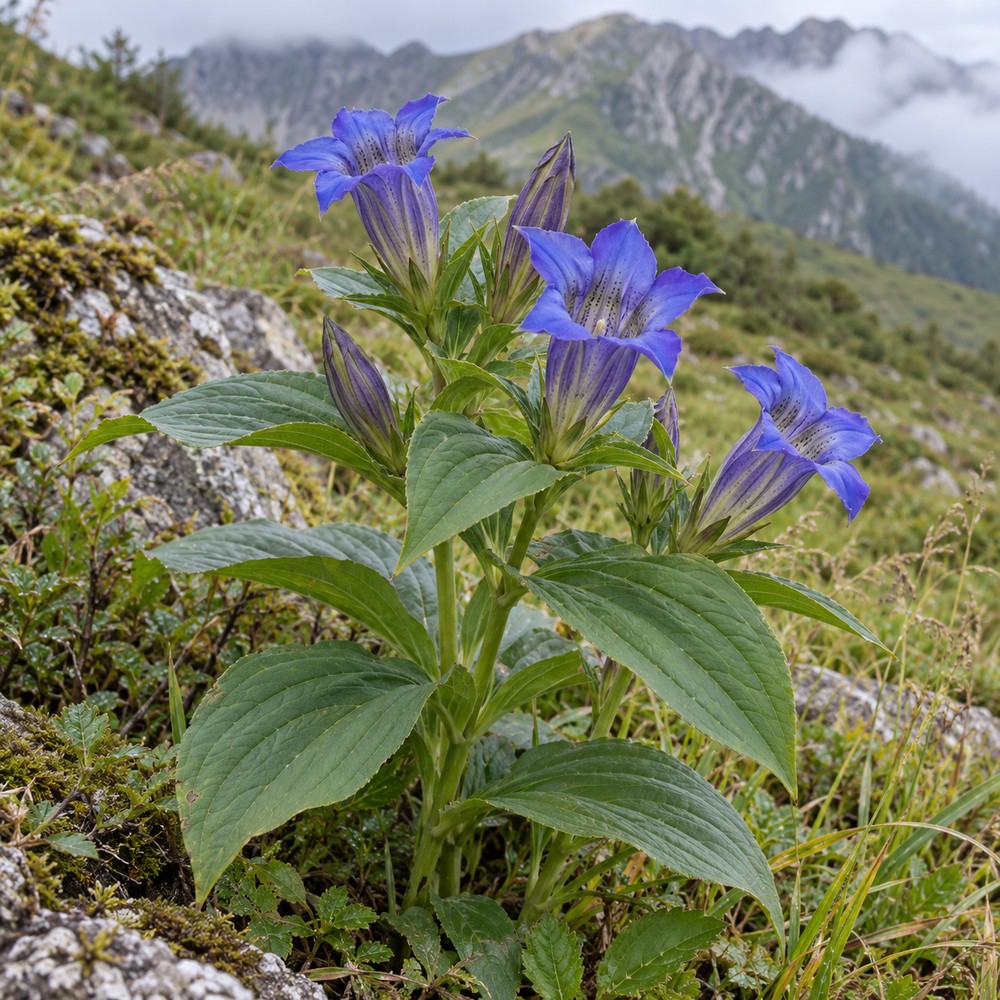
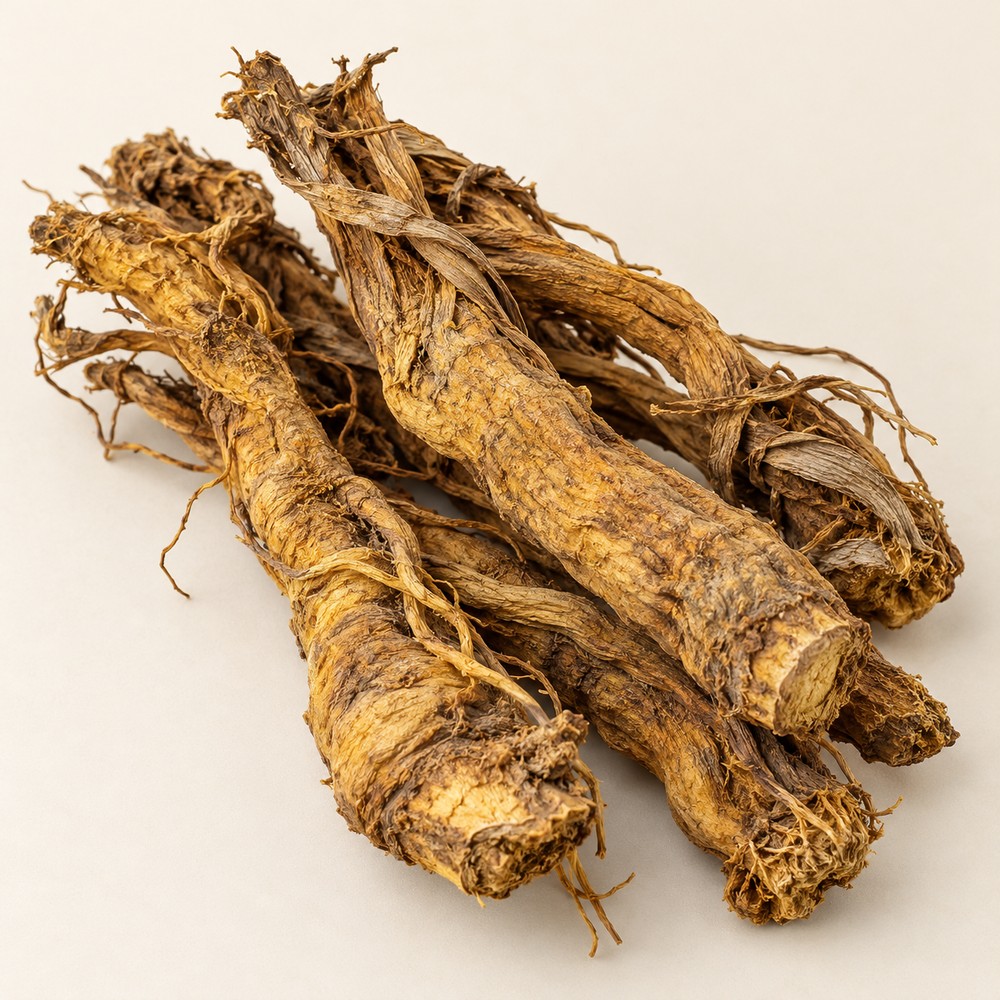
A perennial gentian has opposite leaves and blue-violet bell flowers; roots are thick above, tapered, and yellow-brown.
Traditional context
Wind-damp relief and clearing deficiency heat are traditional claims; persistent fever or joint pain needs diagnosis.
Modern evidence
HKBU lists several Gentiana sources with differing root forms; species identity and source-specific standards matter.
Safety
Bitter constituents may irritate digestion; use caution with ulcers, pregnancy, liver disease, and liver-metabolized medicines.
Pairing in reference texts
Qin Jiao appears with Du Huo or Sang Ji Sheng in historical wind-damp formulas; pairing does not prove arthritis benefit.
Growing, care, and harvest timing
HKBU habitat record: Growing on grasslands or humid slopes. Mainly distributed in Gansu, Sichuan, Tibet, Qinghai, Inner Mongolia and etc. The medicinal materials are mainly produced in Sichuan, Yunnan, Tibet and etc Harvest and processing as recorded: Excavated in spring and autumn, removed cauline leaf and fibrous root and soil, sundried, or heap up and sun-dried until the color become reddish yellow or daffodil yellow, spread out and sundried
Source-recorded harvest/processing: Excavated in spring and autumn, removed cauline leaf and fibrous root and soil, sundried, or heap up and sun-dried until the color become reddish yellow or daffodil yellow, spread out and sundried
The reviewed source does not provide a complete species-specific sowing/growing routine, irrigation/fertilization schedule, or universal plant age. The page therefore does not infer care instructions or years to harvest; consult local cultivation guidance.
Open habitat and season source ↗FROM PLANT / SOURCE HABITAT TO DRIED MATERIAL · REFERENCE WORKFLOW
- Đào rễ sau mùa sinh trưởng; rũ đất, rửa sạch, tỉa lá và rễ hư.
- Excavate roots after growth, shake off soil, wash, and trim leaves/damaged roots.
These are post-harvest study notes, not directions to prepare a remedy for self-treatment. Processing reference ↗
How to read formula amounts
Displayed amounts belong to the cited formula and source; they are not a general safe ratio, treatment dose, or home-decoction instruction. Do not transfer amounts to another formula or adjust them by body weight.
Habitat, season, and harvest in the HKBU botanical record
HKBU botanical record (translated summary): Flowering and fruiting dates: Flowering: July to August. Fruiting: September to October Habitat and distribution: Growing on grasslands or humid slopes. Mainly distributed in Gansu, Sichuan, Tibet, Qinghai, Inner Mongolia and etc. The medicinal materials are mainly produced in Sichuan, Yunnan, Tibet and etc Harvest and processing as recorded: Excavated in spring and autumn, removed cauline leaf and fibrous root and soil, sundried, or heap up and sun-dried until the color become reddish yellow or daffodil yellow, spread out and sundried
Open botanical source ↗HKBU formula record containing this herb: Qing Gu San / Bone-Clearing Powder
Traditional action in the source: of all the medicinals in the formula prevents bitter-cold medicinals from damaging the stomach Chief Yin Chai Hu clears heat and cools the blood relieves fever and relieves steaming bone fever Deputy Zhi Mu nourishes yin and drains fire Hu Huang Lian clear deficiency-heat Di Gu Pi Assistant Qin Jiao clear deficiency-heat and vent latent heat Qing Hao Bie Jia enriches yin and subdues yang directs other medicinals to the yin level Envoy Gan Cao harmonizes the actions of all the medicinals in the formula prevents bitter-cold medicinals from damaging the stomach Chinese Name 清骨散 Phonetic Qing Gu San English Name Bone-Clearing Powder Classification Heat-clearing formulas Source 《Standards for Diagnosis and Treatment》Zheng Zhi Zhun Sheng《證治準繩》 Combination Stellariae Radix (Yin Chai Hu) 1.5 qian (5g), Picrorhizae Rhizoma (Hu Huang Lian) 1 qian (3g), Gentianae Macrophyllae Radix (Qin Jiao) 1 qian (3g), Trionycis Carapax (Bie Jia vinegar-fried) 1 qian (3g), Lycii Cortex (Di Gu Pi) 1 qian (3g), Artemisiae Annuae Herba (Qing Hao) 1 qian (3g), Anemarrhenae Rhizoma (Zhi Mu) 1 qian (3g), Glycyrrhizae Radix et Rhizoma (Gan Cao) 5 fen (2g) Method Decoct one dose of the formula with 2 zhan of water, and boil it until the volume reduces to 80%. Take the decoction after meals. (Modern use: use water to decoct the medicinals.) Action Clears deficiency-heat and relieves steaming bone fever
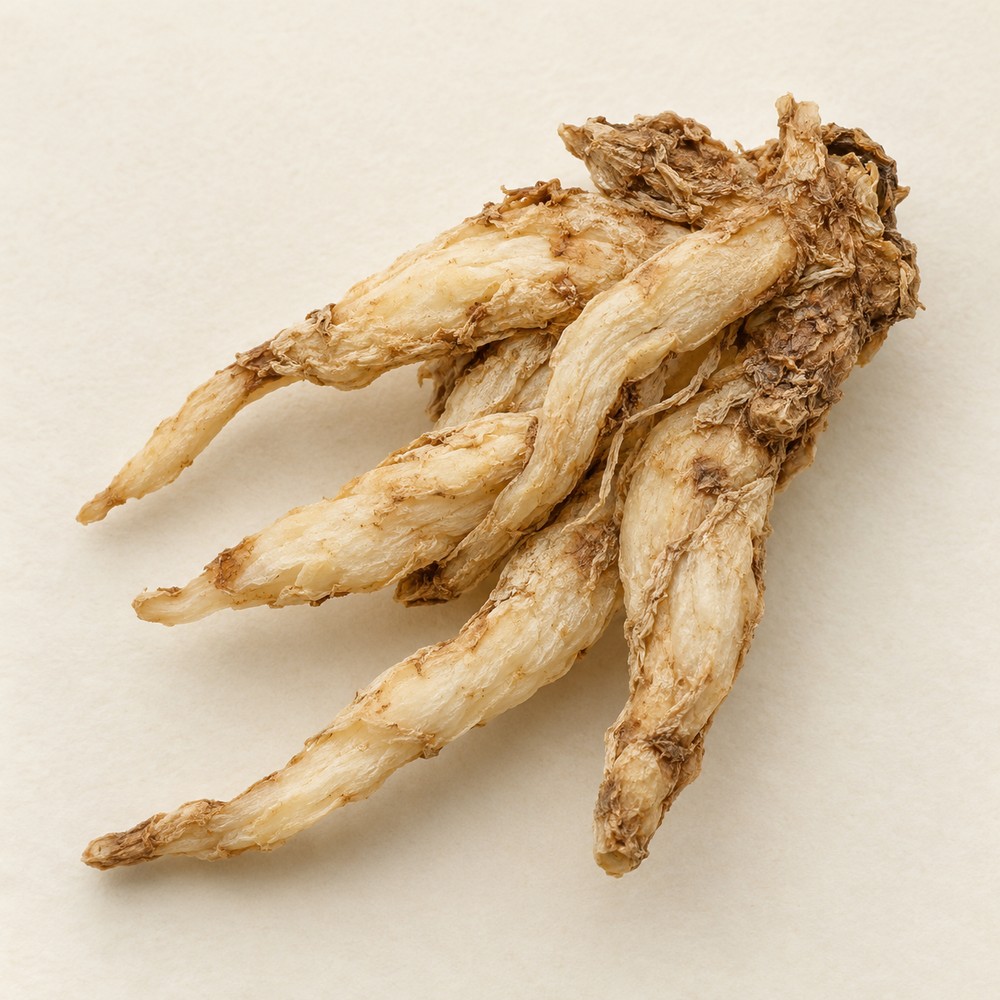
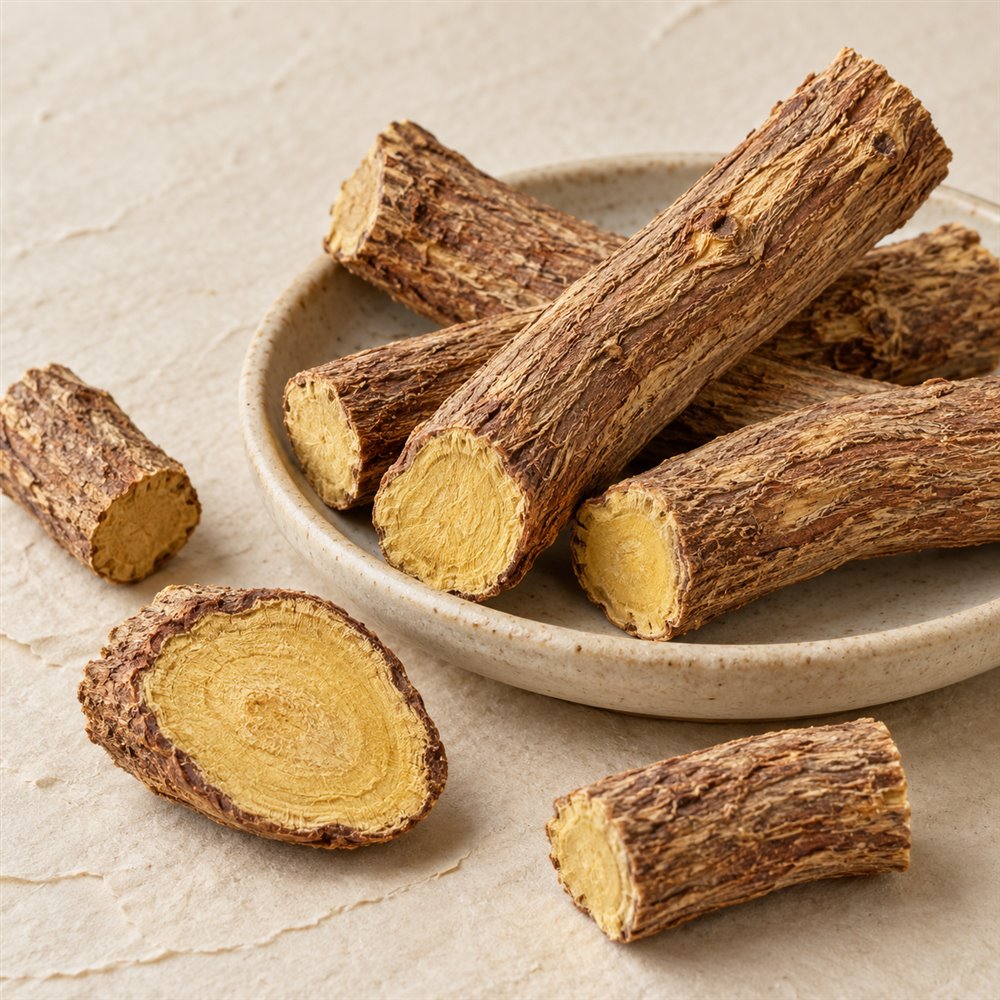
Ingredient images and source amounts are shown for comparison only; this is not a treatment recipe.
HKBU source-recorded composition
Stellariae Radix (Yin Chai Hu) 1.5 qian (5g), Picrorhizae Rhizoma (Hu Huang Lian) 1 qian (3g), Gentianae Macrophyllae Radix (Qin Jiao) 1 qian (3g), Trionycis Carapax (Bie Jia vinegar-fried) 1 qian (3g), Lycii Cortex (Di Gu Pi) 1 qian (3g), Artemisiae Annuae Herba (Qing Hao) 1 qian (3g), Anemarrhenae Rhizoma (Zhi Mu) 1 qian (3g), Glycyrrhizae Radix et Rhizoma (Gan Cao) 5 fen (2g)
The ingredients and amounts below are one HKBU-recorded version; texts, historical units, processing, and modern products can differ. This is comparative reference data, not a home-preparation recipe or personal dose.
Open complete HKBU formula record ↗