Chinese hawthorn fruit · Shan Zha
Crataegus pinnatifida Bunge var. major N.E.Br. · Mature fruit
Name and part used
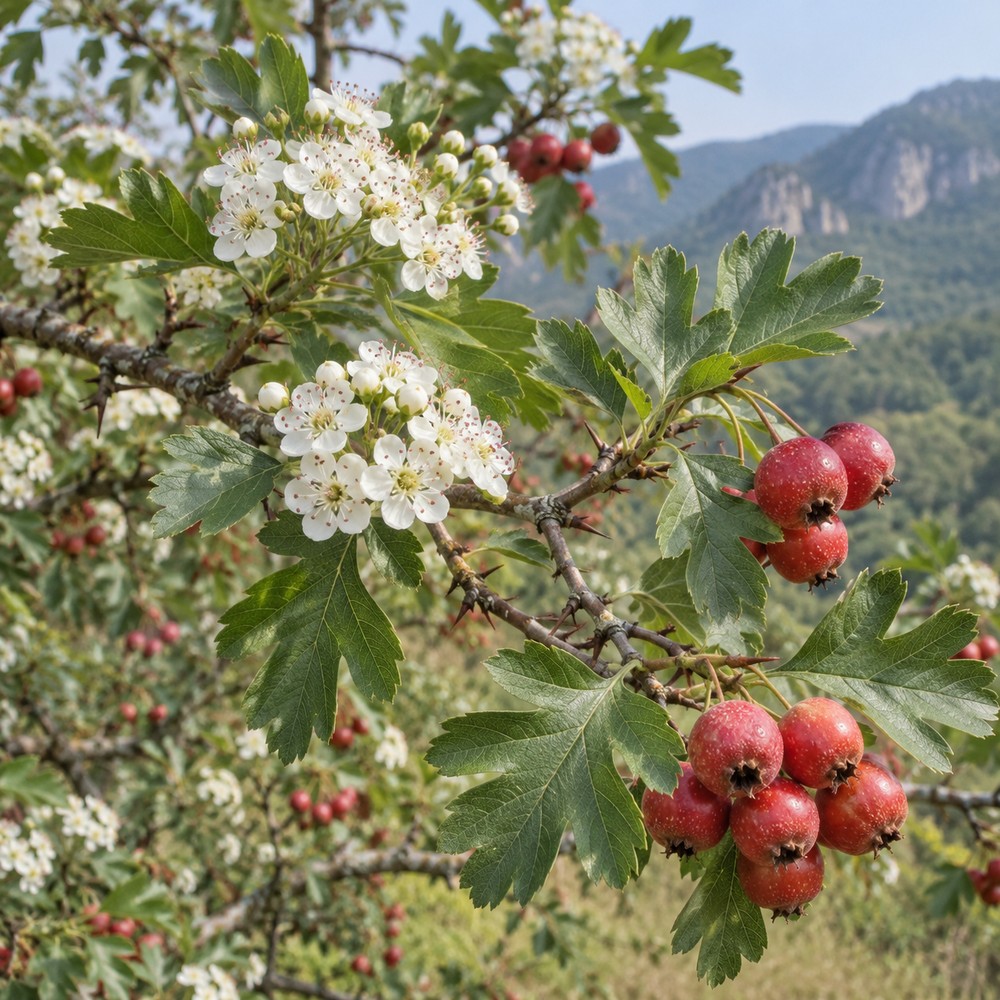
A small tree with lobed leaves, short thorny twigs, white corymbs, and red pomes with persistent calyx.
Traditional context
Shan Zha is mature fruit of Crataegus pinnatifida and accepted varieties. HKBU describes red nearly spherical fruits with persistent calyx; hawthorn refers to many other species.
Modern evidence
Food-digesting and accumulation-resolving are traditional terms. Studies of other hawthorn species do not prove this materia medica treats heart disease or high lipids.
Safety
Interactions with heart, blood-pressure, or anticoagulant medicines are possible; sour fruit can upset the stomach. Consult a clinician for heart treatment.
Pairing in reference texts
Shan Zha appears with malt or medicated leaven in historical digestion formulas; do not self-combine to alter cholesterol or weight.
Growing, care, and harvest timing
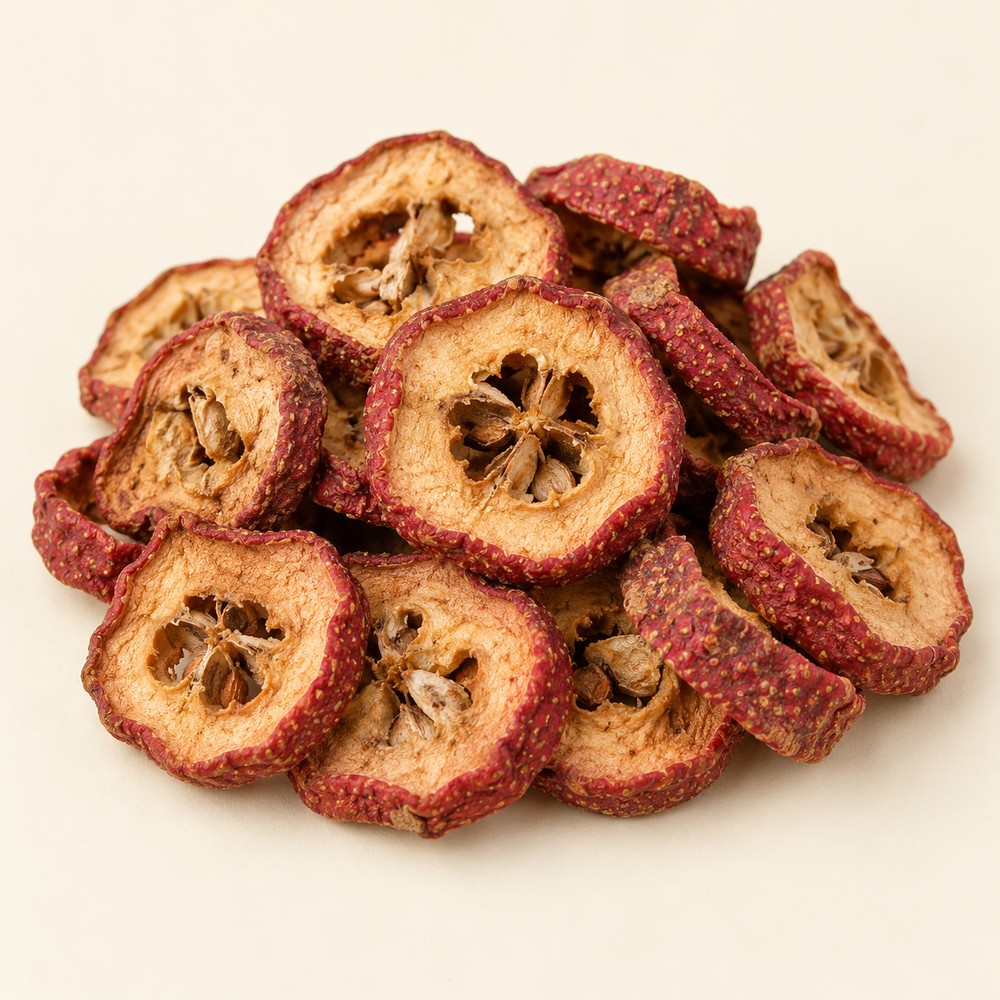
HKBU habitat record: Growing on sandy lands near rivers or slopes of dry gravel. Can be cultivated. Distributed in the south of Northeast China, North China, Jiangsu and etc. The medicinal materials are mainly produced in Henan, Shandong, Hebei and etc Harvest and processing as recorded: Mature fruit: harvested mature fruits in autumn, cut into thick pieces and dried. Leaves: harvested in summer and autumn and sun-dried
Source-recorded harvest/processing: Mature fruit: harvested mature fruits in autumn, cut into thick pieces and dried. Leaves: harvested in summer and autumn and sun-dried
The reviewed source does not provide a complete species-specific sowing/growing routine, irrigation/fertilization schedule, or universal plant age. The page therefore does not infer care instructions or years to harvest; consult local cultivation guidance.
Open habitat and season source ↗FROM PLANT / SOURCE HABITAT TO DRIED MATERIAL · REFERENCE WORKFLOW
- Harvest mature fruit in autumn; authenticate Crataegus pinnatifida and reject rotten, bruised, or mixed fruit.
- Wash, remove stalks per specification, drain, and slice thickly with hygienic equipment.
- Sun- or machine-dry slices evenly; control heat to prevent scorching or moisture re-entry.
- Grade size, color, and integrity; record origin and lot and inspect for mold.
These are post-harvest study notes, not directions to prepare a remedy for self-treatment. Processing reference ↗
How to read formula amounts
The cited sources do not provide a formula with specific amounts for this profile; no ratio is invented. Absence from the incompatibility list does not establish safety.
Habitat, season, and harvest in the HKBU botanical record
HKBU botanical record (translated summary): Flowering and fruiting dates: Flowering May to June, fruiting: August to October Habitat and distribution: Growing on sandy lands near rivers or slopes of dry gravel. Can be cultivated. Distributed in the south of Northeast China, North China, Jiangsu and etc. The medicinal materials are mainly produced in Henan, Shandong, Hebei and etc Harvest and processing as recorded: Mature fruit: harvested mature fruits in autumn, cut into thick pieces and dried. Leaves: harvested in summer and autumn and sun-dried
Open botanical source ↗