She Gan · blackberry lily rhizome · She Gan
Belamcanda chinensis (L.) DC. · Dried rhizome
Name and part used
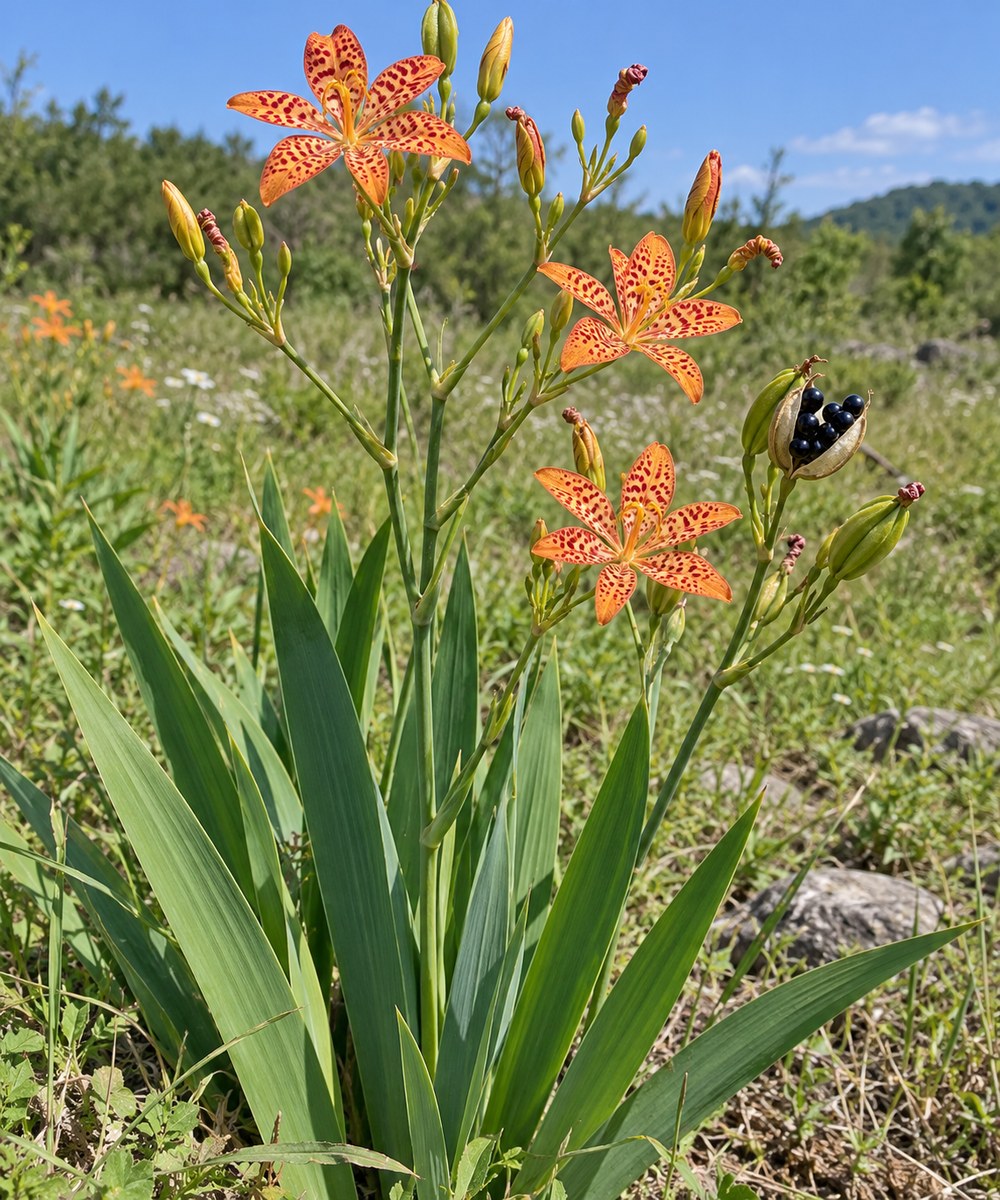
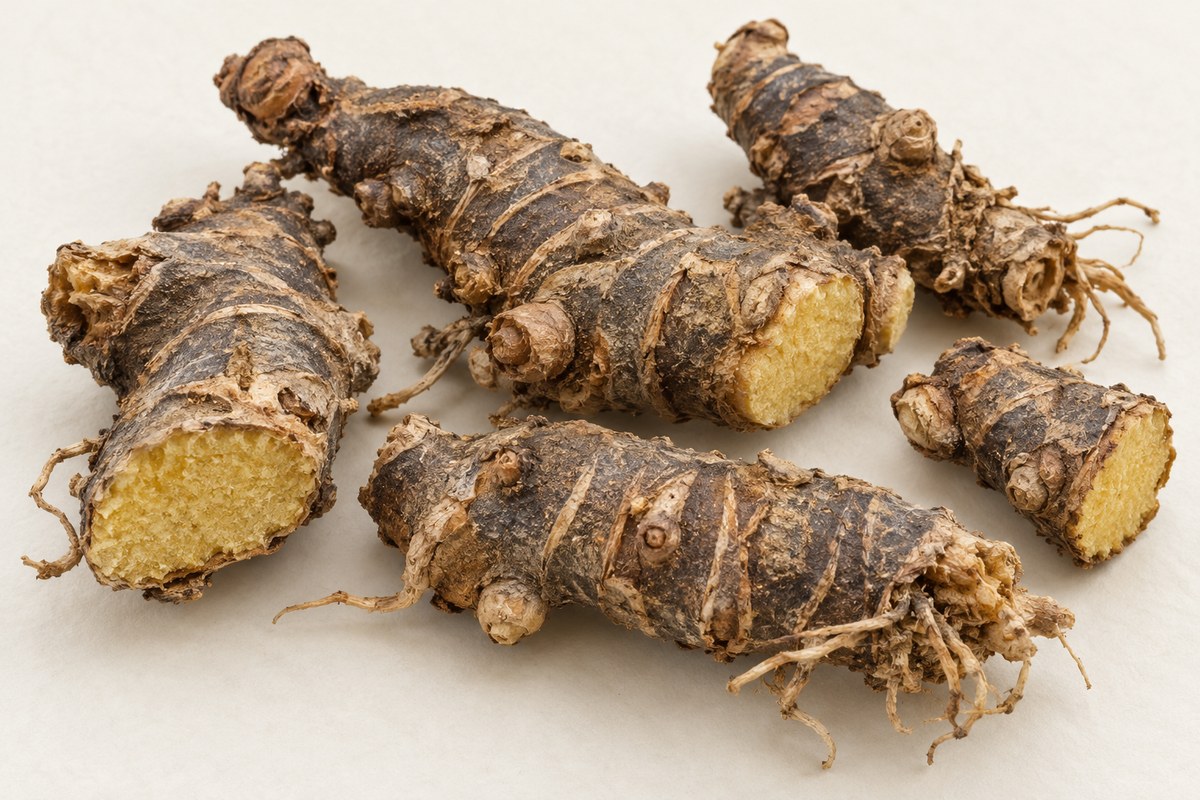
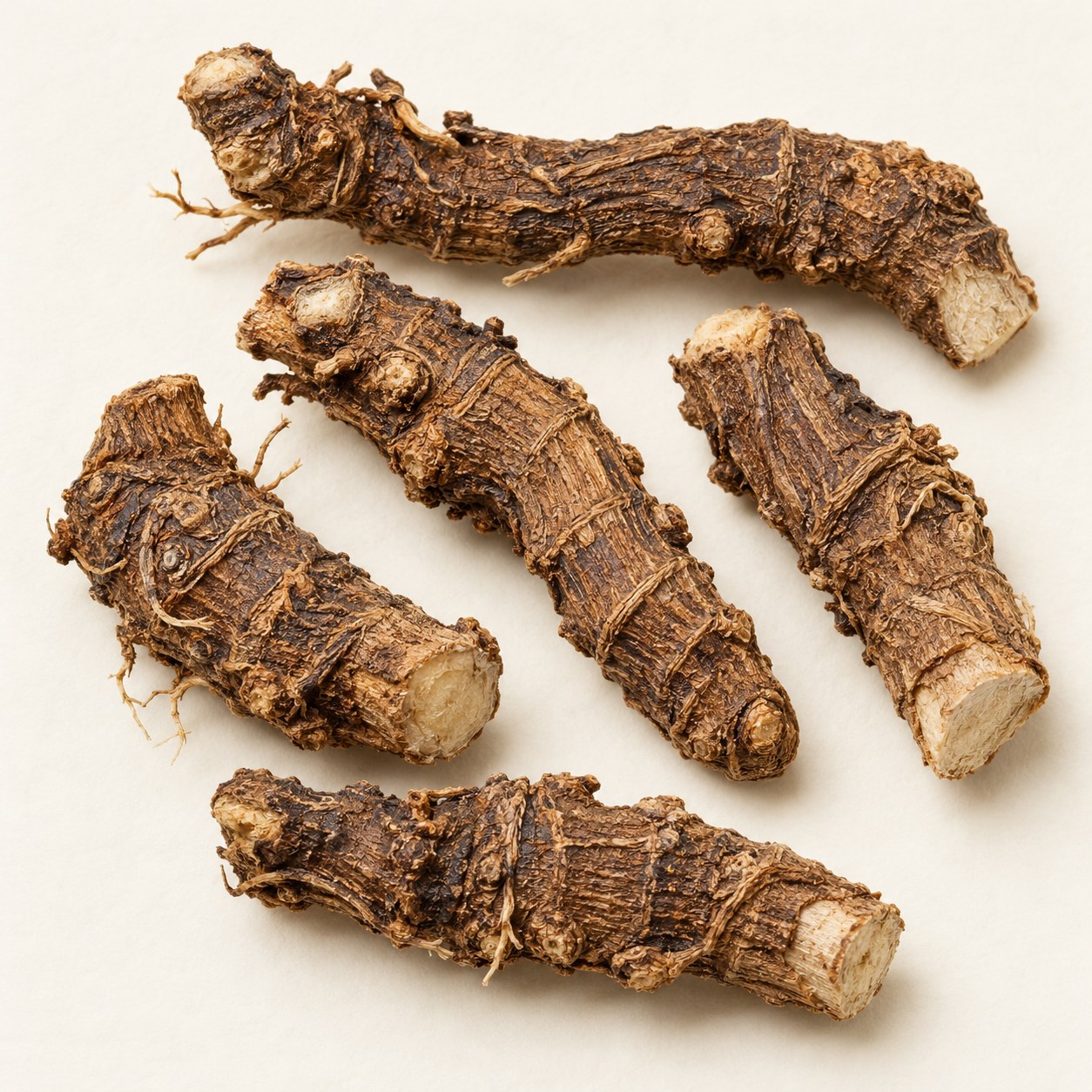
She Gan is the rhizome of Belamcanda chinensis, a clumping herb with flat sword-shaped leaves in two ranks, orange flowers spotted reddish-brown, and capsules containing glossy black seeds. HKBU records plants around 50–150 cm in hillsides, grasslands, and open ground. The dried rhizome is dark with dense oblique ring-like scars and a yellow interior. Some HKBU records classify it as toxic; use caution and do not self-administer.
Traditional context
HKBU describes a bitter, cold nature and traditional actions of clearing heat, resolving toxin, benefiting the throat, and transforming phlegm. This is not evidence for treating sore throat, breathing difficulty, or thyroid disease.
Modern evidence
HKBU documents the drug, processing, and traditional actions but does not provide clinical trial evidence confirming treatment of throat disease. Chemical constituents or preclinical studies do not establish efficacy or safety for self-use.
Safety
Do not self-use, especially during pregnancy/breastfeeding, in children, with thyroid disease, or while taking medicines. HKBU includes a record labeled “toxic”; do not set a dose, grind powder, instill juice, or blow it into the throat. Breathing difficulty, severe painful swallowing, high fever, neck swelling, or persistent hoarseness needs professional or urgent assessment.
Safety reference ↗Pairing in reference texts
HKBU records She Gan in Gan Lu Xiao Du Dan with Huang Qin, Yin Chen, Shi Chang Pu, Chuan Bei Mu, Mu Tong, Huo Xiang, Lian Qiao, Bai Dou Kou, Bo He, and talc; the record lists 120 g She Gan in a large historical converted formula. This is historical reference, not a dose; mineral/animal and other ingredients may require separate standards. No specific toxic pair is established; because the herb itself is labeled toxic in one record, do not combine it yourself.
Identification and study notes
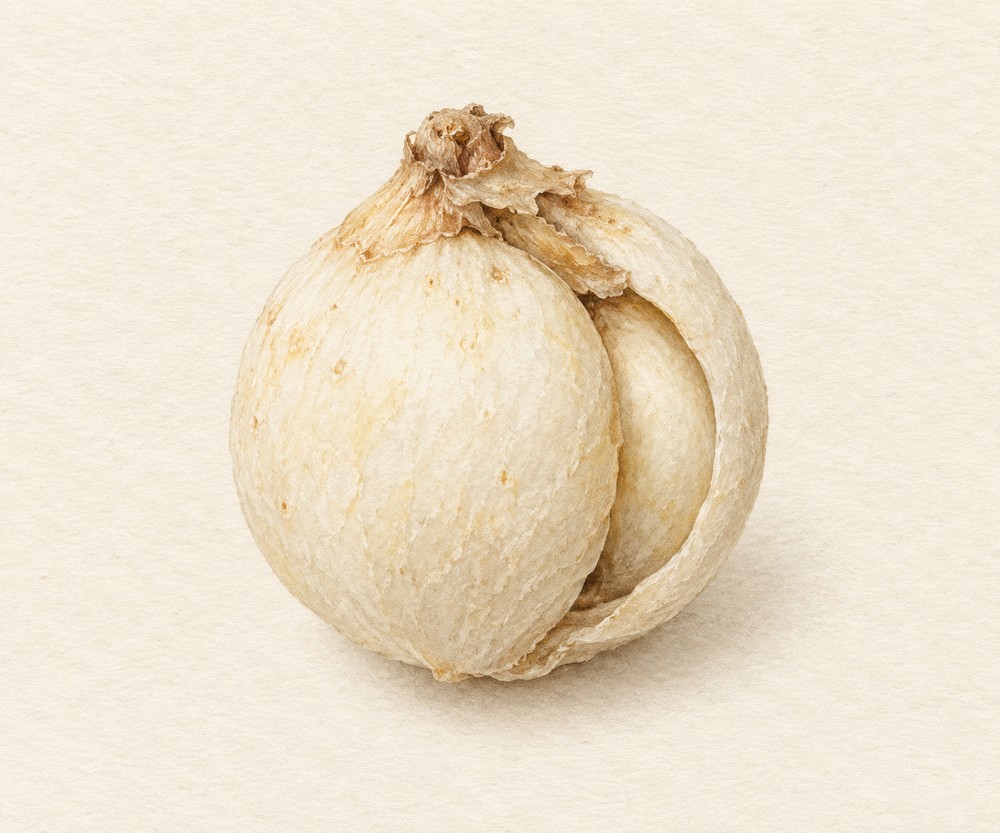
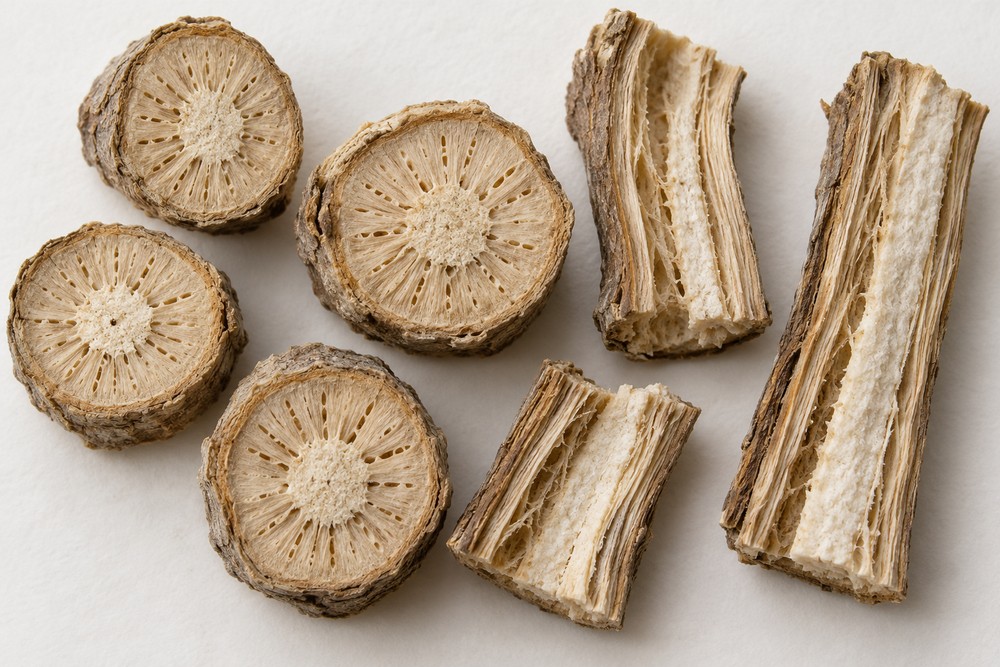
Plants form clumps about 50–150 cm tall. Leaves are long, flat, sword-shaped, with parallel veins in two ranks like an open fan. Branched terminal inflorescences carry orange flowers spotted reddish-brown, opening in succession. After flowering, capsules open to expose glossy black seeds, a useful distinction from many ornamental Irises. The dried medicinal rhizome is not a thin root: it is a knobby gray-brown piece with dense oblique ring scars and a yellow granular fracture. HKBU records spring/autumn harvest, soil removal, half-drying, trimming, and final drying. Because a record warns of toxicity, study its appearance only; do not taste or self-use.
Growth and habitat
HKBU records the plant from hillsides, grassland, and open ground; it can also be cultivated. It prefers light and drained soil and may persist as a perennial in suitable climates. Avoid sites accessible to children or pets because the medicinal rhizome carries a toxicity warning.
Identification and study notes
Plants form clumps about 50–150 cm tall. Leaves are long, flat, sword-shaped, with parallel veins in two ranks like an open fan. Branched terminal inflorescences carry orange flowers spotted reddish-brown, opening in succession. After flowering, capsules open to expose glossy black seeds, a useful distinction from many ornamental Irises. The dried medicinal rhizome is not a thin root: it is a knobby gray-brown piece with dense oblique ring scars and a yellow granular fracture. HKBU records spring/autumn harvest, soil removal, half-drying, trimming, and final drying. Because a record warns of toxicity, study its appearance only; do not taste or self-use.
Growing and care
- Gieo trong giá thể sạch hoặc tách bụi khỏe; đặt cây đúng độ sâu, chừa khoảng để lá kiếm mọc thành cụm. Không nhầm với Iris cảnh có hình lá gần giống.
- Sow in clean medium or divide a healthy clump; plant at the same depth and leave room for sword-shaped foliage. Do not confuse with ornamental Iris species that have similar leaves.
How long until harvest? The record gives spring/autumn rhizome harvest but no cultivation age. Because a source warns of toxicity, there is no safe “home-use after” interval; use only standardized products under professional guidance.
Documented formula pairing: Gan Lu Xiao Du Dan
HKBU records this as a historical damp-clearing formula containing She Gan and other heat-clearing/phlegm-transforming ingredients; this is for studying formula structure, not a use recommendation.
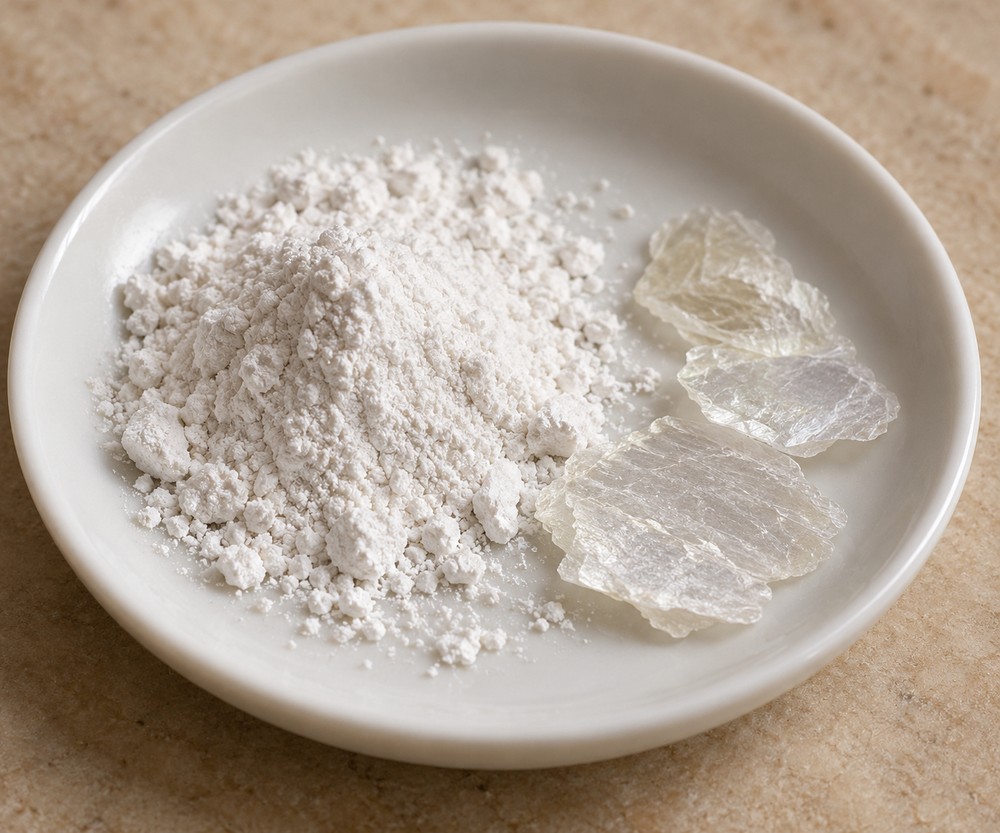
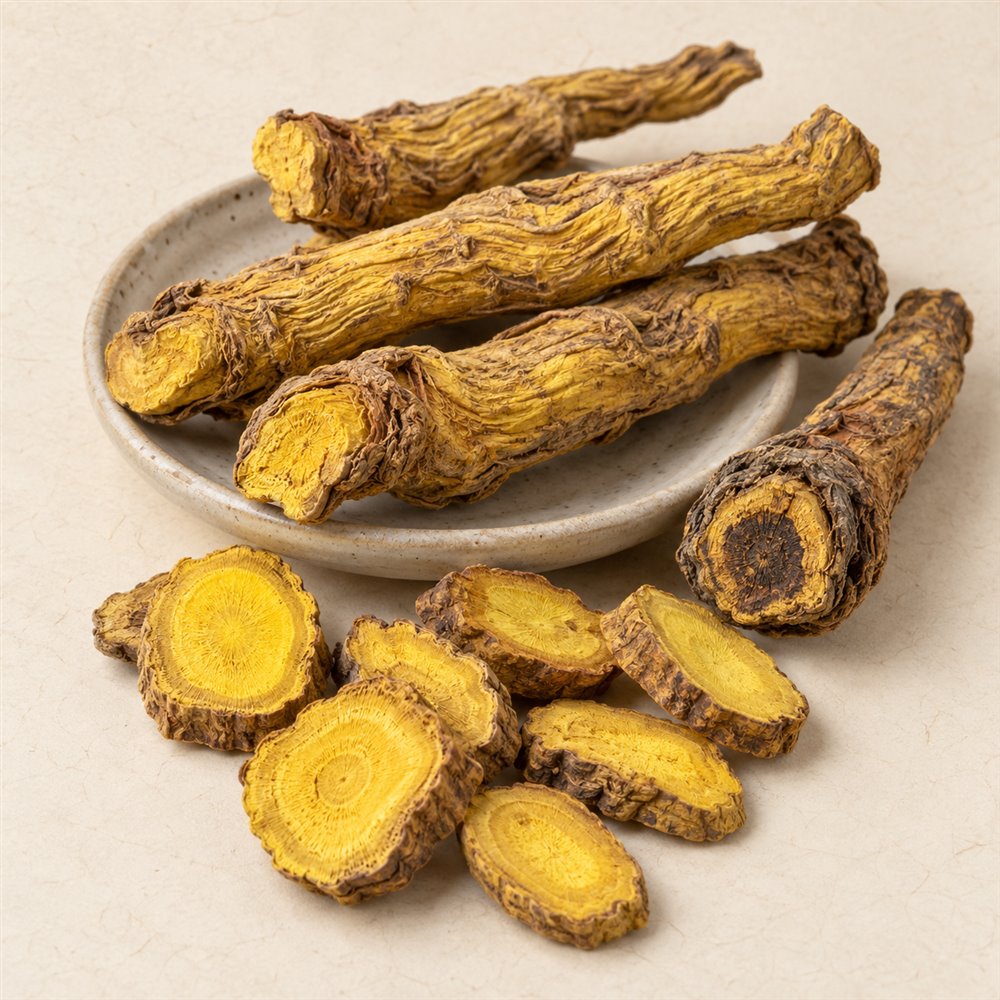
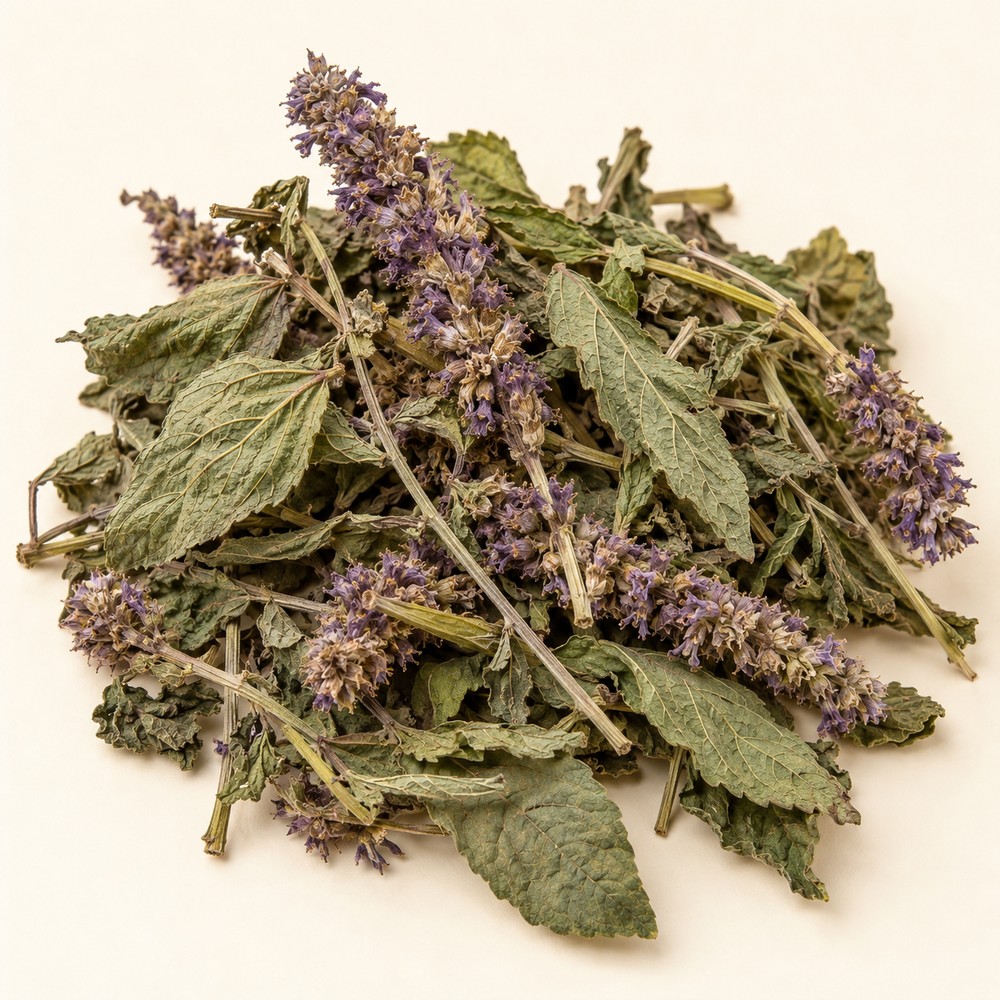
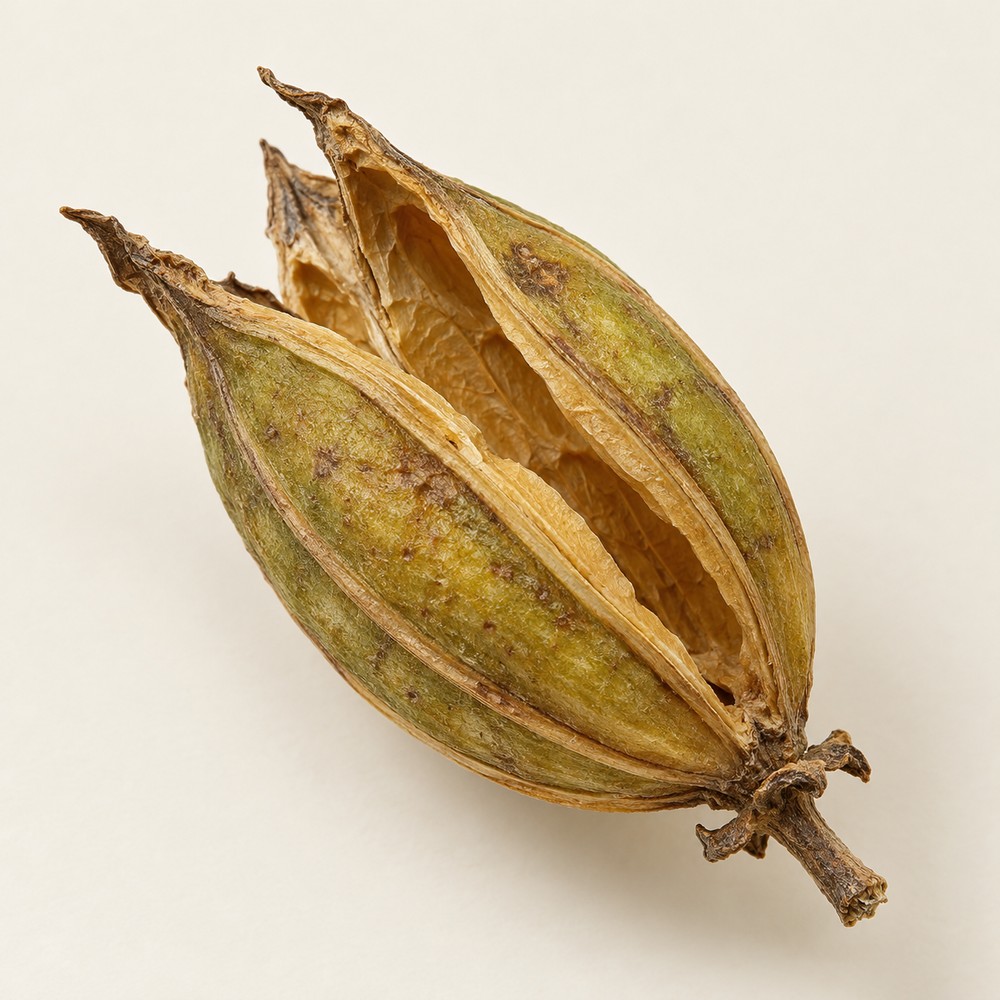
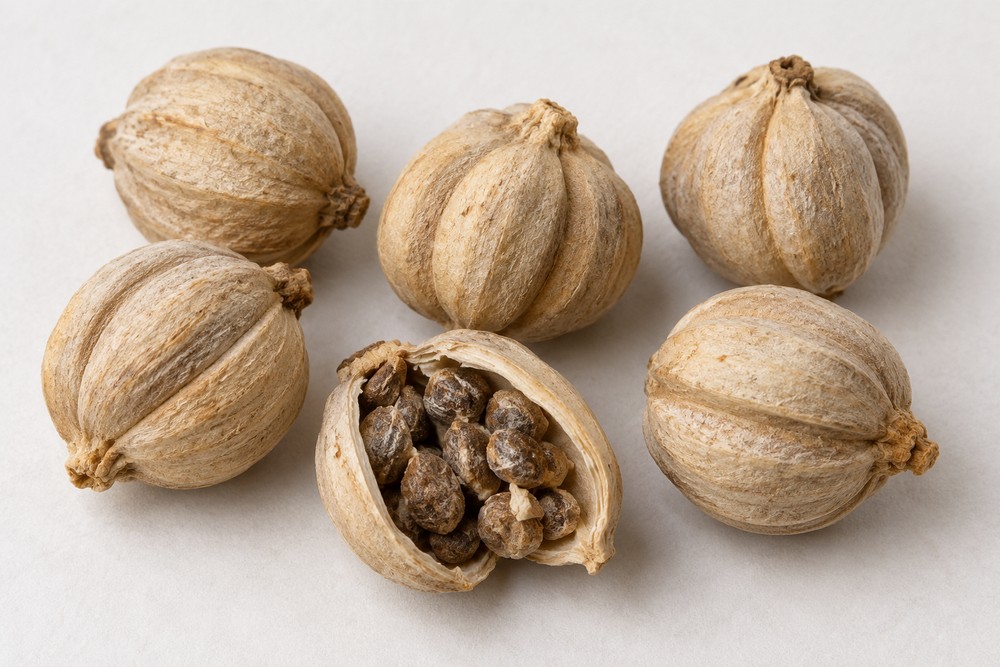
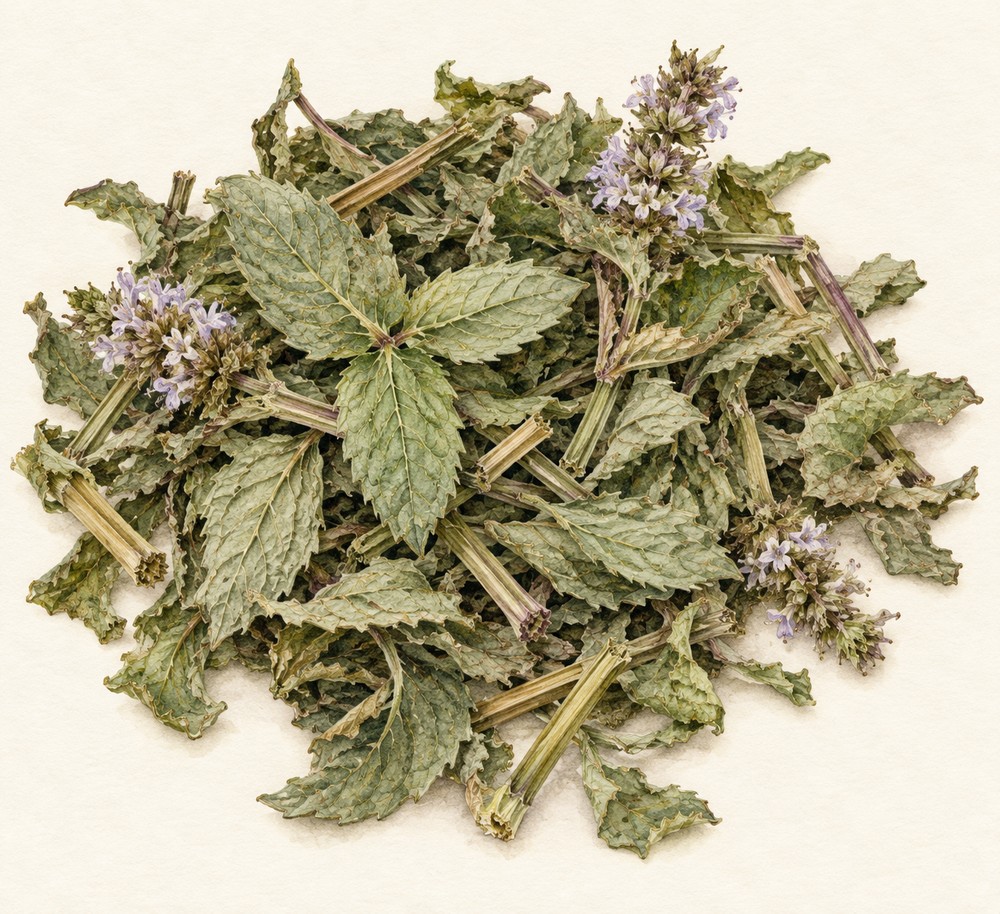
Source-recorded amounts: HKBU’s converted record lists large source amounts: talc 450 g; Huang Qin 300 g; Yin Chen 330 g; Shi Chang Pu 180 g; Chuan Bei Mu and Mu Tong 150 g each; Huo Xiang, Lian Qiao, Bai Dou Kou, Bo He, and She Gan 120 g each. This is a historical conversion, not a dose.
Caution: Not a home-preparation formula or individual dose. An HKBU record labels She Gan toxic; a historical formula does not prove safety of a modern product.
Open formula record ↗Documented toxic incompatibility
No specific toxic pairing was confirmed in reviewed records. However, HKBU describes She Gan as toxic; do not combine it with herbs or prescriptions or make a formula yourself. Mentioning a classical formula is not a conclusion that it is safe.
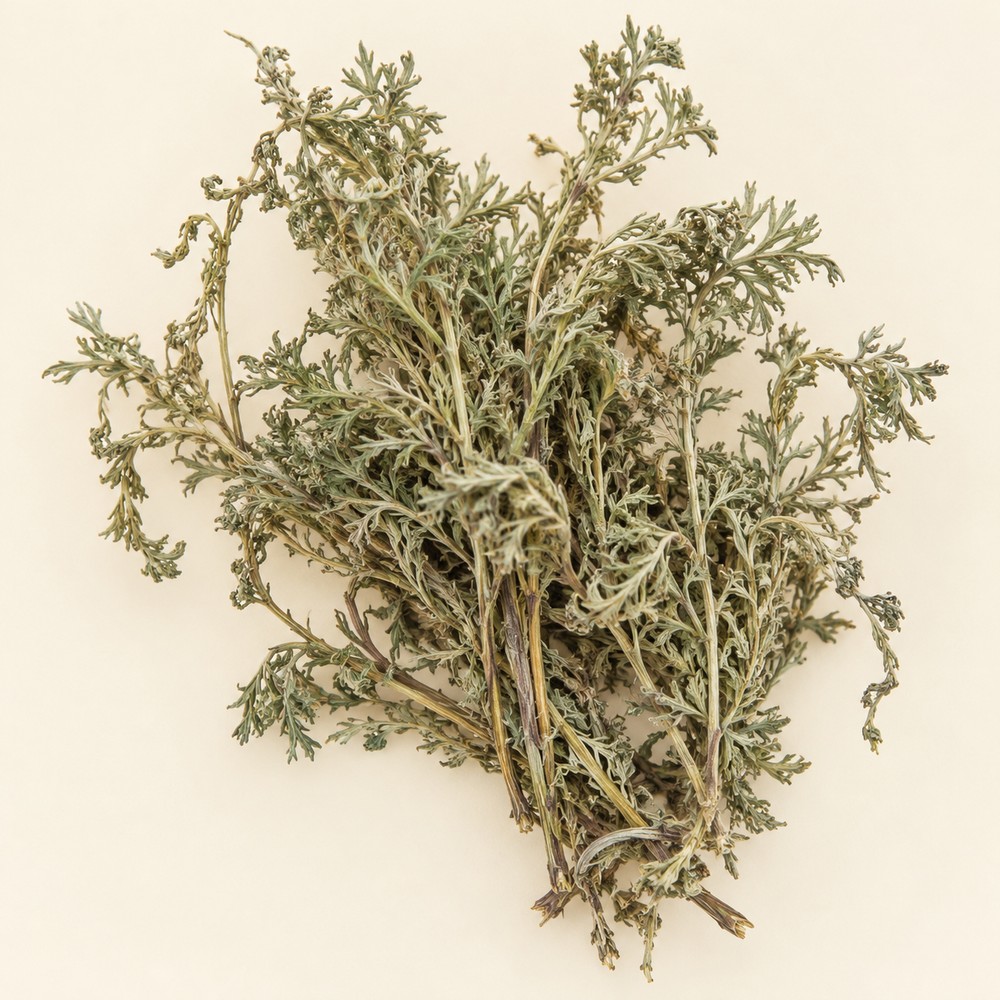
AI study illustrations; not for specimen identification.
FROM PLANT / SOURCE HABITAT TO DRIED MATERIAL · REFERENCE WORKFLOW
- HKBU records rhizomes excavated in spring or autumn; this is a materia medica description, not a recommendation to harvest for home ingestion.
- Shake off soil, remove stems and fibrous roots, half-dry, clean remaining root fibers as the monograph describes, and dry completely.
- Only a qualified facility should control identity, toxicity, contaminants, and processing; do not use home-made powder or extract.
- Label the toxicity caution and store away from children and pets. The dried drug has dense ring-like scars and a yellow fracture, but appearance cannot assure safety.
These are post-harvest study notes, not directions to prepare a remedy for self-treatment. Processing reference ↗
Material source, dried appearance, and processing forms (HKBU)
HKBU identifies She Gan as dried Belamcanda chinensis rhizome, Iridaceae. Dried pieces are irregular, around 3–10 cm long and 1–1.5 cm thick, gray-brown with dense oblique ring wrinkles; the fracture is yellow and granular, with a bitter taste. Rhizomes are excavated in spring/autumn, cleaned, trimmed, half-dried, cleaned of fibers, and dried further. HKBU includes a record labeling it toxic.
Open original materia medica record ↗Habitat, season, and harvest in the HKBU botanical record
HKBU records plants 50–150 cm tall, with two-ranked flat sword leaves, orange flowers spotted red, and black seeds. It occurs on hillsides, grassland, and open ground. Rhizomes are excavated in spring/autumn; no cultivation age or days to harvest are provided.
Open botanical source ↗