Shen Jin Cao · Japanese clubmoss · Shen Jin Cao
Lycopodium japonicum Thunb. · Dried whole aerial plant
Name and part used
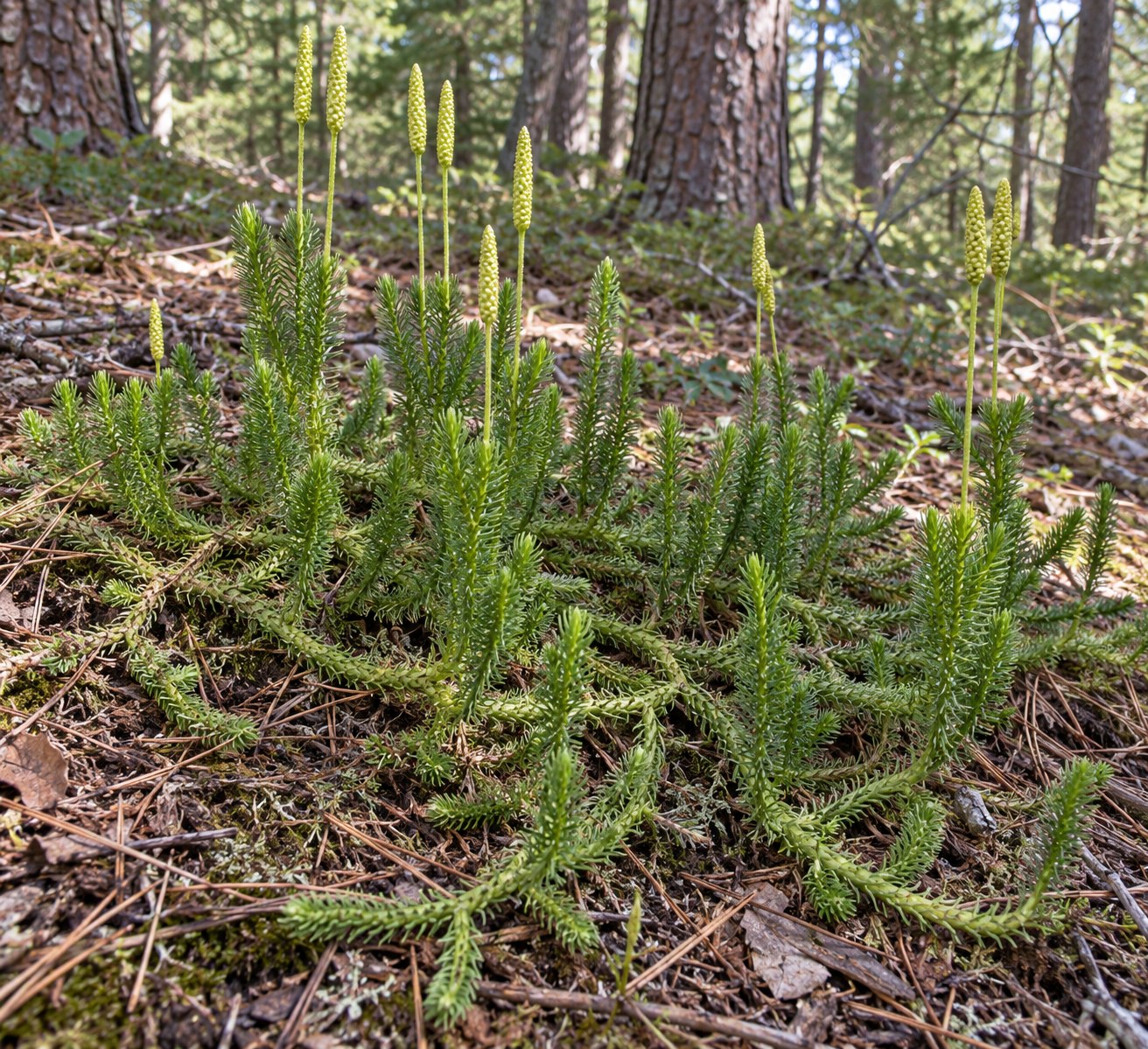
This profile identifies Shen Jin Cao as Lycopodium japonicum Thunb., a vascular spore-producing lycophyte, not a true moss. Creeping stems branch along the ground; minute needle-like or scale-like leaves densely spiral around them. Upright fertile branches commonly bear cylindrical strobili at their tips. It forms green mats in montane woodland and moist habitats and can be confused with other Lycopodium or Huperzia species; identification should use fertile material and a verified botanical specimen. HKBU records the whole plant as the medicinal material, harvested in summer, dug, cleaned of soil, and sun-dried. Commercial spores are a different material; do not confuse spores with the whole herb. The plant grows slowly and wild collection may deplete populations, so cultivation notes here are for observation only.
Traditional context
HKBU specimen records use traditional concepts such as dispelling wind-dampness and relaxing sinews/collaterals, with a historical indication for joint pain and stiffness. These are traditional classifications, not proof that the plant repairs tendons, cures arthritis, or replaces analgesics. Hot swollen joints, injury, weakness/paralysis, or persistent pain needs evaluation of its cause.
Modern evidence
HKBU provides identification, specimen, and traditional medicine records, not clinical evidence of efficacy in people. Chemical or preclinical pharmacology cannot establish that the whole plant treats joint disease or is safe to apply. Distinguish whole Lycopodium japonicum from its spores, other clubmoss species, and similarly named products; a market name alone does not establish the contents.
Safety
Do not dig wild plants, collect spores, or ingest/apply a self-identified specimen. Clubmosses grow slowly and may face collection pressure; use only legally sourced, labeled nursery plants for observation. Dried herb, powder, or products may be misidentified or contaminated. Pregnancy/breastfeeding, children, chronic illness, or medication use are reasons not to self-medicate. Joint pain with fever, redness/heat, deformity, or inability to bear weight warrants prompt medical care.
Safety reference ↗Pairing in reference texts
The reviewed sources do not establish a specific Shen Jin Cao combination with proven clinical efficacy, ratio, and safety. This page therefore does not fabricate a partner-herb image or ratio. HKBU’s specimen records traditional functions but do not justify combining it yourself with analgesics, anticoagulants, or anti-inflammatory medicines. No specific toxic incompatibility was verified; that does not mean every combination is safe.
Identification and study notes
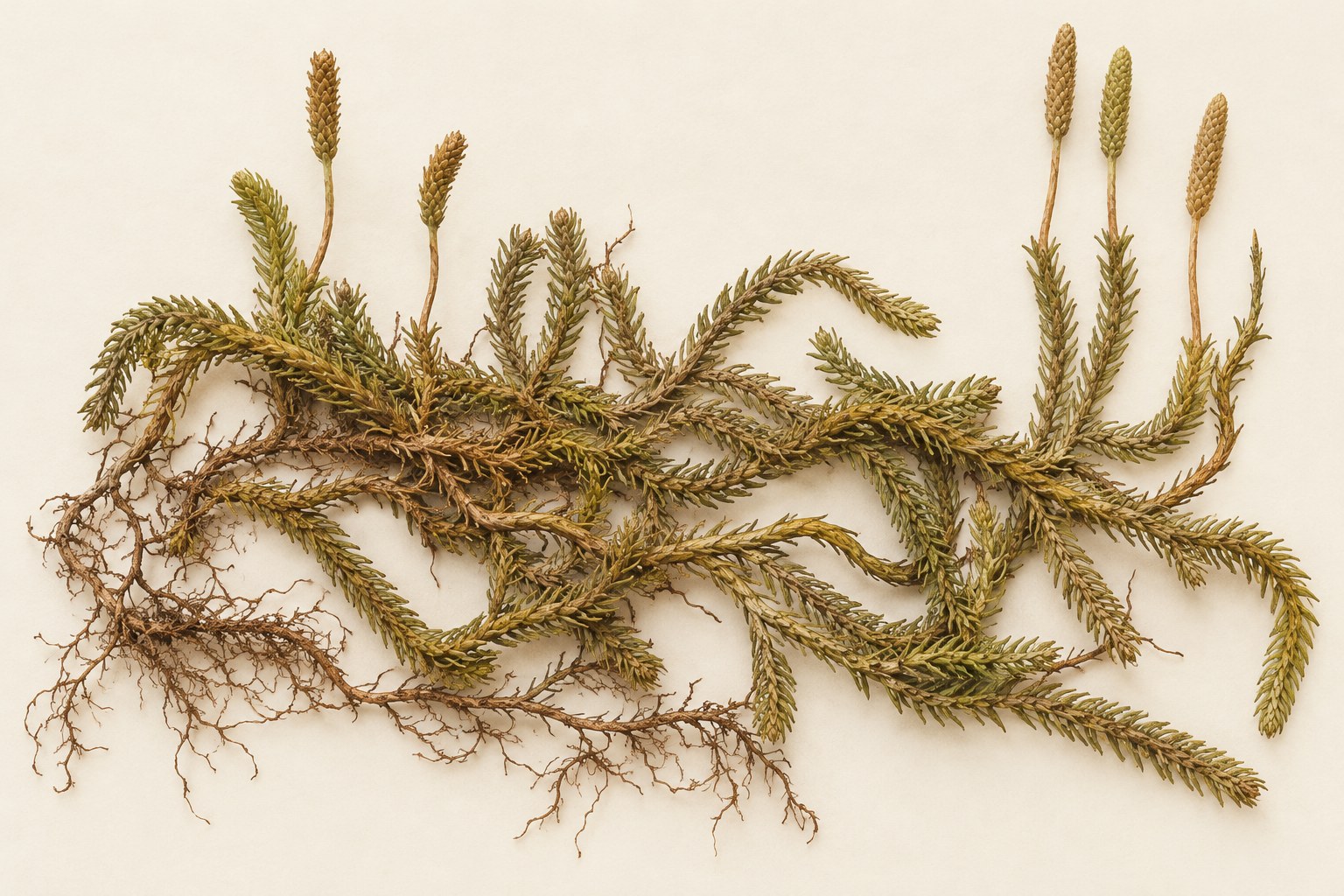
The creeping stem is the key visual feature: the main stem lies close to the substrate and branches, while fertile shoots rise upright. Minute scale- or needle-like leaves spiral densely around the stem; they are not broad fern fronds. Cylindrical strobili at fertile branch tips indicate maturity, although AI imagery may exaggerate their size. Dried specimens range from yellow-green to brown and may be brittle; a sterile stem fragment alone is not enough for confident identification from a photograph or folk name. The whole-plant drug Shen Jin Cao is distinct from clubmoss spores sold under a separate name. Because it grows slowly, keep an observation plant alive rather than uprooting it to “try.”
Growth and habitat
HKBU’s botanical record places the species on grassy slopes, in thickets and mountain woodland, and on acidic soil beneath pines; the environment is generally cool, humid, and humus-rich. Creeping stems need space, airy conditions, protection from harsh midday sun, and uncompressed substrate. This slow-growing species is not suited to mass planting in a small pot watered like an ordinary ornamental. Observation cultivation requires documented nursery stock, a draining but moisture-retentive substrate, bright shade, and protection from children or pets digging or eating it.
Identification and study notes
The creeping stem is the key visual feature: the main stem lies close to the substrate and branches, while fertile shoots rise upright. Minute scale- or needle-like leaves spiral densely around the stem; they are not broad fern fronds. Cylindrical strobili at fertile branch tips indicate maturity, although AI imagery may exaggerate their size. Dried specimens range from yellow-green to brown and may be brittle; a sterile stem fragment alone is not enough for confident identification from a photograph or folk name. The whole-plant drug Shen Jin Cao is distinct from clubmoss spores sold under a separate name. Because it grows slowly, keep an observation plant alive rather than uprooting it to “try.”
Growing and care
- Use only legally sourced nursery stock labeled Lycopodium japonicum; do not remove forest mats, which are easily misidentified and slow to recover. Prepare a wide tray with acidic, loose, humus-rich, draining substrate.
- Place it in a cool, bright-shade location; keep the substrate evenly moist with clean water but never waterlogged. Avoid concentrated fertilizer or pesticide on a study specimen. HKBU does not give a propagation formula or quantitative pH target.
- Maintain the humus layer and hand-remove competing weeds; do not cut fertile branches bearing strobili. Observe creeping stems, spiraled microphylls, and strobilus formation; slow growth is expected.
- The profile gives no safe home-garden time-to-harvest. The source records a professional wild-collection season; do not uproot or use a home-grown specimen medicinally. Keep it as a botanical observation plant.
How long until harvest? There is no home-growing “time until use”; HKBU records only a professional materia-medica collection season. The plant grows slowly and should not be harvested for medicine. Record mat formation, upright fertile branches, and strobili for lifecycle study.
Habitat, season, and harvest in the HKBU botanical record
HKBU describes Lycopodium japonicum with creeping stems, upright branches, dense minute leaves, and strobili; habitats include grassy slopes, thickets, and acidic ground beneath pine forest. The Shen Jin Cao drug uses the whole plant, professionally collected in summer, cleaned of soil, and dried. A separate specimen record classifies it traditionally under wind-dampness and sinew/collateral concepts. Spores are a different materia medica; this profile keeps them distinct to prevent confusion about name and plant part.
Open botanical source ↗FROM PLANT / SOURCE HABITAT TO DRIED MATERIAL · REFERENCE WORKFLOW
- HKBU records professional summer collection of the whole plant, soil removal, and sun-drying; this describes the materia-medica chain and does not encourage wild harvesting.
- For a processing lesson, use a traceable commercial specimen or images rather than uprooting a living plant; keep whole plant and spores distinct because they are different materials.
- When examining a legal dried specimen, check creeping branched stems, dense minute leaves, and fertile shoots; do not sniff closely or taste powder.
- Label Latin name, part, supplier, harvest season, and method; seal the dry specimen away from moisture, children, and pets. Do not add it to homemade tea or medicine.
These are post-harvest study notes, not directions to prepare a remedy for self-treatment. Processing reference ↗