Sour jujube seed · Suan Zao Ren
Ziziphus jujuba Mill. var. spinosa (Bunge) Hu ex H. F. Chou · Seed kernels of mature fruit
Name and part used
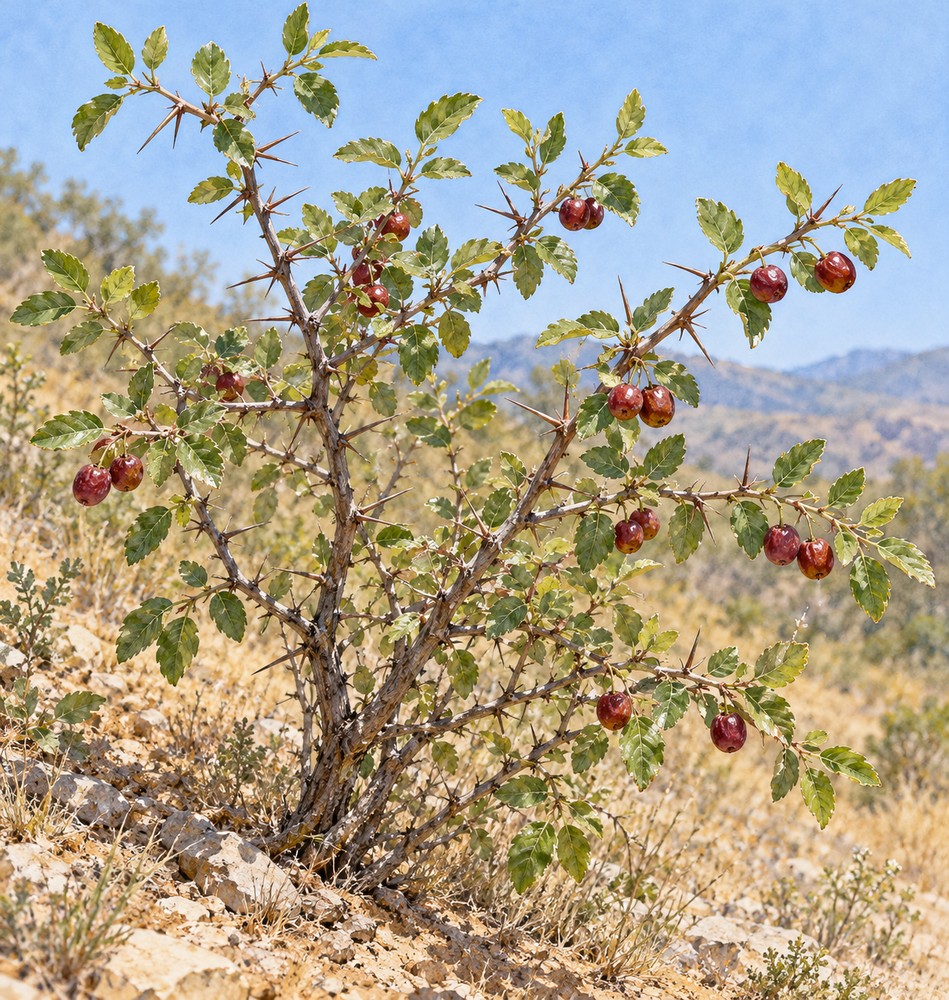
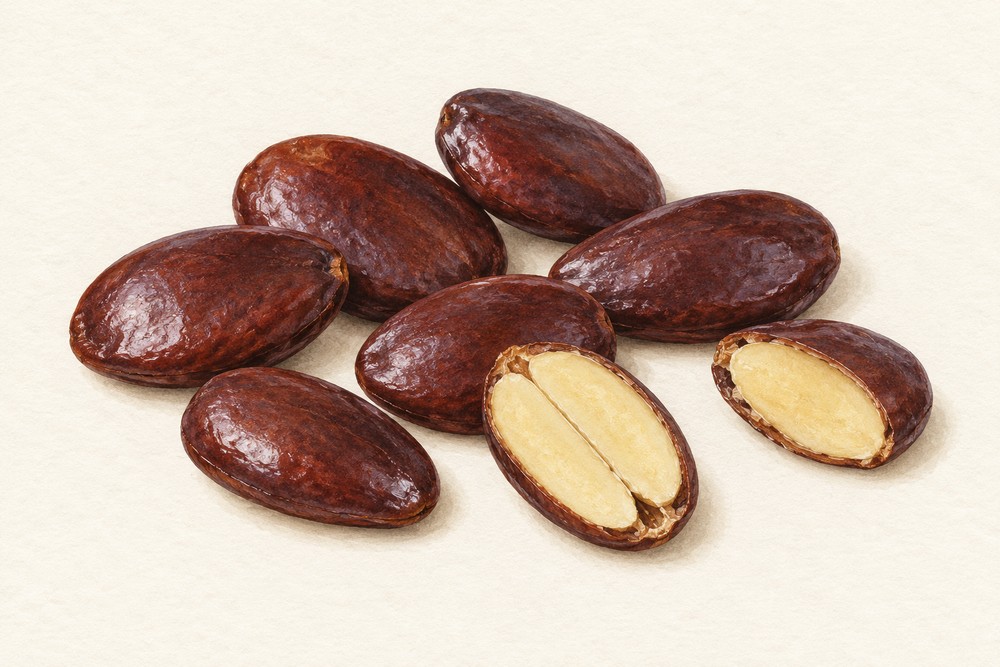
A small shrub with unequal paired thorns, small leaves, and dark-red ripe fruit; the materia medica is the seed kernel.
Traditional context
Suan Zao Ren is the seed of Ziziphus jujuba var. spinosa, not Da Zao fruit from Z. jujuba. HKBU describes paired thorns and small sour fruit; shells or other species may be confused in trade.
Modern evidence
Heart-nourishing, calming, and astringing sweat are traditional claims. Saponin data or historical formulas do not prove insomnia treatment.
Safety
Potential interactions with sedatives or CNS-active medicines warrant caution; do not drive if drowsy. Consult a clinician or pharmacist before combining with medication.
Pairing in reference texts
Suan Zao Ren is a key ingredient in Suan Zao Ren Tang with Poria, Chuanxiong, Anemarrhena, and licorice. A classical formula is not a substitute for insomnia assessment.
Growing, care, and harvest timing
HKBU habitat record: Growing on sunny or dry slopes, valleys, hills, plains, roadsides and wastelands. Can be cultivated. Distributed in North and Northwest China, Liaoning, Shandong, Jiangsu, Anhui, Henan, Hubei, Sichuan and etc. The medicinal materials are mainly produced in Hebei, Shaanxi, Liaoning, Henan and etc Harvest and processing as recorded: Harvested mature fruits in autumn to early winter, removed sarcocarp and shell, collected seeds and sun-dried
Source-recorded harvest/processing: Harvested mature fruits in autumn to early winter, removed sarcocarp and shell, collected seeds and sun-dried
The reviewed source does not provide a complete species-specific sowing/growing routine, irrigation/fertilization schedule, or universal plant age. The page therefore does not infer care instructions or years to harvest; consult local cultivation guidance.
Open habitat and season source ↗FROM PLANT / SOURCE HABITAT TO DRIED MATERIAL · REFERENCE WORKFLOW
- Harvest ripe fruit in autumn to early winter from authenticated var. spinosa; do not substitute ordinary jujube seed.
- Separate pulp and hard shell hygienically at a facility; collect kernels, wash only as the process allows, and remove impurities.
- Sun- or machine-dry kernels to moisture specifications; any roasted form must follow pharmacopoeial facility standards.
- Check species, seed condition, moisture, and fungal contamination; seal lots and protect from heat and humidity.
These are post-harvest study notes, not directions to prepare a remedy for self-treatment. Processing reference ↗
How to read formula amounts
The cited sources do not provide a formula with specific amounts for this profile; no ratio is invented. Absence from the incompatibility list does not establish safety.
Habitat, season, and harvest in the HKBU botanical record
HKBU botanical record (translated summary): Flowering and fruiting dates: Flowering: June to July, fruiting: September to October Habitat and distribution: Growing on sunny or dry slopes, valleys, hills, plains, roadsides and wastelands. Can be cultivated. Distributed in North and Northwest China, Liaoning, Shandong, Jiangsu, Anhui, Henan, Hubei, Sichuan and etc. The medicinal materials are mainly produced in Hebei, Shaanxi, Liaoning, Henan and etc Harvest and processing as recorded: Harvested mature fruits in autumn to early winter, removed sarcocarp and shell, collected seeds and sun-dried
Open botanical source ↗