Tian Nan Xing · jack-in-the-pulpit tuber · Tian Nan Xing
Arisaema erubescens (Wall.) Schott · Professionally processed tuber
Name and part used
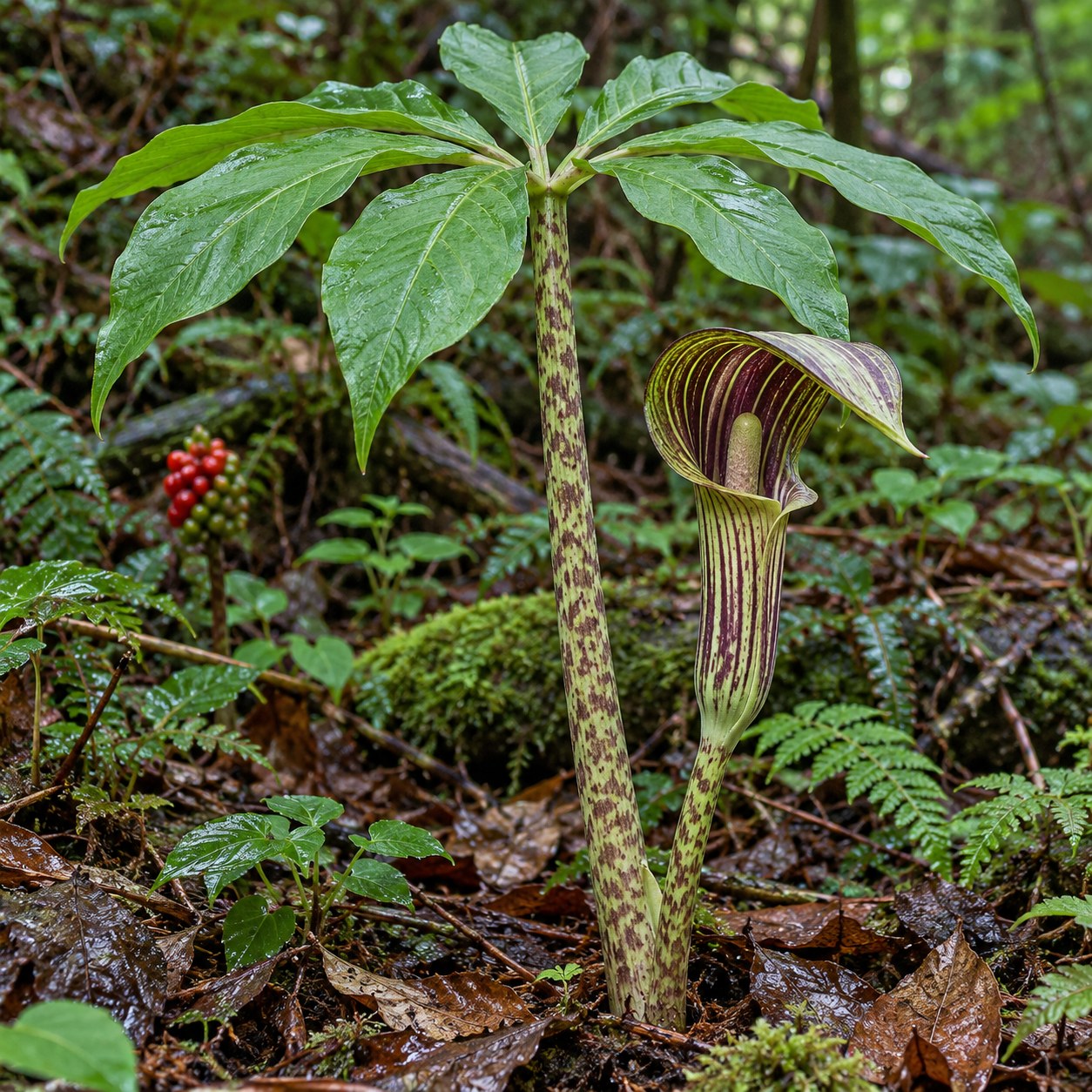
The illustrated plant is Arisaema erubescens, a 60–100 cm perennial Araceae herb. Its large leaf is palmately divided; the petiole may be mottled, and a striped green-purple spathe encloses the spadix before red berries form. HKBU’s Tian Nan Xing monograph may accept dried tubers of A. erubescens or A. heterophyllum; do not collapse these sources. Raw tubers are toxic/irritating; AI art is for study, not foraging or processing.
Traditional context
HKBU records bitter, acrid, warm, toxic qualities and traditional actions of drying dampness, transforming phlegm, dispelling wind, calming convulsions, reducing swelling, and dispersing binds. These are historical concepts, not proof of treating stroke, epilepsy, paralysis, or cancer. Raw tubers are unsafe; no home dose or processing is provided.
Modern evidence
HKBU provides botanical/materia medica records, not efficacy trials. Historical indications and preclinical research do not establish treatment of stroke, epilepsy, paralysis, or cancer. Professional processing cannot be reduced to a home tip. If eye/mouth exposure or ingestion is suspected, rinse with plenty of water and contact emergency/poison control; do not induce vomiting.
Safety
HKBU labels the materia medica toxic; raw tubers are never food or home medicine. Standard processing belongs to qualified facilities, not home soaking, boiling, sulfur-fuming, or grinding. Keep away from children/pets, avoid dust, and store separately from food. Mouth swelling/burning, vomiting, breathing difficulty, or seizures require emergency care.
Safety reference ↗Pairing in reference texts
Reviewed sources establish no safe self-use ratio. Classical formulas may pair processed material, but historical quantities are not personal doses. This page does not invent a toxic pair without exact-species/form evidence; risks include raw tuber, misidentification, improper processing, and unassessed interactions.
Identification and study notes
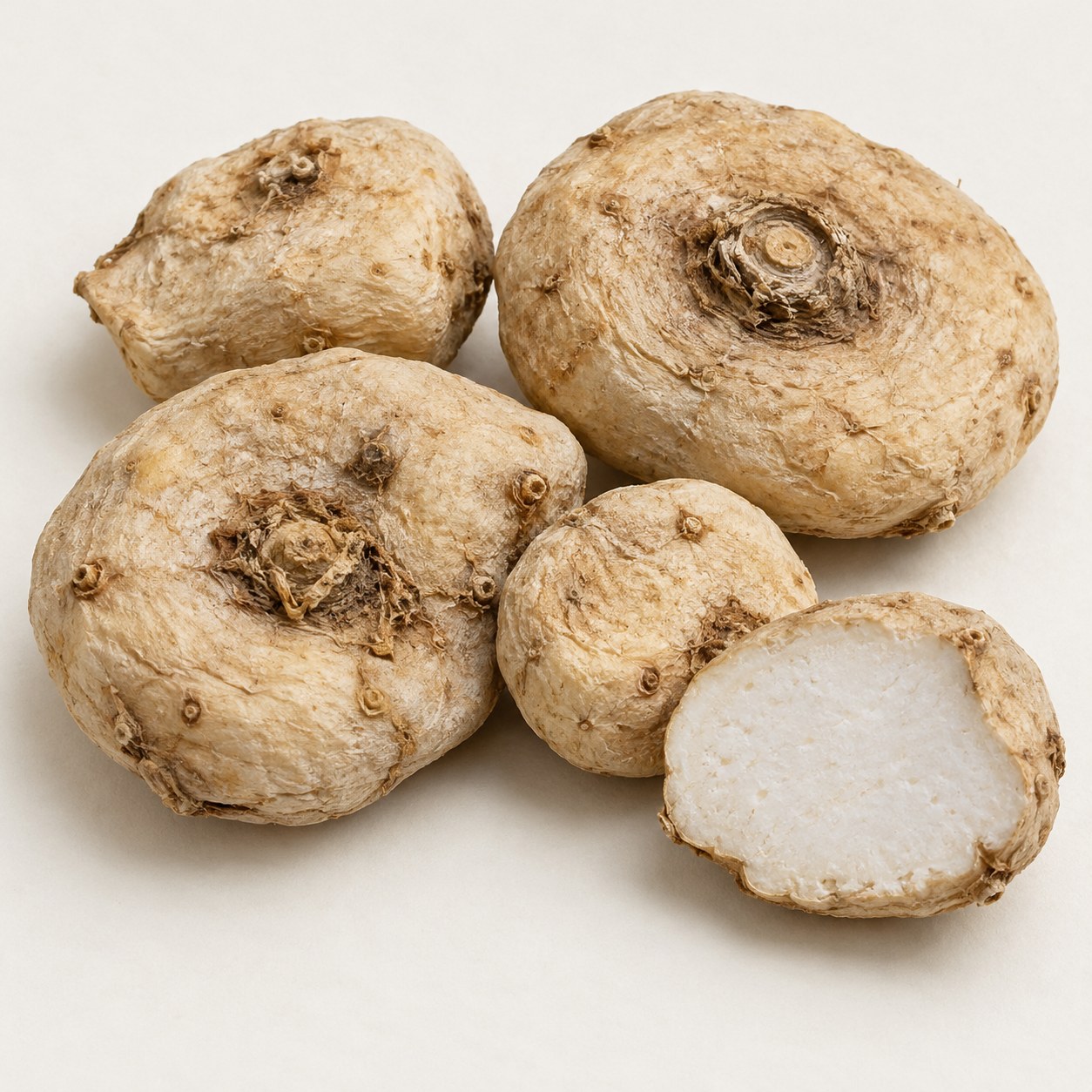
Palmately divided leaves and striped green-purple spathe are living-plant cues; petioles may be mottled. Processed tubers are flattened with an indented stem scar, root marks, and white starchy cuts. Never touch/taste raw tubers or forage from images. Standard material can come from two Arisaema species; consult monographs, labels, and testing.
Growth and habitat
HKBU places it beneath shaded woodland on moist slopes across central/southwestern China. The perennial has underground tubers. Habitat is not a harvest instruction; raw tubers are toxic, so do not grow it at home for use. Live collections need barriers, toxic labels, and authenticated stock.
Identification and study notes
Palmately divided leaves and striped green-purple spathe are living-plant cues; petioles may be mottled. Processed tubers are flattened with an indented stem scar, root marks, and white starchy cuts. Never touch/taste raw tubers or forage from images. Standard material can come from two Arisaema species; consult monographs, labels, and testing. Study the spathe and spadix as a paired structure and the divided leaf as separate identification cues. The dried tuber picture is a morphology illustration only. It cannot show whether an actual tuber received validated processing, whether it came from the permitted species, or whether toxins remain. Thiên nam tinh là dược liệu củ Arisaema cần nhãn rõ bộ phận và chế biến. Ảnh cây là Arisaema erubescens, trong khi tiêu chuẩn có thể chấp nhận hơn một nguồn Arisaema; mo hoa sọc, lá xẻ và củ dưới đất chỉ là dấu hiệu quan sát, không chứng minh củ sống an toàn. Nguyên liệu sống có thể kích ứng miệng, mắt, da; không hít bụi. Chế biến là thao tác chuyên môn kiểm soát; trang không nêu cách khử độc hay bào chế tại nhà. Mùa thu khi lá vàng là ghi chép nguồn cung chuyên nghiệp, không phải lý do tự đào. Bài cổ có củ đã chế không xác định liều cá nhân hay tỷ lệ an toàn. Mẫu sống/chế cần khóa kín, ghi nhãn, tách khỏi thức ăn và vị thuốc thường. Nếu tiếp xúc gây rát, sưng, nôn hoặc khó thở, cần cấp cứu/độc chất; không thử vị khác để trung hòa. Nhãn học Thiên nam tinh nên ghi “củ độc—chỉ chế biến chuyên môn”, rõ hơn chỉ ghi tên. Mo hoa và lá xẻ giúp học hình thái Arisaema nhưng không phân biệt hết loài nguồn hay chứng nhận lô chế. Tránh chạm nhựa hoặc tạo bụi từ mẫu khô. Tỷ lệ bài cổ không phải chuẩn dùng tại nhà; trang giữ ở ngữ cảnh nguồn và không đưa cách khử độc. Dùng hồ sơ để học nhận dạng và ranh giới giữa quan sát cây với chế biến dược liệu.
Growing and care
- No home cultivation for medicinal tubers is advised. Research gardens need authenticated A. erubescens, restricted access, and toxic labels; do not sow unidentified stock.
- HKBU describes shaded moist woodland but gives no pH, seed treatment, temperature, or irrigation schedule. Do not turn habitat into a fixed protocol.
- In controlled collections, track plants/tubers/berries, use barriers, and separate from edible plants. Keep children and pets away.
- The source records autumn tuber excavation when leaves yellow but gives no plant age. This is professional context, not a home-use milestone.
How long until harvest? There is no home-growing interval to readiness: tubers are toxic and require professional processing. HKBU records autumn harvest when leaves yellow as professional context, not advice to dig them.
FROM PLANT / SOURCE HABITAT TO DRIED MATERIAL · REFERENCE WORKFLOW
- HKBU describes professional autumn excavation when leaves yellow, followed by soil/debris removal. Do not reproduce at home because raw tubers are toxic.
- Historical sources mention washing, cleaning, and pharmacopoeial processing; some mention sulfur-fuming. No directions are provided because chemicals, heat, soaking, and cutting are unsafe at home.
- The monograph may accept A. erubescens or A. heterophyllum; products need correct source labeling, processed status, and contaminant/moisture controls.
- AI dried-tuber art depicts flattened form, stem scar, and starchy cut; it does not prove detoxification. Do not taste, grind, or decoct.
These are post-harvest study notes, not directions to prepare a remedy for self-treatment. Processing reference ↗
Habitat, season, and harvest in the HKBU botanical record
HKBU describes A. erubescens as a 60–100 cm perennial with palmately divided leaves and striped spathe in shaded woodland; tubers are collected when leaves yellow in autumn. The dried-material monograph also accepts A. heterophyllum and flags toxicity.
Open botanical source ↗