Xia Ku Cao · common selfheal spike · Xia Ku Cao
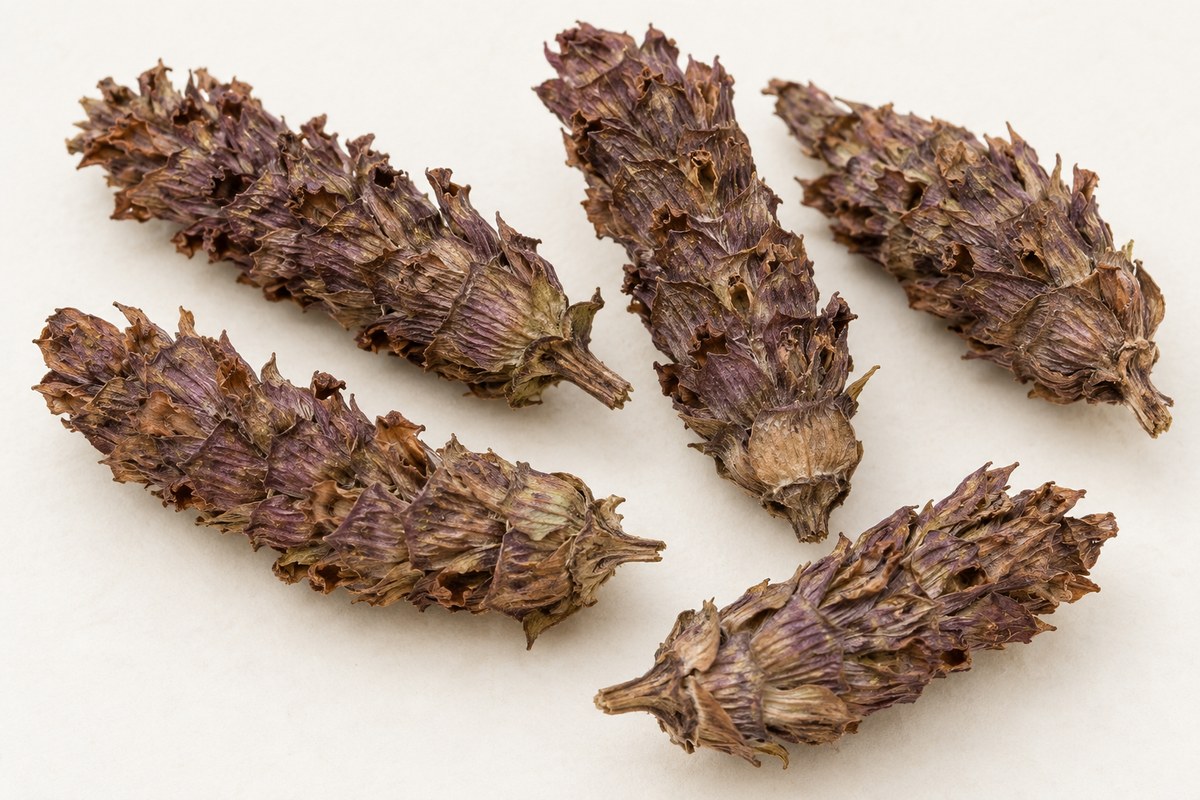
Prunella vulgaris L. · Dried fruit spike
Name and part used
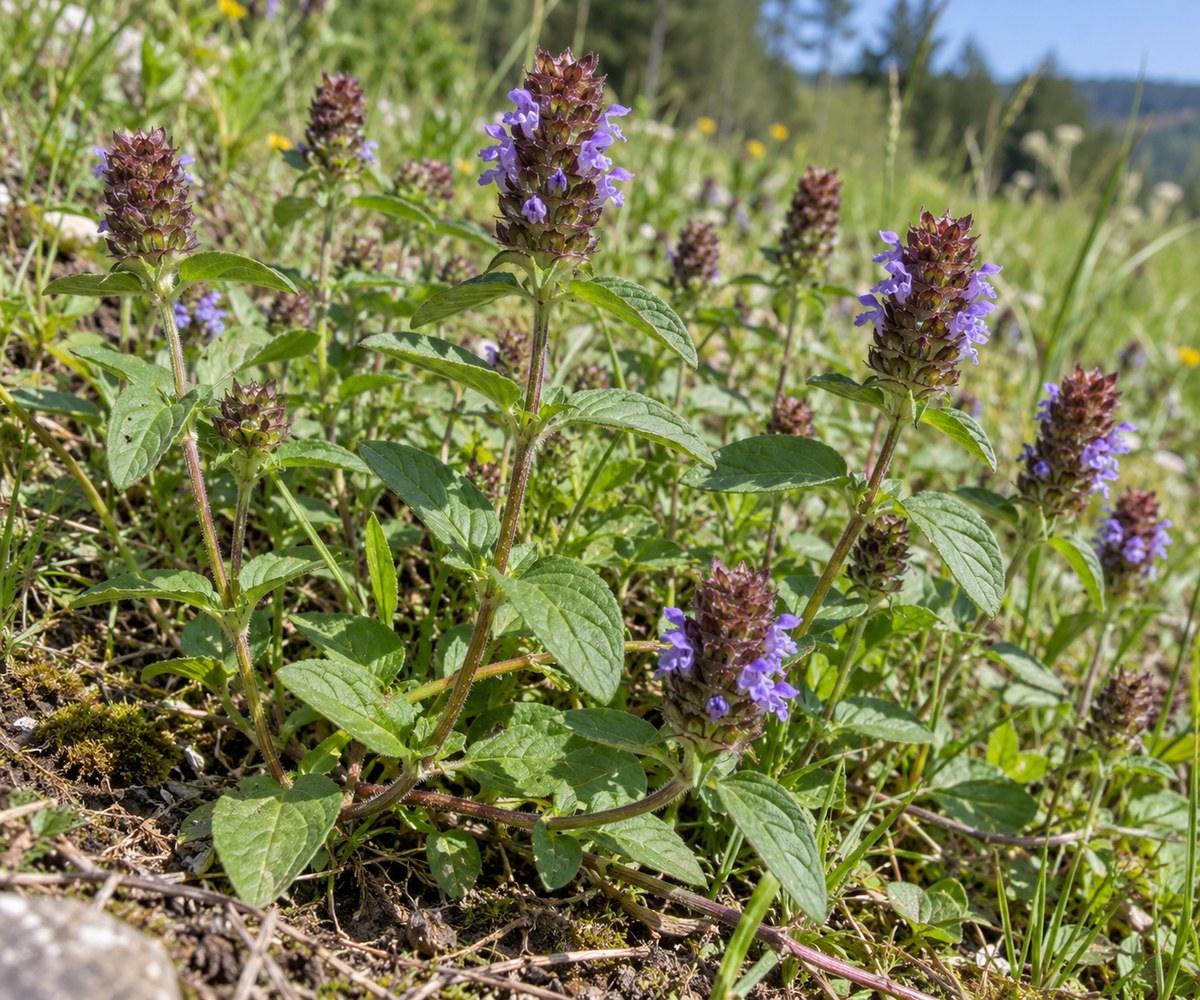
Xia Ku Cao uses the fruit spike of Prunella vulgaris, a low perennial herb with creeping then ascending stems, opposite oval leaves, and terminal pseudo-spikes. After flowering, persistent calyces form a slightly flattened brown-purple spike. HKBU records plants around 15–30 cm in wasteland, roadsides, and slopes; spikes are cut as they turn brown around May–June.
Traditional context
HKBU records acrid, bitter, cold properties and traditional actions of clearing fire, brightening the eyes, dispersing binds, and reducing swelling. These are traditional descriptions, not proof of treatment for thyroid masses, lymph nodes, hypertension, hepatitis, or breast abscess.
Modern evidence
HKBU plant and fruit-spike records document identity, harvest season, and traditional actions, not modern clinical trials. Some Canadian-licensed products carry traditional-use claims and warn against pregnancy/breastfeeding; that label cannot be generalized to every preparation or establish efficacy.
Safety
Avoid self-use during pregnancy or breastfeeding; a Health Canada natural-product licence carries this warning for one Prunella preparation. People with diabetes, low blood pressure, or glucose-/blood-pressure-lowering medicines should consult a clinician: preclinical work suggests metabolic effects, while human interactions remain uncertain. Individual allergy is possible.
Safety reference ↗Pairing in reference texts
Reviewed sources do not establish a specific toxic herb pair or standard pairing ratio for Xia Ku Cao. Do not self-combine it with blood-pressure/glucose medicines or other “mass-dispersing” herbs; pregnancy caution and limited interaction data still apply.
Identification and study notes
Xia Ku Cao is low-growing, with creeping lower stems that root at nodes and ascending upper stems, often slightly square and reddish-purple. Leaves are opposite, ovate to oblong, with shorter petioles upward. Terminal pseudo-spikes are purple or blue-purple at flowering; when fruiting, persistent calyces and bracts form a slightly flattened brown-purple spike. The drug is the fruit spike, not the entire root. HKBU describes spikes around 1.5–8 cm, light and brittle, layered with calyces/bracts and sometimes small brown nutlets. Harvest is around May–June when the spike turns brown. AI illustrations show broad structure; they cannot authenticate species, residues, or storage condition.
Growth and habitat
HKBU places Prunella vulgaris in wasteland, roadsides, and slope grassland across much of China. It prefers light and moderately drained garden soil and may spread by rooting at stem nodes. Avoid roadside collection because dust, metals, and herbicides can contaminate the material.
Identification and study notes
Xia Ku Cao is low-growing, with creeping lower stems that root at nodes and ascending upper stems, often slightly square and reddish-purple. Leaves are opposite, ovate to oblong, with shorter petioles upward. Terminal pseudo-spikes are purple or blue-purple at flowering; when fruiting, persistent calyces and bracts form a slightly flattened brown-purple spike. The drug is the fruit spike, not the entire root. HKBU describes spikes around 1.5–8 cm, light and brittle, layered with calyces/bracts and sometimes small brown nutlets. Harvest is around May–June when the spike turns brown. AI illustrations show broad structure; they cannot authenticate species, residues, or storage condition. Hạ khô thảo dùng phần bông quả khô của Prunella vulgaris, không phải mọi cây cảnh có hoa tím. Thân bò thấp có thể mọc rễ ở đốt; bông tận cùng đổi màu khi già, nên giai đoạn thu hái trong hồ sơ nguồn có ý nghĩa. Cảnh báo của sản phẩm được cấp phép tại Canada áp dụng cho đúng sản phẩm/nhãn đó, đặc biệt thai kỳ và cho con bú; không thể khái quát thành nghiên cứu an toàn cho mọi chế phẩm. Tài liệu cổ nhắc khối tuyến giáp/hạch không chứng minh cây chữa các bệnh ấy. Tránh hái ven đường vì bụi và tạp chất; không nhầm giống cảnh với lô định danh. Nguồn chưa xác minh cặp độc hay tỷ lệ chuẩn nên trang không tự đặt. Khi học mẫu, ghi loài, độ già bông, ngày thu, điều kiện trồng và dạng chế biến.
Growing and care
- Gieo nông trong khay sạch, giữ ẩm nhẹ; chuyển cây khi rễ ổn định. Có thể trồng cây con theo hàng thoáng để quan sát lá mọc đối và cụm hoa ở ngọn.
- Sow shallowly in clean trays and keep lightly moist; transplant once roots establish. Space nursery plants so opposite leaves and terminal spikes are easy to observe.
How long until harvest? A perennial; the record defines spike harvest by color and season, not plant age. At least one growth cycle is generally needed to form spikes; weeks vary with climate, cultivar, and sowing date. Study spikes are not automatically medicinal-grade.
Documented toxic incompatibility
No specific toxic pairing for Prunella vulgaris was confirmed in the reviewed sources. Health Canada warns against pregnancy/breastfeeding for one specific licensed preparation; this is not a claim that all products share that label or all combinations are safe.
AI study illustrations; not for specimen identification.
FROM PLANT / SOURCE HABITAT TO DRIED MATERIAL · REFERENCE WORKFLOW
- Cut the plant or separate fruit spikes on sunny days around May–June as spikes turn brown, per HKBU; keep authenticated lots separate.
- Shake off soil and remove weeds, insects, and diseased parts; the source describes either separating spikes or drying the whole plant.
- Sun-dry in clean conditions until crisp; dried spikes are slightly flattened rods, pale to reddish brown, composed of layered persistent calyces and bracts.
- Cool, seal, and label date and provenance. Do not decoct it at home for blood pressure, masses, or eye disease; appearance is for study, not quality testing.
These are post-harvest study notes, not directions to prepare a remedy for self-treatment. Processing reference ↗
Material source, dried appearance, and processing forms (HKBU)
HKBU identifies Xia Ku Cao as the dried fruit spike of Prunella vulgaris. Spikes are slightly flattened rods about 1.5–8 cm long, pale brown to reddish-brown/purple, formed by persistent whorls of calyces and bracts; small brown nutlets may remain inside. Harvest when brown, clean, and sun-dry; the record favors large purplish-brown spikes.
Open original materia medica record ↗Habitat, season, and harvest in the HKBU botanical record
Prunella vulgaris is a 15–30 cm perennial from wasteland, roadsides, and slopes; fruit spikes are harvested around May–June when brown. It prefers light and drained soil; no universal sowing-to-harvest duration is supplied.
Open botanical source ↗