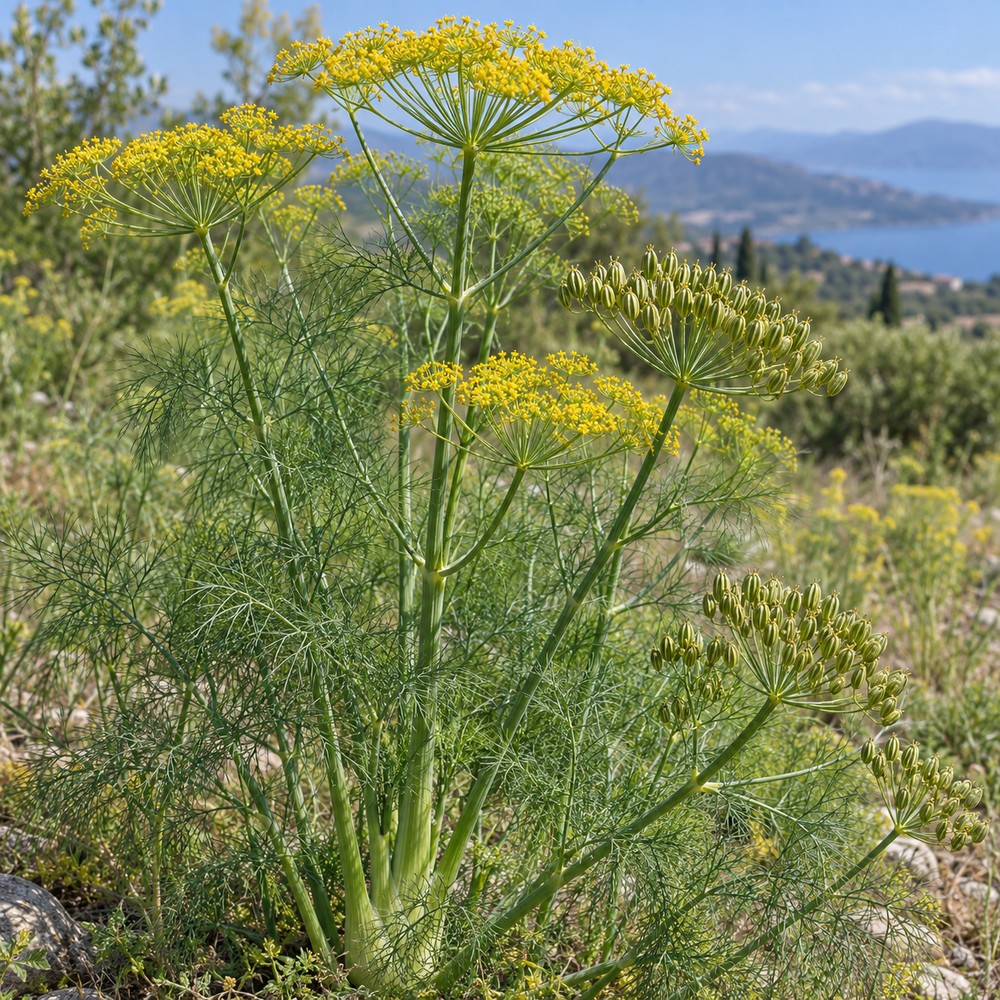
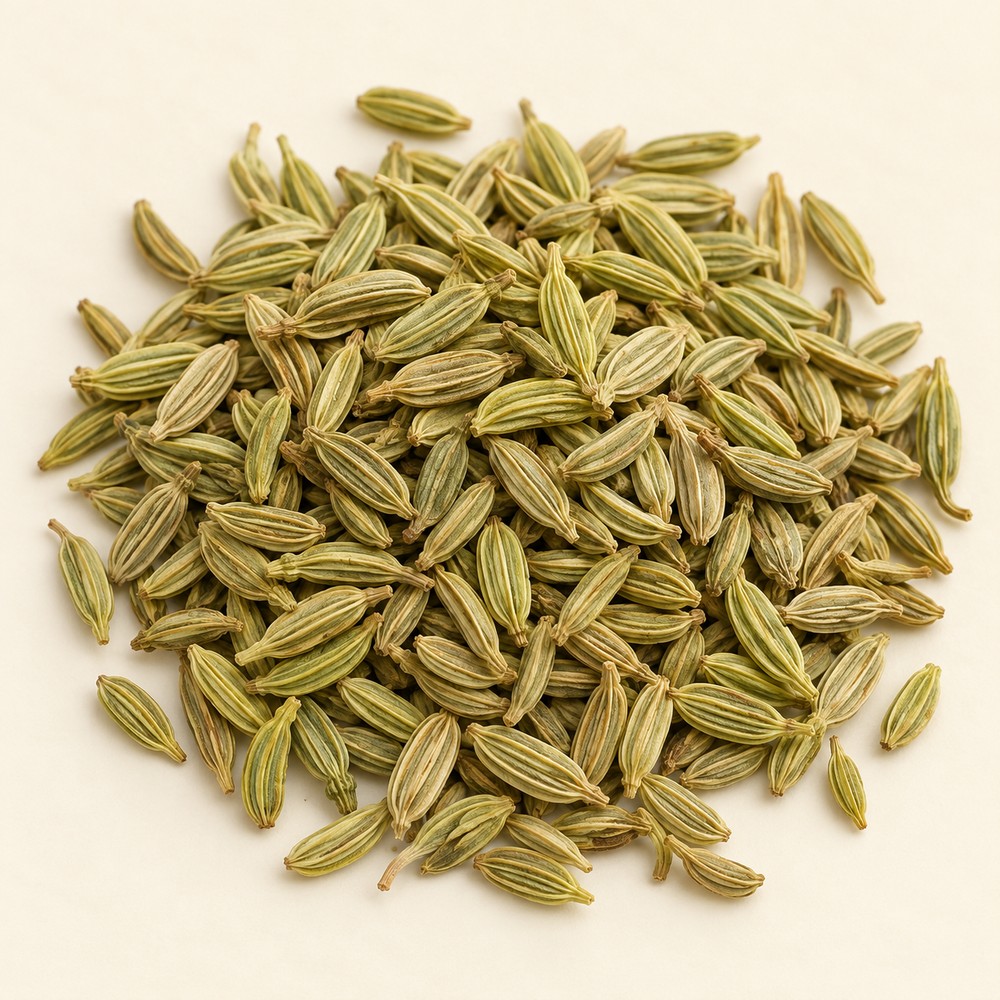
Fennel fruit · Xiao Hui Xiang
Foeniculum vulgare Mill. · Dried fruit
Name and part used
A grooved-stem herb with finely threadlike divided leaves, yellow umbels, and elongated five-ridged fruits.
Traditional context
Xiao Hui Xiang is Foeniculum vulgare fruit, often called fennel seed though botanically a dry schizocarp. Toxic Apiaceae lookalikes exist; use authenticated commercial material only.
Modern evidence
Middle-warming and qi-moving are traditional claims. Essential oil is not proven to treat abdominal pain, endocrine disorders, or infection.
Safety
Concentrated essential oil can cause seizures or irritation; do not ingest it. Pregnancy, celery/carrot allergy, or hormone medicines warrant advice.
Pairing in reference texts
Fennel appears with mugwort or cinnamon in historical formulas for cold pain. Do not self-treat severe abdominal or pelvic pain with a combination.
Growing, care, and harvest timing
HKBU habitat record: Cultivated throughout China. Distributed in Liaoning, Hebei, Shandong, Jiangsu, Zhejiang, Guangdong, Fujian and Taiwan. The medicinal materials are mainly produced in Shanxi, Gansu, Liaoning, Inner Mongolia and etc Harvest and processing as recorded: Cut in autumn when fruits just mature, sundried, knocked the fruits, removed impurities
Source-recorded harvest/processing: Cut in autumn when fruits just mature, sundried, knocked the fruits, removed impurities
The reviewed source does not provide a complete species-specific sowing/growing routine, irrigation/fertilization schedule, or universal plant age. The page therefore does not infer care instructions or years to harvest; consult local cultivation guidance.
Open habitat and season source ↗FROM PLANT / SOURCE HABITAT TO DRIED MATERIAL · REFERENCE WORKFLOW
- Harvest fruit umbels in autumn at maturity from cultivated Foeniculum vulgare; avoid wild Apiaceae collection.
- Dry umbels, thresh fruits, and screen out stems, leaves, and soil hygienically.
- Finish-dry gently to retain aroma and avoid grinding before storage.
- Seal against moisture and aroma loss; document source and date and inspect impurities and allergen cross-contact.
These are post-harvest study notes, not directions to prepare a remedy for self-treatment. Processing reference ↗
How to read formula amounts
The cited sources do not provide a formula with specific amounts for this profile; no ratio is invented. Absence from the incompatibility list does not establish safety.
Habitat, season, and harvest in the HKBU botanical record
HKBU botanical record (translated summary): Flowering and fruiting dates: Flowering: May to June; fruiting: July to September Habitat and distribution: Cultivated throughout China. Distributed in Liaoning, Hebei, Shandong, Jiangsu, Zhejiang, Guangdong, Fujian and Taiwan. The medicinal materials are mainly produced in Shanxi, Gansu, Liaoning, Inner Mongolia and etc Harvest and processing as recorded: Cut in autumn when fruits just mature, sundried, knocked the fruits, removed impurities
Open botanical source ↗