Xi Xin · Xi Xin
Asarum heterotropoides var. mandshuricum (Maxim.) Kitag. · Tested dried root and rhizome
Name and part used
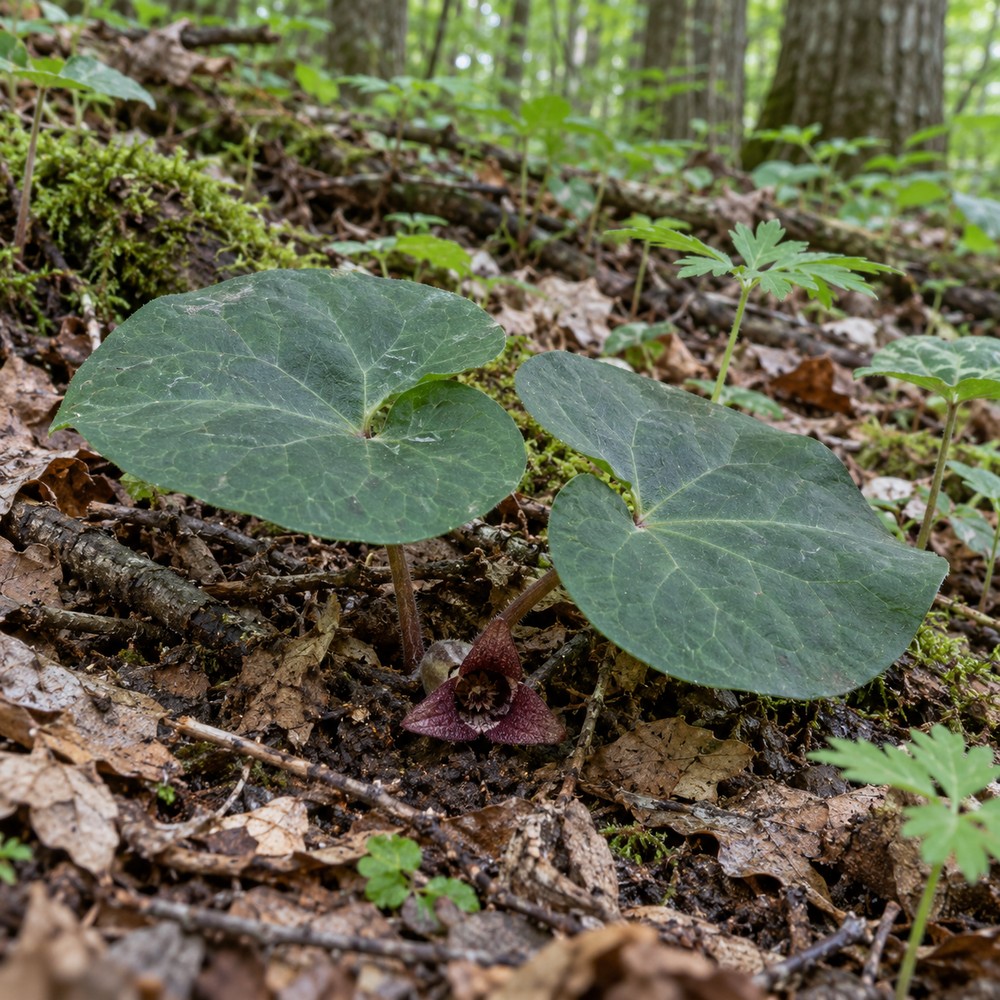
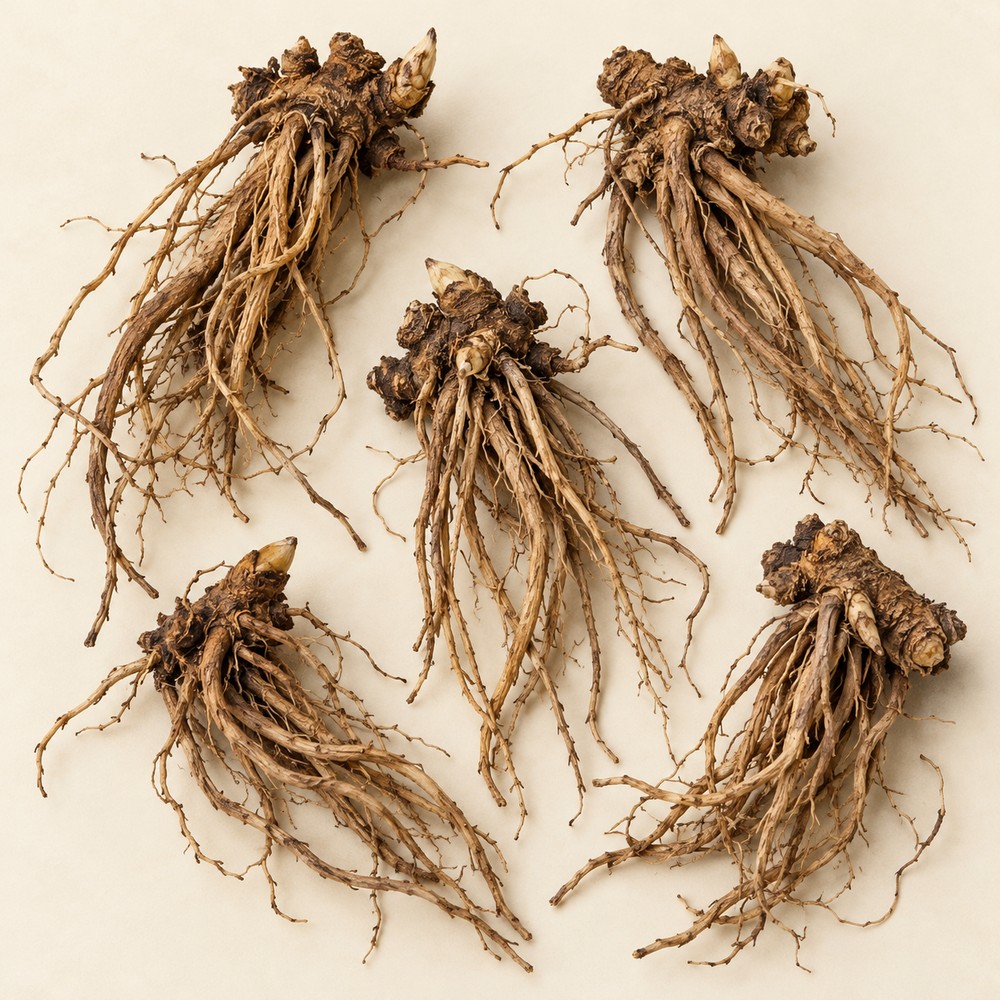
Xi Xin is a low Aristolochiaceae herb with long-petioled heart-shaped basal leaves and a small hidden purplish urn-shaped flower. The medicinal material is controlled dried root/rhizome from accepted species, not the whole plant or leaves. Roots are slender and gray-yellow; the short-node rhizome is gray-brown and aromatic. Related species look alike; AI art cannot verify identity or aristolochic-acid levels.
Traditional context
Traditional theory describes it as acrid and warm in selected pattern-based methods for cold, nasal obstruction, and retained fluids. This is not self-treatment for headache, cough, or congestion.
Modern evidence
Some Asarum contain aristolochic acids associated with kidney toxicity and cancer risk; levels vary by species and plant part. Professional records emphasize testing, compound limits, and exclusion of aerial parts. Evidence must match species and plant part.
Safety
Do not forage, chew roots, decoct the whole plant, or use unidentified products. Kidney disease, pregnancy/breastfeeding, children, or medicines: do not self-use; consult a clinician/pharmacist. Seek poison/medical advice after accidental ingestion or symptoms.
Pairing in reference texts
An HKBU historical formula includes Xi Xin with Qiang Huo and other ingredients; this does not prove individual safety or a home-use ratio. Given intrinsic risks, do not self-combine Xi Xin with any herb or medicine. No specific pair is confirmed; risk relates to the material, species, part, and amount.
Growth and habitat
Flora of China records forests, mountain slopes, valleys, and moist shade; HKBU describes pharmacopoeial roots/rhizomes.
Growing, care, and harvest timing
The profile above includes sourced steps and a documented harvest window. Harvest timing is agronomic information, not a self-use instruction.
Growing and care
- T
- r
- ồ
- n
- g
- n
- ơ
- i
- r
- â
- m
- m
- á
- t
- ,
- đ
- ấ
- t
- m
- ù
- n
- t
- ơ
- i
- h
- ơ
- i
- c
- h
- u
- a
- đ
- ế
- n
- t
- r
- u
- n
- g
- t
- í
- n
- h
- ,
- ẩ
- m
- n
- h
- ư
- n
- g
- t
- h
- o
- á
- t
- n
- ư
- ớ
- c
- .
How long until harvest? A slow-growing forest-floor herb. Botanical sources describe habitat/propagation but not a safe root-harvest age; time in cultivation does not establish chemical safety.
Documented toxic incompatibility
No specific toxic Xi Xin pair is confirmed; this gap is not a recommendation to combine. Intrinsic risks relate to aristolochic acids, species, plant part, and testing.
FROM PLANT / SOURCE HABITAT TO DRIED MATERIAL · REFERENCE WORKFLOW
- Do not harvest for home medicine; observe only verified plants.
- For processing research, use tested root/rhizome from an accepted species, never leaves or the whole plant.
- Pharmacopoeial controls limit aristolochic acids; processing and quantification belong to qualified facilities.
These are post-harvest study notes, not directions to prepare a remedy for self-treatment. Processing reference ↗
How to read formula amounts
The cited sources do not provide a formula with specific amounts for this profile; no ratio is invented. Absence from the incompatibility list does not establish safety.