Xi Yang Shen · American ginseng · Xi Yang Shen
Panax quinquefolius L. · Dried root
Name and part used
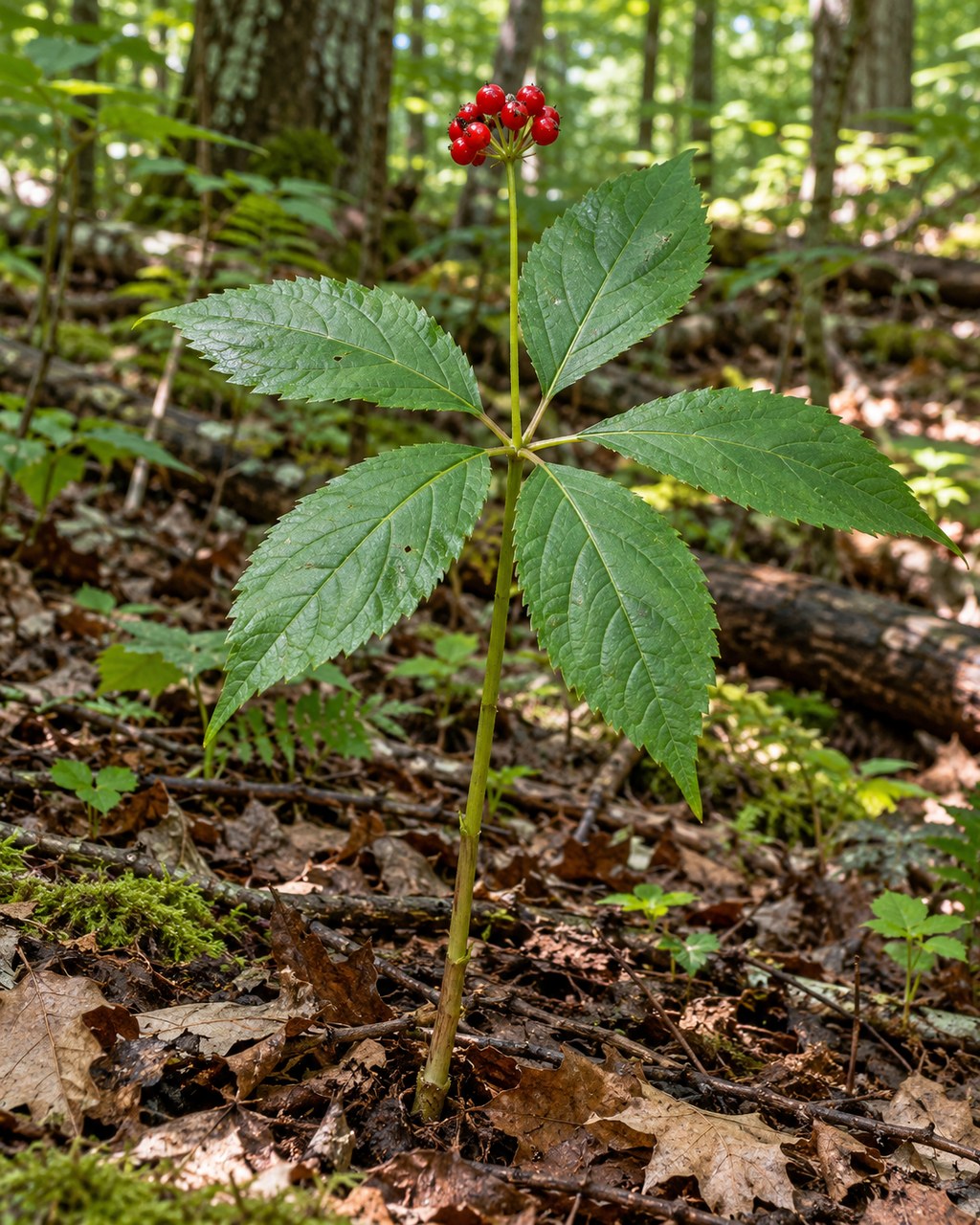
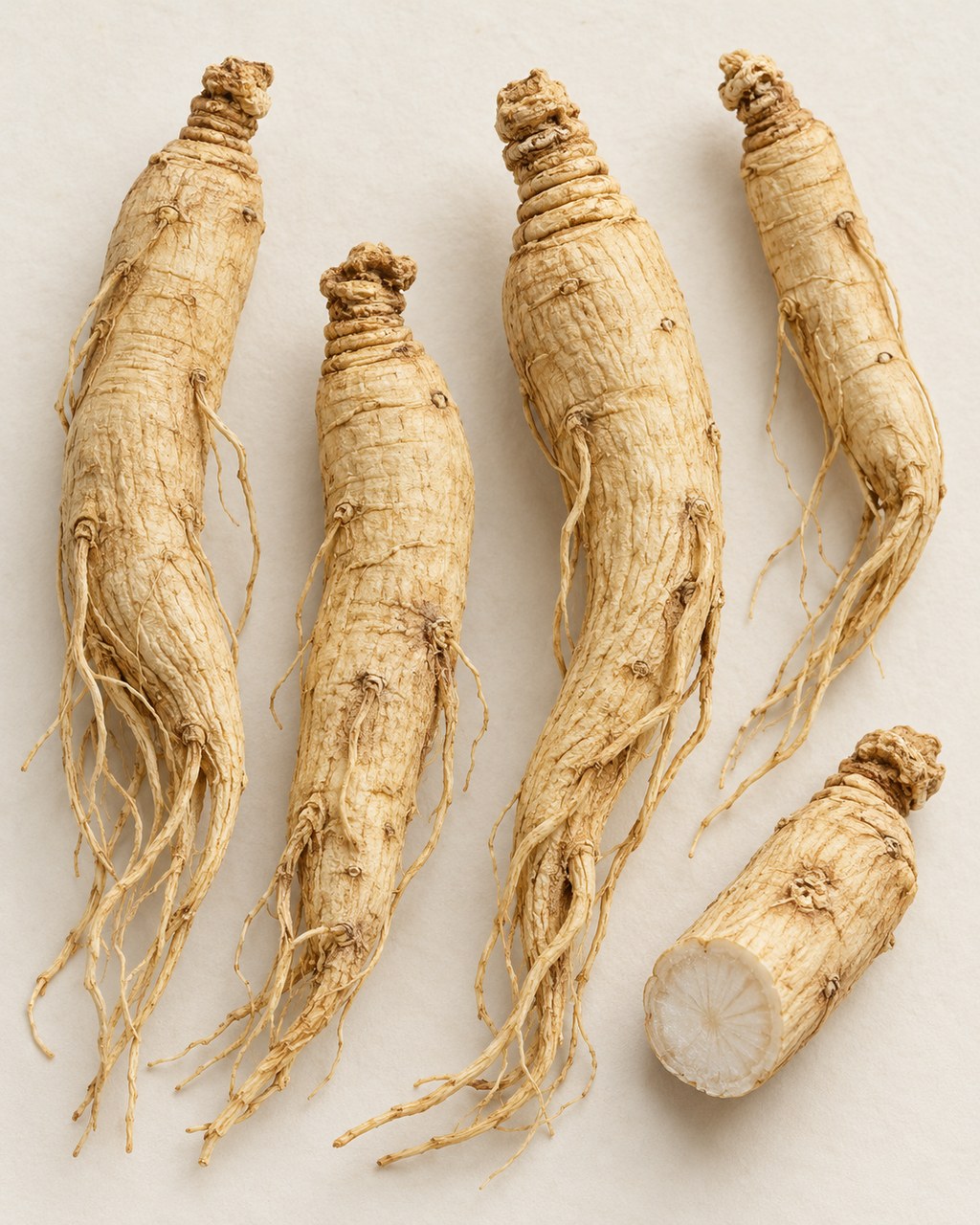
Xi Yang Shen is Panax quinquefolius, a North American perennial distinct from Asian ginseng (Panax ginseng). Stems are about 25–30 cm, with a terminal whorl of 3–4 petioles and usually five serrated leaflets per compound leaf. Small green-white flowers form an umbel; flattened berries ripen red. Dried roots are fusiform/cylindrical, pale yellow, ringed and wrinkled. HKBU lists Canada/USA production and Chinese cultivation; CITES controls trade, so avoid undocumented lots and wild collection.
Traditional context
HKBU records sweet, slightly bitter, slightly cool properties and traditional actions of supplementing qi/yin, clearing heat, and generating fluids. This does not prove treatment of diabetes, cough, fatigue, or immune disease. American and Asian ginseng are distinct species; do not transfer evidence between them.
Modern evidence
HKBU records traditional actions and some pharmacological observations, not clinical proof that American ginseng treats diabetes, respiratory illness, or fatigue. NCCIH evidence for Asian ginseng concerns another species. Supplements vary in species, plant part, contaminants, and dose; assess products individually.
Safety
HKBU notes CITES Appendix II listing; international trade is subject to permits. Do not dig wild plants or buy undocumented material. People with diabetes/on glucose-lowering medicines, anticoagulants, pregnancy, chronic disease, or other medicines should ask a clinician before concentrated products. Do not self-combine or stop prescriptions.
Safety reference ↗Pairing in reference texts
HKBU cites a folk example with Atractylodes and Yun Zhi for poor appetite/fatigue; it is not a standardized formula, clinical trial, or safe ratio. Pairing with glucose-lowering medicines needs professional review; do not reduce medicines or combine products on your own.
Identification and study notes
The live plant has a terminal petiole whorl, usually five serrated leaflets, tiny green-white flowers, and flattened red berries. Dried roots show horizontal rings, longitudinal wrinkles, rootlet scars, and a pale cut face; a crown may retain stem scars. Asian/other Panax species may look similar. Verify Latin name, documents, and testing; never identify/collect from images.
Growth and habitat
Native to eastern North America, it grows beneath cool broadleaf forest canopy in humus-rich, evenly moist but drained soil. HKBU lists Canada/USA production and Chinese cultivation. Hot humid year-round climates are unsuitable without shade/temperature control. Do not collect wild plants; use legal stock due to CITES.
Identification and study notes
The live plant has a terminal petiole whorl, usually five serrated leaflets, tiny green-white flowers, and flattened red berries. Dried roots show horizontal rings, longitudinal wrinkles, rootlet scars, and a pale cut face; a crown may retain stem scars. Asian/other Panax species may look similar. Verify Latin name, documents, and testing; never identify/collect from images. Tây dương sâm là Panax quinquefolius, cần tách khỏi nhân sâm châu Á P. ginseng trên nhãn, ảnh, nghiên cứu và sản phẩm. Vòng lá tận cùng thường có năm lá chét răng cưa và quả đỏ là dấu hiệu quan sát; rễ khô đơn lẻ có thể không lộ loài hay vùng trồng. Rễ cần nhiều mùa; mốc 3–4 năm ở vài hướng dẫn là ví dụ vùng, không đảm bảo trưởng thành/chất lượng chung. Cây hoang và thương mại có quy định bảo tồn, nên hàng không truy xuất không phải lối tắt vô hại. “Bổ khí âm” không chứng minh chữa tiểu đường, ho, mệt hay miễn dịch. Bằng chứng Nhân sâm châu Á không tự áp sang Tây dương sâm. Phối dân gian với Bạch truật ở trang không phải bài lâm sàng chuẩn; thuốc hạ đường huyết/chống đông cần chuyên gia rà. Khi đọc nghiên cứu/bài thuốc, ghi loài Panax, nguồn trồng/hoang, tuổi được tuyên bố, bộ phận và kiểm nghiệm. Thói quen nghiên cứu tốt là viết đầy đủ Panax quinquefolius thay vì rút thành “ginseng”. Nhãn sản phẩm, thử nghiệm và sách cổ có thể nói về Panax khác loài. Tán rừng mát/vòng lá là dấu hiệu nhận biết; tuổi trồng và màu quả không tự xác nhận cấp rễ. Quy định thương mại cũng cần kiểm tra claim nguồn hoang, không xem đó là tín hiệu chất lượng. Ví dụ bài thuốc/tỷ lệ phải gắn đúng văn bản; thuốc đường huyết/chống đông cần chuyên gia rà.
Growing and care
- Use documented cultivated seed/stock labeled Panax quinquefolius and check local permits. Never collect forest plants.
- Make a shaded research bed with loose humus and drainage; mulch with leaf litter and avoid hot/dry or waterlogged soil.
- Maintain moisture, minimize root disturbance, hand-weed, and monitor fungi. Use mesh protection if needed; avoid products with unknown residues.
- Observe leaf whorl/flowers/fruit. HKBU records autumn root harvest but no cultivation age; do not harvest roots for home medicine.
How long until harvest? Roots develop over multiple seasons; HKBU gives autumn harvest but no standard seed-to-root age. Some cultivation guides use 3–4 years depending on region, not a quality or harvest-right guarantee. Container plants are for study; roots may be trade-regulated.
Habitat, season, and harvest in the HKBU botanical record
HKBU describes Panax quinquefolius as a 25–30 cm perennial with palmately compound leaves, umbels, and red berries; roots are excavated in autumn, washed, and sun/low-temperature dried. Native to North America, produced in Canada/USA and cultivated in China; CITES Appendix II controls trade.
Open botanical source ↗FROM PLANT / SOURCE HABITAT TO DRIED MATERIAL · REFERENCE WORKFLOW
- HKBU records autumn excavation; only authorized operators should harvest authenticated cultivated plants; avoid wild collection.
- Rinse soil promptly, keep lots separate, and dry in sun or at low temperature as recorded; do not improvise processing.
- Whole roots are fusiform/cylindrical/conical, pale yellow, with rings, wrinkles, rootlet scars, and a pale slightly powdery cut face. Verify against standards/testing.
- Store dry and sealed and retain provenance/CITES documents. Avoid undocumented wild roots; AI art cannot certify age, species, or quality.
These are post-harvest study notes, not directions to prepare a remedy for self-treatment. Processing reference ↗