Paniculate swallowwort · Xu Chang Qing
Cynanchum paniculatum (Bge.) Kitag. ex Hara · Root and rhizome
Name and part used
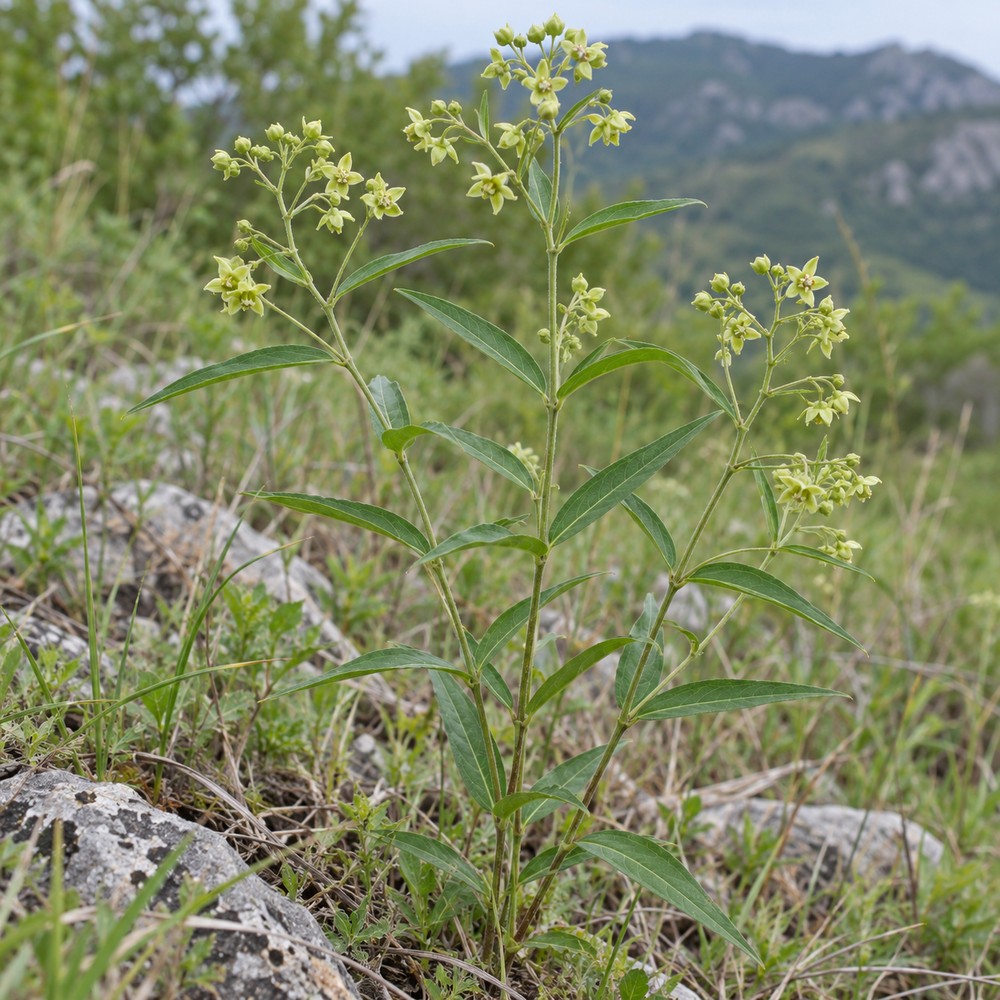
A perennial herb with unbranched upright stems, opposite narrow leaves, yellow-green flowers, and thin aromatic roots.
Traditional context
Wind-dispersing, pain- and itch-relieving are traditional terms; not substitutes for assessment of allergy, abdominal pain, or toothache.
Modern evidence
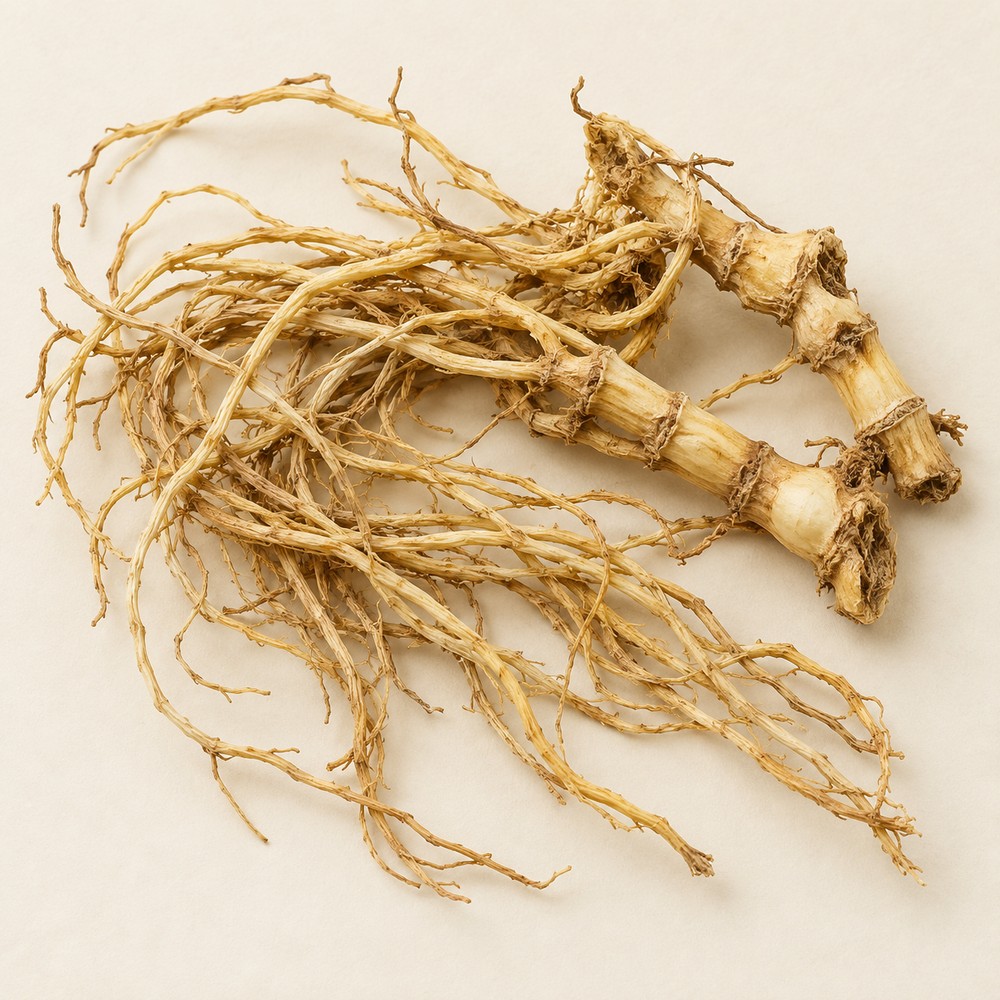
HKBU describes slender pale roots that break easily, with a powdery cut and aroma; strong aroma is a database quality cue.
Safety
May cause drowsiness or irritation; review sedatives, pregnancy, liver disease, and Apocynaceae allergy.
Pairing in reference texts
Xu Chang Qing appears with Fang Feng or Du Huo in some historical pain/itch formulas; this is not self-treatment guidance.
Growth and habitat
Cynanchum paniculatum is a perennial herb of hillsides, woodland margins, grasslands, and roadsides across East Asia. Stems may reach about 1 m, with narrow opposite leaves, pale yellow-green flowers, and aromatic fibrous roots. It suits sunny sites with moderately drained soil; keep it separate from unidentified potentially toxic Apocynaceae species whose roots or stems may be confused.
Botanical / habitat source ↗Growing, care, and harvest timing
The profile above includes sourced steps and a documented harvest window. Harvest timing is agronomic information, not a self-use instruction.
Growing and care
- Start authenticated Cynanchum paniculatum seed in clean trays in spring; spring division is also described in horticultural references.
- Once seedlings are sturdy, transplant the intact root ball to a sunny bed with loose, drained soil; label the species to prevent mixing with volunteer plants.
- Water moderately while roots establish, then let the soil surface dry between watering; avoid prolonged saturation.
- Hand-weed, use light mulch, and remove damaged stems; sanitize pruners because this is an Apocynaceae plant.
- Monitor aphids and fungal disease and quarantine new plants; do not brew or use plants if stock identity and pesticide history are unknown.
- Harvest roots according to the local materia standard; do not dig young plants or prepare extracts at home.
How long until harvest? HKBU’s materia record describes whole-root collection in summer; open horticultural sources do not establish a universal medicinal harvest age. As a perennial, timing depends on stock and growing conditions; harvest only when roots meet local standards rather than assigning a fixed month/year.
Cultivation / season source ↗FROM PLANT / SOURCE HABITAT TO DRIED MATERIAL · REFERENCE WORKFLOW
- Thu cả rễ và thân rễ theo mùa, giũ đất và rửa nhanh.
- Harvest roots and rhizomes seasonally, shake off soil, and wash promptly.
These are post-harvest study notes, not directions to prepare a remedy for self-treatment. Processing reference ↗
How to read formula amounts
The cited sources do not provide a formula with specific amounts for this profile; no ratio is invented. Absence from the incompatibility list does not establish safety.
Habitat, season, and harvest in the HKBU botanical record
HKBU botanical record (translated summary): Flowering and fruiting dates: Fruiting: September to December Habitat and distribution: Growing on slopes or roadsides. Distributed in most parts of China. The medicinal materials are mainly produced in Jiangsu, Hebei, Hunan, Anhui, Guizhou, Guangxi, Northeast China and etc Harvest and processing as recorded: Uproot the whole plant in summer, washed and dried
Open botanical source ↗