Ye Ju Hua · Wild chrysanthemum flower · Ye Ju Hua
Chrysanthemum indicum L. · Dried flower heads
Name and part used
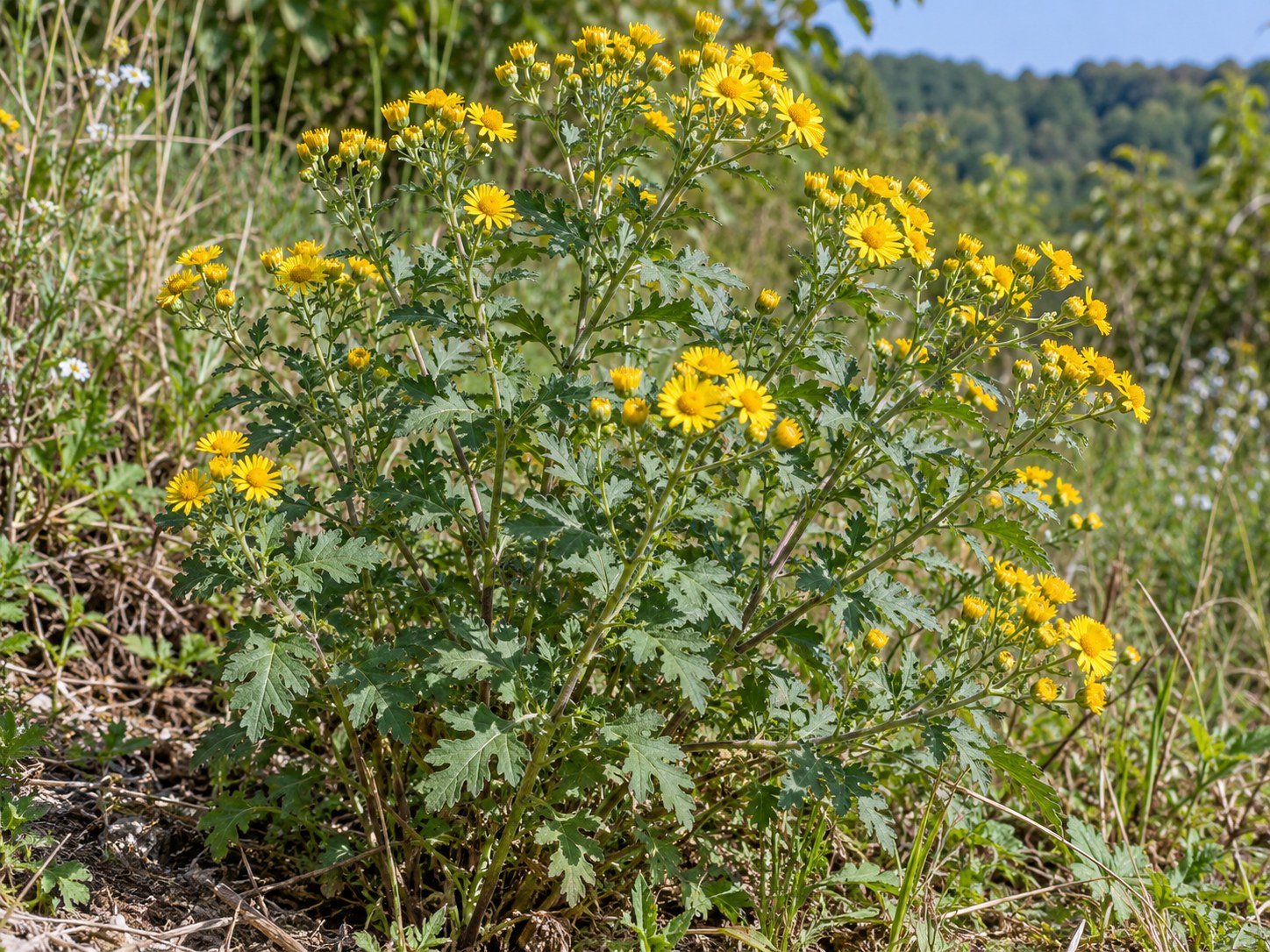
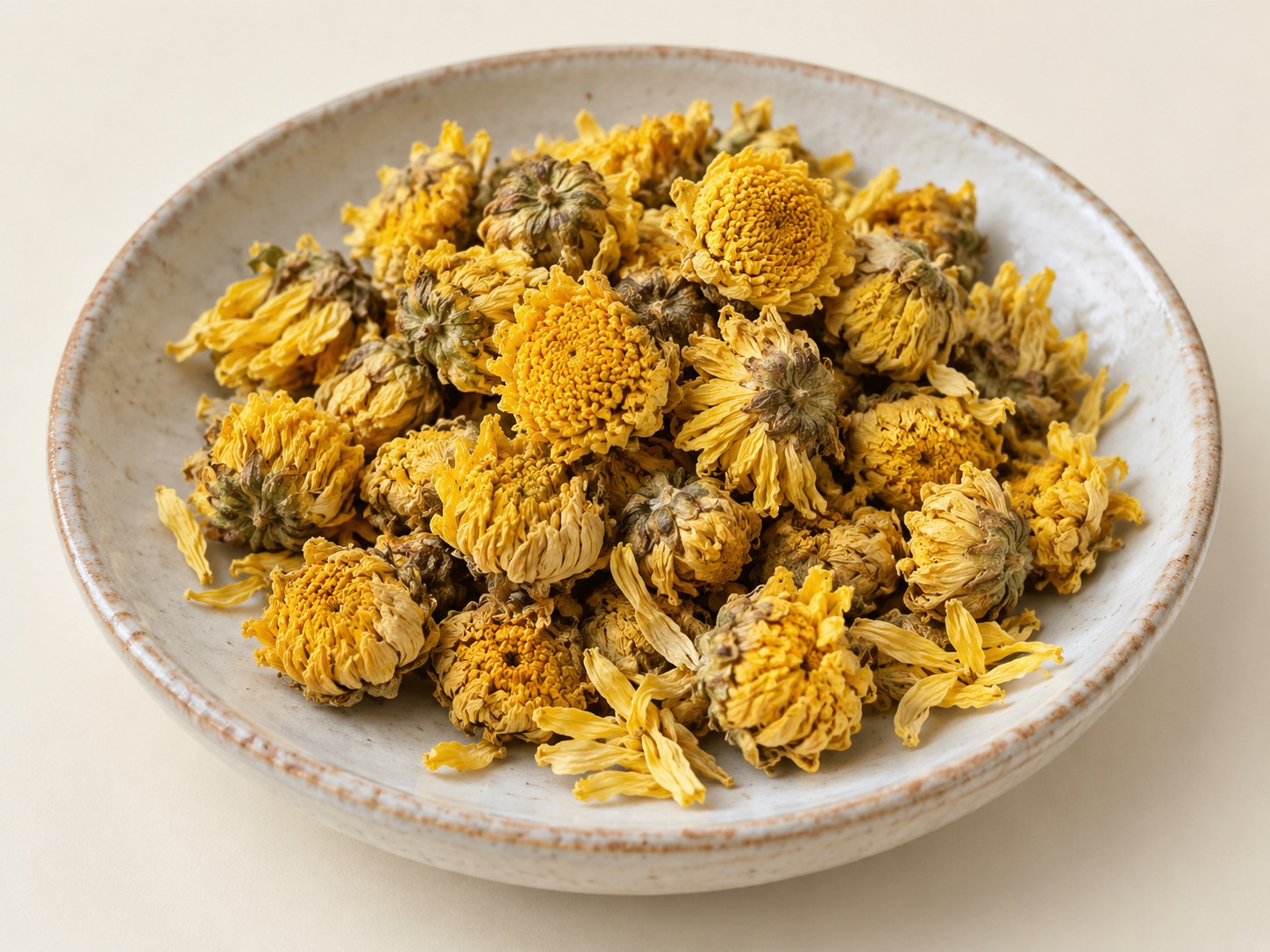
Ye Ju Hua is the dried flower head of Chrysanthemum indicum L., a perennial Asteraceae herb. Plants form branched clumps with alternate, deeply lobed leaves and toothed margins; stems and leaves may be lightly hairy. Numerous small yellow heads form near branch tips; each head has an outer ring of ray florets and central tubular florets. HKBU describes the commercial drug as dried heads, usually about 0.3–1 cm across, yellow-brown, and aromatic. This is distinct from Ju Hua, commonly Chrysanthemum morifolium, and from ornamental chrysanthemums generally. Wild chrysanthemum has variable forms and trade names; plant and dried-flower images support study but cannot authenticate a lot. Moldy, faded, mixed, or untraceable material should be rejected.
Traditional context
HKBU materia-medica records describe Ye Ju Hua as bitter, acrid, and slightly cold, with traditional actions of clearing heat, resolving toxin, and reducing swelling. Historical indication lists do not prove that the flower treats bacterial infection, influenza, abscesses, or eye disease. Persistent fever, a hot painful swelling, or red eye with reduced vision needs medical assessment rather than flower tea.
Modern evidence
HKBU records constituents, traditional properties, and pharmacological experiments, but antimicrobial laboratory findings do not show that flower tea treats infections in people. Preparations vary by species, cleanliness, plant part, drying, and concentration; constituent data cannot be transferred to retail dried flowers. This profile does not support claims of weight loss, flu treatment, or antibiotic replacement. Tea or food use is distinct from medicinal extracts.
Safety
People allergic to chrysanthemums, marigolds, daisies, or other Asteraceae may react by contact or ingestion and should avoid it. Dried flowers can contain pollen, pesticide residues, mold, or other species. Pregnancy, breastfeeding, young children, chronic illness, and concurrent medicines warrant professional advice before concentrated products. Do not put homemade tea in the eye, apply it to wounds, or use it to delay care for worsening fever or swelling.
Safety reference ↗Pairing in reference texts
Ye Ju Hua appears in teas and historical formulas, but co-occurrence does not establish tested interactions or a ratio suitable for everyone. Do not combine it with Ju Hua simply because the names and flowers look similar: they are different materia medica with separate identities and standards. HKBU describes dried heads and historical examples, not individualized prescriptions.
Identification and study notes
The study plant has small yellow heads, lobed leaves, and branching stems; the drug consists of nearly spherical dried flower heads about 0.3–1 cm. Ju Hua is usually larger and a separate materia medica; ornamental chrysanthemums are not automatically medicinal. Memorize the Latin and drug names together, noting both outer ray florets and central tubular florets. Aroma and yellow color cannot establish pesticide safety or food-grade quality. To distinguish two flower drugs, compare head size, leaf form, species, and the drug name on the label rather than color alone. Ye Ju Hua usually has small flower heads, while “Ju Hua” can refer to material from another cultivated species; regional trade names also vary. Images help recall the heads and lobed leaves but do not reveal whether a chrysanthemum was grown ornamentally, as tea, or to medicinal standards. Before harvesting, check permitted pesticide records, distance from roads or industry, and irrigation history. Flower heads must dry evenly; piling them while fresh traps moisture, causes browning, and increases mold risk. For cultivation study, record budding, flowering, harvest dates, and weather to compare seasons. Only authenticated, cleanly processed, traceable lots are appropriate medicinal-study specimens.
Growth and habitat
Kew records the native range from the Himalaya through China and northern Indochina to Korea and Japan; the species is a perennial of temperate biomes. HKBU lists Anhui, Jiangsu, and Jiangxi as principal drug-producing regions. Cultivation should use a sunny, ventilated site with well-drained, uncontaminated soil; wild plants near farms may receive pesticide drift. Do not gather flowers beside roads or industrial sites.
Identification and study notes
The study plant has small yellow heads, lobed leaves, and branching stems; the drug consists of nearly spherical dried flower heads about 0.3–1 cm. Ju Hua is usually larger and a separate materia medica; ornamental chrysanthemums are not automatically medicinal. Memorize the Latin and drug names together, noting both outer ray florets and central tubular florets. Aroma and yellow color cannot establish pesticide safety or food-grade quality. To distinguish two flower drugs, compare head size, leaf form, species, and the drug name on the label rather than color alone. Ye Ju Hua usually has small flower heads, while “Ju Hua” can refer to material from another cultivated species; regional trade names also vary. Images help recall the heads and lobed leaves but do not reveal whether a chrysanthemum was grown ornamentally, as tea, or to medicinal standards. Before harvesting, check permitted pesticide records, distance from roads or industry, and irrigation history. Flower heads must dry evenly; piling them while fresh traps moisture, causes browning, and increases mold risk. For cultivation study, record budding, flowering, harvest dates, and weather to compare seasons. Only authenticated, cleanly processed, traceable lots are appropriate medicinal-study specimens.
Growing and care
- Obtain correctly identified Chrysanthemum indicum stock from a traceable nursery; use division or healthy cuttings rather than an unidentified ornamental chrysanthemum.
- Choose a sunny site with loose, well-drained soil amended with mature organic matter; keep beds clean and ventilated to limit foliar disease.
- Water at the root when the surface begins to dry; remove diseased stems, weed, monitor pests, and use only legally labelled controls when needed.
- Record stock source, planting date, care, and treatments; keep study/medicinal plants separate from ornamental cultivars.
How long until harvest? A medicinal-chrysanthemum cultivation review describes seasonal care and harvest at the appropriate flowering stage; HKBU gives no fixed number of days from planting for this wild species. Observe a local growth cycle, confirm identity, and harvest only healthy heads from plants managed under documented pesticide rules.
Habitat, season, and harvest in the HKBU botanical record
HKBU identifies Ye Ju Hua as dried Chrysanthemum indicum flower heads, nearly spherical, yellow-brown, and aromatic, with principal production in Anhui, Jiangsu, and Jiangxi. Kew accepts the species name and records a broad Asian temperate native range. Production geography does not mean every wild look-alike is the same species or safe to collect.
Open botanical source ↗FROM PLANT / SOURCE HABITAT TO DRIED MATERIAL · REFERENCE WORKFLOW
- Confirm Chrysanthemum indicum and document growing site and pesticide history; do not mix species or collect from contaminated areas.
- Pick flower heads at the lot’s specified flowering stage; remove leaves, insects, diseased flowers, and debris immediately.
- Spread in a single layer on clean ventilated trays and dry to the facility standard; protect from rain, dust, and bare ground.
- Cool, then package dry and label Latin name, harvest date, growing region, and process; check color, odor, moisture, and mold during storage.
These are post-harvest study notes, not directions to prepare a remedy for self-treatment. Processing reference ↗