Coix seed · Yi Yi Ren
Coix lacryma-jobi L. var. ma-yuen (Roman.) Stapf · Dehulled seed kernel
Name and part used
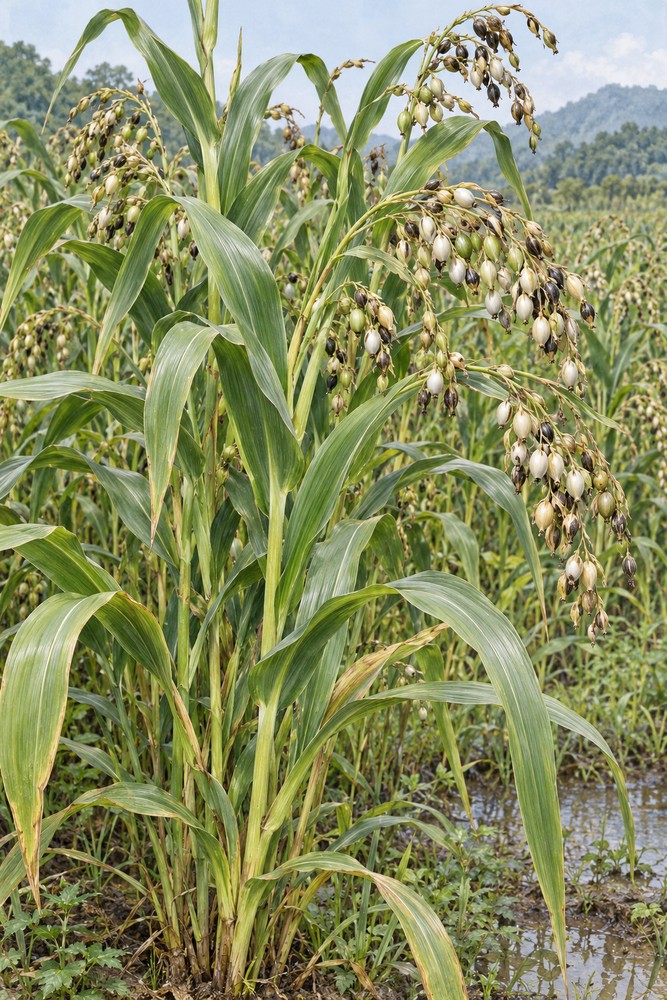
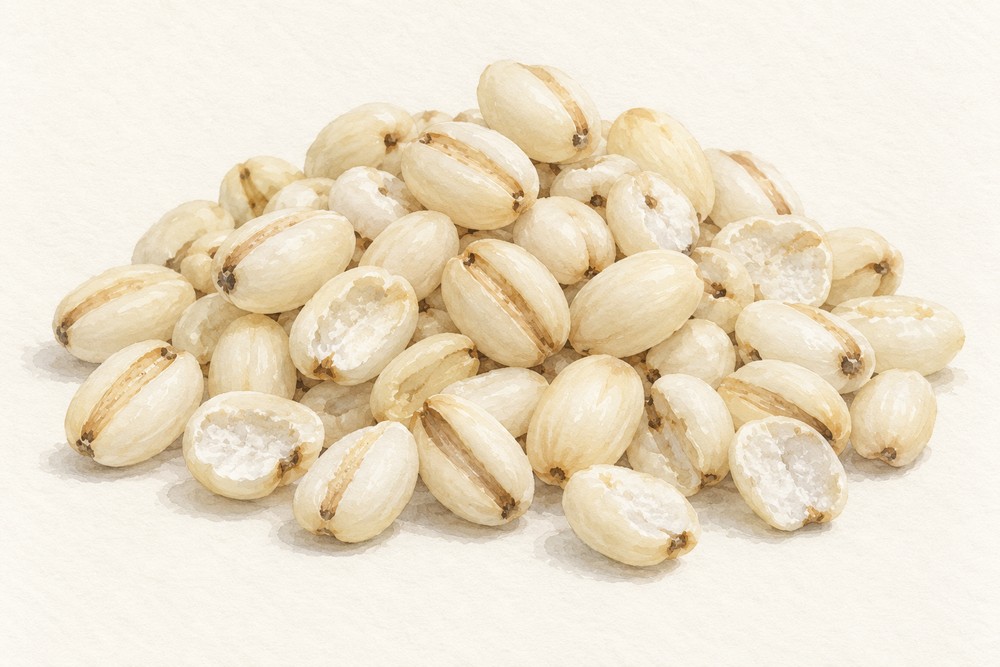
A tall clumping grass with broad leaves and hard teardrop-like husks; the used kernel is small and ivory.
Traditional context
Yi Yi Ren is the kernel of Coix lacryma-jobi var. ma-yuen. HKBU describes the grass in fertile moist soils and harvest at maturity. Decorative intact husks are not the same as the medicinal kernel.
Modern evidence
Spleen-strengthening and dampness-draining are traditional concepts; Coix is also food. Ingredient studies do not prove weight loss, cancer, or inflammation treatment.
Safety
Grain allergy is possible. During pregnancy or medical treatment, ask a clinician before concentrated medicinal use; do not replace meals with weight-loss products.
Pairing in reference texts
Yi Yi Ren appears with Poria, Atractylodes, or adzuki bean in historical references. Traditional use does not guarantee compatibility or suitability for every diet.
Growing, care, and harvest timing
HKBU habitat record: Growing on fertile and humid soil. Distributed in the southern and northern parts of China. The medicinal materials are mainly produced in Zhejiang Harvest and processing as recorded: Harvested the entire plant when fruits become mature in autumn, sundried, threshed down fruits, removed the shell and the yellowish-brown coat, removed foreign matters, collected kernel, and sun-dried
Source-recorded harvest/processing: Harvested the entire plant when fruits become mature in autumn, sundried, threshed down fruits, removed the shell and the yellowish-brown coat, removed foreign matters, collected kernel, and sun-dried
The reviewed source does not provide a complete species-specific sowing/growing routine, irrigation/fertilization schedule, or universal plant age. The page therefore does not infer care instructions or years to harvest; consult local cultivation guidance.
Open habitat and season source ↗FROM PLANT / SOURCE HABITAT TO DRIED MATERIAL · REFERENCE WORKFLOW
- Harvest in autumn when fruits mature; verify the Coix cultivar and clean cultivated lot.
- Dry the whole plant, thresh fruits, and remove the hard husk and brown seed coat through controlled milling.
- Clean-screen intact kernels and redry to moisture specification; check insects, dust, and mold.
- Grade for food or medicinal-material standards, record cultivar and harvest date, and store sealed, dry, and pest-free.
These are post-harvest study notes, not directions to prepare a remedy for self-treatment. Processing reference ↗
How to read formula amounts
The cited sources do not provide a formula with specific amounts for this profile; no ratio is invented. Absence from the incompatibility list does not establish safety.
Habitat, season, and harvest in the HKBU botanical record
HKBU botanical record (translated summary): Flowering and fruiting dates: Flowering: July to August, fruiting: September to October Habitat and distribution: Growing on fertile and humid soil. Distributed in the southern and northern parts of China. The medicinal materials are mainly produced in Zhejiang Harvest and processing as recorded: Harvested the entire plant when fruits become mature in autumn, sundried, threshed down fruits, removed the shell and the yellowish-brown coat, removed foreign matters, collected kernel, and sun-dried
Open botanical source ↗