Heartleaf houttuynia · Yu Xing Cao
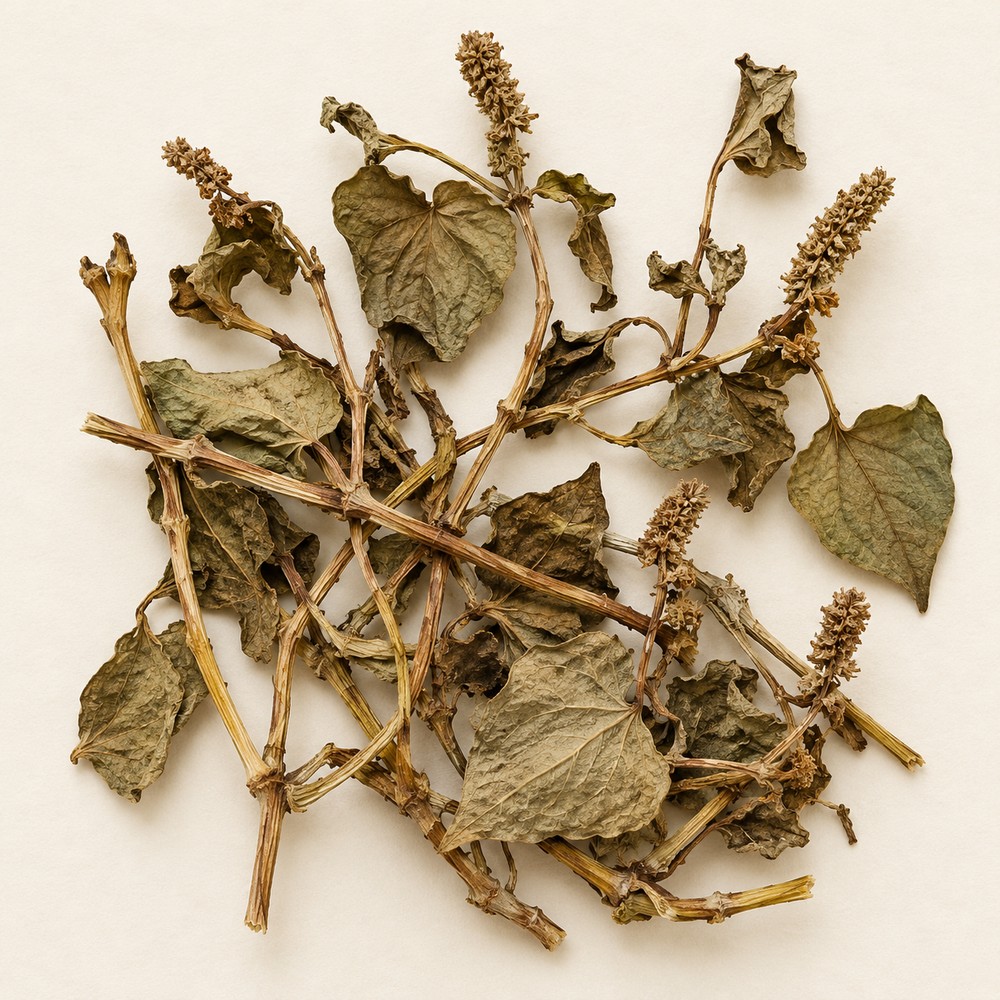
Houttuynia cordata Thunb. · Fresh whole plant or dried aerial parts
Name and part used
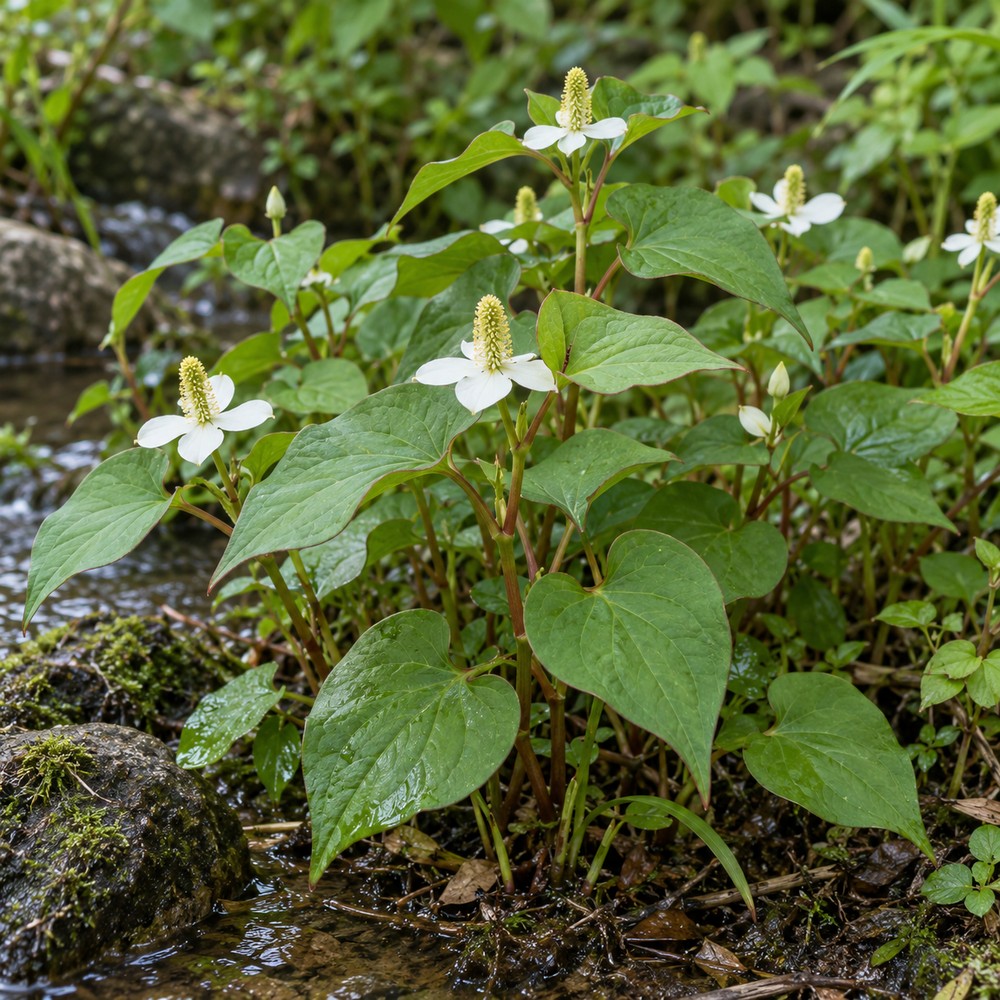
A moisture-loving plant roots at stem nodes, with alternate heart-shaped leaves and tiny flowers with white bracts; crushed leaves have a fishy odor.
Traditional context
Heat-clearing and diuretic uses are traditional; do not self-treat pneumonia, abscess, diarrhea, or infection.
Modern evidence
HKBU records fresh whole plant or dried aerial parts; heart-shaped leaves, ridged stems, and fishy odor are identifying features.
Safety
Allergy or stomach upset is possible; prolonged use or concentrated extracts differ from food. Review diuretics, kidney disease, and pregnancy.
Pairing in reference texts
Yu Xing Cao appears with Jin Yin Hua or Pu Gong Ying in historical heat-clearing formulas; it does not replace antibiotics or emergency care.
Growing, care, and harvest timing
HKBU habitat record: Growing on shady mountain slopes, village-side paddy ridge, riverbanks, wet lands and in tussock. Distributed in provinces in southern parts of China as well as Northwest and North China and Tibet. The medicinal materials are mainly produced in the south of the Yangtze River basin Harvest and processing as recorded: Harvested in summer when cauline leaves and flowers flourishing, removed foreign matters, and sun-dried
Source-recorded harvest/processing: Harvested in summer when cauline leaves and flowers flourishing, removed foreign matters, and sun-dried
The reviewed source does not provide a complete species-specific sowing/growing routine, irrigation/fertilization schedule, or universal plant age. The page therefore does not infer care instructions or years to harvest; consult local cultivation guidance.
Open habitat and season source ↗FROM PLANT / SOURCE HABITAT TO DRIED MATERIAL · REFERENCE WORKFLOW
- Thu cây tươi hoặc phần trên mặt đất khi có lá; rũ đất, rửa nhanh và loại cỏ lẫn.
- Harvest fresh whole plants or leafy aerial parts; shake off soil, rinse promptly, and remove weeds.
These are post-harvest study notes, not directions to prepare a remedy for self-treatment. Processing reference ↗
How to read formula amounts
The cited sources do not provide a formula with specific amounts for this profile; no ratio is invented. Absence from the incompatibility list does not establish safety.
Habitat, season, and harvest in the HKBU botanical record
HKBU botanical record (translated summary): Flowering and fruiting dates: Flowering: May to June, fruiting: October to November Habitat and distribution: Growing on shady mountain slopes, village-side paddy ridge, riverbanks, wet lands and in tussock. Distributed in provinces in southern parts of China as well as Northwest and North China and Tibet. The medicinal materials are mainly produced in the south of the Yangtze River basin Harvest and processing as recorded: Harvested in summer when cauline leaves and flowers flourishing, removed foreign matters, and sun-dried
Open botanical source ↗