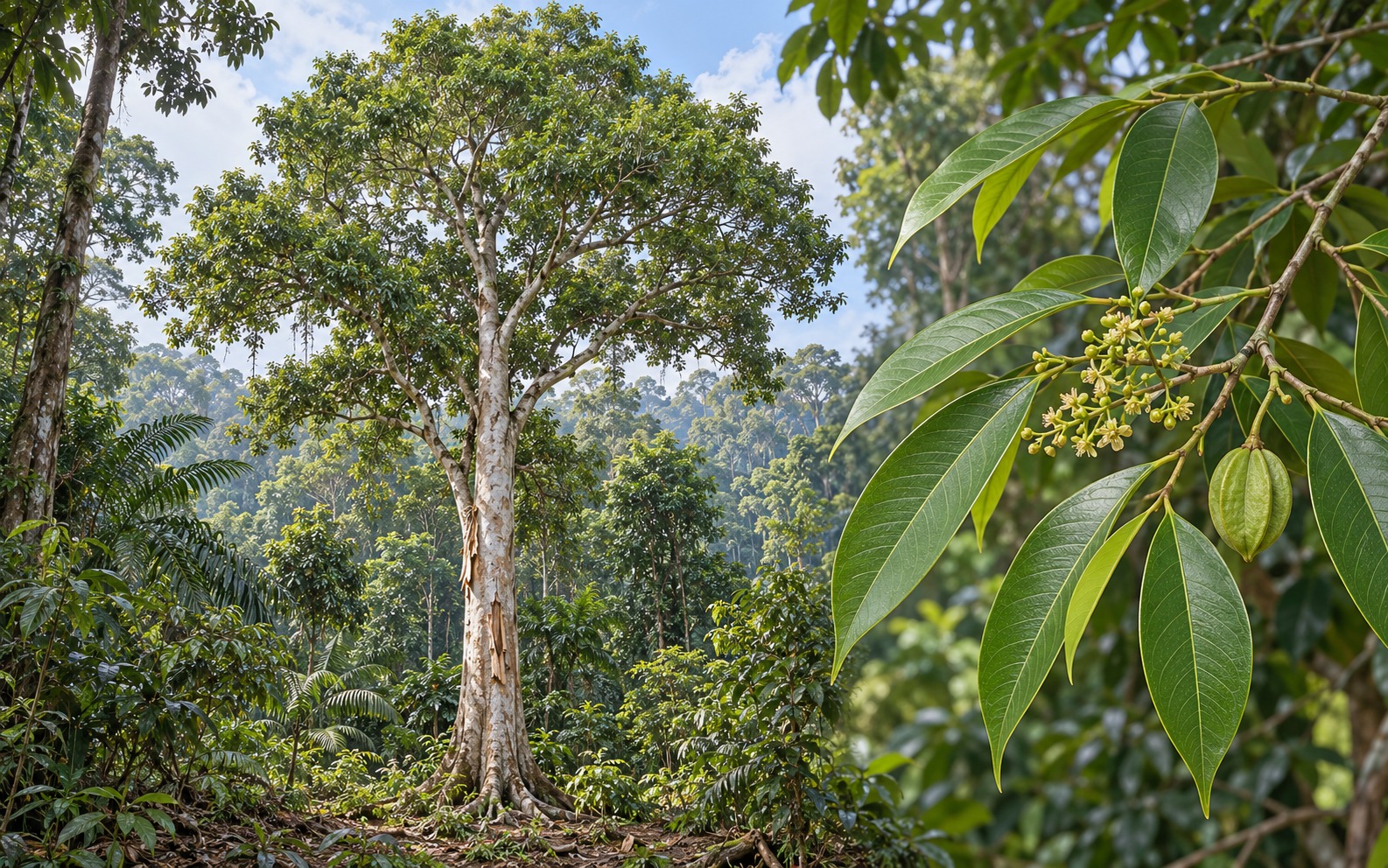
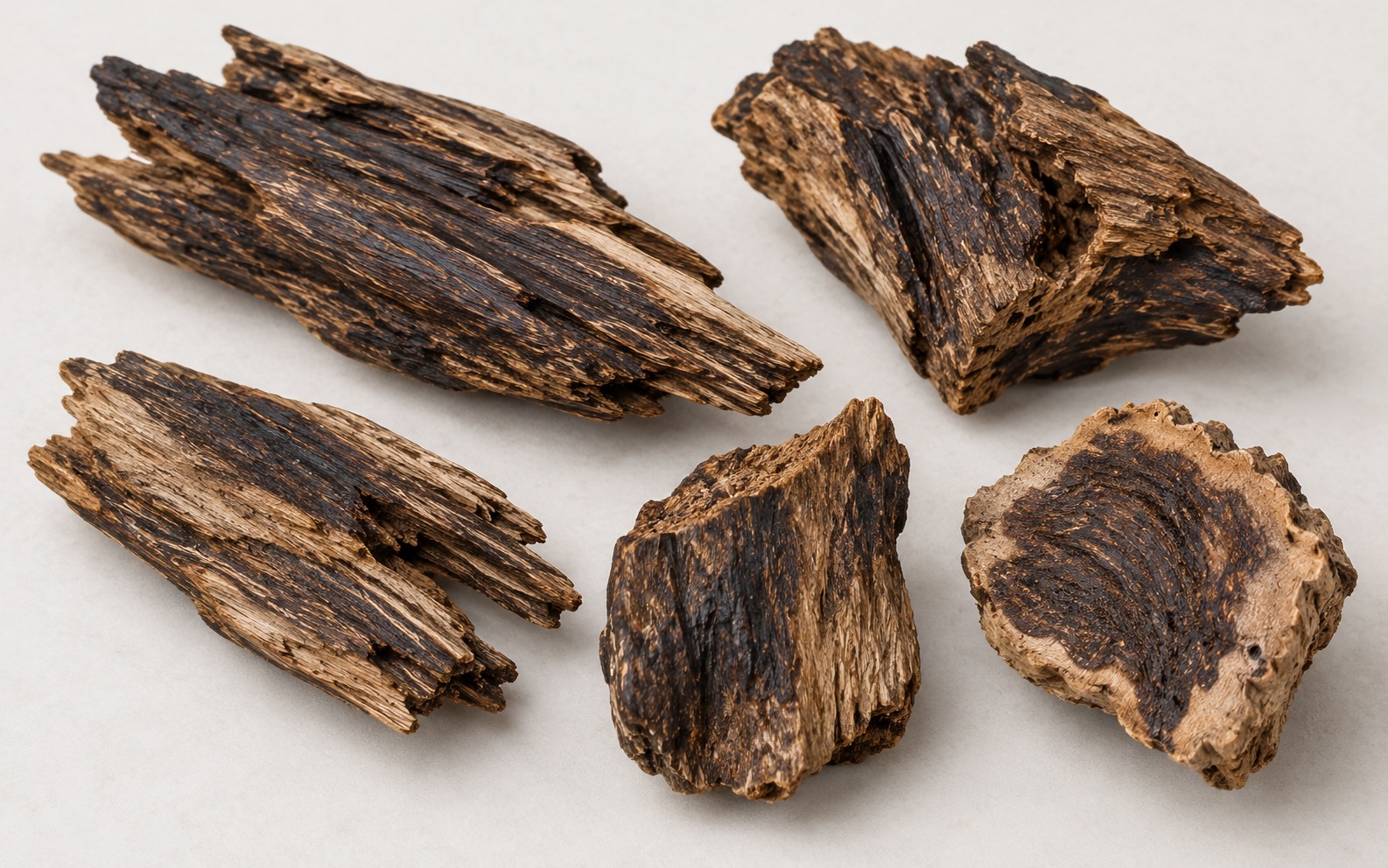
Aquilaria malaccensis Lam. · Resin-bearing heartwood; traded material commonly called agarwood
Materia medica properties in reference
Living plant discussed in this paragraph
Properties as recorded in the source: Materia medica taste, temperature, meridian entry, and functions have not been verified here for the exact scope of A. malaccensis and resin-bearing heartwood. Some traditional sources assign properties to the drug name Chen Xiang, but that materia medica identity may draw on multiple Aquilaria species and processing standards. A traditional drug name should not be equated with a botanically identified species unless the source makes that link explicit. This profile therefore leaves the property field unconfirmed rather than assigning warm nature, pungent/sweet taste, or meridian entry from an unverified secondary source.
No sufficiently specific formula record is linked to this profile. The page therefore does not invent a beneficial pairing or a ratio.
CITES international-trade evidence
Materia medica form discussed in this paragraph
The 2026.1 CITES Trade Database contains 10 comparative-tabulation rows for Aquilaria malaccensis during 2016, 2017, 2019, 2021, 2022. The query selected reported purpose T (Commercial) and trade term MED (medicine); appendices appearing in these rows: II. Reported importer codes include HK, US; exporter codes include CN, JP, MY. These are comparative-tabulation rows, not shipment counts or summed volume. This record does not establish clinical efficacy, the legality of an individual transaction, or safety of use.
Living plant / habitatPlanting stock and identity: buy seed or nursery plants labelled with the scientific name, provenance, mother-plant species, and lawful documentation. Do not collect wild seedlings; Aquilaria species can be confused and may be subject to conservation and trade controls.
Living plant / habitatChoose a warm tropical site with adequate light. NParks records full-sun preference, moderate water, and a moderate-to-slow growth rate. Favor freely drained ground; do not convert a Singapore garden record into a fixed irrigation schedule for another region.
Illustrated plant and growing settingSow fresh seed in clean, airy medium and maintain moderate moisture. NParks confirms seed propagation but does not give a universal germination calendar or temperature. Record sowing date, seed source, and the germination rate of the actual lot.
Illustrated plant and growing settingProtect young plants from damaging wind, waterlogging, and weed competition; adjust shade to local sun exposure. Water when the medium begins to dry, avoiding both rigid calendar watering and standing water. Monitor pests and diseases and use traceable cultivation practices.
Living plant / habitatTransplant when stock is vigorous enough under local nursery advice; keep the base clear, use clean organic mulch, and maintain drainage. The NParks record does not establish universal spacing or fertilizer quantities; follow regional forestry or agricultural guidance.
Living plant / habitatRecord survival, growth, canopy, pests, and any agarwood induction methods. Wounding or inoculating trees to induce resin is a technical intervention with biological and legal risks; do not drill, inject, or apply chemicals using unvalidated instructions.
Living plant / habitatThere is no universal number of years after which a tree can be assumed to contain medicinal agarwood. A tree may grow without accumulating sufficient aromatic resin; time and quality depend on species, age, injury, technique, and lot assessment. Harvest only after qualified quality assessment and legal authorization.
From plant to dried material · source-recorded workflow
Plant before harvestConfirm identity and lawful provenance before purchase or harvest; retain lot code, growing/collection area, permits, and authorized plant part. CITES lists Aquilaria spp. in Appendix II; applicable annotations and rules depend on product, exporting/importing country, and date.
Plant before harvestAfter harvest, separate fragrant resin-bearing heartwood from unresinated wood and mixed material. Dark color or scent may aid screening but cannot verify species, grade, or legal origin on its own.
Illustrated post-harvest workflowRemove soil, loose bark, and foreign matter under facility procedures; cut or grade material into pieces/chips under the buyer’s standard. Oil, powder, incense, and wood chips are different product forms and their weights or uses are not interchangeable.
Illustration of the processing step describedDry and store under clean conditions that limit moisture, mold, and odor contamination. Record product form, weight, processing date, treatment method, and traceability code; use qualified quality-control services.
Plant before harvestThis is an educational outline of post-harvest material handling, not a home medicine-preparation or essential-oil distillation guide. Do not burn or ingest unidentified or untested material.
Illustration of the processing step described
This record supports study and processing traceability; it is not a home preparation or self-use guide.