Hyacinth bean · Bai Bian Dou
Lablab purpureus (L.) Sweet · Mature seed
Name and part used
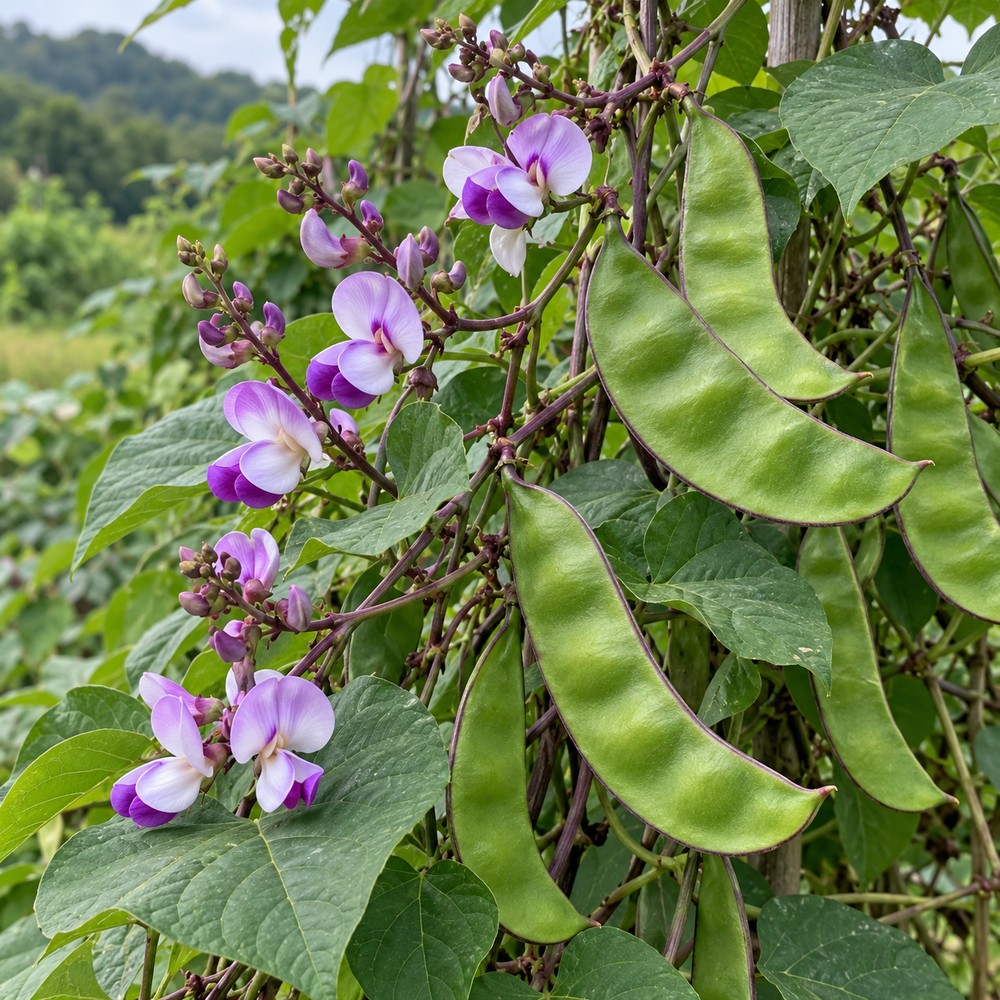
A leguminous climber with trifoliate leaves, white-violet flowers, and flat sickle-shaped pods containing a few seeds.
Traditional context
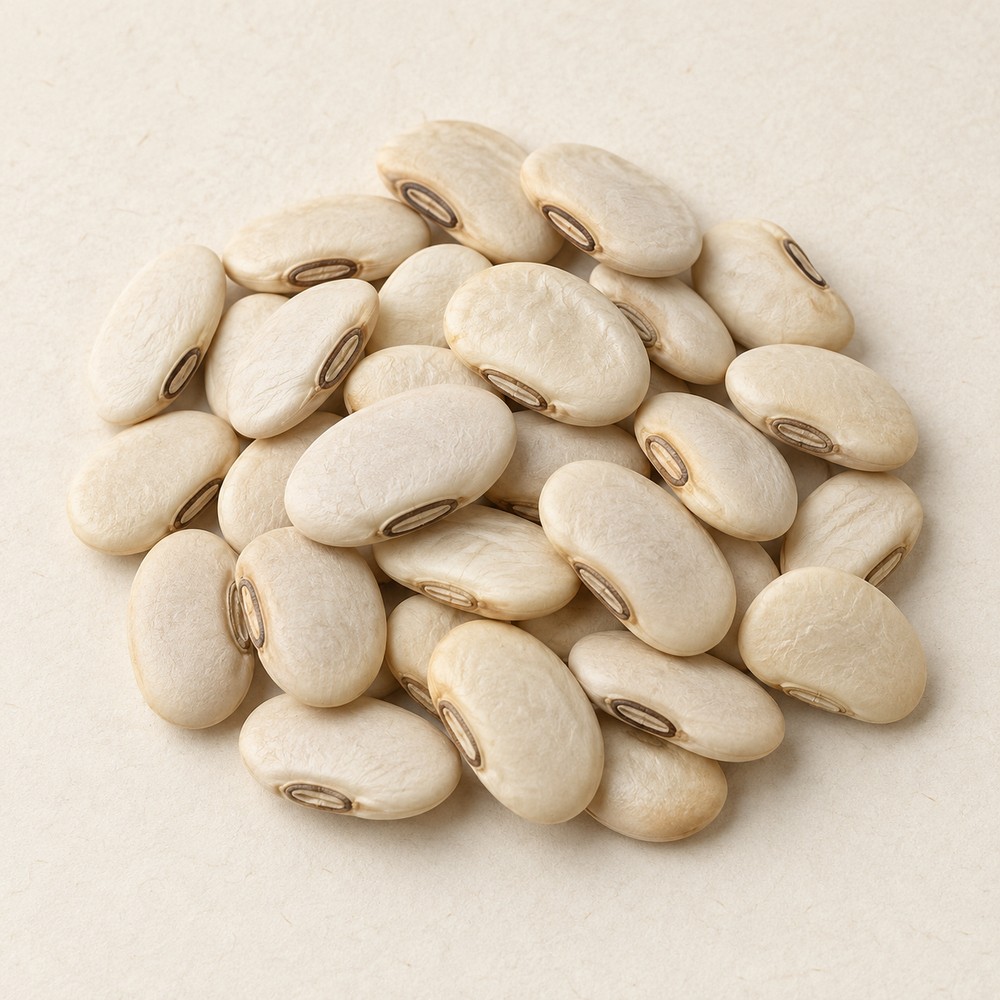
Bai Bian Dou is mature Lablab purpureus seed; HKBU records autumn-winter harvest of mature pods. Seed coats can be white, black, or reddish-brown by cultivar, so color alone cannot authenticate it.
Modern evidence
Spleen-tonifying and dampness-transforming are traditional descriptions; the bean is also food. Nutritional data do not prove treatment of diarrhea, edema, or heat illness.
Safety
Raw or inadequately cooked beans may cause gastrointestinal upset; legume allergy can be severe. Food preparation should follow food-safety cooking guidance.
Pairing in reference texts
Bai Bian Dou appears with Huo Xiang or Atractylodes in traditional spleen-supporting formulas. Historical use does not replace hydration and medical assessment for diarrhea.
Growing, care, and harvest timing
HKBU habitat record: Cultivated throughout China. Originating from India. Distributed in Jiangxi, Fujian, Liaoning, Hebei, Henan, Shandong, Jiangxi, Jiangsu, Guizhou, Sichuan, Anhui, Zhejiang, Hubei, Hunan, Guangdong, Guangxi, Shaanxi, Yunnan, Taiwan and etc. The medicinal materials are mainly produced in Hunan, Anhui, Henan and etc Harvest and processing as recorded: Harvested mature fruits in autumn and winter, sundried; taken out seeds, then sundried
Source-recorded harvest/processing: Harvested mature fruits in autumn and winter, sundried; taken out seeds, then sundried
The reviewed source does not provide a complete species-specific sowing/growing routine, irrigation/fertilization schedule, or universal plant age. The page therefore does not infer care instructions or years to harvest; consult local cultivation guidance.
Open habitat and season source ↗FROM PLANT / SOURCE HABITAT TO DRIED MATERIAL · REFERENCE WORKFLOW
- Harvest mature pods in autumn or winter from cultivated Lablab purpureus; reject moldy or immature pods.
- Dry pods, thresh seeds, remove pod walls and foreign matter, and verify cultivar and origin.
- Dry kernels to safe moisture without scorching or cracking; maintain lot identity.
- Seal and label harvest season and origin, inspect insects and mold, and cook thoroughly when used as food.
These are post-harvest study notes, not directions to prepare a remedy for self-treatment. Processing reference ↗
How to read formula amounts
The cited sources do not provide a formula with specific amounts for this profile; no ratio is invented. Absence from the incompatibility list does not establish safety.
Habitat, season, and harvest in the HKBU botanical record
HKBU botanical record (translated summary): Flowering and fruiting dates: Flowering: June to August, fruiting: September Habitat and distribution: Cultivated throughout China. Originating from India. Distributed in Jiangxi, Fujian, Liaoning, Hebei, Henan, Shandong, Jiangxi, Jiangsu, Guizhou, Sichuan, Anhui, Zhejiang, Hubei, Hunan, Guangdong, Guangxi, Shaanxi, Yunnan, Taiwan and etc. The medicinal materials are mainly produced in Hunan, Anhui, Henan and etc Harvest and processing as recorded: Harvested mature fruits in autumn and winter, sundried; taken out seeds, then sundried
Open botanical source ↗