Lily bulb · Bai He
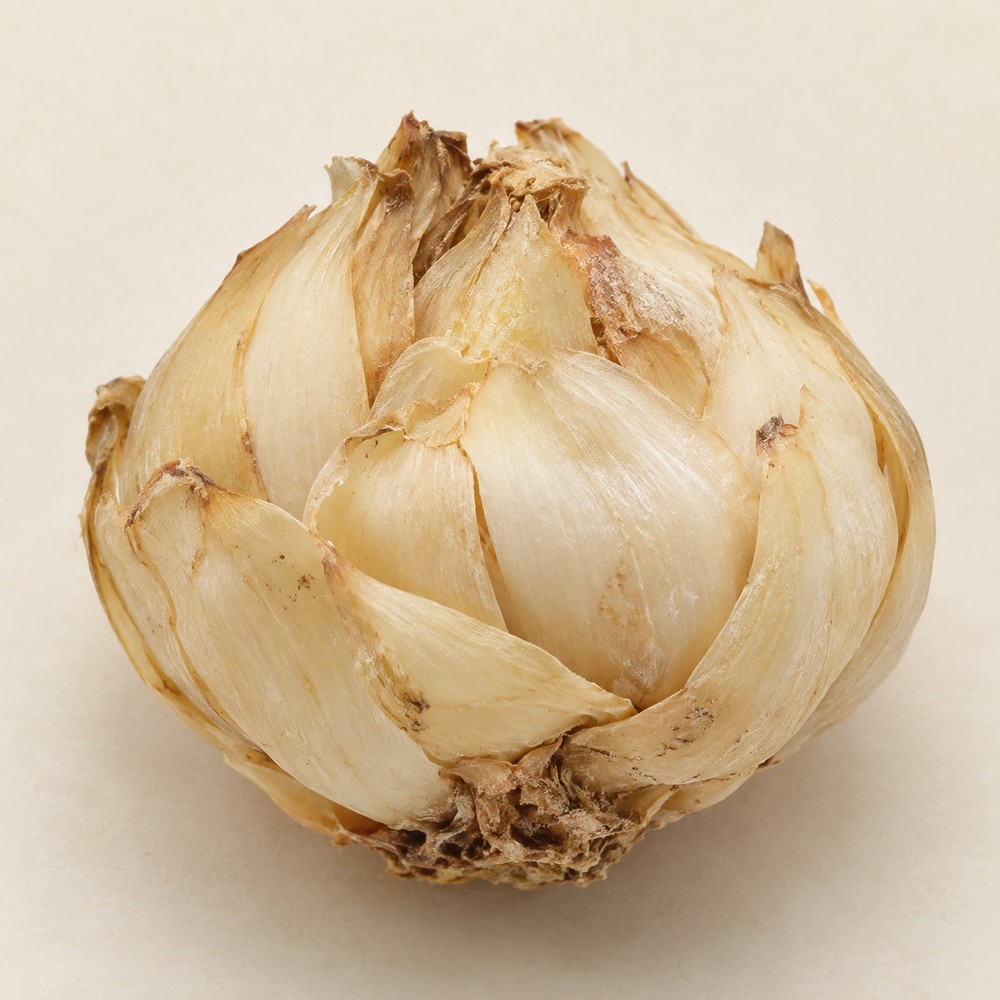
Lilium brownii F. E. Brown ex Miellez var. viridulum Baker · Bulb scales
Name and part used
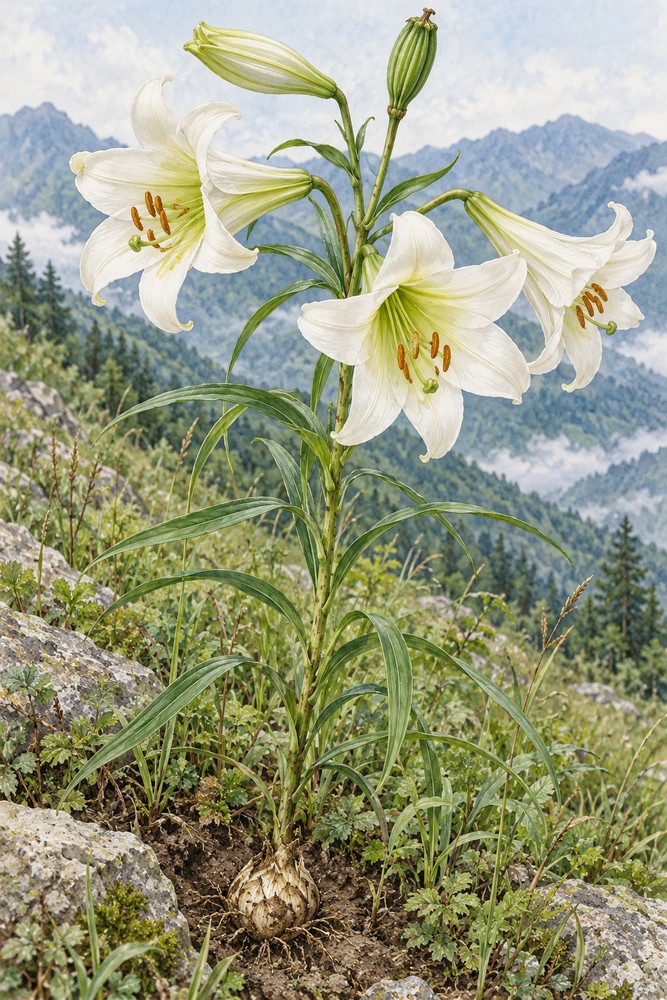
A tall herb with scattered stem leaves and large white trumpet flowers; the bulb has numerous white scales.
Traditional context
Medicinal Bai He uses bulb scales of Lilium brownii var. viridulum, with fragrant white flowers whose tepals do not curl strongly. It is not interchangeable with every ornamental lily.
Modern evidence
Yin-nourishing, lung-moistening, and calming are traditional claims. They do not show that eating bulbs or extracts treats cough, anxiety, or insomnia.
Safety
Species and intended form matter; some lilies are toxic to cats. Allergy or digestive discomfort may occur.
Pairing in reference texts
Bai He appears in Bai He Zhi Mu Tang and other historical formulas; this is textual context, not a therapeutic eating or dosing instruction.
Growing, care, and harvest timing
HKBU habitat record: Growing in fertile forest-margins or tussock. Distributed in all parts of China. Cultivated in most parts of China. The medicinal materials are mainly produced in Heilongjiang, Jilin, Liaoning, Hebei, Henan, Shandong, Shanxi, Shaanxi, Gansu, Qinghai, Inner Mongolia and etc Harvest and processing as recorded: Excavated in autumn and winter, removed aboveground parts, washed off earth, stripped off scale, scalded in boiled water or steamed for a while, baked to dry or sundried
Source-recorded harvest/processing: Excavated in autumn and winter, removed aboveground parts, washed off earth, stripped off scale, scalded in boiled water or steamed for a while, baked to dry or sundried
The reviewed source does not provide a complete species-specific sowing/growing routine, irrigation/fertilization schedule, or universal plant age. The page therefore does not infer care instructions or years to harvest; consult local cultivation guidance.
Open habitat and season source ↗FROM PLANT / SOURCE HABITAT TO DRIED MATERIAL · REFERENCE WORKFLOW
- Harvest bulbs in autumn or winter from authenticated cultivation; select mature plants and avoid unidentified ornamental cultivars.
- Remove stems and soil, separate scales, and reject bruised, discolored, or moldy material.
- HKBU records blanching or light steaming before drying; follow validated facility standards only.
- Dry evenly, inspect color, odor, and moisture, and pack against humidity with species and lot traceability.
These are post-harvest study notes, not directions to prepare a remedy for self-treatment. Processing reference ↗
How to read formula amounts
The cited sources do not provide a formula with specific amounts for this profile; no ratio is invented. Absence from the incompatibility list does not establish safety.
Habitat, season, and harvest in the HKBU botanical record
HKBU botanical record (translated summary): Flowering and fruiting dates: Flowering and fruiting: June to September Habitat and distribution: Growing in fertile forest-margins or tussock. Distributed in all parts of China. Cultivated in most parts of China. The medicinal materials are mainly produced in Heilongjiang, Jilin, Liaoning, Hebei, Henan, Shandong, Shanxi, Shaanxi, Gansu, Qinghai, Inner Mongolia and etc Harvest and processing as recorded: Excavated in autumn and winter, removed aboveground parts, washed off earth, stripped off scale, scalded in boiled water or steamed for a while, baked to dry or sundried
Open botanical source ↗