Common bletilla tuber · Bai Ji
Bletilla striata (Thunb.) Rchb.f. · Tuberous rhizome
Name and part used
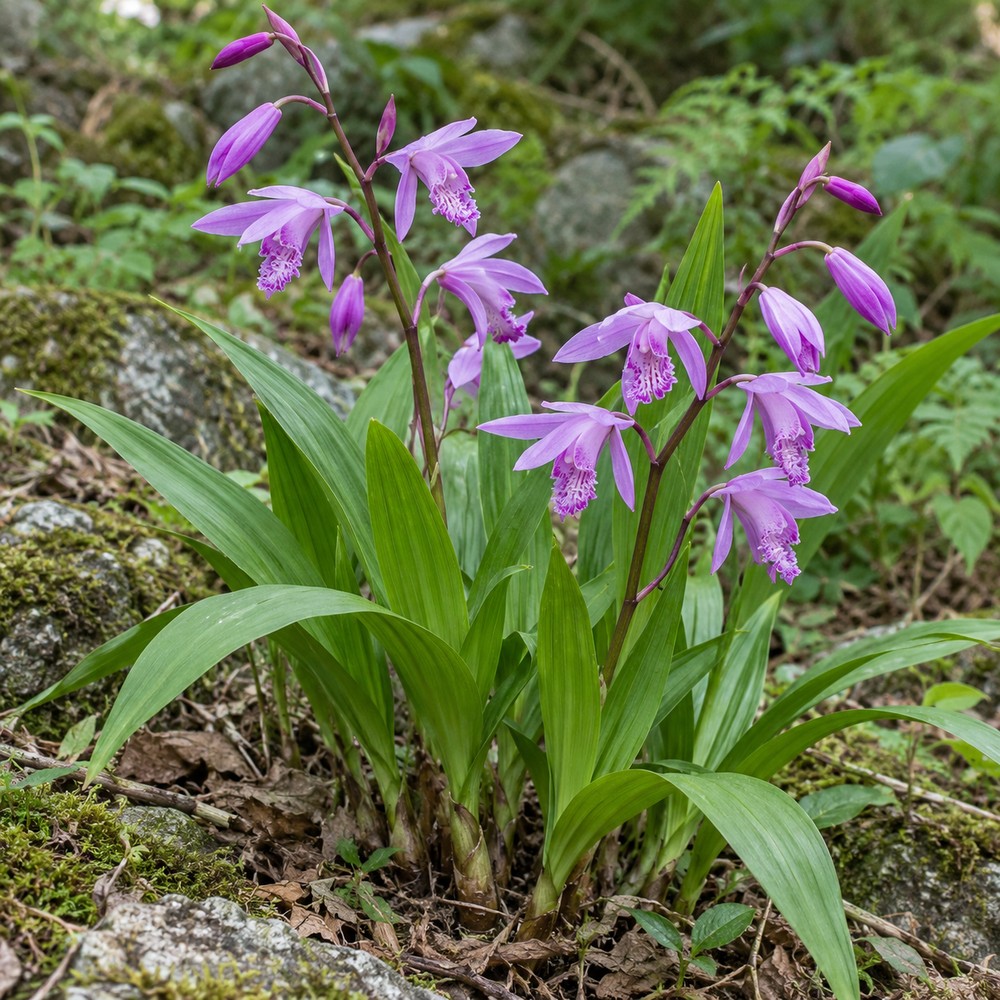
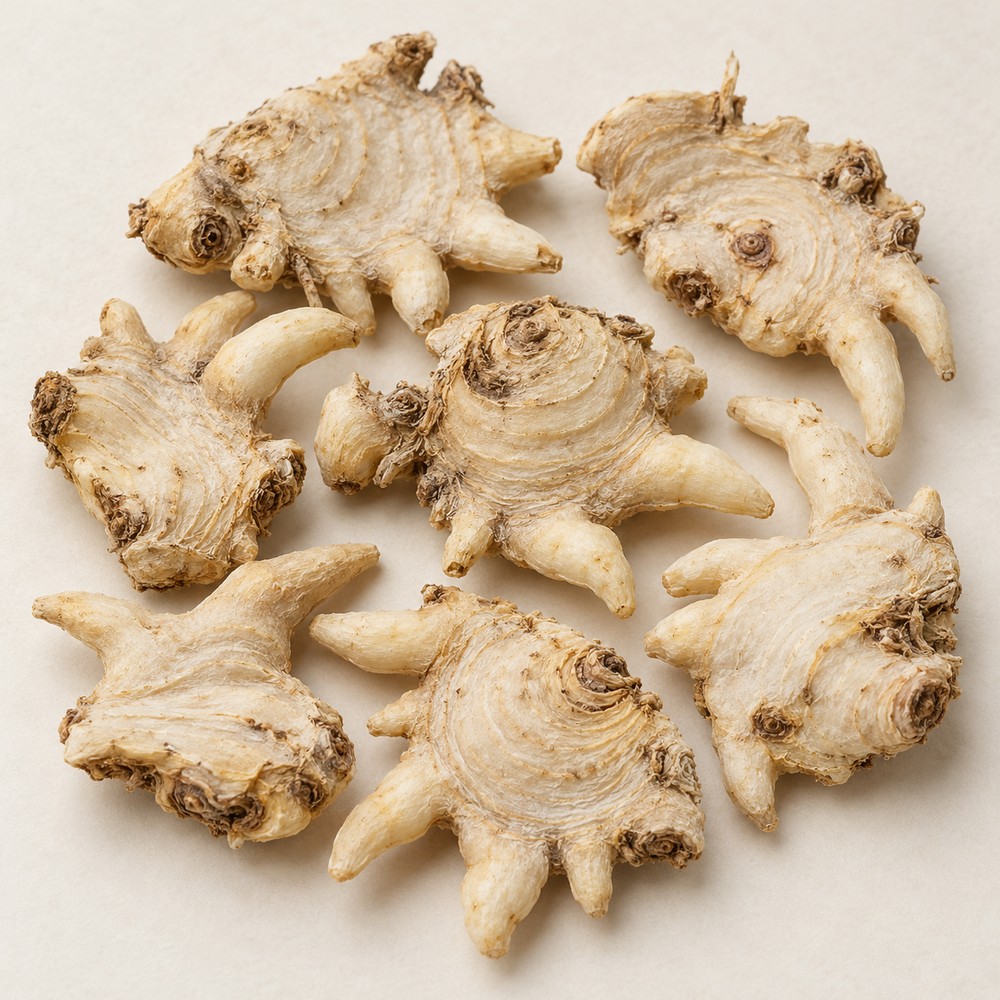
A terrestrial orchid has 3–5 lance-shaped leaves and pink-purple flowers; underground pseudobulbs are flattened pale tubers with concentric rings.
Traditional context
Astringent hemostatic and tissue-supporting uses are traditional; never substitute for emergency bleeding or deep-wound care.
Modern evidence
HKBU describes irregular flattened tubers, claw-like branches, concentric rings, and root scars; trade is regulated.
Safety
Bletilla striata is listed in CITES Appendix II; use cultivated sources and comply with trade permits. Bleeding risks and interactions require advice.
Pairing in reference texts
Bai Ji appears in historical topical and hemostatic formulas; do not apply to open wounds or ingest for bleeding.
Growing, care, and harvest timing
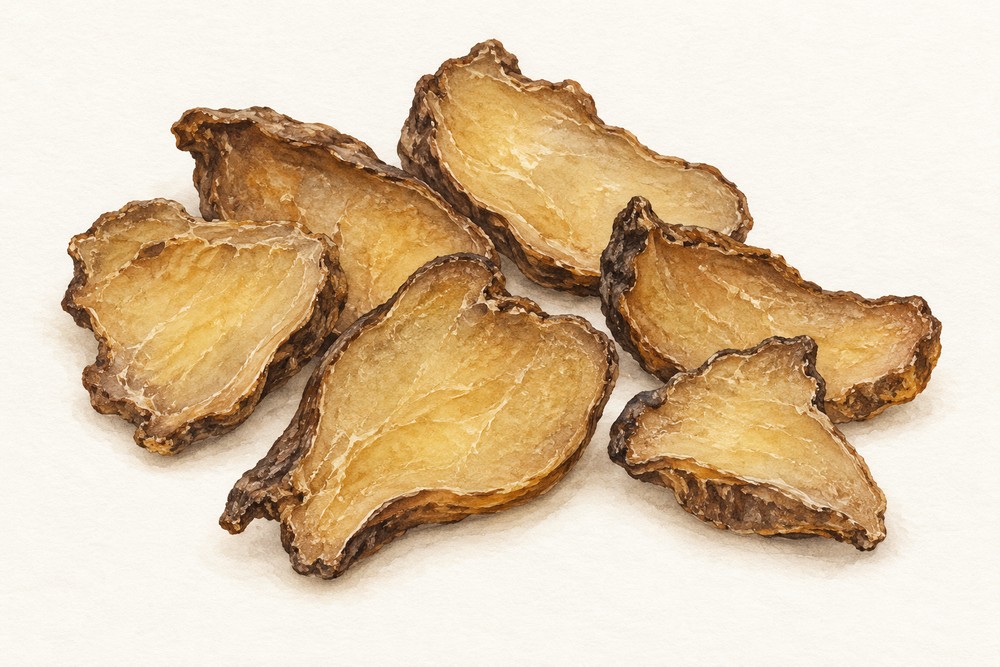
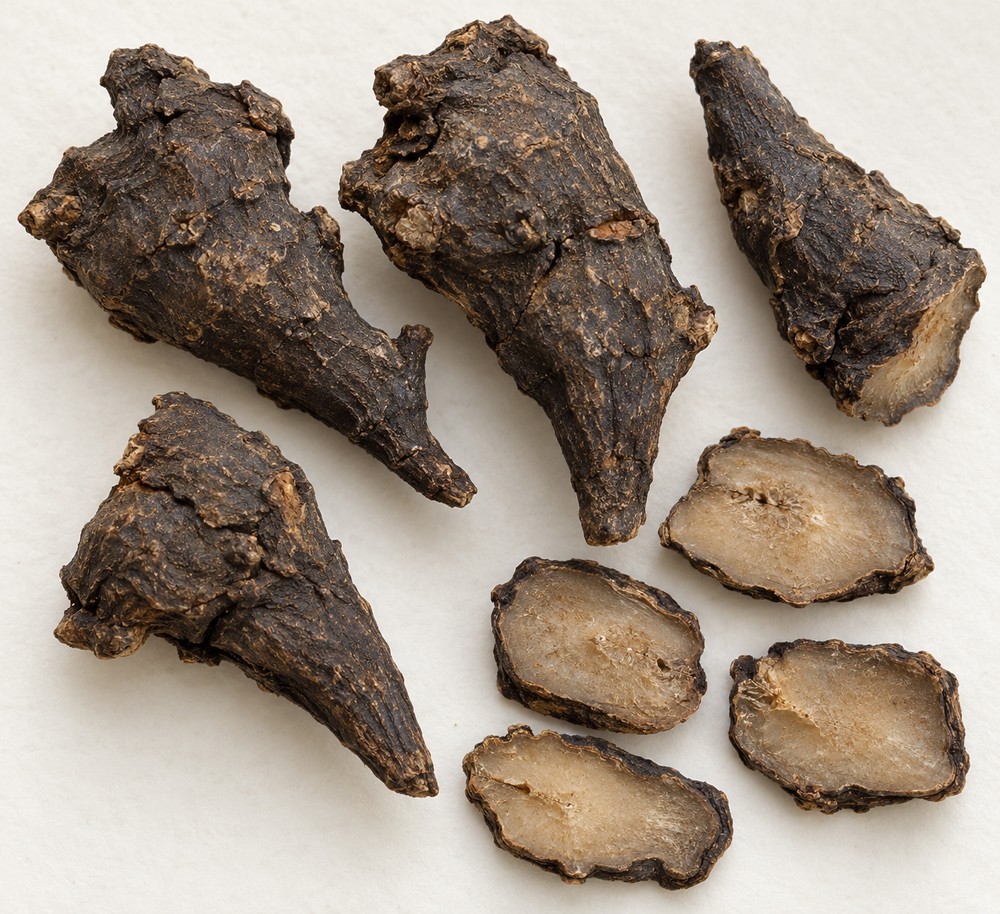
HKBU habitat record: Growing in mountains, or humid places of valleys. Distributed in East, South-central and Southwest China, Hebei, Shanxi, Shaanxi, Gansu, Taiwan and etc. The medicinal materials are mainly produced in Guizhou, Sichuan, Hunan, Hubei, Anhui, Henan, Zhejiang and Shaanxi Harvest and processing as recorded: Removed withered stem, fibrous root, clean soil, steam stem until no white part the inner side, then removed the bark, sun-dried or baked to dry or removed foreign matters, immersed with water, taken out, proper dried, sliced and sun-dried
Source-recorded harvest/processing: Removed withered stem, fibrous root, clean soil, steam stem until no white part the inner side, then removed the bark, sun-dried or baked to dry or removed foreign matters, immersed with water, taken out, proper dried, sliced and sun-dried
The reviewed source does not provide a complete species-specific sowing/growing routine, irrigation/fertilization schedule, or universal plant age. The page therefore does not infer care instructions or years to harvest; consult local cultivation guidance.
Open habitat and season source ↗FROM PLANT / SOURCE HABITAT TO DRIED MATERIAL · REFERENCE WORKFLOW
- Thu củ trưởng thành sau mùa sinh trưởng, rũ đất và rửa nhẹ để bảo toàn vòng bề mặt.
- Harvest mature tubers after growth, remove soil, and wash gently to preserve surface rings.
These are post-harvest study notes, not directions to prepare a remedy for self-treatment. Processing reference ↗
Traditional contraindication pairs in the “18 incompatibilities” appendix
The Beijing Municipal Drug Administration appendix lists the pairs below as traditional incompatibilities. This does not establish that every exposure causes poisoning; the appendix provides no safe ratio. Do not combine them yourself, even if an old formula is cited elsewhere.
How to read formula amounts
The cited sources do not provide a formula with specific amounts for this profile; no ratio is invented. Absence from the incompatibility list does not establish safety.
Habitat, season, and harvest in the HKBU botanical record
HKBU botanical record (translated summary): Flowering and fruiting dates: Flowering: April to May, fruiting: July to September Habitat and distribution: Growing in mountains, or humid places of valleys. Distributed in East, South-central and Southwest China, Hebei, Shanxi, Shaanxi, Gansu, Taiwan and etc. The medicinal materials are mainly produced in Guizhou, Sichuan, Hunan, Hubei, Anhui, Henan, Zhejiang and Shaanxi Harvest and processing as recorded: Removed withered stem, fibrous root, clean soil, steam stem until no white part the inner side, then removed the bark, sun-dried or baked to dry or removed foreign matters, immersed with water, taken out, proper dried, sliced and sun-dried
Open botanical source ↗